
Prototyping and Manufacturing Application in Lighting parts Industries
Accelerate Lighting Innovation with Yigu’s Prototyping & Mass Production. Transform your lighting ideas into market-ready products seamlessly with Yigu Technology. We bridge the gap between rapid prototyping and high-volume manufacturing, ensuring speed, precision, and cost-efficiency.
Key Solutions:
- ✅Fast Prototyping: 3D printing and CNC machining for quick design validation.
- ✅Scalable Production: Injection molding and automated assembly for bulk orders.
- ✅Material Expertise: High-performance plastics, metals, and optics tailored for lighting.
- ✅End-to-End Support: From concept to final product, with strict quality control.
Ideal for LED fixtures, smart lighting, and decorative designs—launch faster, produce smarter.
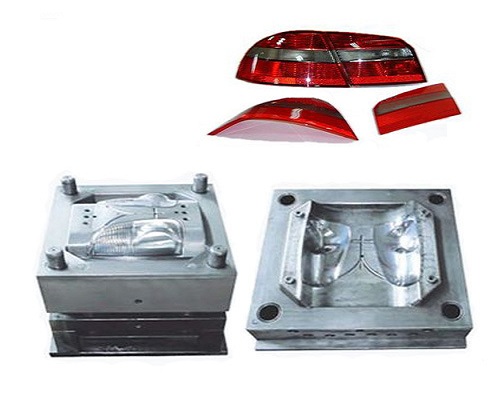
Lighting Mold mass production manufacturing
1. Introduction to Rapid Prototyping and Mass Production in Lighting Industry
1.1 Definition of Rapid Prototyping
Rapid prototyping is a group of techniques used to quickly fabricate a scale model of a physical part or assembly using three-dimensional computer-aided design (CAD) data. In the lighting industry, it has become a crucial tool for product development. For example, with technologies like 3D printing, designers can create prototypes of lamp holders, shades, or decorative lighting elements within hours. This allows them to test the design's functionality, such as how light is dispersed or if the part fits with other components, before committing to mass production. The ability to iterate quickly on designs means that new lighting concepts can be brought to market faster, giving companies a competitive edge.
1.2 Overview of Mass Production Manufacturing
Mass production in the lighting industry involves the large-scale manufacturing of lighting parts using standardized processes. Traditionally, this has relied on methods like injection molding for plastic parts or die casting for metal components. These methods are efficient for producing large quantities of identical parts, ensuring consistency and cost-effectiveness. For instance, a single injection mold can produce thousands of plastic light covers with high precision. However, the initial setup costs for molds and machinery are high, and any design changes require new molds, which can be time-consuming and expensive. The integration of rapid prototyping allows manufacturers to refine designs more efficiently before starting mass production, reducing the risk of costly errors and improving overall product quality.
2. Applications of Rapid Prototyping in Lighting Parts
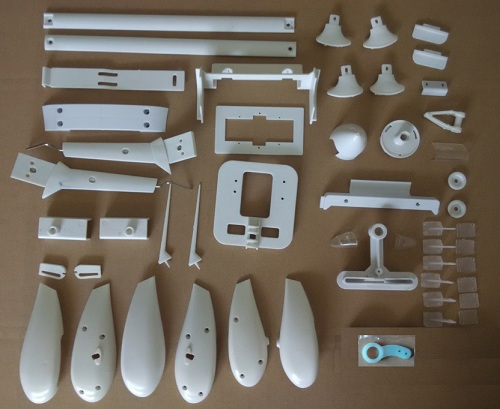
Lighting Products Rapid prototyping
2.1 Design Validation and Testing
Rapid prototyping has revolutionized the way lighting parts are designed and tested. By utilizing 3D printing and other rapid prototyping techniques, manufacturers can create physical models of lighting components such as lamp holders, shades, and diffusers directly from CAD data. This allows designers to validate the functionality and aesthetics of their designs in a matter of hours rather than days or weeks. For example, a prototype of a new LED light fixture can be tested to ensure that the light distribution meets the desired specifications, such as achieving a uniform illumination pattern or a specific beam angle. According to a study by the Lighting Research Center, rapid prototyping can reduce design validation time by up to 60%, enabling companies to bring innovative lighting products to market more quickly.
In addition to functional testing, rapid prototyping also facilitates the evaluation of ergonomic and aesthetic aspects of lighting parts. Designers can create multiple iterations of a prototype to perfect the shape, size, and appearance of a lighting component. This is particularly important in the lighting industry, where the visual appeal of a product can significantly impact its market success. For instance, a decorative chandelier can be prototyped with different crystal patterns or finishes to determine the most visually appealing design. The ability to make these adjustments quickly and inexpensively ensures that the final product meets both functional and aesthetic requirements.
2.2 Customization and Personalization
The lighting industry is increasingly moving towards customization and personalization, driven by consumer demand for unique and tailored lighting solutions. Rapid prototyping plays a key role in enabling this trend. With the ability to create one-off prototypes or small batches of customized parts, manufacturers can offer personalized lighting products that cater to individual customer needs. For example, a customer may request a custom light fixture with a specific shape or color to match their interior decoration. Using rapid prototyping, the manufacturer can quickly produce a prototype that meets these specifications, allowing the customer to approve the design before the final product is manufactured.
This level of customization is not only limited to decorative lighting but also extends to functional lighting solutions. For instance, in the automotive industry, rapid prototyping can be used to create custom headlights or taillights with unique designs or performance characteristics. A study by the Automotive Lighting Association found that 70% of consumers are willing to pay a premium for customized lighting features in their vehicles. Rapid prototyping enables manufacturers to meet this demand by providing a cost-effective and efficient way to produce customized lighting parts.
Moreover, rapid prototyping allows for the integration of advanced materials and technologies into lighting parts. For example, manufacturers can experiment with different types of plastics, metals, or composites to achieve specific properties such as durability, flexibility, or thermal conductivity. This flexibility in material selection further enhances the customization capabilities of rapid prototyping in the lighting industry.
3. Mass Production Techniques for Lighting Parts
3.1 Injection Molding
Injection molding is a widely used mass production technique in the lighting industry, particularly for manufacturing plastic lighting parts. It involves injecting molten plastic material into a mold cavity, where it cools and solidifies to form the desired part. This method is highly efficient for producing large quantities of identical parts with high precision and consistency. For example, plastic light covers, lamp holders, and diffusers can be manufactured using injection molding with tight tolerances and smooth surface finishes.
The key advantages of injection molding include its ability to produce complex geometries and intricate designs, which are common in lighting parts. The use of advanced mold technologies, such as multi-cavity molds, allows manufacturers to produce multiple parts in a single cycle, further increasing production efficiency. According to industry data, a single injection molding machine can produce up to 1,000 parts per hour, depending on the size and complexity of the part.
However, injection molding also has some limitations. The initial setup costs for molds are relatively high, which can be a barrier for small-scale production or frequent design changes. Additionally, the process requires a significant amount of time for mold design and manufacturing, typically ranging from several weeks to months. Despite these challenges, the integration of rapid prototyping can help mitigate these issues by allowing manufacturers to validate and refine designs before committing to expensive mold production.
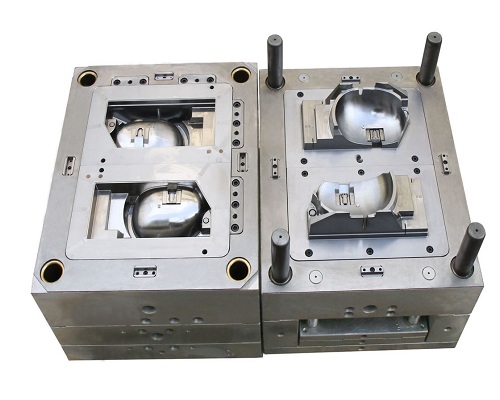
Lighting Mould mass production manufacturing
3.2 Die Casting
Die casting is another essential mass production technique used in the lighting industry, particularly for manufacturing metal lighting parts. It involves forcing molten metal, such as aluminum or zinc, into a reusable metal mold under high pressure. The metal quickly solidifies in the mold, forming the desired part with high dimensional accuracy and surface quality. Die casting is commonly used for producing metal components like light fixtures, brackets, and decorative elements.
One of the main benefits of die casting is its ability to produce parts with thin walls and complex shapes, which are difficult to achieve with other manufacturing methods. This makes it ideal for creating lightweight yet strong lighting parts. For instance, aluminum die-cast light fixtures can be designed with intricate details and thin walls, reducing material usage while maintaining structural integrity. According to market research, die-cast aluminum parts can achieve wall thicknesses as low as 1 mm, while maintaining high strength and durability.
Die casting also offers high production efficiency, with cycle times ranging from a few seconds to a minute, depending on the part size and complexity. This allows manufacturers to produce large quantities of parts quickly and cost-effectively. However, similar to injection molding, die casting has high initial setup costs for molds and requires precise mold design and maintenance. The integration of rapid prototyping can help optimize the design process, reducing the risk of defects and improving overall production quality.
4. Case Studies of Lighting Parts
4.1 Case Study 1: LED Fixture Development
The development of an LED fixture serves as a prime example of how rapid prototyping and mass production techniques are integrated in the lighting industry. A leading lighting manufacturer aimed to develop a new LED downlight fixture that offered improved energy efficiency and better light distribution while maintaining a sleek design. The initial design phase involved creating detailed CAD models of the fixture, including the housing, lens, and heat sink components.
Utilizing rapid prototyping, specifically 3D printing, the manufacturer was able to produce a prototype of the LED fixture within 48 hours. This prototype was used to conduct extensive testing, including light distribution analysis, thermal performance evaluation, and mechanical fit checks. The results showed that the initial design had some issues with heat dissipation and light uniformity. Based on these findings, the design was revised, and a new prototype was created in another 24 hours. This iterative process continued until the final design met all performance specifications.
Once the design was validated, the manufacturer moved to mass production. Injection molding was chosen for the plastic components, such as the housing and lens. The molds were designed based on the final CAD models, and the first batch of parts was produced. The production process was closely monitored to ensure consistency and quality. The LED fixtures were assembled, and final quality checks were performed. The new LED fixture was launched to the market within three months of the initial design phase, thanks to the efficiency of rapid prototyping and mass production techniques.
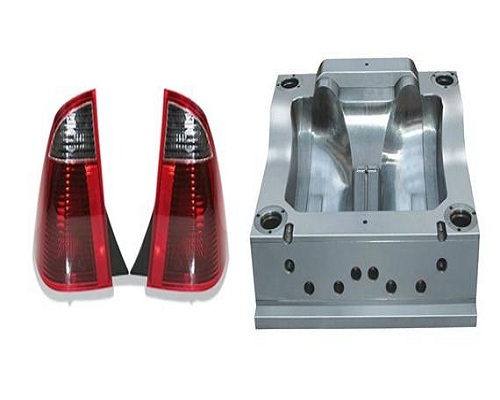
Lighting parts Rapid prototyping
4.2 Case Study 2: Smart Lighting System
Another notable case study is the development of a smart lighting system, which integrates advanced sensors, connectivity, and control mechanisms into traditional lighting fixtures. A major challenge in this project was to create a prototype that accurately represented the functionality and user experience of the final product. The design team used rapid prototyping to create a functional prototype of the smart lighting system within two weeks. This prototype included a mock-up of the light fixture, embedded sensors, and a basic control interface.
The prototype was tested in a simulated home environment to evaluate its performance in various lighting scenarios, such as dimming, color changing, and motion detection. Feedback from the testing phase highlighted the need for improvements in sensor sensitivity and user interface design. The design was refined, and a second prototype was developed, incorporating these changes. The revised prototype underwent further testing, and the results were satisfactory.
For mass production, the manufacturer opted for a combination of injection molding for the plastic components and die casting for the metal parts. The production process was streamlined to ensure the integration of electronic components and software during assembly. The smart lighting system was successfully launched and received positive reviews from consumers for its ease of use and innovative features. The integration of rapid prototyping allowed the manufacturer to quickly iterate on the design and bring a cutting-edge product to market in a relatively short timeframe.
In summary, the integration of rapid prototyping and mass production techniques has significantly transformed the lighting industry, driving innovation, efficiency, and market responsiveness. Rapid prototyping technologies, such as 3D printing, have revolutionized the design and testing phases, allowing manufacturers to quickly iterate on designs and validate functionality and aesthetics. This has led to a substantial reduction in time-to-market and overall production costs. For instance, companies using rapid prototyping can reduce product development time by up to 40% compared to traditional methods.
Mass production techniques like injection molding and die casting have been optimized to ensure high precision and consistency in the manufacturing of lighting parts. These methods are highly efficient for producing large quantities of identical parts, reducing per-unit costs and maintaining product quality. The combination of rapid prototyping and mass production has also enabled greater customization and personalization, meeting the growing consumer demand for unique and tailored lighting solutions.
In conclusion, the integration of rapid prototyping and mass production in the lighting industry is a powerful combination that drives innovation, reduces costs, and enhances market competitiveness. By addressing current challenges and embracing future technological advancements, manufacturers can continue to thrive in this dynamic and evolving market.