Introduction
Precision subtractive manufacturing is a fundamental process in modern industry that involves removing material from a workpiece to create a desired shape. This method stands in contrast to additive manufacturing, which builds objects layer by layer. Subtractive manufacturing techniques—such as turning, milling, and drilling—have been the cornerstone of manufacturing for centuries due to their ability to achieve high levels of accuracy and surface finish. In today’s manufacturing landscape, precision is not just a nicety; it is a necessity. High-precision components are crucial for industries like aerospace, automotive, and medical device manufacturing. For example, in aerospace, engine components must be manufactured with extreme precision to ensure optimal performance and safety—a deviation of even a few micrometers can lead to inefficiencies, increased fuel consumption, and catastrophic failures.
| Industry | Precision Requirement (Typical Tolerance Range) | Importance of Precision |
|---|---|---|
| Aerospace | ±0.001 – 0.01 mm | Critical for engine performance, fuel efficiency, and flight safety |
| Automotive | ±0.01 – 0.1 mm | Affects vehicle performance, durability, and fuel economy |
| Medical Devices | ±0.001 – 0.05 mm | Crucial for patient safety and proper functioning of implants and surgical instruments |
The precision achieved in subtractive manufacturing results from advanced machine tools, high-quality cutting tools, and skilled operators. Modern Computer Numerical Control (CNC) machines control cutting tool movement with extreme accuracy—often down to the micron level. Skilled machinists program machines, select cutting parameters, and ensure overall quality.
What Are the Basics of Turning Service?
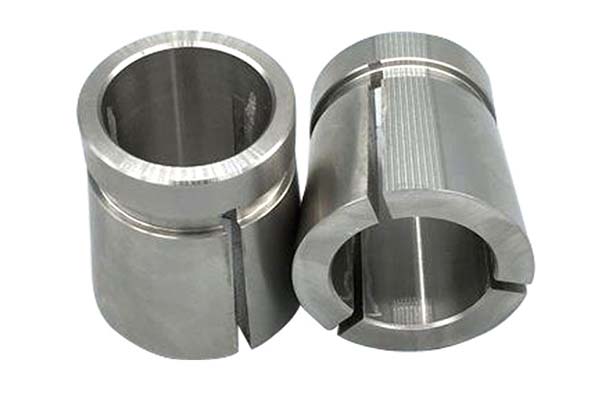
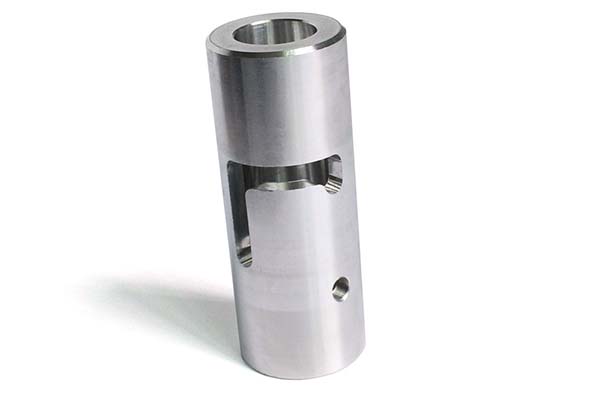
Turning service is a fundamental subtractive manufacturing process that creates precision components. At its core, turning involves rotating a workpiece on a lathe while a cutting tool removes material from the outer diameter, inner diameter, or end face to achieve desired shape and dimensions.
Key Elements in Turning
| Element | Function | Impact on Precision |
|---|---|---|
| Lathes | Provide rotational motion for workpiece; control cutting tool movement | High-precision lathes essential for tight tolerances; CNC lathes maintain consistent accuracy |
| Cutting Tools | Remove material from workpiece | Quality and sharpness directly affect surface finish and dimensional accuracy; dull tools cause inaccuracies, rough surfaces |
| Workpiece | Material being machined | Material properties influence cutting forces, tool wear, achievable precision; different materials require different strategies |
| Cutting Parameters | Determine speed, feed, depth of cut | Improper parameters lead to excessive tool wear, poor surface finish, dimensional errors; optimized parameters ensure high-quality results |
Lathe Types
| Lathe Type | Characteristics | Best For |
|---|---|---|
| Engine lathes | Manually operated | Small-batch production, prototype work |
| Turret lathes | Turret holds multiple cutting tools; quick tool changes | More complex operations |
| CNC lathes | Automated, computer-controlled; positioning accuracy ±0.0001 mm | Mass production; high accuracy and repeatability |
Cutting Tools
| Tool Type | Material | Characteristics |
|---|---|---|
| Single-point tools | High-speed steel or carbide; single cutting edge; resharpenable | Simple turning operations |
| Insert-type tools | Replaceable inserts (carbide, ceramic); multiple cutting edges | Reduce downtime; withstand higher cutting speeds, temperatures; enable faster machining, better surface finish |
Cutting Parameters
| Parameter | Description | Material Example |
|---|---|---|
| Cutting speed | Linear speed of cutting edge relative to workpiece | Aluminum: 200–500 m/min; Hardened steel: 50–150 m/min |
| Feed rate | Distance tool advances per revolution | Higher feed increases material removal; proper feed ensures even cut, good surface quality |
| Depth of cut | Thickness of material removed in single pass | Soft materials: 0.5–2 mm; Hard materials: 0.1–0.5 mm |
How Does Turning Service Shape Precision Subtractive Manufacturing?
Achieving High Precision
Modern turning operations, especially on high-end CNC lathes, achieve tolerances as tight as ±0.0001 mm .
| Industry | Component | Typical Precision Requirement (Tolerance) |
|---|---|---|
| Aerospace | Turbine blade | ±0.002 – 0.005 mm |
| Medical Devices | Hip implant | ±0.001 – 0.003 mm |
Aerospace example: Turbine blades for jet engines require extreme precision—tolerance ±0.002–0.005 mm. Advanced turning techniques and high-precision lathes create smooth surfaces, accurate dimensions, reducing aerodynamic drag and improving engine efficiency.
Medical example: Hip implants require dimensional accuracy ±0.001–0.003 mm for proper fit. Smooth surface finish reduces friction and wear, prolonging implant lifespan.
Material Compatibility
Turning service is highly versatile across materials.
| Material | Hardness | Ductility | Thermal Conductivity | Machining Difficulty | Tool Wear |
|---|---|---|---|---|---|
| Aluminum | Low (20–100 HB) | High | High (200–240 W/(m·K)) | Low–Medium; high speeds; proper coolant to prevent chip adhesion | Low–Moderate; carbide tools work well |
| Steel (mild) | Moderate (100–200 HB) | Good | Moderate (40–60 W/(m·K)) | Medium; higher cutting forces; appropriate tool coatings | Moderate; HSS or carbide common |
| Titanium | High (300–400 HB) | Low–Moderate | Low (15–20 W/(m·K)) | High; high strength, low thermal conductivity cause high cutting temperatures, rapid tool wear | High; ceramic or coated carbide needed |
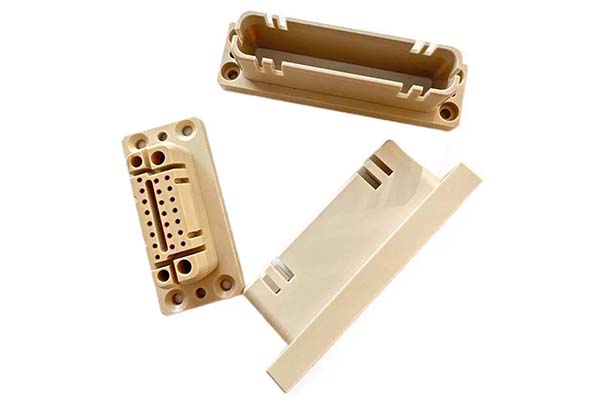
| Plastic (PEEK) | Low (20–50 Shore D) | High–Moderate | Low (0.2–0.5 W/(m·K)) | Low–Medium; prevent melting/deforming; high-speed cutting with sharp tools | Low–Moderate; sharp edge, proper chip evacuation |
Complex Geometric Shapes
Advanced CNC lathes with multiple axes (X, Y, Z, C) enable machining of intricate profiles.
| Feature | Capability |
|---|---|
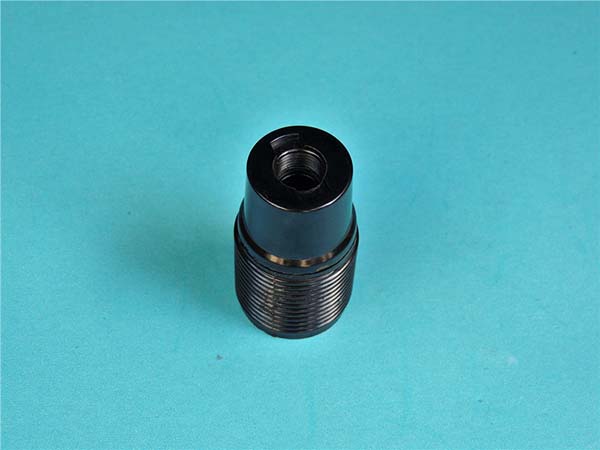
| Single setup | Tapered outer diameter, internal threads, multiple grooves |
| C-axis control | Rotation at precise angles—helical grooves, threads |
| Non-circular cross-sections | Elliptical, cam-shaped components (camshafts) |
| Mold-making | Cores, cavities with intricate curves, undercuts, fine details |
Automotive example: Camshafts—lobes with specific profiles control engine valve timing. Turning creates complex lobe shapes meeting tight tolerances and surface finish requirements.
What Do Real-World Applications and Success Stories Show?
Aerospace Industry
Challenge: High-performance engine shafts requiring diameter tolerance ±0.003 mm, surface finish <0.2 μm Ra.
Solution: Advanced CNC turning—high-end CNC lathe with precision spindle (rotational speed accuracy ±0.01 rpm); carbide inserts with specialized geometry to reduce cutting forces, improve surface finish.
Result: Reduced dimensional variation → better engine balance → reduced vibrations, noise; smooth surface finish minimized friction → 3–5% improvement in fuel consumption .
Medical Device Manufacturing
Challenge: Custom spinal implants requiring tolerance ±0.002 mm, threaded sections, tapered ends, smooth surfaces.
Solution: Multi-axis CNC lathe.
Result: Clinical trials: patients reported reduced pain, improved mobility; precise fit reduced implant failure risk, revision surgeries → company market share increased 20% within two years .
Automotive Sector
Challenge: High-precision transmission gears requiring pitch accuracy ±0.005 mm, tooth profile error <±0.003 mm for smooth operation, reduced noise.
Solution: Optimized cutting parameters—cutting speed 120 m/min, feed rate 0.08 mm/rev, depth of cut 0.2 mm; high-quality carbide cutting tools.
Result: 15% reduction in transmission noise ; increased reliability; new contracts with major car manufacturers—annual revenue doubled within three years .
What Is Yigu Technology’s Perspective?
At Yigu Technology , we specialize in turning service for precision subtractive manufacturing. Our high-end CNC lathes achieve ±0.0001 mm positioning accuracy —critical for aerospace turbine blades (±0.002–0.005 mm) and medical hip implants (±0.001–0.003 mm). We match cutting parameters to material properties—aluminum (200–500 m/min, carbide tools), titanium (50–150 m/min, ceramic or coated carbide), PEEK (high-speed cutting with sharp tools). Our multi-axis CNC lathes produce complex geometries—camshaft lobes, mold cores with undercuts—in single setups, reducing errors. From aerospace engine shafts (3–5% fuel efficiency improvement) to medical spinal implants (20% market share increase), we deliver precision that drives industry success.
Conclusion
Turning service shapes precision subtractive manufacturing through high precision (CNC lathes achieve ±0.0001 mm positioning accuracy ; aerospace turbine blades: ±0.002–0.005 mm; medical hip implants: ±0.001–0.003 mm), material compatibility (aluminum: 200–500 m/min, high thermal conductivity; titanium: 50–150 m/min, low thermal conductivity requires ceramic/coated carbide; PEEK: high-speed cutting with sharp tools), and complex geometric shapes (multi-axis CNC lathes—tapered diameters, internal threads, helical grooves, camshaft lobes, mold cores with undercuts—in single setups). Real-world successes: aerospace engine shafts achieved 3–5% fuel efficiency improvement ; medical spinal implants increased market share 20% ; automotive transmission gears reduced noise 15% , doubled annual revenue. With advanced machine tools, optimized cutting parameters, and skilled operators, turning service delivers the precision essential for aerospace, medical, and automotive industries.
FAQs
What are the common materials suitable for turning service?
Common materials include aluminum (low density, high thermal conductivity—aerospace, automotive), steel (mild, alloy—strength, machinability), titanium (high strength, low thermal conductivity—aerospace, medical), copper, brass, and plastics (PEEK, nylon—electrical insulation, chemical resistance, low friction). Each material requires specific cutting parameters and tooling.
How to ensure the precision of turning service?
Ensure precision by using high-precision CNC lathes (±0.0001 mm positioning accuracy); selecting appropriate cutting tools (sharp carbide/ceramic); optimizing cutting parameters (speed, feed, depth of cut) for material; ensuring proper workpiece clamping to prevent movement; performing regular machine calibration and maintenance ; employing skilled operators for programming, monitoring, real-time adjustments.
Contact Yigu Technology for Custom Manufacturing
At Yigu Technology , we combine advanced turning service with precision subtractive manufacturing expertise. Our CNC lathes achieve ±0.0001 mm positioning accuracy —delivering aerospace turbine blades (±0.002–0.005 mm), medical hip implants (±0.001–0.003 mm), and automotive transmission gears (15% noise reduction). We provide DFM feedback to optimize your designs for manufacturability. From prototypes to high-volume production, we turn your concepts into precision components.
Ready to shape your next project with precision turning? Contact Yigu Technology today for a free consultation and quote. Let us help you achieve the accuracy, surface finish, and reliability your industry demands.