In the world of high-performance manufacturing, Industrial Injection Plastics represent a specialized class of materials and processes designed to meet the extreme demands of heavy-duty applications. Beyond common consumer plastics, these engineered polymers and composites are formulated to withstand mechanical stress, chemical exposure, high temperatures, and long-term wear. For engineers and manufacturers in automotive, aerospace, machinery, and industrial equipment, selecting and processing these materials correctly is critical to product safety, longevity, and performance. This comprehensive guide delves into the core of Industrial Injection Plastics, exploring the dominant polymer families, the transformative role of fillers, the rigorous design rules to prevent defects, and the precision engineering required for mold making and part fabrication. Our goal is to provide actionable knowledge for designing and producing robust, reliable industrial components.
What Are Industrial Injection Plastics?
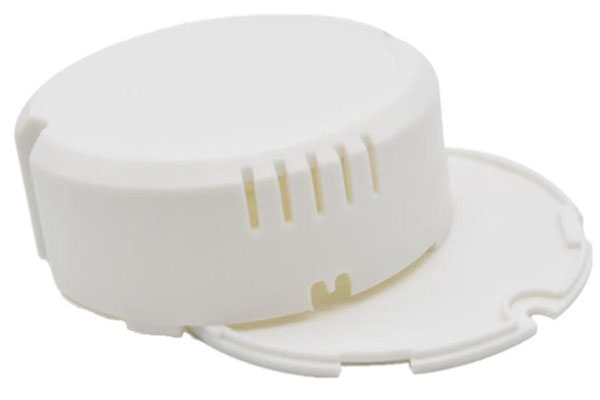
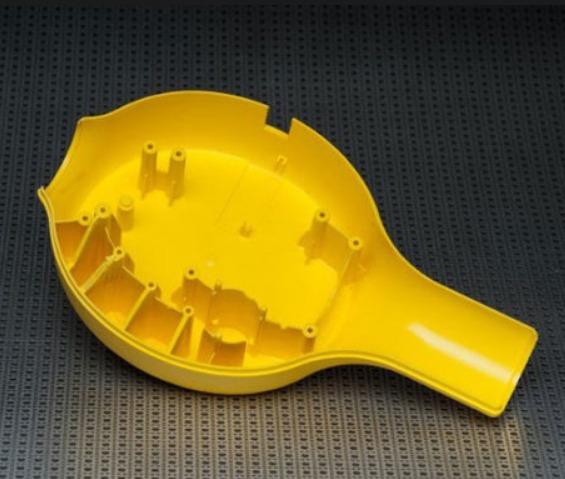
Industrial Injection Plastics refer to a category of high-performance thermoplastic and thermoset materials specifically engineered for injection molding applications that require superior mechanical properties, dimensional stability, and resistance to harsh environments. Unlike commodity plastics used for packaging or disposable goods, these materials are selected for their structural integrity, longevity, and ability to perform under load. They are the backbone of components like automotive under-hood parts, industrial gear housings, electrical connectors, and medical device enclosures. The selection and processing of these plastics are driven by functional requirements rather than just cost, often involving precise engineering and stringent quality control.
Which Polymers Dominate Heavy-Duty Applications?
Several polymer families are the workhorses of industrial applications, each offering a unique balance of properties.
| Polymer Family | Common Examples | Key Properties | Typical Industrial Applications |
|---|---|---|---|
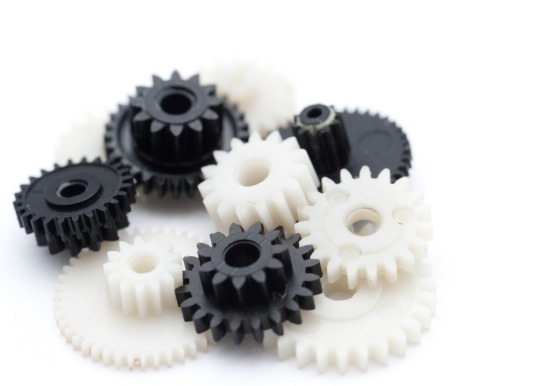
| Polyamide (Nylon) | PA6, PA66, PA46 | High strength, good fatigue resistance, excellent wear/abrasion resistance. Hygroscopic (absorbs moisture). | Gears, bearings, bushings, electrical connectors, under-hood automotive components. |
| Acetal (POM) | POM-C (Copolymer) | High stiffness, excellent dimensional stability, low friction, good chemical resistance. Known for its "slippery" feel. | Precision gears, pump components, conveyor parts, fasteners, lock mechanisms. |
| Polycarbonate (PC) | PC, PC/ABS Blends | Exceptional impact strength and toughness, good transparency, heat resistance. Can be prone to stress cracking. | Safety shields, machine guards, transparent housings, electrical components. |
| Polyether Ether Ketone (PEEK) | PEEK | Extreme heat resistance (continuous use >240°C), outstanding chemical resistance, high mechanical strength, and excellent wear properties. Very high cost. | Aerospace components, high-performance seals, semiconductor manufacturing parts, medical implants. |
| Polyphenylene Sulfide (PPS) | PPS | High heat resistance, inherent flame retardancy, exceptional dimensional stability, and excellent chemical resistance. | Electrical/electronic components, pump parts, and components for hot water/chemical environments. |
How Do Fillers and Additives Enhance Performance?
The base polymer is often just the starting point. Fillers and additives are compounded into the resin to tailor its properties for specific industrial challenges.
- Reinforcing Fillers:
- Glass Fiber (10%, 30%, 50%): The most common reinforcement. Dramatically increases stiffness, tensile strength, and heat deflection temperature (HDT). It also reduces shrinkage and improves dimensional stability but increases abrasiveness on molds and tools.
- Carbon Fiber: Provides even higher stiffness and strength than glass fiber, adds electrical conductivity, and offers a distinctive black appearance.
- Functional Additives:
- Internal Lubricants (e.g., PTFE, MoS2): Reduce friction and wear, creating self-lubricating parts ideal for moving components like gears and slides.
- Stabilizers: UV stabilizers prevent degradation from sunlight; heat stabilizers protect the polymer during high-temperature processing and end-use.
- Flame Retardants (FR): Essential for electrical and electronic applications to meet safety standards like UL94 V-0.
What Wall-Section Limits Prevent Sink and Warp?
Managing wall thickness is the most critical rule in designing for Industrial Injection Plastics. Inconsistent walls lead to defects.
- The Golden Rule: Uniform Wall Thickness. Aim for a consistent nominal wall throughout the part. Variations should not exceed ±15-20% of the nominal thickness.
- Recommended Ranges: For most engineering plastics like PA6 or POM, a nominal wall of 2mm to 4mm (0.080" to 0.160") is a reliable starting point. Thinner walls increase filling difficulty; thicker walls drastically increase cooling time and the risk of sink marks (surface depressions over ribs or thick sections) and warpage (distortion due to uneven shrinkage).
- Designing Transitions: Use gradual tapers and fillets where wall thickness must change. Avoid abrupt changes. For thick sections, core out material to create a "hollow" rib structure instead of a solid block.
Mold-Steel Choices for High-Volume Runs
The mold must withstand the abrasive and corrosive nature of many industrial plastics over hundreds of thousands of cycles.
- Pre-Hardened Steels (e.g., P20, 718): Good for medium-volume runs (up to 500,000 cycles) of non-abrasive materials. They are machinable in their pre-hardened state (~30 HRC).
- Through-Hardened Steels (e.g., H13, S7): The standard for high-volume production. H13 is the "workhorse" for abrasive, glass-filled materials. It is heat-treated to 48-52 HRC for excellent wear resistance.
- Stainless Steels (e.g., 420SS, S136): Used for corrosive materials (e.g., PVC, flame-retardant grades that release acids) or applications requiring a mirror polish for optical clarity or easy part release.
- Coatings (e.g., Nickel-PTFE, Chromium Nitride): Applied to mold surfaces to further reduce wear, improve release, and resist corrosion, extending mold life and maintenance intervals.
How to Achieve Tight Tolerances on Large Parts?
Holding tight tolerances on large industrial parts is a significant challenge due to material shrinkage and thermal effects.
- Scientific Molding & Process Control: This is non-negotiable. Using cavity pressure sensors and melt temperature control to ensure shot-to-shot consistency is the foundation.
- Mold Temperature Control: Precise and balanced cooling is paramount. Use multiple independent cooling zones and turbulent-flow water lines to maintain a uniform mold temperature, which minimizes differential shrinkage and warpage.
- Compensated Mold Design (Shrinkage Allowance): The mold is cut larger than the final part based on a precise shrinkage factor provided by the material supplier. For crystalline materials like Nylon or POM, shrinkage is higher and more anisotropic (direction-dependent) than for amorphous materials like PC, requiring more sophisticated mold design.
- In-Mold Stressing: Strategic design of molded-in fixtures or frames can counteract anticipated shrinkage forces, holding critical dimensions during cooling.
Post-Machining vs. Mold-in Features
The decision to mold a feature or machine it later is a key cost and quality consideration.
- Mold It In (When Possible):
- Pros: Lower per-part cost, faster production, better fiber orientation (for composites) around the feature.
- Cons: Higher initial mold complexity and cost.
- Best For: Majority of features: bosses, ribs, snap-fits, and general geometry.
- Machine It After (Post-Machining):
- Pros: Achieves tolerances tighter than standard molding (e.g., ±0.025mm), allows for perfect flatness or perpendicularity, ideal for features that would require prohibitively complex (and fragile) mold actions.
- Cons: Adds a secondary operation, increases cost, and can cut through the molded-in "skin," potentially exposing less wear-resistant core material.
- Best For: Critical sealing surfaces, precision bearing bores, and threaded holes for metal inserts in high-stress applications.
Conclusion
Mastering Industrial Injection Plastics requires a systems-level approach that integrates material science, part design, mold engineering, and precision processing. It begins with selecting the right polymer and reinforcement package to meet the functional demands, followed by designing the part with disciplined attention to uniform wall sections. Success is then secured by investing in a robust, wear-resistant mold made from appropriate tool steel and employing scientific molding techniques to control the process with data. Finally, strategic decisions on which features to mold versus machine ensure the final component meets all performance and tolerance requirements. By adhering to these principles, engineers and manufacturers can reliably produce the durable, high-performance plastic components that form the critical infrastructure of modern industry.
FAQ on Industrial Injection Plastics
What is the most common mistake when switching from commodity to industrial plastics?
Underestimating shrinkage and warpage. Industrial plastics, especially semi-crystalline ones like Nylon and POM, have higher and more directional shrinkage. Using the same design rules and shrinkage allowances as for ABS or PP will lead to out-of-tolerance parts. Always consult the material datasheet and engage in early DFM with your molder.
Can you injection mold plastic-metal hybrid parts?
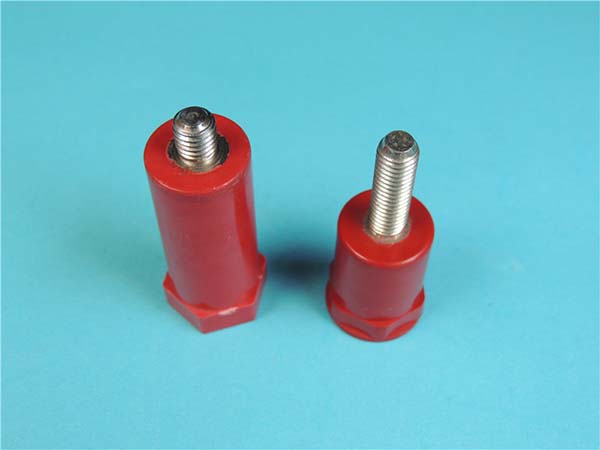
Yes, this is insert molding. Metal inserts (threaded bosses, bushings, electrical contacts) are placed into the mold, and plastic is injected around them. This creates a strong mechanical bond. It's common for creating strong threaded points or adding conductivity. The key is pre-heating the insert to ensure good adhesion and prevent plastic cracking from differential shrinkage.
How does moisture affect engineering plastics like Nylon?
It is critical. Nylon (Polyamide) is hygroscopic. "Dry-as-molded" parts will absorb moisture from the air, which acts as a plasticizer, increasing toughness and impact strength but reducing stiffness and dimensional stability. For precision parts, conditioning (drying or humidifying) to the expected service environment is often necessary before final machining or use.
What is the "gate" and why is its location important?
The gate is the small opening where molten plastic enters the part cavity. Its location is crucial because it affects:
- Flow Path: Determines how the plastic fills the mold, influencing weld line locations and fiber orientation.
- Packing: Affects how well thick sections are packed out to prevent sink.
- Stress: Can create areas of high residual stress.
For large industrial parts, multiple gates are often used to ensure balanced filling.
Is it worth using expensive plastics like PEEK?
The decision is based on Total Cost of Ownership (TCO). While PEEK's raw material cost is 10-50x that of Nylon, its extreme performance in temperature, chemical resistance, and wear can eliminate the need for maintenance, replacement, or system failures in critical applications. It often replaces metals in harsh environments, saving weight and corrosion issues. The ROI is in reliability, not just part cost.
Contact Yigu technology for custom manufacturing.
At Yigu Technology, we specialize in the high-stakes world of Industrial Injection Plastics. Our expertise spans from selecting the optimal material and reinforcement package for your performance requirements to engineering molds from premium tool steels for durability. We employ scientific molding principles and advanced process controls to consistently produce large, complex components that meet the tight tolerances and rigorous standards of automotive, industrial equipment, and aerospace applications.
Partner with us to engineer and manufacture plastic components that are built for the long haul. Contact Yigu Technology today for a technical consultation on your next industrial project.