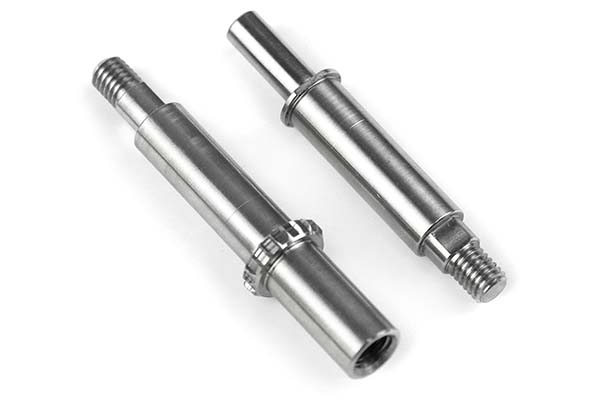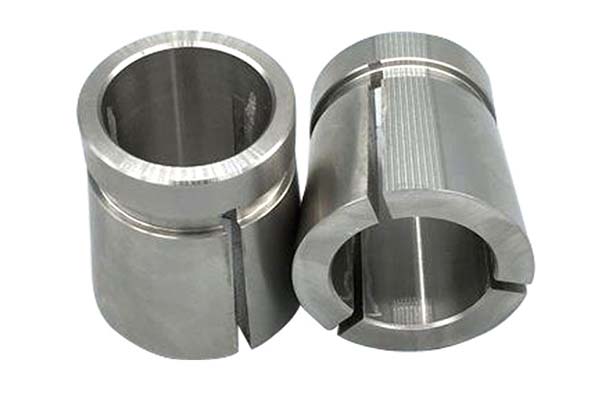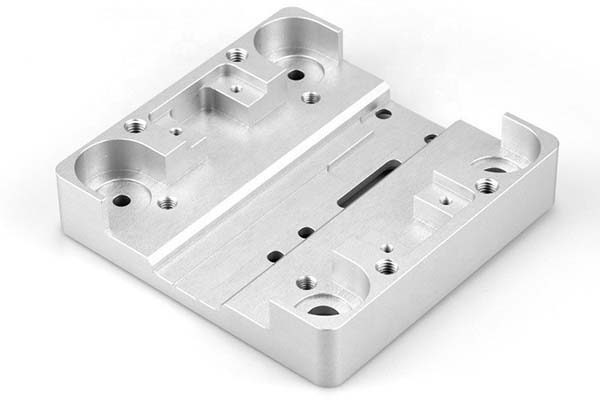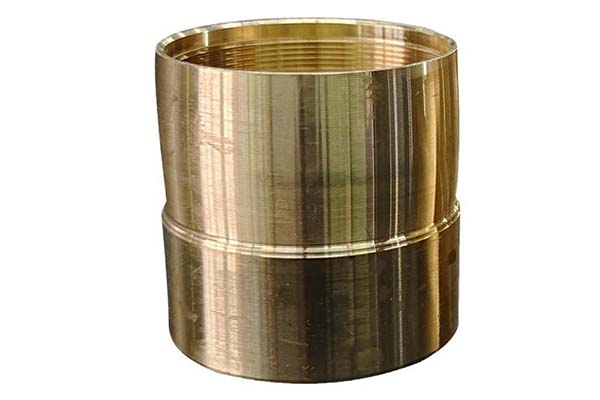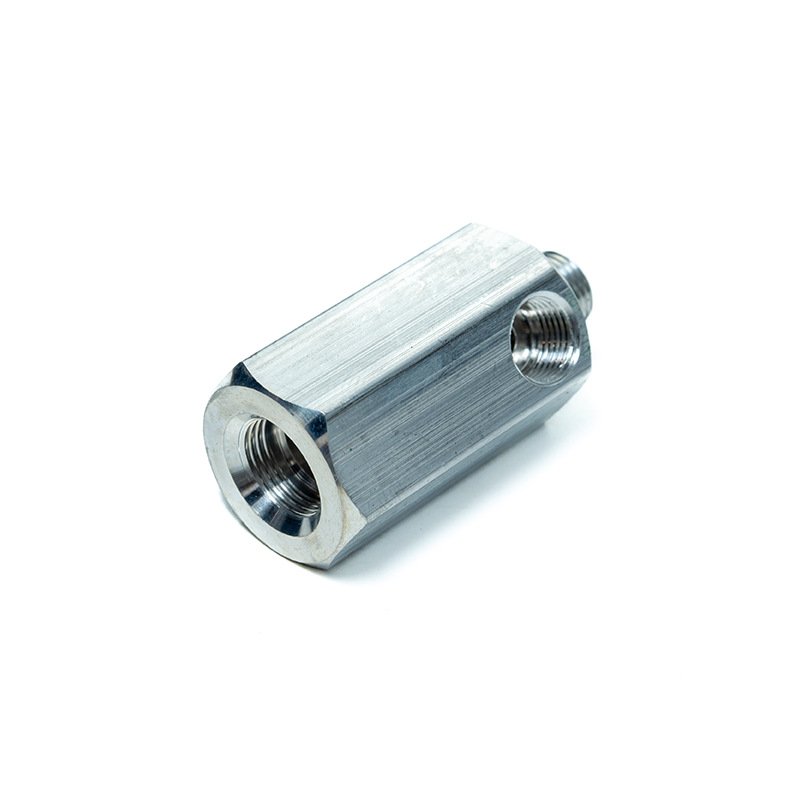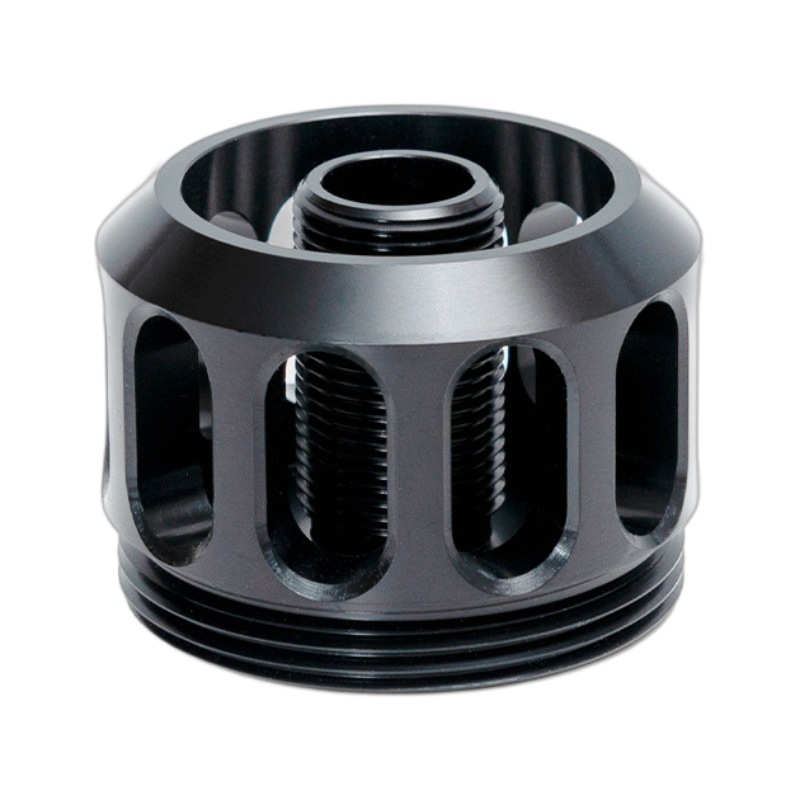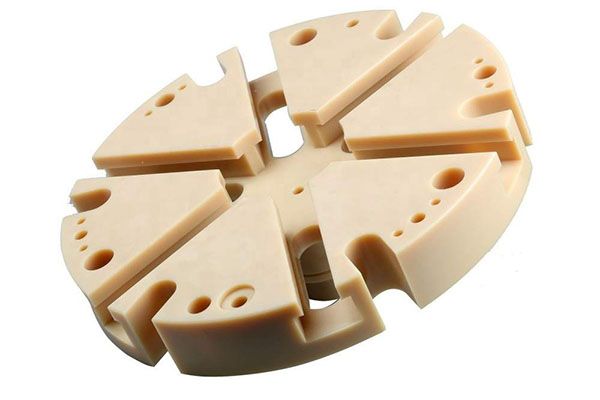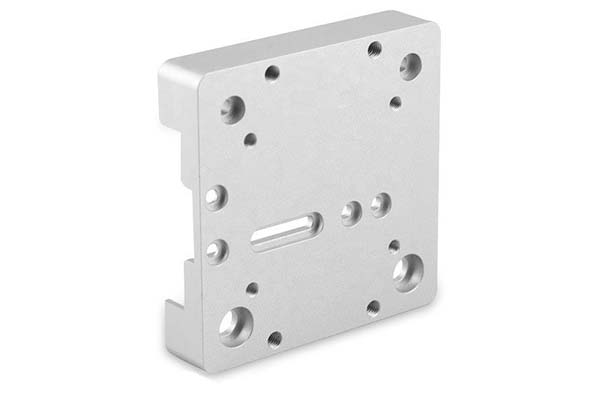
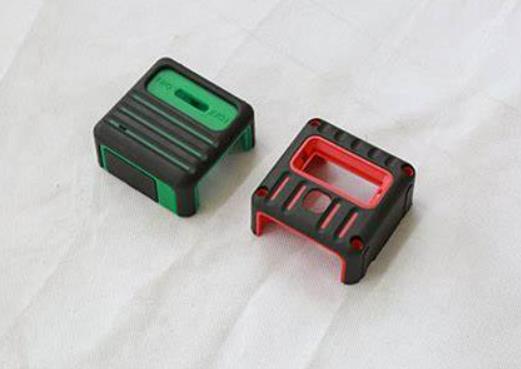
Custom machined parts enable rapid, precise, and flexible product development by transforming digital designs into functional physical components without the delays or costs of traditional tooling.
For engineers, designers, and innovators, the ability to quickly produce custom machined parts is a critical competitive advantage. Whether you're iterating on a prototype, testing a market with a small production run, or producing a complex component that can't be made any other way, CNC machining offers unparalleled flexibility. This guide dives deep into the practicalities of sourcing custom parts, from selecting the optimal material and process to understanding the real-world tolerances and finishing options available. We'll also explore proven strategies for making small batch production economical, helping you navigate from initial concept to validated part with confidence and efficiency.
Introduction
The journey from a brilliant idea to a tangible, functional product is paved with critical decisions about manufacturing. Custom machined parts, produced via computer numerical control (CNC) technology, sit at the heart of modern product development. Unlike off-the-shelf components or parts requiring expensive custom molds, CNC machining allows for the direct translation of a 3D CAD model into a precise physical object, using materials ranging from common aluminum to high-performance engineering plastics and superalloys. This process is ideal for low-volume production, rapid prototyping, and creating high-complexity geometries that are impossible with other methods. However, to leverage this technology effectively, one must understand its nuances. This article serves as a comprehensive playbook, guiding you through material selection, process capabilities, cost optimization, and supplier collaboration to ensure your custom parts meet both your design intent and project goals.
What Exactly Are Custom Machined Parts?
Custom machined parts are components manufactured to unique, customer-provided specifications through subtractive machining processes. They are "custom" because their geometry, material, tolerances, and finishes are defined for a specific application, rather than being standardized. The process begins with a solid block of material (the "workpiece"), and material is precisely removed using cutting tools to reveal the final part.
The defining advantages of this approach are:
- Design Freedom: Ability to create complex internal features, undercuts, and organic shapes that are challenging for casting or forming.
- Material Versatility: Can be applied to metals, plastics, composites, and woods.
- Rapid Turnaround: No need for hard tooling (like injection molds or die casts), which can take months to produce. Parts can often be produced in days or weeks.
- Superior Material Properties: Parts are machined from solid, wrought, or cast plate stock, which has better and more consistent mechanical properties (strength, uniformity) than parts molded or cast into shape.
Which Materials Best Match Your Application?
Material choice is foundational, impacting the part's function, cost, manufacturability, and longevity. The optimal material balances performance requirements with practical machining considerations.
| Material Category | Example Alloys/Polymers | Key Properties | Best For Applications Requiring… |
|---|---|---|---|
| Aluminum Alloys | 6061-T6, 7075-T6 | Lightweight, good strength-to-weight, excellent machinability, naturally corrosion-resistant. | Structural frames, enclosures, brackets, heat sinks, and prototypes where weight is a concern. |
| Stainless Steels | 304, 316, 17-4 PH | High strength, excellent corrosion resistance, can be heat treated for added hardness. | Surgical instruments, food processing parts, marine hardware, and high-wear components. |
| Tool Steels | A2, D2, H13 | Extreme hardness and wear resistance, can hold an edge. | Molds, dies, cutting tools, and high-volume production tooling. |
| Titanium Alloys | Ti-6Al-4V (Grade 5) | Exceptional strength-to-weight ratio, biocompatible, excellent corrosion resistance. | Aerospace components, medical implants, high-performance automotive, and marine fittings. |
| Engineering Plastics | PEEK, Acetal (Delrin®), UHMW-PE | Electrical insulation, chemical resistance, low friction, low weight. | Electrical insulators, bearings, seals, chemical processing parts, and non-magnetic components. |
| Copper Alloys | C110 (Copper), C360 (Brass) | Excellent electrical and thermal conductivity. | Electrical bus bars, heat exchangers, waveguides, and decorative elements. |
Case Example: A startup developing a compact, high-power drone motor was overheating. Their initial aluminum housing couldn't dissipate heat quickly enough. Switching to a custom machined part made from C110 copper for the critical stator mount increased thermal conductivity by nearly 400%, solving the overheating issue without a complete motor redesign. The rapid prototyping capability of CNC machining allowed them to test this material change in just one week.
Core CNC Processes for Custom Work
The two primary CNC processes are defined by the part geometry and are often used in tandem.
CNC Milling
In milling, a rotating cutting tool moves along multiple axes to remove material from a stationary workpiece. It's used for prismatic parts (with flat features) and complex 3D contours.
- 3-Axis Milling: The tool moves in X, Y, and Z. Ideal for parts where all features can be accessed from the top (like a pocketed plate).
- 5-Axis Milling: The tool can approach the workpiece from any direction due to two additional rotational axes. This allows for machining incredibly complex shapes (like impellers or turbine blades) in a single setup, improving accuracy and reducing lead time.
CNC Turning
In turning, the workpiece rotates while a stationary cutting tool removes material. It's the optimal process for creating cylindrical or conical parts.
- Basic Turning: Produces standard round features like shafts, pins, and bushings.
- Swiss-Style Turning (Swiss Screw Machines): Ideal for long, slender parts. The guide bushing provides immense support close to the cutting action, allowing for exceptional precision on small-diameter components.
For complex custom machined parts, a multi-axis mill-turn center is often used. This hybrid machine can perform both turning and milling operations on the same part without changing fixtures, which is perfect for parts like a valve body with both cylindrical and complex port features.
What Tolerances Can Modern Shops Hold?
Tolerance defines the permissible limit of variation in a physical dimension. Specifying tolerances correctly is crucial for function and cost.
- Standard Machining Tolerances: For most custom parts, a standard tolerance of ±0.005 inches (±0.13 mm) is achievable and economical. This is suitable for many non-critical features, housings, and brackets.
- Precision Machining Tolerances: With optimized processes and equipment, ±0.001 inches (±0.025 mm) is routinely held for critical features. This level is common for parts that must fit with bearings, seals, or other components.
- Ultra-Precision Tolerances: Specialized shops with temperature-controlled environments, advanced metrology, and specialized tooling can achieve ±0.0001 inches (±0.0025 mm) or tighter. This is essential for aerospace, medical, and optical applications.
Critical Factor: Tolerances follow an exponential cost curve. Holding a ±0.0005" tolerance can be 10 times more expensive than holding a ±0.005" tolerance due to the required equipment, inspection time, and reduced process speed. Always specify the tightest tolerance necessary for function and use standard tolerances elsewhere.
Rapid Prototyping: How Fast Can You Iterate?
Speed is a key value proposition of custom CNC machining for prototyping.
- Digital-to-Physical Speed: Once a 3D CAD model is finalized, machine programming (CAM) can often be completed in hours. The first part can be in your hands within 1-5 business days for simple to moderately complex geometries.
- True Form, Fit, and Function: Unlike 3D-printed prototypes which may use different materials, CNC-machined prototypes are made from the exact production-grade material. This allows for accurate testing of mechanical properties, thermal performance, and real-world stress.
- Iterative Design Cycles: The digital workflow means design changes can be made quickly. A "V2" of a part can be machined as soon as the CAD file is updated, enabling rapid design verification and failure analysis.
For example, a medical device company designing a new laparoscopic tool can machine a prototype from medical-grade stainless steel in one week, sterilize it, and use it in a cadaver lab for functional testing—something impossible with a plastic 3D print. They can then tweak the ergonomic contours based on surgeon feedback and have an updated version the following week.
Surface Finishing Choices and Their Impact
The chosen finish impacts appearance, wear, corrosion resistance, and dimensional accuracy.
| Finish | Process Description | Key Impact & Application |
|---|---|---|
| As-Machined | The part as it comes off the machine, with visible tool marks. | Most economical. Suitable for non-visible internal components or where finish is irrelevant. |
| Bead/Sand Blasting | Propelling fine media at the surface to create a uniform matte texture. | Eliminates tool marks, provides a clean, uniform appearance, and can improve paint adhesion. Common for enclosures. |
| Anodizing (Aluminum) | Electrochemical process that creates a hard, porous oxide layer. Type II can be dyed; Type III (hard coat) is for wear. | Adds corrosion and wear resistance. Adds 0.0005-0.002" of thickness per surface, which must be planned for in tolerance stacking. |
| Powder Coating | Spraying electrostatically charged powder onto the part, then curing it into a solid layer. | Provides superior color options and a very durable, thick protective layer. Excellent for consumer products and outdoor use. |
| Passivation (Stainless Steel) | Chemical bath that removes free iron and enhances the natural chromium oxide layer. | Maximizes corrosion resistance without altering dimensions. A must for medical and food-grade stainless parts. |
| Plating (Nickel, Chrome) | Electro-depositing a thin layer of metal onto the part. | Provides a decorative chrome look, enhances surface hardness, or improves corrosion resistance. |
How Can Small Batch Sizes Stay Economical?
Producing small quantities of custom machined parts can be cost-effective with the right strategies.
- Embrace Design for Manufacturability (DfM): This is the single most effective cost-saving measure. A good manufacturing partner will provide DfM feedback to simplify geometry, suggest more machinable features (e.g., radii instead of sharp corners), and recommend material alternatives that perform equally but cost less or machine faster.
- Optimize for Minimal Setups: Design parts that can be machined in one or two setups. Each time a part is re-fixtured, it adds cost and potential for error.
- Use Modular or Standard Fixturing: For small batches, avoid designs that require expensive, custom-built fixtures. Designs that can be held in standard vises or on modular grid systems reduce upfront cost.
- Rationalize Tolerances: Scrutinize every tight tolerance. Could a ±0.010" slot work instead of a ±0.001" one? Relaxing non-critical tolerances dramatically reduces machining time and inspection cost.
- Consider Material Form: Choose parts that can be made from standard bar stock or plate sizes. Needing to start with an oversized, custom-ordered blank adds significant material cost and waste.
Conclusion
Navigating the world of custom machined parts empowers you to bring innovative designs to life with speed and precision. By understanding the synergy between material properties and CNC processes, setting realistic tolerance expectations, and collaborating with your manufacturer on DfM and finishing choices, you transform machining from a simple service into a strategic development tool. Whether you are producing a single prototype or a batch of specialized components, this knowledge enables you to make informed decisions, control costs, and ultimately accelerate your product's journey to market. The flexibility and capability of modern CNC machining make it an indispensable resource for turning today's concepts into tomorrow's leading products.
Frequently Asked Questions (FAQ)
What file format should I provide to get a quote for custom machined parts?
Always provide a 3D CAD file (STEP or IGES format are industry standards) along with a 2D drawing. The 3D model defines the geometry, while the 2D drawing specifies critical dimensions, tolerances, materials, finishes, and other notes. Providing both ensures there is no ambiguity.
How does CNC machining compare to 3D printing for custom parts?
CNC Machining is subtractive and excels at parts with tight tolerances, excellent material strength (from solid stock), and superior surface finishes. It's best for functional prototypes and end-use parts. 3D Printing is additive and excels at extremely complex, organic shapes (like lattices), very low single-part cost for complexity, and fastest turnaround for form-only models. The choice depends on the part's function, material needs, and required quality.
What is the typical lead time for small batch custom machined parts?
For simple parts in a common material, lead times can be as short as 3-5 business days. For more complex parts requiring multi-axis machining or special materials, expect 1-3 weeks. Lead time is a combination of programming, material procurement, machining, finishing, and inspection. Clear communication with your supplier about your timeline is crucial.
Are there minimum order quantities (MOQs) for custom machined parts?
Typically, no. One of the key advantages of CNC machining is low-to-no MOQ. You can order a single prototype or ten parts for a pilot run. However, the unit price will be higher for very small quantities due to fixed setup costs being amortized over fewer parts. The unit cost becomes more economical as the batch size increases.
Contact Yigu Technology for Custom Manufacturing.
At Yigu Technology, we specialize in turning your complex designs into high-precision reality. We understand that custom machined parts are more than just components; they are the building blocks of innovation. Our expertise spans a vast material library and advanced multi-axis CNC capabilities, allowing us to tackle your most challenging projects.
We pride ourselves on being a true engineering partner. From the initial quote, our team provides proactive Design for Manufacturability (DfM) analysis to optimize your part for performance, cost, and manufacturability. We are committed to transparent communication, reliable lead times, and delivering parts that meet your exact specifications.
Ready to move your project forward with precision and speed? Contact Yigu Technology today to discuss your custom machining needs and receive a detailed, collaborative quote.