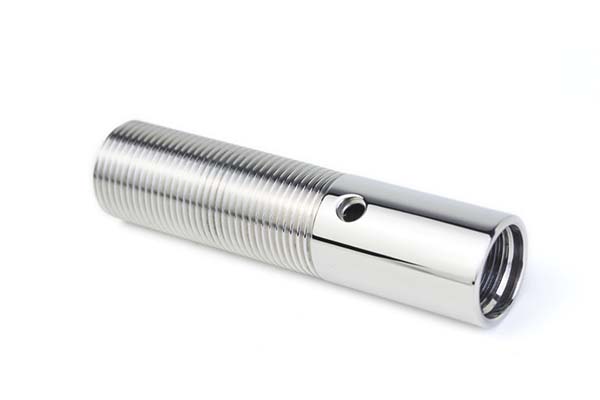
Choosing a machined bar isn’t just about picking a metal stick. It’s about finding the perfect match between your application’s demands and the material’s hidden properties. This guide walks you through the logic engineers use, from basic definitions to micron-level precision, ensuring you make a choice that balances performance, cost, and reliability.
Introduction: More Than Just a Metal Stick
Many people new to manufacturing often confuse a solid machined bar with a hollow tube. The difference is critical. A bar is solid. It forms the backbone of countless products, from the landing gear on an aircraft to the tiny connectors inside your phone. The quality of this raw material directly decides if your final product will fail early or perform flawlessly for years.
Understanding the machining principle is simple: it’s the process of removing material—through cutting, grinding, or turning—to achieve an exact shape. But the real challenge lies in selecting a bar that can withstand this process and still meet your final needs.
What Defines a Machined Bar?
What Are the Core Parameters?
The specifications of a bar are its identity card. You need to check three things first:
- Diameter: Typically ranges from 6mm to 500mm. The tolerance here is key. For a standard project, ±0.1mm might be fine. For an aerospace component, the tolerance might need to be within ±0.02mm.
- Length: Standard lengths are usually 1m to 6m, but almost all suppliers offer custom cuts.
- Shape: The cross-section can be round, square, or hexagonal. Round bars are the most common for turning operations.
Solid vs. Hollow: Why Does It Matter?
The core difference between a bar and a tube is structural integrity. A solid bar handles torsional stress better. A real-world example: a manufacturer once used a hollow tube for a high-torque drive shaft. It twisted and failed. Switching to a solid high-strength alloy steel bar solved the problem immediately.
Which Material Is Right for You?
This is where most decisions are made. The material’s properties dictate its performance.
A Quick Material Comparison
| Material Type | Representative Grade | Core Performance Metrics | Best For |
|---|---|---|---|
| Stainless Steel | 304 / 316L | Excellent corrosion resistance, tensile strength 480-620 MPa | Food machinery, marine equipment, chemical plants |
| Chromium Zirconium Copper | C18150 | High conductivity 75-83% IACS, high softening point | Welding tips, electronic connectors, circuit breakers |
| High-Strength Alloy Steel | 4140 / Ti-6Al-4V | Very high strength-to-weight ratio, tensile up to 1400 MPa | Aerospace landing gear, engine parts, structural components |
Understanding Material Microstructure
It’s not just about the name; it’s about what’s inside. The austenitic structure of stainless steel gives it its corrosion resistance. The fine grain of chromium zirconium copper allows it to conduct electricity efficiently. For titanium alloys, the α+β duplex structure offers a perfect balance of strength and formability.
A practical case: An electronics firm used ordinary carbon steel for a high-current connector. The part overheated. By switching to chrome-zirconium copper (with conductivity >75% IACS and a softening point above 475°C), the heat issue vanished, and the product passed safety tests.
How Are These Bars Made?
The manufacturing process affects the bar’s internal structure and final cost.
Hot Rolling vs. Cold Drawing
The way a bar is formed changes its properties.
- Hot-Rolled Bars: These are formed at high temperatures. They are great for large diameters (>100mm) and applications where tight tolerances aren’t the main concern. The four-roll rolling technology used here is efficient and strengthens the metal’s core.
- Cold-Drawn Bars: This process pulls the bar through a die at room temperature. It creates a smoother surface and much tighter tolerances (up to ±0.01mm). This is essential for medical devices and precision hydraulic cylinders.
The Role of Heat Treatment
A bar’s performance isn’t fixed after forming. Heat treatment is a critical step that fine-tunes its properties.
- Solution Treatment: Increases strength.
- Annealing: Optimizes toughness, making the bar easier to machine.
- Aging Treatment: Provides a balanced mix of strength and hardness.
What About Quality and Precision?
Even the best material fails without proper quality control and machining.
Key Quality Checks
International standards exist for a reason. For steel bars, you follow GB/T 4162-2022. For titanium, it’s GB/T 40324-2021. A key parameter to check is straightness. If a bar is bent more than 0.2mm per meter, it will cause vibration during CNC machining, ruining the final part’s accuracy.
Non-Destructive Testing (NDT)
You can’t always see defects. That’s why we use NDT. Here are the common methods:
- Ultrasonic Testing (UT): Finds internal flaws, like tiny cracks or inclusions as small as 0.1mm.
- Eddy Current Testing (ET): Scans the surface for defects in conductive materials.
- Metallographic Inspection: Looks at the microstructure to confirm heat treatment was done correctly.
For example, an aerospace supplier once found a 0.3mm internal inclusion in a titanium bar using ultrasonic testing. Catching this early prevented a potential in-flight failure.
Achieving Micron-Level Accuracy
Modern manufacturing demands extreme precision. CNC Swiss lathes are the standard here, offering tolerance control as tight as ±0.002mm. To achieve this, you must manage:
- Thermal Deformation: Use a constant-temperature workshop (temperature variance under ±1°C).
- Vibration: Use anti-vibration tool holders.
- Tool Wear: Monitor tool wear and replace it if it exceeds 0.005mm.
Where Are They Used?
Aerospace: The Ultimate Test
The aerospace sector demands the highest reliability. The Airbus A350 uses machined Ti-6Al-4V titanium bars for its airframe. This single material choice reduces weight by 12%, saving roughly 300 tons of fuel per aircraft annually.
Automotive: Everyday Reliability
In your car, the engine crankshaft is made from a high-strength alloy steel bar. After quenching and tempering, it achieves a hardness of HRC28-32, ensuring it can last for over a million kilometers.
Medical Devices: Precision and Safety
For surgical instruments, the bar must be perfectly smooth, with a surface roughness of Ra ≤ 0.2μm, to ensure sterility and prevent tissue damage. For implants, the titanium bar must meet strict ISO 13485 medical standards to guarantee biocompatibility.
Conclusion
Choosing the right machined bar is a systematic process of matching material properties with application demands. You start with the basics—diameter, shape, material type—then dive deeper into manufacturing processes, heat treatment, and quality control. By understanding these layers, you can avoid common failures like overheating connectors or twisted shafts. The goal is simple: find the bar that delivers the performance you need without paying for features you don’t.
FAQ
How do I select the best material for my machined bar?
First, define your environment. For high-temperature applications, choose a superalloy or titanium. For corrosive environments, stainless steel is your best bet. If you need high electrical conductivity, copper alloys like chromium zirconium are ideal.
What’s the real difference between cold-drawn and cold-rolled bars?
Cold-drawn bars offer higher precision (tolerances as tight as ±0.01mm) and are best for small-diameter, high-accuracy parts. Cold-rolled bars are more efficient for medium to large diameters and produce a denser surface finish.
What dimensional tolerances can I expect?
It depends on the process. Standard machining holds about ±0.05mm. Precision machining can achieve ±0.005mm. If you use a CNC Swiss lathe, you can reach tolerances as tight as ±0.002mm.
Why is non-destructive testing important for bars?
NDT methods like ultrasonic flaw detection find hidden internal defects—such as cracks, inclusions, or porosity—that you can’t see with the naked eye. This prevents material failures during machining or in the final application.
Why are chrome zirconium copper bars preferred for electronics?
They offer a rare combination of high strength and high conductivity (>75% IACS). Plus, their high softening point (≥475°C) means they won’t deform under the heat generated by high electrical currents.
Contact Yigu Technology for Custom Manufacturing
Selecting the right material is just the first step. At Yigu Technology, we specialize in turning your specifications into reality. Whether you need precision-machined titanium bars for aerospace or high-conductivity copper alloys for electronics, our team provides end-to-end solutions.
We combine advanced CNC Swiss machining with rigorous in-house quality control to ensure every part meets your exact tolerances. Don’t settle for standard when you need custom.
Contact Yigu Technology today to discuss your project requirements.