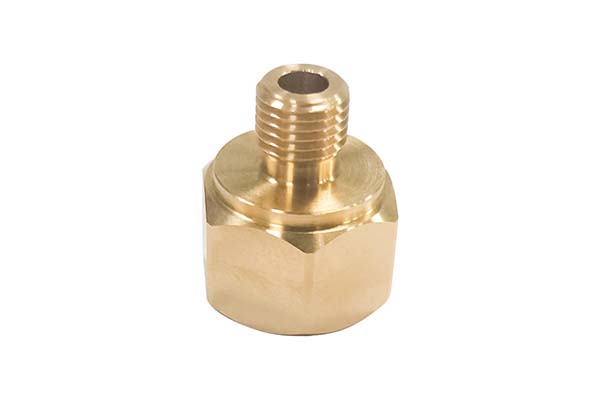
Introduction
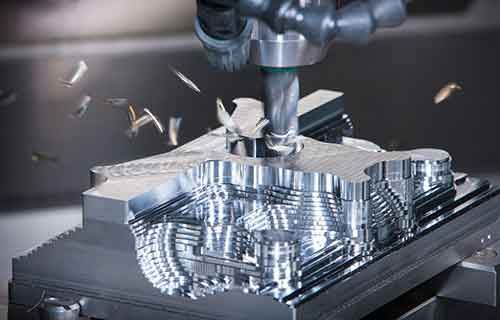
To master brass machining, you must first understand the material itself. As a copper-zinc alloy, different brass alloy types and brass grades directly determine processing difficulty and applicable scenarios. This guide covers everything from material properties and process parameters to tool selection, cost optimization, and real-world applications—helping you achieve efficient, high-quality brass machining.
How Do Material Properties Influence Machining Choices?
Common Brass Grades and Their Characteristics
| Grade | Composition | Machinability | Typical Applications |
|---|---|---|---|
| H62 brass | 62% copper, 38% zinc | Medium | General engineering |
| HPb59-1 lead brass | ~1% lead content | Excellent (improves cutting performance) | Machined components, fittings |
| C28000 (lead-free brass) | Copper-zinc | Requires tool wear control | Drinking water pipelines, medical devices |
Key Material Properties
| Property | Value | Machining Implication |
|---|---|---|
| Tensile strength | 200 – 400 MPa | Moderate strength; cuts cleanly |
| Hardness | HB 60 – 100 | Softer than steel; lower cutting forces |
| Cutting resistance | 60% of medium carbon steel | Enables high-speed machining |
| Corrosion resistance | Better than pure copper | Suitable for humid environments |
| Electrical conductivity | ~2/3 of pure copper | Ideal for electronics applications |
| Recycling value | Up to 80% of raw material price | Significant economic benefit |
Case study: An electronic component factory initially selected the wrong material, resulting in low processing efficiency. After switching to HPb59-1 lead brass based on material selection guidelines, production efficiency increased by 30% .
What Are the Core Advantages of Brass Machining?
High-Speed Machining Capacity
| Material | Typical Cutting Speed |
|---|---|
| Brass | 300 – 600 m/min |
| Ordinary steel | 100 – 200 m/min |
Real-world result: An auto parts factory increased brass spool machining speed from 400 m/min to 550 m/min, reducing cycle time by 25% and increasing daily output from 800 to 1,000 pieces.
Cost Optimization
| Advantage | Impact |
|---|---|
| Extended tool life | Brass chips break easily; non-stick; tool life 2–3× longer than steel; tooling cost 1/3 of stainless steel |
| Simple chip control | No additional chip entanglement issues; reduces labor costs |
| Recycling benefits | Scrap recovery covers 15–20% of raw material costs |
| Overall unit cost | Reduced; increased return on investment |
How Do You Set Key Process Parameters?
Recommended Parameters by Operation
| Process | Cutting Speed (m/min) | Feed Rate (mm/r) | Depth of Cut (mm) | Key Considerations |
|---|---|---|---|---|
| Turning | 300 – 600 | 0.1 – 0.3 | 1 – 3 | High speed, low feed ensures smooth surfaces |
| Milling | 200 – 400 | 0.05 – 0.2 | 0.5 – 2 | Use climb milling to reduce vibration |
| Drilling | 150 – 300 | 0.08 – 0.25 | ≤5 mm per pass | Cobalt-containing drills avoid hole diameter shift |
Parameter Matching Example
For turning a φ50 mm brass bar with cutting speed 500 m/min:
- Spindle speed: ( N = \frac{500}{\pi \times 0.050} \approx 3,183 \text{ RPM} )
- Feed rate: 0.2 mm/r
- Result: Surface roughness Ra ≤ 1.6 μm
Coolant Application
| Coolant Type | Benefit |
|---|---|
| Emulsion or cutting oil | Reduces cutting temperature 30–40%; reduces tool wear and workpiece deformation |
Case study: A sanitary hardware factory experienced surface scratches due to no coolant. After adding specialized brass cutting fluid, surface quality pass rate increased from 85% to 98% .
How Do You Select Tool Technology to Extend Life and Reduce Costs?
Tool Geometry
| Parameter | Recommendation | Benefit |
|---|---|---|
| Rake angle | 15° – 20° (large) | Reduces cutting force |
| Cutting edge | Sharp | Clean cuts |
| Edge radius (finishing) | 0.05 – 0.1 mm | Suitable for precision work |
| Edge radius (roughing) | 0.1 – 0.2 mm | Suitable for heavy cuts |
Tool Material
| Tool Material | Advantage |
|---|---|
| Carbide tools | 3× harder than HSS; 5× longer tool life in brass machining; ideal for high-volume production |
| HSS tools | Suitable for low-volume work |
Tool Coatings
| Coating | Application |
|---|---|
| TiN | Good lubricity; suitable for general processing |
| AlTiN | High-temperature resistance; suitable for high-speed processing |
Case study: A medical device factory replaced ordinary HSS tools with TiN-coated carbide tools. Parts machined per tool increased from 200 to 1,200 .
Tool Vibration Control
Optimize tool clamping method and machining path to suppress vibration, reducing cutting force difficulty and avoiding surface chatter marks.
How Does Brass Compare with Other Metals?
| Comparison | Brass | Steel | Aluminum | Stainless Steel |
|---|---|---|---|---|
| Cutting speed | 300–600 m/min | 100–200 m/min | 400–800 m/min | 80–150 m/min |
| Tool life | Long (2–3× steel) | Medium | Longer (but sticky) | Short |
| Processing cost | Low | Medium | Medium | High |
| Corrosion resistance | Good | General (needs rust prevention) | Good (oxide protection) | Excellent |
Material Replacement Considerations
| Scenario | Recommendation |
|---|---|
| Cost and efficiency priority | Brass ideal substitute for steel—industrial parts factory replaced stainless steel gears with brass gears: 50% production efficiency increase; 30% cost reduction |
| Lightweight requirement | Aluminum advantageous; address chip adhesion issues |
| Extreme corrosion resistance | Stainless steel more suitable |
Where Is Brass Machining Applied?
| Industry | Applications | Why Brass? |
|---|---|---|
| Sanitary hardware | Faucet valve spools, shower joints | Corrosion resistance; machinability; complex thread processing; service life 500,000 switches |
| Auto parts | Fuel nozzles, gearbox gears | High-speed machining meets mass production; daily output up to 20,000 pieces |
| Electronic connectors | Precision components | Excellent conductivity; processing accuracy ±0.01 mm |
| Aerospace | Structural parts, connectors | Lightweight, fatigue resistance; high stability ensures consistency |
| Medical devices | Infusion set fittings, surgical instruments | Lead-free grades; biocompatibility; surface roughness Ra ≤0.8 μm |
What Are Best Practices for Brass Machining?
Parameter Optimization Case
Challenge: Electronic component factory processing brass connectors—initial cutting speed 200 m/min resulted in low efficiency.
Solution: Adjusted to 450 m/min, feed rate 0.15 mm/r, depth of cut 1.5 mm.
Result: Production capacity increased 80% ; defect rate reduced from 3% to 0.5% .
Tool Selection Guide
| Operation | Tool Recommendation |
|---|---|
| Roughing | Carbide indexable tools; edge radius 0.2 mm for large cutting volumes |
| Finishing | Diamond-coated tools for surface accuracy |
| Deep hole machining | Internally cooled drill bits with high-pressure coolant to avoid edge buildup |
Troubleshooting Methods
| Issue | Solution |
|---|---|
| Rough surface | Increase cutting speed; reduce feed rate; check tool edge wear |
| Rapid tool wear | Replace with coated tools; increase coolant flow; reduce depth of cut |
| Workpiece deformation | Use fixture positioning; reduce clamping force; machine in multiple passes |
Cost Control Strategy
| Strategy | Benefit |
|---|---|
| Scrap recycling | Centralized chip collection; brass chips ≥99% purity recycled up to 70% of raw material value |
| Tool reuse | Regrind worn tools for 2–3 additional uses |
| Batch processing | Reasonable production scheduling; reduce tool change and adjustment time |
What Is Yigu Technology’s Perspective?
The core competitiveness of brass machining lies in balancing high efficiency, low cost, and high adaptability —key to its long-term success in manufacturing. With increasing demand for lead-free and precision applications, manufacturers should focus on three areas:
| Focus Area | Strategy |
|---|---|
| Material selection | Choose appropriate brass grade (lead-free for medical, leaded for general) |
| Process optimization | Parameter tuning for efficiency and quality |
| Tool upgrades | Coated carbide for extended life |
Recommendations:
- Small and medium enterprises: Prioritize parameter optimization and tool selection—achieve efficiency gains without large equipment investment.
- Large enterprises: Explore automated processing and digital management to further reduce labor costs.
Future trends: Brass machining will move toward green (lead-free, energy-saving), precision (micron-level accuracy), and intelligence (automated production lines). Enterprises that invest early will gain greater competitive advantages.
FAQs
What should I do if the tool sticks when machining brass?
Increase cutting speed (≥350 m/min ), use TiN or diamond-coated tools , add specialized cutting fluid, and use climb milling to effectively solve tool sticking.
What is the difference between lead-free brass and leaded brass machining?
Lead-free brass has slightly higher cutting resistance and faster tool wear—reduce depth of cut (≤1 mm) and use sharper tools. Leaded brass has better cutting performance—higher speeds and feed rates are possible.
How do you control dimensional accuracy in brass machining?
Choose stable machine tools, use constant temperature processing environment (temperature fluctuation ≤±2°C), separate roughing and finishing, control finishing allowance at 0.2–0.5 mm , and calibrate tools and measuring tools regularly.
How do you choose coolant for brass machining?
Emulsion (5–10% concentration) for general processing; extreme pressure cutting oil for finishing; high-pressure coolant (≥10 MPa) for deep hole machining; environmentally friendly coolant required for lead-free brass processing.
Contact Yigu Technology for Custom Manufacturing
At Yigu Technology , we specialize in efficient, high-quality brass machining. Our 3-axis, 4-axis, and 5-axis CNC machines achieve cutting speeds up to 600 m/min with TiN-coated carbide tools for extended tool life. We work with leaded brass (HPb59-1) and lead-free brass (C28000) for sanitary, automotive, electronics, and medical applications. We provide DFM feedback to optimize your designs for manufacturability—and parameter optimization to balance efficiency, quality, and cost.
Ready to optimize your brass machining? Contact Yigu Technology today for a free consultation and quote. Let us help you achieve high efficiency, low cost, and precision in every brass component.