Discover how 3D printing is transforming plastic manufacturing—from rapid prototyping to custom medical devices. Learn about FDM, SLA, SLS technologies and real-world applications.
Introduction
3D printing has quietly revolutionized how we work with plastic. What started as a niche tool for prototyping has grown into a manufacturing force that touches nearly every industry. Today, you can print everything from a simple phone case to a complex medical implant—all in plastic, all built layer by layer.
But here's what many people miss: 3D printing with plastic isn't just about making things faster or cheaper. It's about making things differently. Designs that were impossible to mold or machine become practical. Products that required expensive tooling now print on demand. And customization? That's no longer a luxury—it's becoming the norm.
This guide explores how plastic 3D printing is transforming manufacturing, the technologies driving this change, and what it means for designers, engineers, and businesses. Whether you're new to additive manufacturing or looking to deepen your understanding, you'll see why plastic has become the material of choice for this revolution.
Why Plastic? The Perfect Match for 3D Printing
What Makes Plastic So Suitable?
Plastic dominates 3D printing for good reasons. First, it's affordable. A kilogram of filament costs $20-50. Compare that to metal powders at $100-600 per kilogram, and the economics become clear. For prototyping and many end-use applications, plastic delivers the best value.
Second, plastic is versatile. It melts at reasonable temperatures (150-300°C), flows well through nozzles, and bonds to itself reliably. This makes printing predictable and repeatable.
Third, the range of plastic materials available keeps expanding:
| Plastic Type | Key Properties | Common Applications |
|---|---|---|
| PLA | Biodegradable, easy to print, low warping | Prototypes, educational, decorative |
| ABS | Strong, impact-resistant, heat-tolerant | Functional parts, automotive, electronics |
| PETG | Strong, slightly flexible, chemical-resistant | Mechanical parts, containers, outdoor |
| Nylon | Very strong, wear-resistant, durable | Gears, tools, structural components |
| TPU/TPE | Rubber-like flexibility | Gaskets, phone cases, soft grips |
| Polycarbonate | High strength, heat-resistant | Engineering prototypes, tooling |
| PEEK/PEKK | High-performance, medical-grade | Implants, aerospace, high-temp |
How Does Plastic Enable Design Freedom?
Design freedom is where plastic truly shines. With traditional manufacturing, every design choice has cost implications:
- Undercuts require complex molds
- Internal channels need special tooling
- Organic shapes demand multi-axis machining
With 3D printing, complexity is free. A simple cube and an intricate lattice structure cost about the same to print. This changes how designers think. Instead of designing for manufacturability, they design for function.
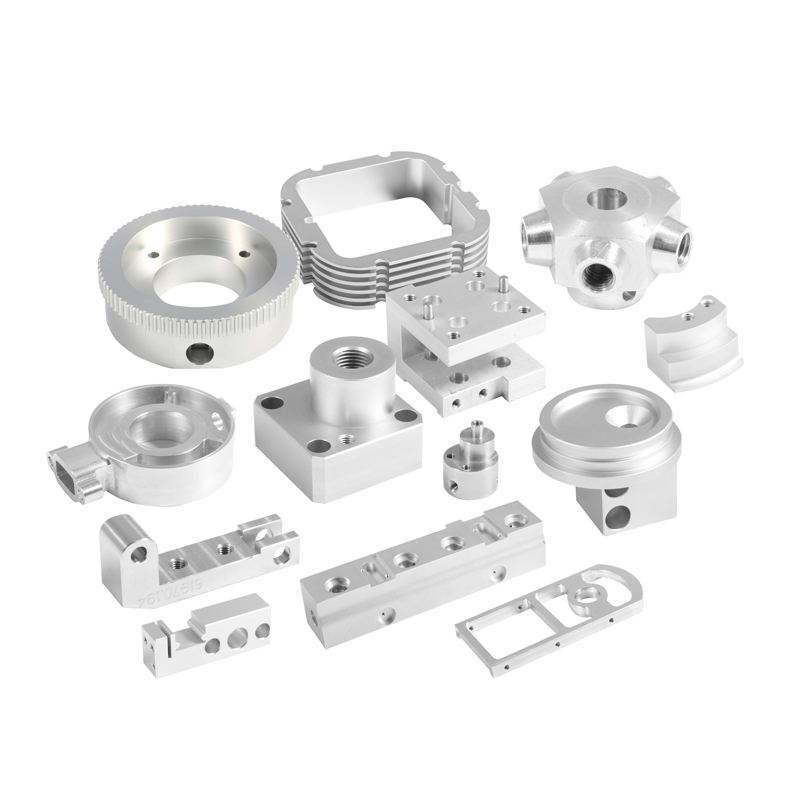
A client recently designed a hydraulic manifold that consolidated 12 separate parts into one printed piece. The plastic prototype cost $200 and took 3 days. The traditional machined version would cost $4,000 and take 4 weeks. And because they prototyped in plastic first, they caught interference issues before committing to metal production.
What Technologies Drive Plastic 3D Printing?
FDM: The Workhorse of Plastic Printing
Fused Deposition Modeling (FDM)—also called Fused Filament Fabrication (FFF)—is the most common 3D printing technology for plastic. Here's how it works:
A spool of plastic filament feeds into a heated nozzle. The nozzle melts the plastic (typically 200-260°C depending on material) and moves in X and Y coordinates, depositing the melted plastic onto the build platform. The plastic cools and solidifies almost immediately. Then the platform drops slightly, and the next layer builds on top.
Why FDM dominates:
- Low cost: Printers start at $200 for hobbyist models
- Material variety: Dozens of filament types available
- Large sizes: Industrial FDM prints parts over 1 meter
- Simplicity: Easy to learn and maintain
Limitations:
- Visible layer lines
- Weaker bonding between layers
- Less detail than resin processes
A small business we work with prints assembly line fixtures on FDM machines. They design a fixture in the morning, print overnight, and use it on the line the next day. Cost per fixture: $15-40. Machined aluminum fixtures would cost $300-500 and take weeks.
SLA: Precision for Detailed Work
Stereolithography (SLA) takes a completely different approach. Instead of melting plastic, it uses a UV laser to cure liquid photopolymer resin into solid plastic.
The process: A build platform sits in a vat of liquid resin. The laser traces each layer's shape, curing the resin wherever it hits. The platform lifts slightly, fresh resin flows underneath, and the laser cures the next layer.
Where SLA excels:
- Exceptional detail: Layer heights down to 0.025 mm
- Smooth surfaces: Minimal visible layer lines
- Complex geometries: Intricate features print cleanly
- Wide resin options: Tough, flexible, castable, high-temp
Best applications:
- Jewelry patterns for investment casting
- Dental models and surgical guides
- Detailed prototypes for consumer products
- Artistic sculptures and miniatures
A dental lab we partner with prints crown models on SLA machines. The precision ensures perfect fit for patients, and the smooth surface means no sanding or finishing before use. They produce 50+ models daily, each customized to individual patient scans.
SLS: Industrial Strength Without Supports
Selective Laser Sintering (SLS) represents the high end of plastic 3D printing. It uses a laser to fuse plastic powder particles together, layer by layer.
Key differentiator: No support structures needed. The unsintered powder naturally supports overhangs and complex shapes. This allows geometries impossible with FDM or SLA—internal channels, nesting parts, living hinges.
Why industries choose SLS:
- Strength: Parts approach injection-molded properties
- Complexity: Design without support constraints
- Durability: Nylon parts resist wear and chemicals
- Batch production: Multiple parts print in one run
Typical applications:
- Functional prototypes for testing
- End-use parts for low-to-medium production
- Aerospace and automotive components
- Medical devices and surgical tools
An aerospace client uses SLS for air duct prototypes. The nylon parts survive engine bay temperatures and vibration testing, allowing real-world validation before metal production. Each prototype costs 80% less than machined alternatives.
Technology Comparison: Which Should You Choose?
| Factor | FDM | SLA | SLS |
|---|---|---|---|
| Detail | Moderate | Excellent | Good |
| Surface finish | Rough, layer lines | Smooth | Matte, slightly grainy |
| Strength | Good (directional) | Moderate | Excellent (isotropic) |
| Support needed | Yes | Yes | No |
| Build size | Small to very large | Small to medium | Medium |
| Material cost | Low ($20-50/kg) | Medium ($50-150/L) | High ($60-120/kg) |
| Equipment cost | $200-$100k+ | $500-$150k+ | $10k-$500k+ |
| Ease of use | Very easy | Moderate | Complex |
Where Is 3D-Printed Plastic Transforming Industries?
Rapid Prototyping: Speed That Changes Everything
Rapid prototyping was 3D printing's first killer app, and it remains one of the most transformative uses. The ability to go from CAD to physical part in hours instead of weeks changes how products develop.
Consider a consumer electronics company designing a new smartwatch:
- Traditional: Design, send to model maker (2 weeks), receive prototype, discover ergonomic issues, repeat (another 2 weeks). Four weeks for one iteration.
- With 3D printing: Design, print overnight, test in morning, modify design (1 day), print again overnight. Two days for two iterations.
That speed means more design cycles, better products, and faster time-to-market. A startup we worked with iterated their smart home device through 12 design versions in 3 weeks—all printed in PLA on desktop FDM printers. By week 4, they had a design ready for tooling, with ergonomics and fit validated by real users.
Custom Consumer Goods: Personalization at Scale
Customization used to mean high prices and long waits. Not anymore. 3D-printed plastic enables personalization without premium costs.
Phone cases: Upload a photo, add text, design your pattern—print on demand. No inventory, no minimum quantities.
Eyewear: Companies now scan customers' faces and print custom-fit frames. Better fit, more comfort, unique style.
Footwear: Custom insoles printed to match individual foot shapes. Major athletic brands use 3D printing for limited-run custom shoes.
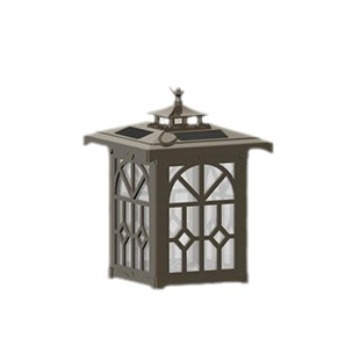
Home decor: Lamps, vases, wall art—all customizable. A homeowner can design a pendant light that matches their exact space, print it, and install it within days.
A furniture designer we know creates custom lamp shades for interior designers. Each shade matches the client's space perfectly—size, shape, color, pattern. Traditional manufacturing would require expensive molds for each design. 3D printing makes each one unique at standard pricing.
Healthcare: Patient-Specific Solutions
Healthcare has embraced plastic 3D printing for applications where "one size fits all" simply doesn't work.
Surgical guides: Before complex procedures, surgeons now print custom guides that fit precisely on a patient's anatomy. These guides show exactly where to cut, improving accuracy and reducing operating time. A cranial surgeon we work with prints guides for pediatric skull reconstruction—each guide unique to the child's anatomy.
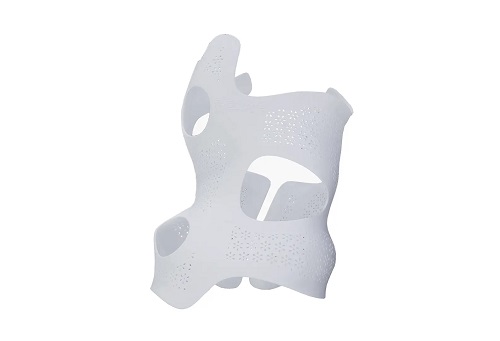
Prosthetics: Traditional prosthetics require extensive fitting and adjustment. 3D-printed sockets match the patient's residual limb perfectly, improving comfort and function. And because they're printed, adjustments are simple file changes rather than complete refabrication.
Orthotics: Custom insoles, braces, and supports print to match individual biomechanics. A patient with foot pain gets insoles designed for their specific gait pattern, printed in flexible TPU that provides exactly the right support.
Anatomical models: Surgeons practice on 3D-printed models of patient-specific anatomy before entering the operating room. A heart surgeon can hold a replica of a patient's malformed valve, plan the repair, and reduce surprises during surgery.
A hospital reported that using 3D-printed surgical guides reduced operating time for complex joint replacements by 30 minutes on average. At $100 per minute of operating time, that's $3,000 savings per case—plus better patient outcomes.
Automotive and Aerospace: Lightweight and Complex
Automotive and aerospace industries push materials to their limits. 3D-printed plastic helps them meet demanding requirements.
Prototyping: New designs print in days, test in real conditions, iterate quickly. A Formula 1 team prints airflow sensors and pressure taps for wind tunnel testing—complex geometries that would take weeks to machine.
Tooling: Assembly fixtures, jigs, and workholders print on demand. When a line changes, new fixtures print overnight. No downtime waiting for machined tools.
End-use parts: For low-volume vehicles or replacement parts, 3D printing makes sense. Classic car restoration uses printed parts for components no longer available. Luxury automakers offer printed custom trim pieces.
Weight reduction: Lattice structures replace solid plastic, saving grams that add up across thousands of vehicles. Every kilogram saved improves fuel efficiency.
An automotive supplier printed assembly line grippers in carbon-fiber-reinforced nylon. The grippers lasted 3x longer than machined aluminum versions, weighed 60% less (reducing robot load), and cost 80% less to produce.
Art and Education: Fueling Creativity
Beyond industry, 3D-printed plastic has become a creative tool for artists and educators.
Artists: Sculptors design on screen, print in plastic, and finish with traditional techniques. The medium enables forms impossible with clay or stone—interconnected lattices, impossibly thin walls, mathematically generated shapes.
Educators: STEM classes use printed models to teach complex concepts. Biology students hold printed organs. Engineering students design and test printed mechanisms. History classes print artifacts for hands-on study.
Makers: Hobbyists and tinkerers bring ideas to life. A maker prints a custom bracket for their bike, a replacement knob for an old radio, a cosplay helmet for a convention. The barrier between idea and object has never been lower.
A high school teacher we know uses 3D printing to teach product design. Students sketch ideas, model in CAD, print prototypes, test, and refine. They learn that failure is part of design—and that iteration leads to better outcomes. Several of his students have gone on to engineering and industrial design programs.
What's the Future of Plastic 3D Printing?
Materials Keep Expanding
New plastics enter the market regularly:
- High-temperature materials for engineering applications
- Bio-based plastics from renewable sources
- Recycled filaments made from waste plastic
- Composites with carbon fiber, glass, or wood
- Conductive plastics for embedded electronics
Speed Increases
Multi-head printers, continuous printing systems, and improved processes cut print times dramatically. What took 24 hours now takes 8. Production volumes that weren't economical become practical.
Size Grows
Large-format FDM printers now handle parts over 2 meters. Boat hulls, architectural elements, and furniture print as single pieces rather than assemblies.
Integration Expands
Printed parts combine with electronics, sensors, and mechanical components during printing. A part with embedded wiring or integrated bearings prints in one process.
Yigu Technology's Perspective
At Yigu Technology, we've watched plastic 3D printing evolve from a prototyping curiosity to a serious manufacturing tool. Our clients use it for:
- Rapid iteration during product development
- Custom parts for specialized applications
- Bridge production while tooling builds
- Legacy parts no longer available commercially
- Tooling and fixtures for their own production lines
We've seen startups go from idea to market in months instead of years. We've seen established companies slash development time and costs. And we've seen designers create things that simply couldn't exist before.
The technology isn't magic—it's a tool. Used well, it transforms how you work. Used poorly, it creates expensive plastic junk. Our role is helping clients use it well.
A recent client came to us with a medical device that needed ergonomic testing. Traditional prototyping would cost $15,000 and take 8 weeks. We printed 20 iterations in various sizes and shapes over 2 weeks—total cost $3,000. The final design, validated by real user testing, went to production with confidence.
That's the power of plastic 3D printing when applied thoughtfully.
Frequently Asked Questions
What's the strongest plastic for 3D printing?
Nylon (particularly glass-filled or carbon-filled) offers excellent strength and durability. Polycarbonate provides high impact resistance. PEEK and PEKK are high-performance materials for extreme applications. For most functional parts, nylon strikes the best balance of strength, cost, and printability.
Can 3D-printed plastic parts be used outdoors?
Yes, with material selection. ASA is specifically designed for outdoor use with UV resistance. PETG handles sun exposure reasonably well. ABS with UV-resistant additives works for many applications. For long-term outdoor exposure, consider painting or coating printed parts for additional protection.
How accurate is plastic 3D printing?
Accuracy varies by technology: FDM achieves ±0.3-0.5 mm typical, SLA reaches ±0.1-0.2 mm, SLS hits ±0.2-0.3 mm. For critical dimensions, design in extra material and machine after printing. For most prototypes and many end-use parts, standard accuracy suffices.
Is 3D-printed plastic expensive?
For single parts or small batches, it's often cheaper than traditional manufacturing. A prototype that costs $500 machined might cost $20 printed. For mass production, injection molding still wins on per-part cost. The crossover point varies but typically falls between 100-1,000 parts depending on complexity.
What can't 3D-printed plastic do?
It's not ideal for:
- Very high temperatures (above material limits)
- Extreme loads (metal still wins)
- Optical clarity (some resins are clear, but not glass)
- Food contact (some materials are food-safe, but layer lines trap bacteria)
- Very large volumes (injection molding is faster)
How do I get started with plastic 3D printing?
Start small. Identify a simple project—a replacement part, a prototype, a custom item. Choose a technology based on your needs: FDM for affordability and size, SLA for detail, or SLS for strength. Consider using a service bureau like Yigu Technology for your first projects—you'll learn without the equipment investment.
Contact Yigu Technology for Custom Manufacturing
Ready to explore how plastic 3D printing can transform your projects? At Yigu Technology, we combine deep expertise with production capabilities across FDM, SLA, and SLS technologies.
We help clients:
- Select the right process for each application
- Optimize designs for printability and performance
- Print prototypes fast for testing and iteration
- Produce small batches for pilot runs or limited products
- Transition smoothly to production when ready
Contact our team today with your CAD files or project requirements. We'll provide expert guidance, a detailed quote, and parts that meet your needs—whether that's a quick concept model or production-ready components.
Let's build something innovative together.