Introduction
Precision engineering shapes the world around us. From the smartphone in your pocket to the aircraft flying overhead, countless products rely on components made with extreme accuracy. At the heart of this manufacturing capability lies a fundamental piece of equipment: the 3-axis machining center. These machines form the foundation of modern precision manufacturing. They combine computer control with mechanical cutting to turn raw materials into finished parts with tolerances measured in hundredths of a millimeter.
This article explores how 3-axis machining centers work, why they remain essential despite newer technologies, and what they reveal about the broader field of precision engineering. By the end, you will understand their capabilities, limitations, and why they continue to dominate production floors worldwide.
How Do 3-Axis Machining Centers Actually Work?
The Three Axes Explained
A 3-axis machining center operates along three linear directions. Think of them as a precise way to position a cutting tool anywhere within a defined rectangular space.
- X-axis – Movement left and right along the length of the machine table
- Y-axis – Movement forward and backward across the table width
- Z-axis – Movement up and down, controlling cutting depth
These three movements work together. The cutting tool spins at high speed while the machine positions it exactly where needed. The workpiece stays fixed to the table. Together, this setup allows the tool to reach any point within the machine’s working envelope.
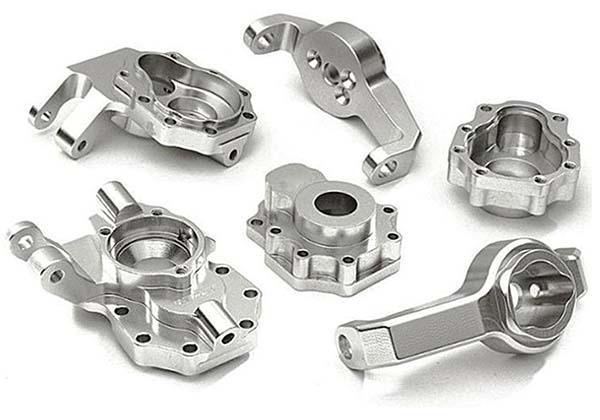
For example, imagine machining a rectangular block of aluminum into a complex bracket. The 3-axis machine can precisely carve holes, slots, and contoured surfaces by moving the tool along these three paths in carefully coordinated ways.
What Limits Does the 3-Axis Design Have?
Unlike advanced 5-axis systems, 3-axis machines cannot tilt or rotate the workpiece or tool. This means they work best for planar and cylindrical surfaces. Complex undercuts or parts requiring multiple angles often need repositioning.
However, this limitation does not reduce their importance. A well-maintained 3-axis machining center achieves repeatable tolerances of ±0.01mm. That level of accuracy meets the demands of aerospace, medical, and automotive industries every day.
What Precision Levels Can 3-Axis Machining Actually Achieve?
Surface Finish and Tolerance Compared to Traditional Methods
When comparing 3-axis machining to conventional milling, the differences in quality become clear. The table below highlights key metrics:
| Parameter | 3-Axis Machining | Conventional Milling |
|---|---|---|
| Typical Tolerance | ±0.01mm | ±0.05mm |
| Surface Finish (Ra) | 0.8–1.6μm | 1.6–6.3μm |
| Material Removal Rate | 50–100 cm³/min | 30–70 cm³/min |
These numbers matter in real applications. A smoother surface finish reduces friction and improves part longevity. Tighter tolerances ensure components fit together correctly without gaps or interference.
In the aerospace industry, turbine blades require finishing within strict geometric tolerances set by standards like ISO 2768. Even a deviation of 0.02mm can affect engine efficiency and fuel consumption. 3-axis machining consistently delivers the required precision.
Why Do These Numbers Matter?
Higher material removal rates mean faster production. A shop machining aluminum alloy parts can reduce cycle times by nearly 40% compared to conventional methods. This directly impacts cost and delivery schedules.
The precision also reduces secondary operations. Parts often come off the machine ready for assembly, eliminating the need for grinding or hand finishing.
Can 3-Axis Machines Handle Tough Materials?
Machining High-Strength Alloys
Modern 3-axis machining centers excel at cutting difficult materials. Titanium alloys (Ti-6Al-4V) and Inconel 718 are common in demanding industries. Both materials challenge even the best equipment due to their low thermal conductivity and work-hardening tendencies.
A 2023 study by Sandvik Coromant showed that carbide end mills with TiAlN coatings extended tool life by 30% when machining titanium alloys on 3-axis centers. The coating reduces friction and dissipates heat, allowing the tool to withstand extreme cutting conditions.
Real-World Performance
Consider a manufacturer producing aerospace brackets from Inconel 718. Using a 3-axis machining center with high-pressure coolant and optimized toolpaths, they achieved consistent results without excessive tool wear. The rigidity of the machine structure maintained stability despite the high cutting forces.
This capability makes 3-axis centers invaluable for shops working with high-strength materials. They combine affordability with the precision required for critical components.
What Do Real-World Applications Reveal?
Case Study: Fighter Jet Brackets at Lockheed Martin
Lockheed Martin faced a challenge with fighter jet bracket production. Traditional methods required multiple setups and significant manual work. Development times stretched, and accuracy suffered.
By switching to 3-axis machining centers, they achieved remarkable results:
- 45% reduction in development time
- Concentricity within 0.005mm – far surpassing legacy methods
- Consistent surface finish across all production batches
The single-setup capability eliminated repositioning errors. The CNC system ensured every bracket met the same high standard. For fighter jets, where structural integrity is critical, this precision translates directly to safety and performance.
Case Study: Orthopedic Screws with 0.002mm Thread Accuracy
In medical device manufacturing, precision saves lives. A 2024 study examined orthopedic screws produced on 3-axis micromachining centers. These screws achieved thread pitch accuracy of 0.002mm.
The results were significant. Patients receiving these high-precision screws showed 20% faster bone integration compared to those with conventionally made implants. Faster integration means shorter recovery times and reduced risk of complications.
This example shows how 3-axis machining directly impacts patient outcomes. The combination of advanced CNC controls and high-resolution motion feedback enables this level of precision.
How Does 3-Axis Compare to 5-Axis Technology?
Cost vs. Capability Analysis
Many shops face the decision between 3-axis and 5-axis equipment. The choice depends on part complexity, volume, and budget.
| Factor | 3-Axis Machining Center | 5-Axis Machining Center |
|---|---|---|
| Initial Cost | 30–50% lower | Higher investment |
| Maintenance Cost | Lower | Higher due to complexity |
| Setup Complexity | Simpler | Requires advanced programming |
| Best Application | High-volume, simpler parts | Complex freeform surfaces |
| Typical Industries | Automotive, general manufacturing | Aerospace, medical implants |
For many manufacturers, 3-axis centers offer the better value. They handle the majority of parts while requiring less specialized operator training. A shop can purchase two 3-axis machines for the price of one 5-axis system, doubling production capacity.
When Does 5-Axis Make Sense?
Complex parts with undercuts, compound angles, or freeform surfaces benefit from 5-axis capability. Aerospace impellers, turbine blades, and certain medical implants often require the additional axes.
However, even in these cases, 3-axis machines frequently perform the initial roughing and finishing operations. The two technologies complement each other rather than compete.
What Does the Future Hold for 3-Axis Machining?
Automation and Industry 4.0 Integration
3-axis machining centers are evolving. Modern machines integrate with automated pallet systems, robotic loaders, and real-time monitoring software.
A typical lights-out manufacturing setup might include:
- A 3-axis machining center
- A six-axis robot for part loading
- An automated pallet storage system
- Remote monitoring software tracking tool wear and spindle load
These systems run unattended for hours or even full shifts. The precision of 3-axis machining remains consistent regardless of operator presence.
Hybrid Manufacturing
Some manufacturers are combining 3-axis machining with additive manufacturing. A part may be 3D printed near-net shape, then finished on a 3-axis machining center to achieve final tolerances. This approach reduces material waste while maintaining precision.
Conclusion
3-axis machining centers reveal a fundamental truth about precision engineering: consistent accuracy at scale matters more than theoretical maximum capability. These machines deliver reliable results across industries, from aerospace brackets to medical screws. They handle tough materials, achieve tight tolerances, and integrate with modern automation.
While 5-axis technology offers additional flexibility, 3-axis centers remain the workhorses of precision manufacturing. Their balance of cost, capability, and reliability makes them essential for shops producing high-quality parts efficiently. Understanding their strengths and limitations helps engineers and manufacturers make better decisions about equipment and processes.
FAQ
Can 3-axis machines create complex 3D shapes?
Yes, using advanced toolpath strategies like trochoidal milling and high-speed machining. However, parts with severe undercuts or freeform surfaces may require 5-axis equipment.
How do I maintain precision on a 3-axis machining center?
Regular calibration to ISO 10791-7 standards, spindle thermal stabilization, and rigid fixturing are essential. Annual laser alignment checks help maintain positioning accuracy.
What is the typical lifespan of a 3-axis machining center?
With proper maintenance, these machines often operate reliably for 15–20 years. Many shops run machines from the early 2000s that still hold tolerances within specification.
Which materials are easiest to machine on 3-axis centers?
Aluminum alloys, brass, and mild steels are straightforward. With proper tooling and parameters, titanium, stainless steel, and Inconel are also successfully machined.
When should I choose 3-axis over 5-axis?
Choose 3-axis for high-volume production of prismatic parts, when budgets are limited, or when operator skill levels vary. 5-axis is best for complex parts requiring multiple angles in one setup.
Contact Yigu Technology for Custom Manufacturing
At Yigu Technology, we specialize in precision manufacturing solutions tailored to your specific needs. Our experienced engineering team works with 3-axis, 4-axis, and 5-axis machining centers to deliver components that meet the tightest tolerances. Whether you need aerospace-grade brackets, medical implants, or high-volume automotive parts, we combine technical expertise with quality control to ensure every part meets specifications.
Contact us today to discuss your custom manufacturing requirements. Let our team help you select the right machining strategy for your project.