1. Precision machining: the "cornerstone of precision" of modern industry
Are you curious about how the core components of aerospace and the fine structure of medical equipment are manufactured with micron-level precision? This is inseparable from the technical support of precision machining companies. Precision machining refers to the processing of raw materials into parts that meet strict dimensional tolerances and surface quality requirements through specialized equipment and processes, with an accuracy of usually reaching ±0.001mm, which is an indispensable link in high-end manufacturing.
In the automotive industry, precision-machined engine pistons can reduce fuel consumption by 3%-5%; In the semiconductor field, micron-scale chip pin processing directly determines the upper limit of the performance of electronic products. According to the Global Precision Manufacturing Industry Report, the global precision machining market will exceed $800 billion in 2024, with a compound annual growth rate of 7.2%, which shows its core position in the industrial system.
2. The core technology and process of precision machining: the "behind-the-scenes" of precision
1. CNC Machining: The "Universal Cornerstone" of Precision Manufacturing
CNC machining (Computer Numerical Control Machining) is the core technology of precision machining, which controls machine tools through computer programs to complete automatic processing, which improves accuracy by more than 10 times and production efficiency by 30%-50% compared with traditional manual machining. An aviation parts company used CNC machining centers to produce aircraft landing gear components, controlling machining tolerances within ±0.005mm, and increasing the pass rate from 82% to 99.7% of traditional processes.
Its core advantage is that it can realize batch processing of complex parts, reduce human error, and is suitable for standardized parts production in aerospace, automotive, electronics and other fields. Common equipment includes CNC lathes and CNC milling machines, which can complete various machining needs such as turning, milling, and drilling.
2. 5-axis machining: "machining tools" for complex surfaces
In the face of complex curved parts such as impellers and mold cavities, five-axis machining has become the key to solving problems. It can process parts from any angle through the linkage control of three linear axes and two rotary axes of X, Y, and Z, avoiding errors caused by multiple clamping. A new energy vehicle company uses five-axis machining technology to produce motor rotors, increasing the surface processing accuracy to ±0.003mm, increasing motor efficiency by 8%.
Compared with traditional three-axis machining, the advantages of five-axis machining are significant:
| Contrast dimensions | Three-axis machining | 5-axis machining |
| Processing complexity | Suitable for simple flat / curved surfaces | Complex special-shaped parts can be processed |
| Number of clips | 2-3 times | 1 completion |
| Accuracy error | ±0.01mm | ±0.003mm |
| Production efficiency | Regular level | 40%-60% increase |
3. Milling and Turning: The "CNC Revolution" of Traditional Craftsmanship
Milling and turning are the most basic and core processes in precision machining. Milling cuts materials through rotating tools, suitable for structural processing such as planes, grooves, and gears; Turning is fed through the rotation of the workpiece with the tool to process shaft and disc parts.
When a medical equipment company produces artificial joints, it uses CNC milling to process the curved surface of the joint, and the surface roughness is controlled below Ra0.8μm to ensure compatibility after implantation into the human body. The turning process of automobile gearbox gears needs to strictly control the tooth pitch error within 0.02mm to ensure the smoothness of the transmission.
4. Ultra-precision machining and micromachining technology: "fine operation" in the micron world
The accuracy of ultra-precision machining can reach the nanometer level (0.001μm), and it is mainly used in high-end products such as semiconductor chips and optical lenses. For example, the sapphire lens of a mobile phone camera needs to be ground with an ultra-precise grinding process to ensure image clarity with a surface flatness error of less than 0.005μm.
Micromachining technology focuses on the processing of tiny parts, with parts typically ranging from 0.1-10mm in size. A MEMS sensor company uses microfabrication technology to produce pressure sensor chips, and the line width of its core structure is only 5μm, which is equivalent to 1/10 of the diameter of a hair, realizing the miniaturization and high precision of the sensor.
5. Machining Accuracy and Tolerance: The "Core Yardstick" for Measuring Quality
Machining accuracy and tolerance are key indicators to judge the quality of precision machining. Machining accuracy refers to the degree to which the actual size of the part matches the design size, and tolerance is the allowable size fluctuation range. In the aerospace field, the machining tolerance of engine blades should be controlled within ±0.002mm, otherwise it may lead to vibration hazards during high-speed rotation. Medical implants have higher tolerance requirements, usually at the level of ±0.001mm, which is directly related to patient safety.
High-quality precision machining companies will conduct 100% full inspection of each batch of products through coordinate measuring instruments, laser interferometers and other equipment to ensure that the tolerances meet customer requirements.
3. Industry application of precision machining: penetrating the "all aspects" of high-end manufacturing
1. Aerospace Component Machining: Pushing the Limits of Precision
The aerospace field has strict requirements for the reliability and precision of components, and the processing of aerospace parts needs to cope with extreme working conditions such as high temperature, high pressure, and high speed. An aero engine manufacturing enterprise cooperated with a precision machining company to use five-axis linkage machining + ultra-precision grinding process to control the shape and position tolerance of the blades at ±0.003mm, and successfully passed the limit test of 1200°C high temperature and 20000 rpm.
Common processing products include: engine blades, landing gear structural parts, satellite antenna brackets, etc., and the processing quality of these parts directly affects the safety and performance of the aircraft.
2. Precision machining of medical equipment: "precise guarantee" to protect lives
Precision machining of medical equipment requires zero defects and high biocompatibility, and the processing materials are mostly titanium alloys, medical stainless steel, etc. When an orthopedic equipment company produces artificial hip joints, the roundness error of the joint surface is less than 0.002mm through CNC turning + surface polishing process, and the service life can reach more than 25 years with ultra-slip coating treatment, which has been applied to 500,000 implant surgeries around the world.
Typical application scenarios: surgical instruments (such as minimally invasive forceps, orthopedic drills), implants (artificial joints, heart stents), core components of diagnostic equipment (CT detectors, ultrasound probes).
3. Precision components for the automotive industry: Upgraded drive performance
With the development of new energy vehicles and intelligent driving, the processing requirements of precision components in the automotive industry continue to increase. The motor shaft processing of a new energy vehicle company uses precision turning + grinding technology to control the cylindrical error of the shaft within 0.0015mm, reducing the noise of the motor by 15dB and increasing the cruising range by 5%.
Core processing products: engine pistons, gearbox gears, motor rotors, automatic driving sensor brackets, etc., precision machining can effectively improve the power, economy and safety of automobiles.
4. Electronic semiconductor processing: the "core support" of the miniaturization era
Electronic semiconductor processing is a key link in chip manufacturing, and the precision is required to reach the nanometer level. A semiconductor equipment company produces the workpiece table of the chip lithography machine, using ultra-precision processing technology to make the motion accuracy of the workpiece table reach ±0.0001mm, which is equivalent to 1/1000 of the diameter of a hair, providing a guarantee for the production of advanced process chips below 7nm.
Main applications: chip pins, circuit boards (PCBs), semiconductor packaging molds, sensor chips, etc., directly promote the development of electronic devices to miniaturization and high performance.
5. Mold manufacturing and application in the field of national defense energy
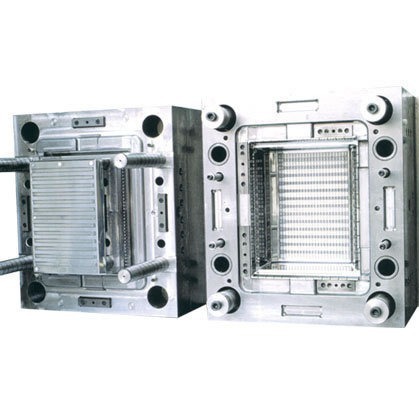
Mold manufacturing is an important scenario for precision machining, and the accuracy of the mold directly determines the quality of the product. The air conditioning shell mold of a home appliance company uses CNC milling + EDM to control the dimensional tolerance of the mold cavity to ±0.005mm, and the qualified rate of the shell produced reaches 99.5%, increasing the annual production capacity by 30%.
In the field of national defense and energy, precision machining is also indispensable. Missile guidance system components and nuclear reactor seals need to be processed with high precision to ensure stability and safety. The missile gyroscope processing of a defense company uses five-axis machining + ultra-precision detection to make the gyroscope's drift error less than 0.001°/h to ensure the accuracy of missile hits.
4. The core capabilities of high-quality precision machining enterprises: how to judge and select?
1. ISO 9001/AS9100 Certification: The "International Pass" to Quality
Formal precision machining companies must have ISO 9001 certification (General Quality Management System), while companies serving the aerospace sector must also pass AS9100 certification (aerospace industry specific certification). After a precision machining company passed the dual certification, the customer complaint rate decreased from 3.2% to 0.8%, and the proportion of international orders increased to 40%.
Certification is not only the embodiment of enterprise management norms, but also the guarantee of product quality. When selecting, it is necessary to give priority to enterprises with relevant certifications to avoid project delays caused by quality problems.
2. Inspection and Quality Control: Strictly adhere to the "Precision Lifeline"
High-quality enterprises will be equipped with complete testing equipment and quality control systems. Common testing equipment includes: three-dimensional measuring instrument (accuracy ±0.001mm), laser interferometer, roughness meter, etc. An auto parts company has established a "three-inspection system" (self-inspection, mutual inspection, and special inspection), and the testing data of each batch of products can be traced to ensure that unqualified products do not flow into the next process.
When selecting, you can ask the company's testing equipment configuration, quality control process, or even on-site inspection of the laboratory to judge its quality assurance capabilities.
3. Engineering and Design Support: The "Bridge" from Drawings to Products
Specialized precision machining companies can not only process according to drawings, but also provide engineering and design support. When developing a new sensor, an electronics company worked with a processing company to optimize the product structure, reducing processing difficulty by 30% and production costs by 15%.
The company's engineer team should have professional knowledge in materials science, mechanical design, etc., and can provide customers with suggestions such as process optimization and material selection to help customers improve product performance and reduce costs.
4. Prototype to Mass Production: Seamless "Delivery Capability"
The seamless transition from prototyping to mass production is a reflection of the company's comprehensive strength. When a medical device company develops a new product, the processing company first verifies the design through 3D printing to produce prototypes, and then quickly switches to CNC mass production, shortening the time-to-market period by 6 months.
When selecting, it is necessary to pay attention to the company's prototyping capabilities, mass production capacity, and delivery cycle to ensure that it can meet the needs of the whole process of the project from R&D to mass production.
5. Customized processing capabilities and supply chain management
Customized processing capabilities are the key to responding to individual needs. A new energy company needed to customize a special-shaped motor shell, and a precision machining company successfully achieved mass production by optimizing the five-axis machining path, with tolerances controlled within ±0.004mm to meet the special needs of customers.
At the same time, perfect supply chain management can ensure stable raw material supply and controllable costs. High-quality enterprises will establish long-term cooperation with well-known material suppliers and establish raw material inspection mechanisms to avoid affecting product quality due to material problems.
5. Yigu Technology's view
Precision machining is the core support of high-end manufacturing, and its technical level directly determines the competitiveness of products. When choosing a precision machining company, you should not only focus on price, but also comprehensively consider factors such as technical strength, quality system, and industry experience. Priority should be given to enterprises with core technology, relevant certifications, and improved testing capabilities to ensure product accuracy and delivery stability. In the future, with the integration of artificial intelligence, big data and other technologies, precision machining will develop in the direction of higher precision, higher efficiency and more intelligence, and enterprises need to continue to innovate in order to gain a foothold in market competition.
6. FAQ
- How accurate can precision machining be achieved?
A: Conventional precision machining accuracy can reach ±0.005mm, and ultra-precision machining accuracy can reach the nanometer level (±0.0001mm), depending on the process and equipment.
- What are the special requirements for precision machining in the aerospace sector?
A: It needs to meet stability in high-temperature and high-pressure environments, tight tolerance control (usually within ±0.003mm), and it needs to pass AS9100 certification, and the product can be traced.
- How to judge the strength of precision machining enterprises?
Answer: It can be judged from the following points: whether it has ISO 9001/AS9100 certification, testing equipment configuration, industry case experience, engineering design support capabilities, and delivery cycle stability.
- What is the process of custom precision machining?
Answer: The usual process is: the customer provides drawings→ the enterprise evaluates the process feasibility→ quotation→ makes prototypes→ customer verification→ mass production→ testing and delivery.
- What are the common materials for precision machining?
A: Common materials include aluminum alloys, stainless steel, titanium alloys, copper alloys, engineering plastics (such as POM, PEEK), ceramics, etc., which need to be selected according to the application scenario.