Introduction: Why is Machining Finish an "invisible threshold" for industrial manufacturing?
In high-precision industries such as aerospace, medical devices, and automotive manufacturing, "similar" surface quality often means product failure, safety hazards, and even huge losses. Have you ever encountered the problem of the same processing process, the surface roughness of the part fluctuates between high and low? The finish meets the standard, but there is still seal leakage or wear too quickly? In fact, machining finish is not only the "appearance" of the part, but also the core indicator that determines product performance, longevity and reliability. This article will take you from basic concepts to practical applications, taking you to thoroughly grasp the key knowledge of machining surface quality and solve practical problems in production.
1. Basic cognition: the core parameters of machining surface quality
To achieve a good machining finish, you must first understand the "language" of surface quality – these key parameters directly determine the use of the part.
| Parameter Name | English abbreviation | Core definition | Industrial application value |
| Surface roughness | - | The degree of microscopic unevenness on the surface of the part | It affects the fit accuracy, friction coefficient and corrosion resistance |
| Contour arithmetic mean deviation | Ra | The arithmetic mean of the deviation from the mean line within the sample length | The most commonly used roughness evaluation index, such as Ra 0.8μm |
| Microscopic unevenness is 10 points high | Rz | The average of the 5 maximum peak heights and 5 maximum valley depths within the sample length | Suitable for evaluating the surface of heavy-duty, wear-resistant parts |
| Surface texture | - | Regular textures formed on the surface after machining (e.g. cutting texture, grinding texture) | It affects the sealing performance and lubrication effect, and needs to match the usage scenario |
| corrugation | - | Periodic fluctuations longer than roughness wavelengths (usually caused by machine vibration) | It will reduce the accuracy of the parts and needs to be strictly controlled |
Practical case: A car engine piston ring requires Ra ≤ 0.2μm and Rz ≤ 1.0μm. If the Ra exceeds the standard to 0.4μm, the friction coefficient between the piston ring and the cylinder wall will increase by 30%, resulting in an increase of more than 5% in engine fuel consumption; if there is obvious ripple, there will also be seal oil leakage.
2. 8 finishing processes to achieve a high-quality Machining Finish
Different part materials, structures, and precision requirements require matching finishing methods. Here are the 8 most commonly used processes in industry, see which one suits your needs:
1. Finish Turning
- Applicable scenarios: finishing the outer circle and inner hole of shaft and disc parts, such as motor shafts and gear blanks
- Operation points: High speed (1500-3000rpm), small feed (0.05-0.1mm/r), small back cutter amount (0.1-0.3mm)
- Advantages: High efficiency and low cost, up to Ra 0.8-3.2μm
- Limitations: It is difficult to process complex surfaces with a single surface texture
2. Finish Milling
- Applicable scenarios: Finishing of planes, grooves, cavities, such as machine tool beds, mold cavities
- Core tip: Use carbide end mills or ball nose cutters to reduce vibration using downmilling
- Accuracy level: flatness up to 0.01mm/m, Ra 1.6-6.3μm
- Industry data: High-speed finish milling (above 5000rpm) can improve surface quality by up to 40%, but machine rigidity is extremely demanding
3. Grinding
- Applicable scenarios: final processing of high-precision parts, such as bearing inner and outer rings, precision guide rails
- Process classification: cylindrical grinding, surface grinding, centerless grinding
- Accuracy performance: Ra 0.025-0.8μm, dimensional tolerance up to ±0.001mm
- Experience sharing: When grinding stainless steel, it is necessary to use cubic boron nitride (CBN) grinding wheels and cool them with emulsion to avoid surface burns
4. Polishing
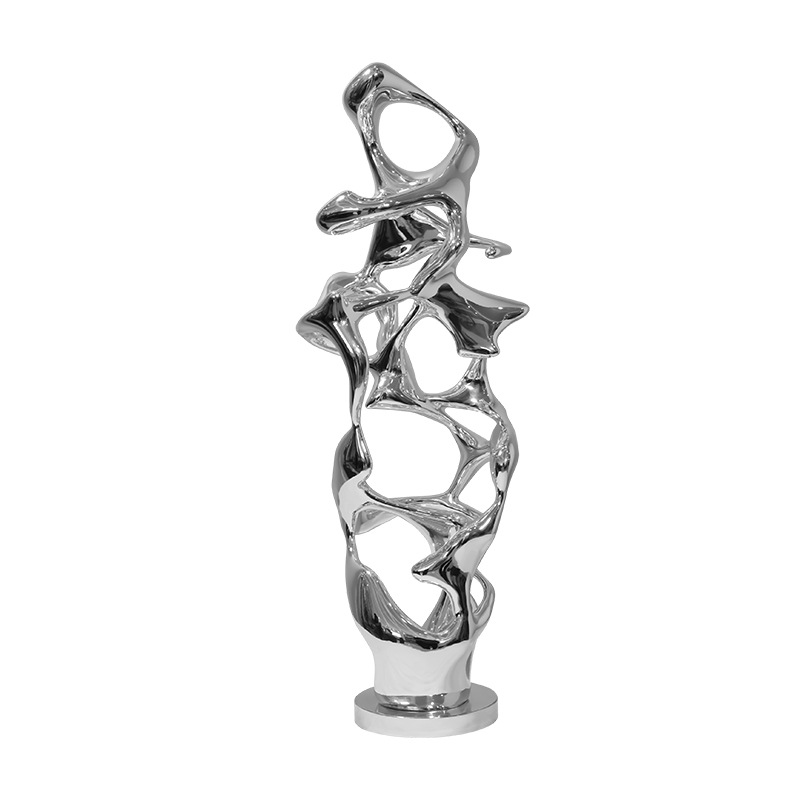
- Applicable scenarios: parts that require mirror effects, such as mold cavities and optical parts
- Operation: Hand polishing (for complex curved surfaces), mechanical polishing (for flat / cylindrical surfaces)
- Effect: Ra ≤ 0.025μm, surface gloss > 800GU
- Note: The size of the part will be slightly reduced after polishing (usually 0.005-0.01mm), and the allowance should be reserved in advance
5. Lapping
- Core principle: Correction of surface microscopic defects through the micro-cutting action of abrasives (such as diamond powder).
- Applicable parts: high-precision bearings, gauges, semiconductor chip substrates
- Unique advantage: It can correct the shape error of the part, such as the flatness error ≤ 0.0005mm
- Limitations: low efficiency, suitable for small batches of high-precision products
6. Honing
- Special use: deep hole finishing, such as engine cylinder liners, hydraulic cylinders
- Process characteristics: The honing head forms a surface contact with the hole wall, and is processed by a combination of reciprocating and rotary movements
- Accuracy index: roundness ≤ 0.001mm, Ra 0.05-0.2μm
- Industry case: An aero engine hydraulic actuator has an inner hole of Ra 0.1μm after honing, and the service life has been increased to 100,000 hours
7. Superfinishing
- Technical positioning: Precision machining with higher precision than grinding, belonging to the "ultimate finishing"
- Applicable scenarios: key surfaces of high-end bearings, gears, camshafts
- Process advantages: Surface roughness Ra ≤ 0.01μm, uniform surface texture, and 2-3 times higher wear resistance
- Cost situation: The equipment investment is 3-5 times higher than that of ordinary grinding, suitable for high value-added products
8. Burnishing
- Processing principle: Through the cold extrusion action of the rolling tool, the metal on the surface of the part is plastically deformed, forming a dense surface layer
- Applicable materials: metals with good plasticity, such as carbon steel, aluminum alloy, copper alloy
- Core value: 20%-30% increase in surface hardness, Ra 0.1-0.4μm, and no chip generation
- Contraindications: Not suitable for brittle materials (such as cast iron, ceramic), which can easily lead to surface cracking
3. 7 key factors and optimization plans that affect Machining Finish
Many times, even though high-precision processes are used, the expected surface quality is not achieved – the problem is often due to the following 7 factors.
1. Cutting Parameters
- Core impact: too low rotation speed will lead to an increase in cutting force and an increase in surface roughness; Excessive feed will leave obvious knife marks
- Optimization scheme: Follow the principle of "high speed, small feed, small back cutter capacity", for example, when processing 45 gauge steel, the recommended speed of the finishing wheel is 2000rpm, and the feed rate is 0.08mm/r
2. Tool Geometry
- Key parameters: rake angle, back angle, tip arc radius
- Optimization tips: The rake angle of the finishing tool should be 5°-15° (sharp and not easy to chip), and the tip arc radius should be R0.2-R0.5mm (reduce the surface residual area)
- Case lesson: When a factory was machining aluminum alloy parts, the Ra increased from 0.8μm to 2.5μm due to the small rake angle of the tool (-5°), resulting in tear burrs on the surface
3. Tool Material
- Matching principle: choose tools according to the workpiece material, avoid "hard hits" or "soft knife hard materials"
- Recommended Combinations:
- Steel / Cast iron: carbide tools, CBN tools
- Aluminum alloy / copper alloy: diamond cutter, PCD cutter
- Superalloys: ceramic knives, metal-ceramic knives
4. Cutting Fluid
- Core role: cooling, lubricating, chip removal, reducing friction between the tool and the workpiece
- Selection tips: emulsion for finishing steel parts (cooling + lubrication balance); Kerosene for finishing aluminum alloys (improves lubricity and avoids knife sticking)
- Data support: Correct use of cutting fluid can reduce surface roughness by 30%-50% and extend tool life by more than 2 times
5. Machine Tool Rigidity
- Affect performance: Insufficient rigidity of the machine tool will cause vibration, resulting in corrugation and vibration on the surface
- Optimization measures:
- Regularly check the clearance of the machine tool guide rail and the accuracy of the lead screw
- Shorter tool overhang length during machining (≤ 3 times tool diameter)
- Rigid tool holder and chuck are used
6. Vibration Control
- Common vibration sources: machine tool spindle vibration, tool vibration, workpiece clamp looseness
- Workaround:
- Frequency conversion speed regulation is used to avoid the resonance frequency of the machine tool
- The workpiece clamping uses soft jaws or special clamps to ensure uniform clamping force
- For slender shaft parts, add center frame support
7. Workpiece Material
- Material characteristics affect: materials with high hardness (such as hardened steel HRC55 or above) need to be ground and honed; materials with good plasticity (such as copper) are easy to stick to knives, and sharp tools and sufficient cutting fluid are required
- Pretreatment suggestion: Tempering the workpiece before processing to improve the uniformity of material hardness and reduce surface quality fluctuations
4. Machining Finish measurement technology and inspection standards
After the processing is completed, how to accurately judge whether the surface quality is qualified? This requires professional measurement tools and standard basis.
1. Common measurement tools
- Contact Profilometer:
- Working principle: The probe touches the surface of the part and records the microscopic contour changes
- Advantages: High measurement accuracy (±0.001μm), Ra, Rz and other parameters can be obtained
- Limitations: Slow measurement speed, easy to scratch the surface of soft materials
- Non-contact Optical Measurement:
- Technology Type: Laser scanning, white light interference
- Applicable scenarios: batch testing of soft materials and precision parts
- Advantages: No damage, fast measurement speed (more than 1000 points per second)
- Industry Trends: In the era of Industry 4.0, optical measurement has become a core solution for automated inspection
- Surface Roughness Tester:
- Portable vs Benchtop: Portable is suitable for on-site inspection in the shop, and benchtop is suitable for high-precision calibration in the laboratory
- Operation points: The surface of the parts should be cleaned before measurement to avoid oil stains and iron filings affecting the results
- Surface Finish Comparison Samples:
- Function: Quickly visually compare surface roughness grades (e.g., Ra 0.4μm, 0.8μm, 1.6μm blocks)
- Applicable scenarios: workshop first article inspection, mass production rapid screening
2. Core inspection standards
- ISO Surface Roughness Standard: The world's most common standard, such as ISO 4287, specifies the definition and measurement methods of parameters such as Ra and Rz
- ASME B46.1 Surface Texture Standard: Commonly used in North America, with slight differences from ISO standards (e.g., different parameter definition ranges)
- Application suggestions: Export products need to clarify the standard system required by customers to avoid unqualified due to standard differences
5. Machining Finish specific requirements for different application fields
The "conformity criteria" for surface quality are not uniform, but are determined by the application scenario – here are the specific requirements of the five core industries, which can be directly referenced:
1. Aerospace Component Finish
- Core requirements: extremely high wear resistance, corrosion resistance and fatigue strength
- Typical parameters: engine turbine blades Ra ≤ 0.1 μm, landing gear parts Ra ≤ 0.2 μm
- Special requirements: no micro cracks on the surface (need to be confirmed by penetrant testing)
- Case: A combustion chamber part of an aero engine caused a high-temperature gas leak due to surface roughness exceeding the standard (Ra 0.3μm), shortening the service life of the parts by 50%.
2. Mold Polishing
- Grades: Mirror polishing (Ra ≤ 0.025 μm), high finish polishing (Ra 0.05-0.1 μm), normal polishing (Ra 0.2-0.4 μm)
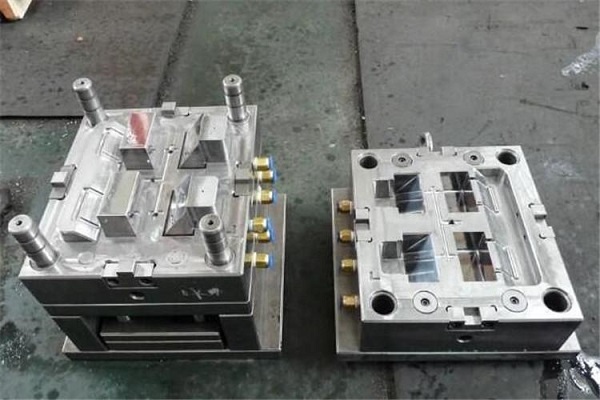
- Industry demand: The cavity of the injection mold needs to be mirror polished to ensure that there are no flow marks and uniform luster on the surface of the plastic part
- Technical difficulties: The polishing of complex cavities needs to be combined manually and mechanically to avoid inadequate polishing of corners
3. Medical Device Surface Finish
- Core principles: biocompatibility, ease of cleaning (avoiding bacterial growth)
- Typical requirements: Ra ≤ 0.2 μm for surgical instruments and Ra ≤ 0.05 μm for implantable parts (e.g. artificial joints).
- Standard basis: Compliance with ISO 10993 biocompatibility standard
- Key note: The surface should not have any sharp angles or burrs to avoid damaging human tissues
4. Automotive Engine Part Finishing
- Key Parts Requirements:
- Crankshaft: Ra 0.2-0.4μm, the direction of the surface texture needs to be controlled (consistent with the direction of force)
- Cylinder liner: Ra 0.4-0.8μm, the surface should have a cross-texture (conducive to lubricating oil storage)
- Performance correlation: For each level of surface quality, engine fuel consumption can be reduced by 3%-5%, and the service life can be extended by more than 1 times
5. Sealing Surface Quality
- Core requirements: good sealing to avoid leakage
- Key parameters: Ra 0.1-0.4 μm, non-directional surface texture (or perpendicular to the direction of seal movement)
- Common problems: If there is corrugation or knife marks on the seal surface, it will cause the seal to wear quickly and increase the leakage rate
Yigu Technology Perspective
Machining finish is the key bridge between design and performance, and its importance far exceeds the intuitive perception of "surface smoothness". In today's transformation of the manufacturing industry to high-end and precision, enterprises should not only be satisfied with "meeting standards" but should pursue "matching needs" - customizing surface quality parameters and processing processes according to the usage scenarios, stress conditions, and environmental requirements of parts. In the future, surface quality control will be deeply integrated with digitalization and intelligence, from "post-event testing" to "in-process control" and even "pre-prediction", which can not only reduce production costs and improve product reliability, but also become an important part of the core competitiveness of enterprises.
FAQ
- Q: Which parameter, Ra or Rz, better reflects surface quality?
A: Ra is the most commonly used comprehensive evaluation index and is suitable for most scenarios; Rz can better reflect the peak and valley height of the surface, suitable for heavy load, wear resistance, sealing and other scenarios that are sensitive to surface microscopic bulges, and it is recommended to use it in combination.
- Q: How to solve the vibration on the surface after finishing?
A: First, check the rigidity of the machine tool (such as guide rail clearance, lead screw accuracy), then reduce the feed rate, increase the speed, shorten the tool overhang length, if there is still a vibro, you can adjust the cutting parameters to avoid the resonance frequency of the machine tool, or use a vibration damper.
- Q: How to avoid surface sticking knives and burrs when machining aluminum alloys?
A: Choose diamond or PCD tools (sharp and not easy to stick), use kerosene or special aluminum alloy cutting fluid, use high speed (more than 3000rpm), small feed (0.05-0.1mm/r), and add a deburring process (such as electrochemical deburring) after finishing.
- Q: How to choose between non-contact and contact measurement?
A: Soft materials (such as aluminum, copper, plastic) or precision parts (afraid of scratches) prefer non-contact type; when you need to obtain accurate parameters such as Ra and Rz, or when the surface has complex contours, choose a contact profiler; Portable surface roughness meter is optional for on-site rapid inspection in the workshop.
- Q: What is the reason for the "fog shadow" after the mirror polishing of the mold?
A: It may be polishing paste residue (not thoroughly cleaned), improper polishing sequence (not gradually transitioning from rough polishing to fine polishing), impurities or pores in the mold material, it is recommended to optimize the polishing process, use high-purity polishing paste, and thoroughly remove the residue with ultrasonic cleaning after polishing.