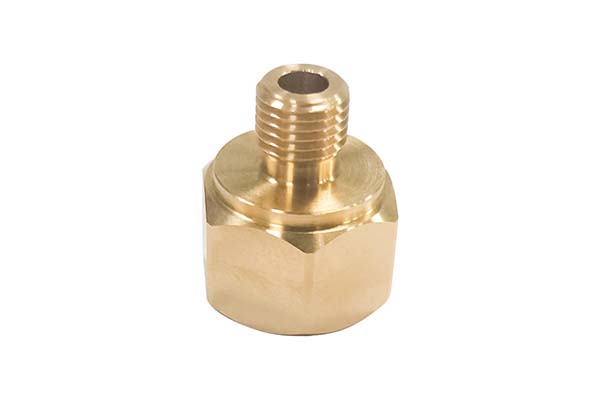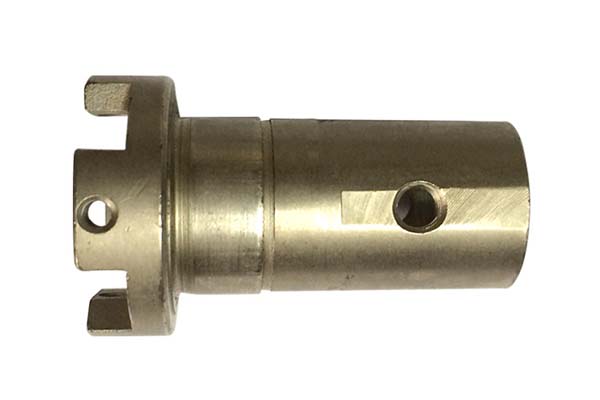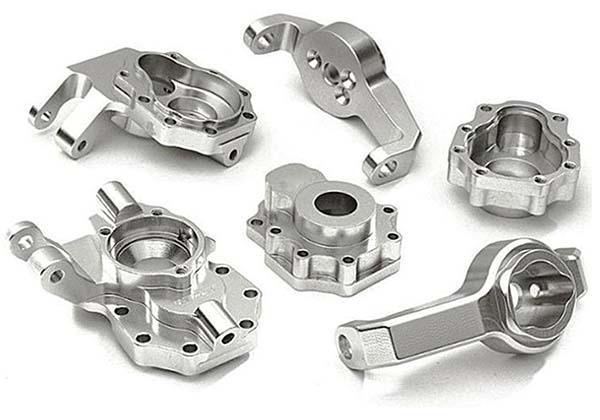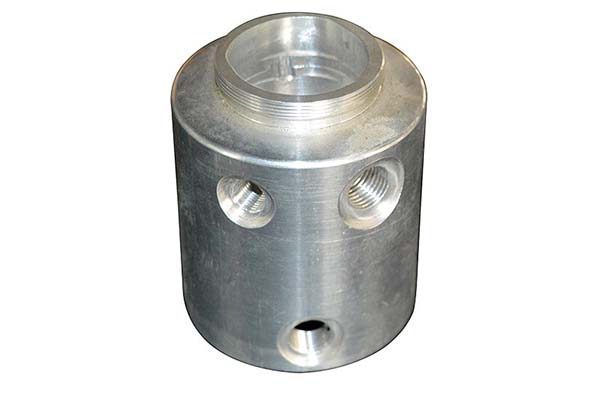
A top-tier machined components manufacturer guarantees precision by building a holistic ecosystem of advanced equipment, rigorous process control, data-driven quality systems, and deep material science expertise.
Finding a machined components manufacturer who can consistently deliver high-precision parts is a strategic challenge. The difference between a good part and a perfect one is often measured in microns, but the difference between suppliers is measured in their systemic approach to eliminating variables. This guide deconstructs the operational excellence of leading manufacturers. We’ll examine the precise technologies and methodologies—from thermal-stable machine tools and adaptive toolpaths to in-process metrology—that transform a digital model into a flawless physical component. For engineers and procurement specialists in aerospace, medical, and automotive sectors, this framework provides the critical lens to evaluate potential partners, ensuring your next project is built on a foundation of uncompromising precision and reliability.
Introduction
In precision manufacturing, consistency is the true benchmark of capability. A single perfect part is a feat; ten thousand identical perfect parts is a system. The most advanced machined components manufacturers operate as integrated engineering systems where every element—from the concrete floor to the final inspection report—is designed to achieve and verify micron-level accuracy. This article moves beyond listing machine specs to explain the interconnected disciplines that define a world-class shop. We will explore how tight tolerances are not just "held" but are engineered into the process, how lead time compression is achieved through smart planning rather than corner-cutting, and how transparent cost structures are built. Understanding these principles empowers you to select a manufacturing partner whose capabilities are aligned with the demands of your most critical projects.
How Are Tight Tolerances Consistently Held?
Holding tolerances like ±0.0005" (0.0127 mm) or tighter across a production run is not a matter of skilled machinists "feeling" the cut. It is the result of eliminating variables through environmental, equipment, and process control.
Mastering the Thermal Environment
Thermal expansion is the arch-nemesis of tight tolerances. A 100 mm aluminum part grows by approximately 2.3 µm for every 1°C increase. To combat this, premier manufacturers implement comprehensive thermal management:
- Facility-Wide Climate Control: Precision machining cells are housed in rooms maintained at a constant 20°C ± 0.5°C. This includes controlling humidity, as thermal capacity of air changes with humidity.
- Machine Thermal Stability: High-precision machines often feature polymer concrete bases for superior vibration damping and thermal inertia. Coolant temperature is precisely regulated, and some shops implement pre-heat cycles for machine spindles and axes to reach a stable thermal state before production begins.
- Part Thermal Soaking: Raw material and in-process workpieces are allowed to normalize to room temperature between operations to dissipate machining heat and prevent distortion.
The Science of Tooling and Fixturing
Tool pressure and workholding deflection are critical, often overlooked variables.
- Mono-Block Tooling: Using single, solid carbide end mills for finishing operations, rather than modular tool holders, maximizes rigidity and minimizes runout.
- Engineered Fixturing: Precision vises with repeatable clamping force and custom machinable soft jaws or pneumatic fixtures are used to hold the part with uniform, predictable force, eliminating distortion.
- Tool Path Optimization: Advanced CAM software is used to generate constant engagement toolpaths (like trochoidal milling) that maintain uniform tool load, reducing vibration, heat, and deflection for a better surface finish and dimensional stability.
Advanced CNC Technologies on the Shop Floor
The machine tool is the heart of precision. Leading manufacturers invest in technologies that provide not just power, but control and feedback.
| Technology | Core Function | Impact on Precision & Capability |
|---|---|---|
| 5-Axis Simultaneous Machining | Allows the cutting tool to approach the workpiece from any direction in a single setup. | Eliminates multiple setup errors, enables machining of complex contoured geometries (e.g., impellers, turbine blades) impossible with 3-axis. |
| Linear Motor Drives | Uses electromagnetic force for direct drive motion, replacing traditional ball screws. | Provides exceptional positioning accuracy and repeatability with no backlash, enabling faster, smoother acceleration for superior surface finishes. |
| In-Process Probing & Tool Setting | Touch-trigger probes on the machine spindle measure parts and tools automatically. | Enables closed-loop machining: the machine can automatically update tool offsets, find part datums, and even measure features mid-process to adjust for tool wear. |
| Adaptive Control & Vibration Damping | Software and hardware systems that monitor cutting forces and spindle vibration in real-time. | Automatically adjusts feed rates to maintain optimal load, preventing tool chatter (which ruins surface finish) and protecting delicate tools from breakage. |
For example, machining a monolithic aluminum aircraft bracket with complex pockets and angled mounting holes becomes drastically more accurate on a 5-axis machine with in-process probing. The part is completed in one fixture, and the probe verifies the position of each critical bore before the final finishing pass, ensuring perfect alignment.
In-Process Quality Control Methods
Final inspection is a pass/fail test; in-process control is the system that ensures a "pass." Top manufacturers use a layered, data-driven approach.
- First Article Inspection (FAI) with Digital Twin Comparison: A comprehensive FAI is performed on a Coordinate Measuring Machine (CMM). The resulting point cloud data is not just checked against 2D dimensions; it is compared to the original 3D CAD model in software like PolyWorks or Geomagic, generating a full-color deviation map. This validates the part's entire geometry, not just called-out dimensions.
- Statistical Process Control (SPC) Integration: For production runs, key Critical-to-Quality (CTQ) dimensions are measured at a defined frequency. The data is plotted on real-time SPC control charts (X-bar and R charts). This allows engineers to see statistical trends—like a gradual drift in size due to tool wear—and make proactive adjustments long before a single part falls out of tolerance.
- Non-Contact and Surface Metrology: For delicate parts or critical surface finishes, tools like vision-based measuring systems and white-light interferometers provide nanoscale surface topography data without touching the part, essential for optical or sealing surfaces.
How Can Lead Times Be Compressed Without Sacrificing Quality?
Rushing typically degrades quality. True lead time compression comes from eliminating waste in the planning and workflow, not from running machines faster.
- Concurrent Engineering: The most significant compression happens before machining starts. When a manufacturer is involved early for Design for Manufacturability (DfM), potential bottlenecks (impossible internal corners, unnecessarily tight tolerances) are resolved in the design phase, preventing costly and time-consuming revisions later.
- Digital Twin & Machining Simulation: Using software to simulate the entire machining process—including toolpath verification, collision detection, and material removal rates—virtually eliminates programming errors and optimizes cycle times before any metal is cut.
- Lights-Out Machining & Automation: For appropriate production volumes, shops employ automated pallet changers and robotic part handling. This allows the machine to run unattended for hours or even days, producing parts while the shop is closed, effectively adding a second or third shift without labor cost.
- Standardized Process Libraries: Manufacturers with deep experience build libraries of proven processes for specific materials and feature types. This turns custom programming into a selection of optimized, pre-validated routines, drastically reducing planning time.
Cost Drivers and Hidden Fees to Watch For
A transparent quote builds trust. Understanding the true drivers of cost helps you evaluate value and avoid surprise expenses.
Transparent Cost Drivers
- Part Complexity: This is the primary driver. A part requiring 5-axis contouring, multiple setups, or micro-machining will have a higher machining time cost than a simple 2.5D milled plate.
- Tolerance & Surface Finish: Tolerances follow an exponential cost curve. Holding ±0.005" is standard; achieving ±0.0005" may require special equipment, slower cycle times, and 100% inspection, potentially doubling or tripling the cost.
- Material Cost & Machinability: Exotic alloys (Inconel, Titanium) are expensive to buy and machine slowly due to their hardness and low thermal conductivity, increasing both material and runtime costs.
- Certifications & Documentation: Requiring material traceability (e.g., Mill Test Reports to ASTM standards), full FAI reports, or NADCAP accredited processes adds significant administrative and quality labor to the job.
Potential "Hidden" Fees to Clarify
- Expedite/Night-Weekend Surcharge: Understand the exact cost and policy for rush orders.
- Minimum Order/Setup Charges: Especially relevant for small-batch prototyping.
- Engineering/Programming Revisions: Clarify the cost structure for drawing changes after the initial quote acceptance.
- Returned Material/Re-inspection Fees: Know the policy and cost if parts are rejected by your QC and returned.
Selecting the Right Partner for Long-Term Success
Choosing a machined components manufacturer is a long-term investment. The evaluation must go beyond the RFQ response.
Conduct a Technical Dialogue, Not an Interrogation:
Instead of just asking "Can you hold ±0.001"?", ask "How do you hold ±0.001" on a thin-walled aluminum feature?" Listen for answers that discuss fixturing strategy, tool step-down rates, and thermal management.
Audit Their Problem-Solving Framework:
Request a case study of a challenging past project. A capable manufacturer will gladly explain a problem they encountered (e.g., part warpage) and walk you through their root cause analysis (e.g., residual stress in raw stock) and their implemented corrective action (e.g., adding a stress-relief annealing step).
Evaluate Cultural Alignment:
Do they exhibit a culture of continuous improvement and transparency? Signs include active participation in industry groups, investment in employee training, and a willingness to share process data. A partner who hides their process is a risk.
The Critical Step: A Site Assessment
If possible, visit. Look for:
- Organization & 5S: A clean, organized shop is a disciplined shop.
- Equipment Condition: Well-maintained machines, not just new ones.
- Metrology Lab: The presence and condition of CMMs, surface testers, etc., indicate their commitment to verification.
- Employee Engagement: Do machinists and technicians seem knowledgeable and engaged?
Conclusion
The journey to find an exceptional machined components manufacturer is a journey to find a partner whose entire operational philosophy is engineered for precision. It requires looking past marketing claims to evaluate the integrated system: the thermal-stable environment, the advanced CNC technologies with closed-loop feedback, the data-driven quality control methods, and the cultural commitment to problem-solving and transparency. By applying this comprehensive framework, you move from price-taker to value-driven partner, capable of selecting a manufacturer that will not only meet your specifications but will also enhance your product's performance and your supply chain's resilience. In precision manufacturing, the right partnership is your most valuable component.
Frequently Asked Questions (FAQ)
What is a realistic tolerance to specify for a CNC machined metal part?
For most applications, ±0.005" (0.127 mm) is a standard, economical tolerance. ±0.001" (0.025 mm) is considered precise and requires good processes. ±0.0005" (0.0127 mm) and tighter is high-precision, often doubling cost and extending lead time. Always specify the tightest tolerance necessary for function on critical features only, and use looser, standard tolerances elsewhere.
How do I know if a manufacturer truly has 5-axis capability versus just a 3+2 axis indexer?
A true 5-axis simultaneous machine can move all five axes (X, Y, Z, and two rotational) at the same time to create smooth, complex contours. A 3+2 indexer positions the part at a fixed angle and then does 3-axis machining. Ask: "Can you machine a complex sculpted surface (like a turbine blade airfoil) in one setup?" If they can only machine multiple flat faces at angles, it's 3+2.
What is the biggest mistake companies make when sourcing precision machined components?
The biggest mistake is sending out finalized drawings for quote without a DfM review. This locks in potentially costly or problematic design features. The second biggest mistake is selecting a supplier based solely on the lowest unit price, which often leads to higher total cost due to quality issues, delays, and administrative burden.
Can a manufacturer hold the same tolerances on plastics as on metals?
Often, it's harder to hold tight tolerances on plastics. Plastics have lower stiffness, leading to tool deflection and part flexing during machining. They also have much higher coefficients of thermal expansion. Achieving metal-like tolerances in plastics requires specialized tooling, very high spindle speeds, perfect fixturing, and expert control of heat. A manufacturer experienced in plastics will discuss these factors upfront.
Contact Yigu Technology for Custom Manufacturing.
At Yigu Technology, we engineer precision at a systemic level. We are not just a machine shop; we are a solutions partner for companies that cannot afford compromise. Our facility is built around the principles detailed in this guide: from our climate-controlled precision hall and fleet of advanced 5-axis CNC centers with in-process probing to our dedicated metrology lab and culture of data-driven process control.
We specialize in transforming complex designs into high-reliability machined components for the aerospace, medical, and advanced technology sectors. Our engineers thrive on technical collaboration, offering proactive DfM analysis to optimize your part for performance, cost, and manufacturability from the very beginning.
If your project demands precision that is consistently verifiable and reliably delivered, let's talk. Contact Yigu Technology to start a conversation about your custom manufacturing needs.