Introduction
You need precision parts for a medical device, an aerospace component, or an automotive prototype. You search for CNC companies—and find hundreds. But not all are equal. Some deliver zero-defect parts with tight tolerances. Others cut corners, miss deadlines, and fail quality inspections. In 2026, the global CNC market reaches $108.63 billion and grows at 7.79% annually through 2030. Choosing the wrong provider costs more than money—it costs time, reputation, and market opportunity. This guide helps you understand what CNC companies do, how to evaluate them, and how to match the right partner to your project requirements.
What Exactly Do CNC Companies Do?
Beyond Basic Machining
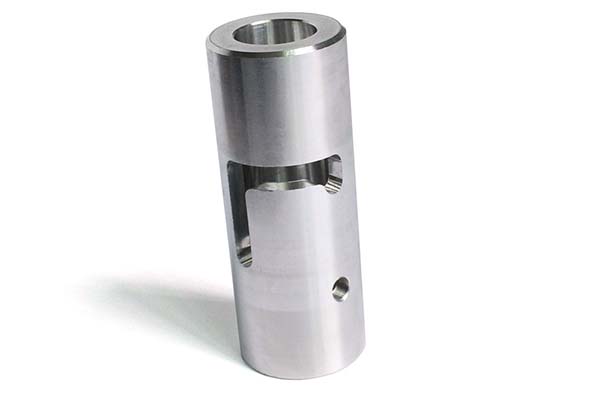
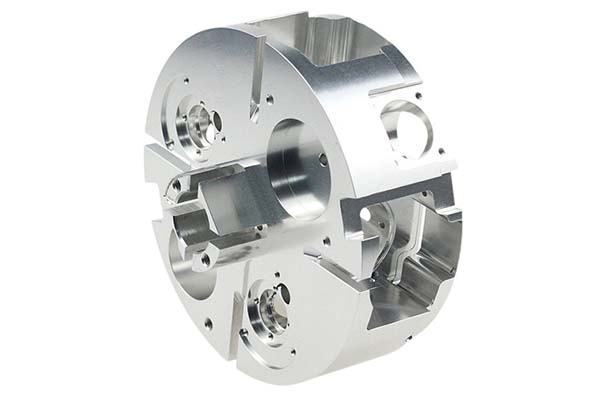
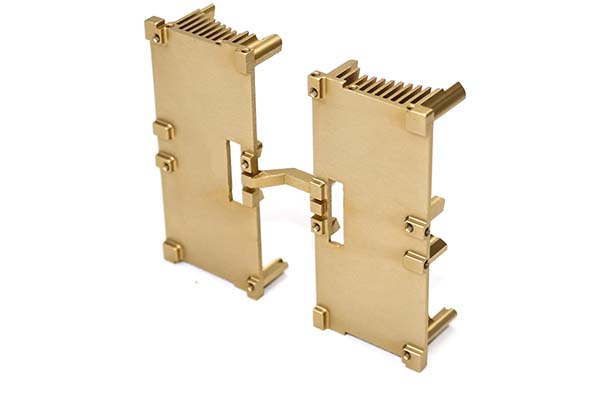
At their core, CNC companies use Computer Numerical Control machines to transform raw materials into precision components. But top-tier firms offer far more than basic machining. They provide end-to-end solutions tailored to specific industries.
Key services from reputable CNC companies:
- Precision machining (milling, turning, 5-axis work)
- Material expertise (titanium, aluminum, PEEK, composites)
- Surface treatments (anodizing, plating, passivation)
- Assembly and integration
- Design for Manufacturability (DFM) consulting
Real-world example:
A leading CNC company recently produced 200 Inconel 718 fuel nozzles for a jet engine manufacturer—achieving zero defects in strict FAA audits. Another firm cut production time for a satellite component by 40% using AI-optimized toolpaths. These are not just machine shops—they are manufacturing partners.
What Does the 2026 CNC Market Look Like?
Key Statistics
| Metric | Value |
|---|---|
| Global CNC machine market size (2026) | $751.6 billion |
| Chinese CNC market size (2026) | $229.1 billion |
| Annual growth rate (2026–2030) | 7.79% |
| Top application | Automotive (EV production) |
Three Game-Changing Trends
1. AI Integration:
Smart software reduces tool wear by 25% and optimizes cycle times. Leading firms now use AI for real-time quality checks—detecting defects before they reach final inspection.
2. Automation:
Production lines with 95% automation cut costs by 20–35% and speed up delivery. Automated material handling and lights-out manufacturing allow continuous operation.
3. Sustainability:
Top providers recycle 95% of metal waste and use renewable-powered machines. This matters as brands prioritize eco-friendly supply chains.
How Do You Choose the Right CNC Company?
A Practical Evaluation Framework
| Category | Key Questions | Must-Have Standards |
|---|---|---|
| Technical Capability | What machines? (5-axis? Swiss?) What tolerances? | ±0.001 mm accuracy; multi-axis for complex geometries |
| Material Expertise | Worked with your material? (titanium, PEEK, Inconel?) | Industry-specific material experience; proven waste reduction |
| Quality Control | What certifications? How do they test? | ISO 9001/13485 (medical); AS9100 (aerospace); SPC for key processes |
| Production Capacity | Prototypes (1–10) and mass production (10k+)? Lead time? | Sample delivery: 3–7 days; mass production 20% faster than average |
| Transparency | Real-time tracking? Process updates? | Online production visualization; regular progress reports |
Red Flags to Watch
- No certification copies provided when requested
- Unwilling to share recent customer references
- Vague answers about tolerances or inspection methods
- No DFM review offered—or charged separately without value
What Are the Costs of Choosing Wrong?
A Real-World Example
A medical device startup picked a CNC company based solely on low prices. The firm lacked ISO 13485 certification and cut corners on material testing.
Result:
- 80% of spinal implants failed biocompatibility tests
- $200,000 in rework costs
- 6-month launch delay
A certified provider would have caught issues early. The savings from a lower quote disappeared—and then some.
How Do CNC Companies Specialize by Industry?
Aerospace & Defense
Typical parts: Turbine blades, UAV frames, radar housings
Critical requirements:
- AS9100 certification
- ±0.005 mm accuracy for engine components
- Material traceability
Case study: A CNC firm supplied 5-axis machined engine blades to a defense contractor—reducing weight by 15% while maintaining strength.
Medical Devices
Typical parts: Surgical robot arms, titanium implants, spinal hardware
Critical requirements:
- ISO 13485 certification
- ±0.002″ (0.05 mm) positional accuracy
- Cleanroom processing
- Material certification per ASTM F136 (for implants)
Success story: A provider’s DFM advice cut a surgical tool’s production cost by 22% and boosted yield to 99.9% .
Automotive (EV)
Typical parts: Battery trays, transmission gears, motor housings
Critical requirements:
- High-volume production capability
- Lightweight material expertise (aluminum, composites)
- Cost efficiency
Trend: Firms using 40,000 RPM spindles cut mold time by 60% , accelerating EV component development.
What Certifications Should You Look For?
| Certification | Industry | What It Ensures |
|---|---|---|
| ISO 9001:2015 | General | Quality management system; documented processes |
| AS9100 | Aerospace | Aerospace quality; stricter traceability and risk management |
| ISO 13485 | Medical | Medical device quality; regulatory compliance |
| NADCAP | Aerospace | Special processes (heat treatment, coatings, NDT) |
A company without relevant certifications may still produce good parts—but for regulated industries, certifications are non-negotiable.
How Do You Verify Quality Claims?
Ask for Evidence
1. Certification copies:
Request current ISO, AS9100, or ISO 13485 certificates. Verify they cover the specific services you need.
2. Customer testimonials:
Ask for references from clients in your industry. Follow up. Ask about quality, delivery, and communication.
3. First-article inspection reports:
A reputable company provides detailed inspection reports for first parts—including CMM measurements, surface finish data, and material verification.
4. Facility tour:
In-person or virtual. Look for organized work areas, documented processes, and functioning inspection equipment.
What About Design Help?
The Value of DFM Reviews
Top CNC companies provide free DFM (Design for Manufacturability) reviews. An experienced engineer reviews your design before machining begins.
What DFM review catches:
- Features that cannot be machined as designed
- Tolerances that are unnecessarily tight (adding cost)
- Material selection that could be optimized
- Potential workholding issues
Cost impact: DFM reviews typically reduce machining costs by 15–30% and prevent production delays.
Red flag: A company that takes your design without questions—and delivers parts that don’t work.
A Comparison Framework
| Provider | Certifications | Machine Capability | Material Experience | Quality Process | Lead Time | DFM Offered |
|---|---|---|---|---|---|---|
| Company A | ISO 9001 | 3-axis | Aluminum only | Visual only | 2–3 weeks | No |
| Company B | ISO 9001, AS9100 | 5-axis, Swiss | Titanium, Inconel, PEEK | CMM, SPC, First-article | 1–2 weeks | Yes |
| Company C | ISO 13485 | 5-axis, Swiss | Medical-grade materials | CMM, cleanroom, biocompatibility testing | 2–3 weeks | Yes |
Company B and C justify higher quotes with capability, quality, and expertise.
How Do You Match Provider to Project?
Prototypes (1–10 units)
Priority: Speed, DFM feedback, flexibility
Look for: Quick-turn shops with engineering support. Expect higher per-unit cost but faster iteration.
Small Batch (10–500 units)
Priority: Balance of cost and quality
Look for: Companies with flexible capacity. Ask about setup costs—they dominate small-batch pricing.
High Volume (500–10,000+ units)
Priority: Cost efficiency, consistency, automation
Look for: Firms with automated lines, SPC processes, and proven scale-up capability. Request capability data for similar past projects.
Conclusion
CNC companies are evolving from machining services to solution partners. The right provider does not just follow blueprints—they co-create solutions, offering DFM feedback, material expertise, and quality assurance that prevent problems before they occur. In 2026, industry trends point toward AI integration, automation, and sustainability. But the fundamentals remain: verify certifications, inspect quality processes, match specialization to your industry, and look for transparency in communication. The lowest quote rarely delivers the lowest total cost. Choose a partner that aligns with your long-term goals, not just immediate budget.
FAQs
How much does it cost to work with a CNC company?
Costs vary by part complexity, material, and volume. Prototypes typically start at $50–$200 per part, depending on complexity and setup. Mass production can drop to $5–$10 per unit for simple parts in high volumes. Always request a detailed quote with material, labor, and setup cost breakdowns.
What is the difference between 3-axis and 5-axis CNC companies?
3-axis machines move along X, Y, and Z linear axes—suitable for simple parts with features accessible from one direction. 5-axis machines add two rotational axes, enabling complex geometries, undercuts, and multiple surfaces in one setup. Choose 5-axis if your part has curved surfaces or would otherwise require multiple setups.
How can I verify a CNC company’s quality claims?
Ask for: (1) Current certification copies (ISO, AS9100, etc.), (2) Recent customer testimonials from your industry, (3) First-article inspection reports with CMM data, and (4) A facility tour—in-person or virtual—to see their quality lab and processes.
Do CNC companies offer design help?
Top firms provide free DFM (Design for Manufacturability) reviews. Their engineers analyze your design and suggest modifications that reduce cost, improve machinability, or prevent quality issues. This typically reduces machining costs by 15–30% . Always ask about DFM support upfront.
What certifications should I require for medical device components?
For medical components, require ISO 13485 (medical device quality management). For implants, additional certifications may include material certification per ASTM F136 (for titanium), biocompatibility testing per ISO 10993, and cleanroom processing documentation. Always verify the certification scope matches your specific application.
Contact Yigu Technology for Custom Manufacturing
At Yigu Technology, we combine precision CNC machining with engineering partnership. We hold ISO 9001:2015 certification and follow AS9100 practices for aerospace work and ISO 13485 standards for medical components. Our facility includes 5-axis machining centers, Swiss-type lathes, and CMM inspection equipment. We provide free DFM reviews to optimize your designs before production, and we maintain transparent communication with regular progress updates. Whether you need prototypes or high-volume production, we deliver precision parts with traceable quality. Contact us to discuss your project and see how we can help you succeed.