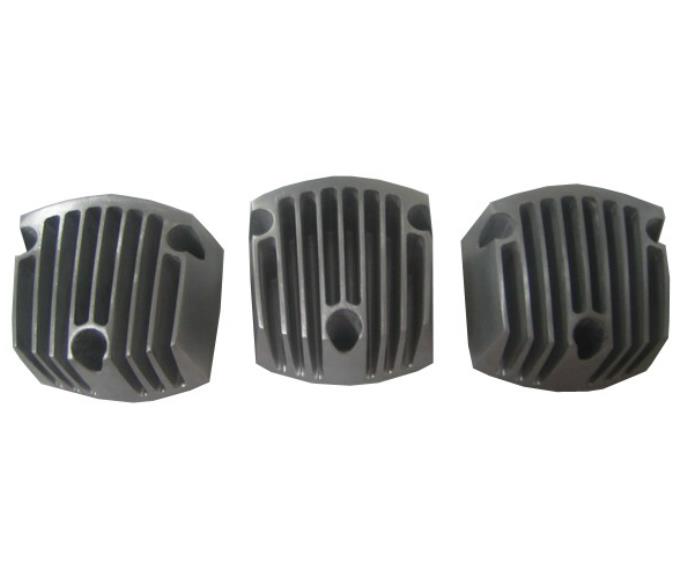
Identifying a reliable machined parts supplier requires evaluating their quality systems, operational transparency, and problem-solving capabilities—not just their quoted price or advertised equipment list.
Finding the right machined parts supplier is one of the most critical decisions a manufacturing, engineering, or procurement professional makes. The wrong choice can lead to production delays, cost overruns, and quality failures that damage your brand. With the global market for custom machined parts growing, the challenge is distinguishing truly capable partners from mere job shops. This guide provides a comprehensive framework to evaluate suppliers based on the attributes that matter most: demonstrable quality control processes, predictable lead times, transparent pricing models, and the strategic use of in-house capabilities. By moving beyond superficial checks, you can build a resilient supply chain partnership that drives value and innovation for your projects.
Introduction
Your machined parts supplier is more than a vendor; they are an extension of your engineering and manufacturing team. The reliability of your supply chain directly impacts your product's quality, your company's reputation, and your bottom line. Yet, the process of vetting suppliers is often reduced to a simple RFQ (Request for Quotation) comparison, focusing primarily on cost and stated lead time. This approach misses the deeper, systemic factors that determine long-term success. A supplier might win your business with a low bid but cost you far more in delayed shipments, rejected parts, and engineering rework. This article shifts the perspective from transactional buying to strategic partnership selection. We will dissect what defines reliability, how it's operationalized in a machine shop, and what practical steps you can take to separate the best from the rest. Whether you're sourcing simple brackets or complex aerospace components, this framework will help you make a confident, informed decision.
What Defines a Reliable Machined Parts Supplier?
A reliable supplier is defined by their consistency, transparency, and proactive partnership. Reliability isn't a single attribute but a system of interconnected practices.
- Consistent Quality Delivery: This is the non-negotiable foundation. It means every shipment, from the first prototype to the ten-thousandth production part, meets all specified dimensional, material, and cosmetic requirements. Consistency is the result of a mature quality management system, not luck or heroics.
- Operational Transparency: A reliable partner operates with openness. They provide clear communication on order status, proactively alert you to potential delays, and are willing to share data like SPC (Statistical Process Control) charts from your production run. They see communication as a core service, not an afterthought.
- Technical Collaboration & Problem-Solving: The best suppliers act as manufacturing consultants. They engage in Design for Manufacturability (DfM) reviews, offering constructive feedback to optimize your part for cost, quality, and lead time without compromising function. When a problem arises, they focus on root-cause analysis and solution, not assigning blame.
- Financial and Operational Stability: Reliability requires a solid business foundation. A supplier living order-to-order may not have the capital to maintain their equipment or retain skilled staff, leading to unpredictable performance. Signs of stability include investment in new technology, low employee turnover, and a diverse, reputable client base.
For example, a medical device company sourcing a critical surgical tool component needs more than a shop that can hit a tolerance. They need a supplier with ISO 13485 certification, a controlled cleanroom environment for final packaging, and full lot traceability for every raw material billet—a systemic approach to reliability that ensures patient safety.
How Do Suppliers Ensure Consistent Quality?
Consistent quality is engineered into the process; it is not achieved through final inspection alone. Here is how top-tier suppliers build quality into their operations:
The Framework: Certifications and Systems
Formal certifications like ISO 9001 or industry-specific standards (e.g., IATF 16949 for automotive, AS9100 for aerospace) provide a baseline. These frameworks mandate documented procedures for everything from document control to corrective action. However, the certificate is just proof of a system's existence; its effective implementation is what matters.
The Execution: Process Control and Metrology
- First Article Inspection (FAI): A comprehensive FAI per the AS9102 standard (common in aerospace) validates that the first part off the process meets all drawing requirements. A thorough report includes actual measurements for every feature.
- In-Process Verification: This is the heart of preventing defects. Techniques include:
- On-machine probing to automatically verify part location and feature dimensions before the final cut.
- Statistical Process Control (SPC) to monitor key dimensions during a production run, identifying trends (like tool wear) before they cause a part to go out of tolerance.
- Advanced Metrology Investment: Reliability is proven with data. A supplier's investment in measurement technology speaks volumes. A shop with a Coordinate Measuring Machine (CMM), optical comparators, and surface roughness testers can provide objective, verifiable proof of quality, unlike one reliant solely on calipers and micrometers.
Typical Lead Times and How to Shorten Them
Understanding standard lead time components is key to managing expectations and identifying opportunities for acceleration.
Breakdown of a Standard Lead Time
For a typical CNC machined part, the lead time is not just "machining time." It's a sum of sequential stages:
- Order Review & Planning (1-3 days): Engineering review, DfM feedback, process planning, and tooling/fixturing design.
- Material Procurement (3-10 days): Sourcing the correct certified material, which can vary widely based on alloy and form (e.g., bar stock vs. custom forging).
- Setup & First Article (2-5 days): Machining the first part, conducting FAI, and obtaining customer approval.
- Production Machining & Final QC (Variable): The actual batch run and final quality inspection.
Thus, a "standard" lead time for a moderately complex part in a common material is often 3-6 weeks, not days.
Strategies for Accelerated Timelines
| Strategy | How It Works | Best For |
|---|---|---|
| Consigned Raw Material | You purchase and hold the material, releasing it to the supplier as needed. | Eliminates material procurement lead time entirely. Ideal for high-volume, long-term projects. |
| Standardized Design Libraries | Using common, pre-qualified features (hole sizes, thread types, standard stock sizes). | Allows for faster planning and the use of standard tooling and fixtures. |
| Proactive DfM Collaboration | Engaging the supplier during the design phase, not after the drawing is finalized. | Prevents last-minute drawing revisions and manufacturing challenges that cause delays. |
| Prioritized Scheduling | Paying a premium to have your order jump the production queue. | Critical prototypes or breakdown emergencies. This is often the most expensive option. |
Pricing Models: What Drives the Quote?
A clear, transparent quote builds trust. Understanding the cost drivers helps you evaluate quotes fairly and identify potential savings.
Core Components of a Machining Quote
- Material Costs: The cost of the raw billet, bar, or plate, plus any material certification fees (e.g., Mill Test Reports).
- Setup/NRE (Non-Recurring Engineering) Costs: This one-time fee covers the engineering time for programming, process planning, and the design/manufacture of any custom fixtures or tooling. It is amortized over the production batch.
- Machining Time (Runtime): Calculated based on the estimated cycle time to machine one part, multiplied by the shop's machine hourly rate. Complex geometries, tight tolerances, and difficult materials increase this time.
- Finishing & Post-Processing: Costs for anodizing, plating, painting, heat treatment, or specialized inspection.
- Overhead & Margin: The supplier's costs for facilities, administration, and profit.
A quote that is 30% lower than all others is a major red flag. It often indicates a critical misunderstanding of the requirements, the use of inferior material, or a business model that cannot sustain itself, risking your project's stability. The goal is Total Cost of Ownership, not just unit price. Consider the hidden costs of poor quality: incoming inspection time, rejected parts, production line stoppages, and administrative hassle.
In-House Capabilities vs. Outsourced Services
The scope of a supplier's in-house capabilities is a strong indicator of their control over quality, timing, and cost.
| Capability | Kept In-House by a Reliable Supplier | Often Outsourced | Why It Matters |
|---|---|---|---|
| Core Machining | 3/4/5-Axis CNC Milling, CNC Turning, Swiss Machining. | Highly specialized or low-volume processes (e.g., large castings). | Maintains control over the primary value-add process and schedule. |
| Quality Inspection | First-Article Inspection (FAI), basic metrology (CMM, micrometers). | Very specialized tests (e.g., CT scanning, destructive testing). | Enables immediate feedback loops and faster turnaround on production decisions. |
| Secondary Processing | Deburring, basic finishing, heat treatment for common alloys. | Specialized coatings (e.g., proprietary PVD), complex plating. | Reduces logistics complexity and prevents delays caused by coordinating multiple vendors. |
| Design & Engineering | CAD/CAM, DfM analysis, fixture design. | Rarely outsourced by a capable supplier. | This is the intellectual capital that differentiates a partner from a parts pusher. |
A supplier with strong in-house multi-axis machining and metrology can handle complex parts from start to finish, ensuring accountability. One that outsources heat treatment or plating introduces another link in the chain where quality and timing can break down.
Red Flags When Vetting a New Supplier
During your evaluation, watch for these warning signs that often predict future problems:
- Vague or Evasive Answers: If they cannot clearly explain how they will hold a critical tolerance or manage a specific material, they likely lack experience.
- No Request for DfM Review: A supplier that quotes blindly on your drawing without asking clarifying questions is not engaged in preventing problems.
- Lack of Process Documentation: An inability or unwillingness to share examples of an FAI report, inspection plan, or SPC data suggests an informal, uncontrolled quality approach.
- "Yes-Man" Attitude: A supplier that promises everything (impossible tolerances, unrealistically short lead times) without discussing technical challenges is setting you up for disappointment.
- Poor Facility Condition: A disorganized, dirty, or poorly maintained shop floor (during a site visit or virtual tour) often correlates with poor process discipline and machine maintenance.
- High Personnel Turnover: Frequent changes in your point of contact (sales engineer, project manager) can indicate internal instability and will lead to communication breakdowns.
Conclusion
Selecting a machined parts supplier is a strategic decision with long-term consequences for your product quality and operational efficiency. By looking beyond the unit price and evaluating a supplier's systemic approach to quality control, their transparency on lead times, their rational pricing models, and the strategic depth of their in-house capabilities, you align yourself with a true partner. This partner will not only deliver parts to print but will also contribute engineering expertise, proactively manage risks, and help you navigate the complexities of modern manufacturing. The diligence you invest in the selection process pays recurring dividends in reduced stress, lower total cost, and a more resilient, innovative supply chain.
Frequently Asked Questions (FAQ)
What is the most important question to ask a potential machined parts supplier?
Ask for a detailed case study or sample part similar to your project's complexity. Then ask them to walk you through their process: how they planned it, what challenges they faced, and how they verified quality. Their answer will reveal their engineering depth and communication style better than any generic capabilities list.
How can I verify a supplier's quality claims if I can't visit in person?
Request an audit packet. This should include copies of their current quality certifications, a sample First Article Inspection Report (with sensitive data redacted), and a list of their key metrology equipment (make/model of CMM, etc.). A virtual live tour of their facility and quality lab is also a reasonable request.
Is it better to use a large, full-service supplier or a smaller, specialized machine shop?
It depends on your needs. Large suppliers offer breadth, redundancy, and often global support, ideal for high-volume, commoditized parts. Smaller, specialized shops often provide more personalized service, faster decision-making, and deep expertise in niche materials or processes (like precision machining of medical implants). For complex, low-to-medium volume engineered components, the specialized shop often delivers better value and partnership.
What should be included in a clear RFQ (Request for Quotation) to get accurate bids?
Include: 1) Fully dimensioned drawings (PDF and native CAD if possible), 2) Material specifications (alloy, grade, standard), 3) Quantity breakdown (prototype, initial production, annual forecast), 4) Key quality requirements (critical tolerances, surface finishes, certifications needed), and 5) Target timelines. The more clarity you provide, the more accurate and comparable the quotes will be.
Contact Yigu Technology for Custom Manufacturing.
At Yigu Technology, we build reliability into every component we deliver. We understand that you're not just looking for a parts vendor; you're seeking a manufacturing partner you can trust with your most critical projects. Our commitment to consistent quality is backed by a rigorous quality management system, advanced in-house metrology, and a culture of proactive communication.
We combine extensive in-house capabilities—from multi-axis precision machining to comprehensive finishing—with deep technical collaboration. Our engineers are ready to partner with you during the design phase to optimize for manufacturability, cost, and performance.
Move from transactional sourcing to strategic partnership. Contact Yigu Technology today to discuss your project requirements and experience the difference a truly reliable supplier can make.