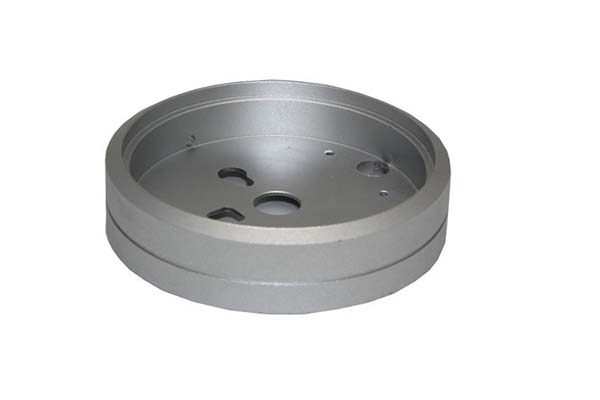
1. What are milled parts? Understand the core concepts first
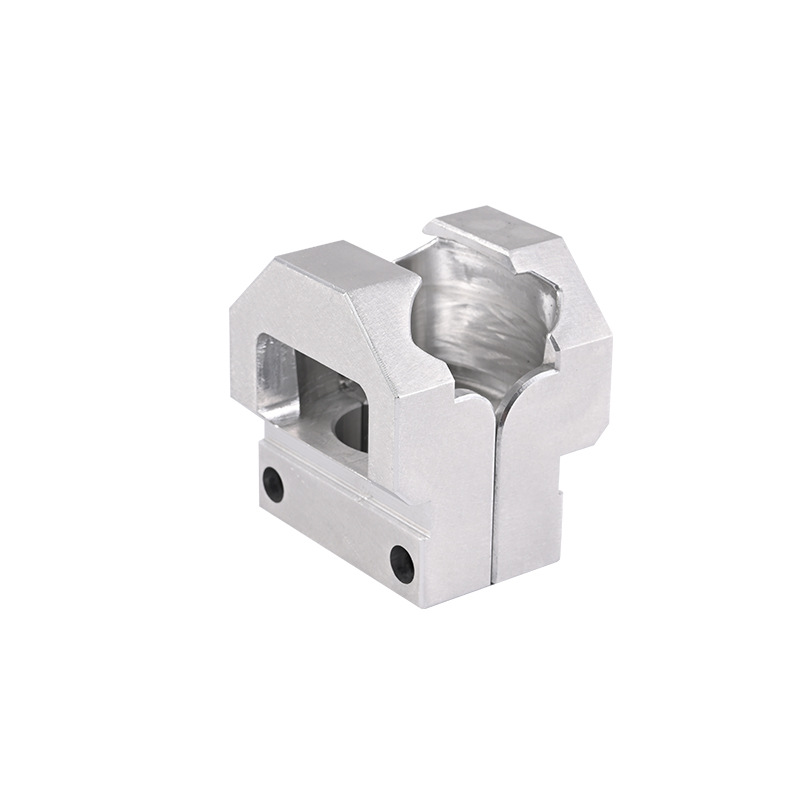
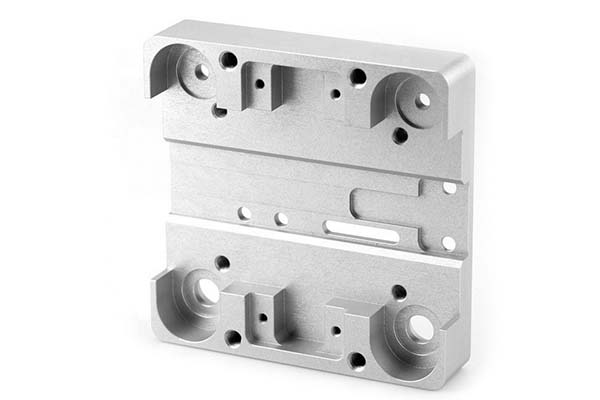
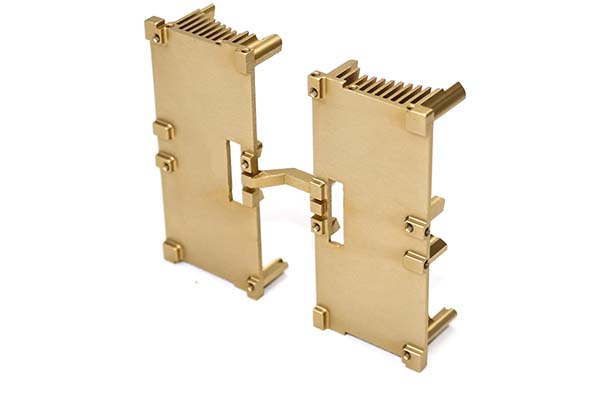
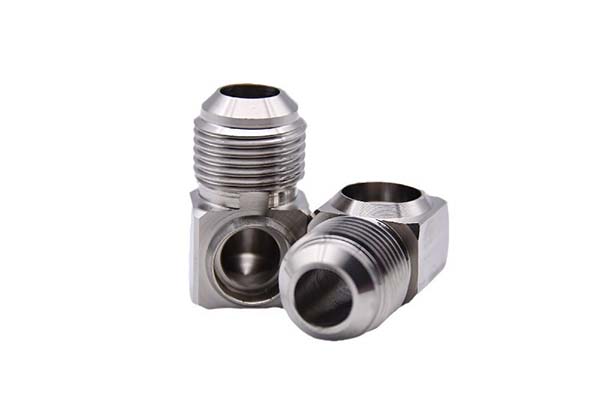
Many friends engaged in machining, automobile manufacturing or aerospace industries will encounter the problem of selecting and processing "milled parts". In simple terms, milling parts are used to remove excess material through the milling process to obtain precision parts that meet design requirements, from metal connections for mobile phone holders to core components of aircraft engines.
Key Cognitive Points:
- Core Principle: Relying on CNC milling machining equipment to achieve material cutting through the relative motion of the rotating tool with the workpiece
- Core advantages: It can process complex curved surfaces and high-precision hole positions, suitable for mass production of multiple materials
- Industry data: According to the Machining Industry Report, milled parts account for more than 40% of the global precision parts market share, and applications in the aerospace field account for 62%
2. Milling processing technology and technology: choose the right method to avoid detours
2.1 Comparison of mainstream milling technologies
Different scenarios need to match different milling technologies, and the following is a practical comparison of common technologies in the industry:
| Types of technology | Core strengths | Applicable scenarios | Accuracy range | Typical case |
| High-speed milling | 30%-50% higher efficiency and low surface roughness | Mold processing, precision parts | ±0.005mm | An automobile mold factory uses high-speed milling to process injection molds, reducing the lead time by 40% |
| Multi-axis milling technology | Complex structures are formed at one time to reduce clamping errors | Aerospace parts, medical equipment | ±0.003mm | Aero engine blades are milled in 5 axes, increasing the pass rate from 82% to 97% of conventional processes |
| Precision milling | Ultra-high precision control for tiny parts | Electronic components, medical devices | ±0.001mm | The pacemaker housing is precision milled to meet biocompatibility and size requirements |
2.2 Practical keys: tools, parameters and coolant
- Milling tool selection: Carbide tools are suitable for metal materials (e.g. stainless steel, titanium alloys), PCD tools are suitable for plastics and composite materials, and the tool diameter should be matched according to 1.2 times the width of the machining groove (empirical value)
- Cutting parameter optimization: Taking aluminum alloy milling as an example, the recommended rotation speed is 15000rpm, the feed speed is 500mm/min, and the back eating amount is 0.5mm (the data comes from the practical operation standard of a precision machinery factory)
- Coolant application: Oil-based coolant is suitable for high-strength steel milling, and emulsion is suitable for aluminum alloys, which can reduce tool losses by more than 30%
3. Materials and applicable fields: choose not to step on the pit as needed
3.1 Characteristics of commonly milled materials
| Material type | Processing difficulty | Typical applications: | Notes: |
| Aluminum alloy | low | Auto parts, electronic housings | Easy to stick knives and need to optimize cutting speed |
| Stainless steel | Middle and high | Medical devices, chemical equipment | For poor heat dissipation, it is recommended to use cobalt-containing tools |
| Titanium alloy | High | aerospace and military products | High hardness requires low speed and large feed |
| Composite materials | Medium | New energy components, high-end equipment | Easy to layer, special tools are required |
3.2 Industry application case sharing
- Aerospace: Titanium milling of a model of aircraft landing gear supports enables the formation of complex structures in one go through multi-axis milling technology, reducing weight by 25% and increasing strength by 18%
- Medical devices: Orthopedic implants (such as artificial joints) are precision milled using stainless steel, with surface roughness controlled below Ra0.8μm to meet biocompatibility requirements
- Automotive industry: Aluminum alloy milling for motor housings for new energy vehicles, reducing the machining time per piece from 12 minutes to 7 minutes through high-speed milling in mass production
4. Design points and quality control: details determine success or failure
4.1 Design specifications for milled parts
- Follow the "ease of machining principle": the radius of the internal corner is not less than 1.5 times the radius of the tool, and the deep cavity structure (depth does not exceed 5 times the diameter)
- Tolerance and Fit: Choose the tolerance level according to the application scenario, with recommended levels of IT7-IT8 for precision equipment parts and level 9-IT10 for ordinary structural parts
- CAD/CAM programming: Mastercam or UG software is preferred, and adaptive milling strategies are recommended for complex surfaces to reduce tool vibration
4.2 Core links of quality control
- Dimensional accuracy inspection: Using CMM, the critical dimensional inspection coverage rate is 100%, and the sampling frequency is not less than 30 pieces per batch
- Surface Roughness Control: Ra≤1.6μm (precision part requirement) by adjusting the cutting speed and feed rate, combined with the post-milling polishing process,
- Milling deformation prevention: For long shaft parts, the two-end clamping + intermediate support scheme is used to control the residual stress below 80MPa (industry standard)
- Non-destructive testing: Critical parts (such as aviation components) need to be tested by ultrasonic waves, with a sensitivity ≥ 0.8mm equivalent defects
5. Industry application and selection guide: practical decision-making tools
5.1 Comparison of processing methods
| Processing method | Cost level | Delivery cycle | Suitable for batches | Complex structural capabilities |
| Milling | Medium | Short - medium | Small - large batches | strong |
| turning | low | short | Large volumes | Weak (suitable for rotary body) |
| Additive manufacturing | High | Long | Small batches | strong |
| Milling + additive combination | Middle and high | Medium | Small - medium batches | Extremely strong |
5.2 Supplier selection and cost optimization
- Supplier evaluation dimensions: equipment accuracy (CNC milling machine positioning accuracy ≥0.005mm), industry experience (preferential selection of manufacturers in subdivisions for more than 3 years), quality system (ISO9001+IATF16949 certification)
- Cost optimization tips: Low-volume production uses a combination of prototyping + batch milling, and high-volume production can reduce unit costs by optimizing process parameters (e.g., high-speed milling to improve efficiency)
- Delivery time evaluation: 7-15 days for regular parts, 15-30 days for complex parts, and for urgent orders, you can choose a supplier that supports 24-hour continuous processing
6. Yigu Technology's views
As the core link of precision manufacturing, the quality of milled parts directly determines the performance and reliability of the end product. At a time when technology iteration is accelerating, enterprises should give priority to the overall solution of "process adaptation + material matching + quality controllable" rather than simply pursuing low prices. It is recommended to combine your own product needs, balance precision, cost and delivery time, and use the composite process of "additive manufacturing + milling post-processing" if necessary to break through the bottleneck of complex structure processing. In the future, with the application of 5G and AI technology in the field of machining, milled parts will develop in the direction of higher precision, shorter cycle time, and more environmentally friendly.
7. FAQ
- Q: How to distinguish between milled and turned parts?
Answer: Milling is suitable for machining non-rotating bodies and complex curved surfaces (such as brackets and boxes), and turning is suitable for rotary body parts (such as shafts and sleeves). Milling is dominated by tool rotation, and turning is dominated by workpiece rotation.
- Q: Why is titanium alloy milling difficult?
Answer: Titanium alloy has high hardness (HRC30-40) and low thermal conductivity (only 1/5 of steel), which is easy to generate high temperature during cutting, resulting in fast tool wear, and requires the use of special tools and low-speed and large feed parameters.
- Q: What is the surface roughness of precision milling?
A: Ordinary precision milling can achieve Ra≤ of 1.6μm, ultra-precision milling can reach Ra≤0.8μm, and combined with polishing process, Ra≤0.4μm can be achieved.
- Q: How can I control the cost of custom milled parts in small batches?
A: Optimizing design to reduce complex structures, choosing universal tools, placing orders in batches, and negotiating and sharing process plans with suppliers can reduce costs by 15%-20%.
- Q: What is the main cause of milling deformation?
Answer: The core reasons are excessive cutting force, residual stress release, and improper clamping method, which can be solved by optimizing cutting parameters, increasing stress relief processes, and improving clamping schemes.