Introduction
Precision CNC turning is everywhere. It makes the shafts in your car engine. It creates the implants that go into human bodies. It forms the housings for your electronic devices.
But what makes it so precise? How does a machine spinning a piece of metal create features measured in thousandths of a millimeter?
This guide walks you through the science behind precision CNC turning. You will learn how it works, what makes it different from traditional turning, and how manufacturers achieve such remarkable accuracy. By the end, you will understand why this process is the foundation of modern manufacturing.
What Exactly Is Precision CNC Turning?
The Core Concept
Precision CNC turning combines computer numerical control (CNC) technology with traditional lathe operations. The workpiece rotates on a spindle. A cutting tool removes material to create the desired shape.
The difference lies in the control. A computer program dictates every movement. It tells the machine exactly where to move, how fast to rotate, and how deeply to cut. Human hands never touch the controls during operation.
How CNC Technology Works
A pre-programmed software controls the lathe’s axes. These are typically:
- X-axis – Controls the cutting tool’s movement toward or away from the centerline
- Z-axis – Controls movement along the length of the workpiece
- C-axis – Rotational positioning for milling operations on a lathe
The program is incredibly detailed. It specifies feed rates, spindle speeds, and depth of cuts. For a typical job, the spindle might rotate at speeds from a few hundred to tens of thousands of RPM, depending on the material and part complexity.
Traditional Turning vs. Precision CNC Turning
| Aspect | Traditional Turning | Precision CNC Turning |
|---|---|---|
| Control Method | Manual operation by a machinist | Computer-programmed control |
| Accuracy | ±0.1–0.5 mm | ±0.001–0.01 mm |
| Shape Complexity | Limited to simple shapes | Highly complex 3D geometries |
| Production Speed | Slower, depends on operator skill | Faster, machine runs continuously |
| Operator Skill | High-level manual machining skills | CNC programming and setup knowledge |
How Does the Precision CNC Turning Process Work?
Step 1: Material Selection and Preparation
The process starts with choosing the right material. Common options include:
- Aluminum – Lightweight, good thermal conductivity. Used in aerospace and automotive.
- Stainless steel – Corrosion-resistant and strong. Used in medical and food industries.
- Titanium – Excellent strength-to-weight ratio. Used in aerospace and high-performance automotive.
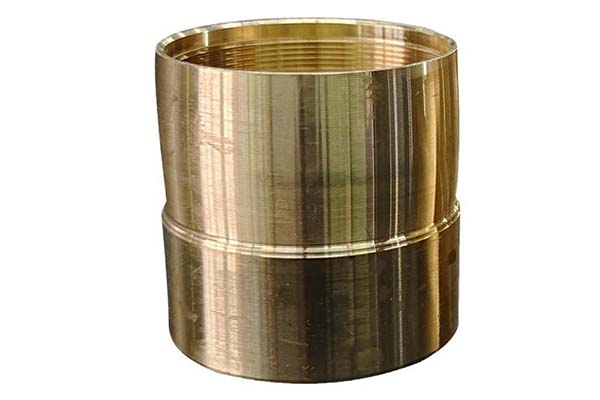
- Brass – Good machinability and electrical conductivity. Used in electrical and plumbing components.
- Engineering plastics – PEEK, nylon, and others for specialized applications.
Once selected, the material is prepared. This may involve cutting raw stock to size. Some metals need pre-treatment like annealing to reduce internal stresses that could affect machining.
Step 2: CNC Programming
A skilled programmer creates a detailed set of instructions. This program defines:
- Tool paths – The exact route the cutting tool follows
- Spindle speed – How fast the workpiece rotates
- Feed rate – How quickly the tool advances
- Depth of cut – How much material is removed per pass
CAM (Computer-Aided Manufacturing) software takes a 3D model of the part and generates G-code. This is the standard programming language for CNC machines.
For example, creating a complex shaft with multiple diameters and threads requires careful planning. The CAM software calculates optimal tool paths. It might set spindle speed at 5000 RPM for rough cutting of aluminum, then reduce to 2000 RPM for finishing. Feed rates might be 0.1 mm/rev for roughing and 0.05 mm/rev for finishing.
Step 3: Setup of the CNC Lathe
Before machining begins, the machine is set up:
- Workpiece mounting – The part is clamped in a chuck or fixture on the spindle. Complex parts may need custom fixtures for stability.
- Tool installation – Cutting tools are mounted in the tool holder. CNC lathes often have multiple tool positions for quick changes.
- Tool calibration – Each tool’s position is precisely measured. Even a small deviation leads to dimensional errors.
Step 4: Machining Operations
With setup complete, machining begins.
Rough turning removes large amounts of material quickly. The goal is to get close to the final shape. For a bearing shaft, rough turning might remove most excess material, leaving 0.5–1 mm for finishing.
Finish turning achieves final dimensions and surface finish. Tolerances can be as tight as ±0.001 mm. Surface finishes can reach Ra 0.2–0.4 μm.
Other operations performed during precision CNC turning include:
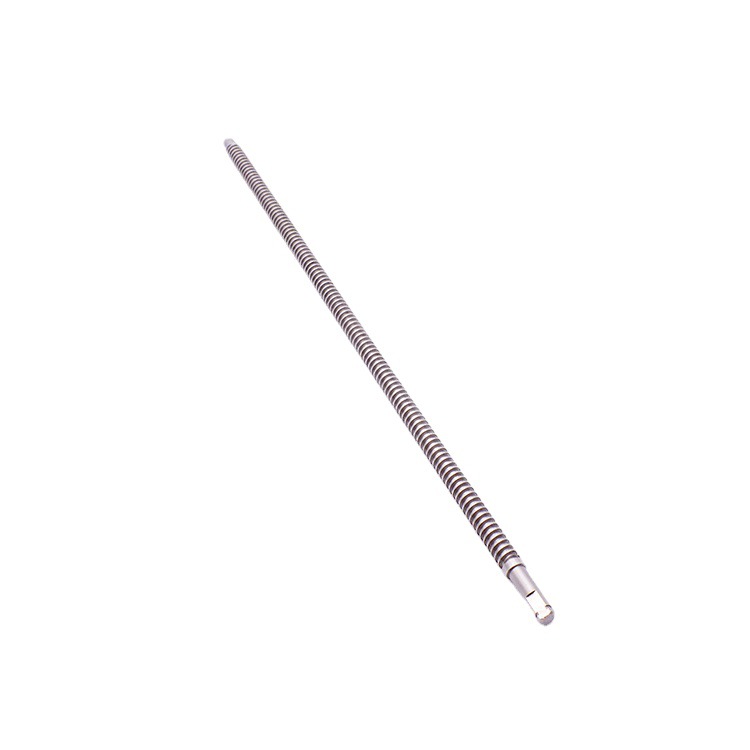
- Threading – Internal and external threads
- Boring – Enlarging existing holes with high accuracy
- Facing – Creating flat surfaces perpendicular to the axis
- Grooving – Cutting channels or recesses
- Parting – Cutting off finished parts from the stock
Step 5: Quality Control and Inspection
Quality control runs throughout the process.
In-process monitoring uses sensors to track:
- Tool wear – Detects gradual wear that affects dimensions
- Vibration – Identifies conditions that cause poor surface finish
- Temperature – Monitors thermal expansion that changes part size
If parameters deviate from acceptable ranges, the machine can stop automatically.
Post-machining inspection verifies final quality:
- CMM (Coordinate Measuring Machines) – Measure dimensions with high accuracy
- Optical comparators – Compare part shape to design blueprint
- Surface roughness testers – Ensure finish meets specifications
Only parts passing all inspections move to final use.
What Industries Rely on Precision CNC Turning?
Aerospace Industry
Precision is non-negotiable in aerospace. Components include:
- Turbine blades – Complex airfoil shapes with tolerances of ±0.001–0.005 mm
- Engine shafts – Must withstand extreme temperatures and high rotational speeds
- Landing gear parts – Require absolute reliability
A leading aerospace manufacturer reduced engine shaft weight by 15% through precision CNC turning while maintaining strength. This improved fuel efficiency by 8% across their commercial aircraft fleet.
Automotive Manufacturing
Modern vehicles depend on precision-turned components:
- Crankshafts – Convert piston motion to rotational power. Roundness tolerances below 0.002 mm .
- Camshafts – Control valve timing with extreme accuracy
- Pistons – Must fit perfectly within cylinders
A major automotive company saw a 20% reduction in engine vibration after switching to precision CNC-turned crankshafts. Engine lifespan increased by 15% due to reduced wear.
Medical Equipment
Medical devices demand precision that affects patient outcomes:
- Hip and knee replacements – Femoral stems need precise fit within bone
- Dental implants – Require exact dimensions for osseointegration
- Surgical instruments – Must perform reliably in critical procedures
Hip implants made with precision CNC turning achieve surface finishes as low as Ra 0.1–0.2 μm. This is essential for bone integration. A clinical study showed patients with these implants had 30% faster recovery times compared to traditional manufacturing methods.
Electronics
The electronics industry uses precision turning for:
- Smartphone housings – Aluminum cases with wall thicknesses of 0.5–1 mm
- Connector pins – Small, precise electrical contacts
- Heat sinks – Components that dissipate heat efficiently
A well-known electronics brand increased smartphone housing structural integrity by 25% through precision CNC turning. Warranty claims for damaged housings dropped by 40% .
How Is Quality Control Maintained?
In-Process Monitoring
Modern CNC machines use multiple sensors during operation.
Tool-wear sensors detect gradual wear of cutting edges. As tools wear, dimensions shift. The system can adjust cutting parameters automatically or prompt tool changes before errors occur.
Vibration sensors measure amplitude and frequency of machine vibrations. Excessive vibration causes poor surface finish and dimensional inaccuracies. If vibration exceeds preset limits, the machine can reduce cutting speed or adjust feed rates.
Post-Machining Inspection
Coordinate Measuring Machines (CMMs) use a probe to measure coordinates of points on the workpiece. They accurately measure linear dimensions, angles, and feature positions. For a part with nominal diameter of 10 mm and tolerance of ±0.001 mm , a CMM verifies compliance precisely.
Optical comparators project a magnified image of the part onto a screen. The image is compared to a template of the ideal part. Shape deviations are immediately visible.
Surface roughness testers measure microscopic irregularities. For medical implants, they ensure Ra values meet required standards for biocompatibility.
Quality Management Systems
A robust Quality Management System (QMS) ensures consistent results:
- Documented procedures for every manufacturing step
- Regular calibration of measuring equipment (CMMs calibrated at least annually)
- Employee training on inspection equipment and quality standards
- Regular audits to verify QMS compliance
- Corrective actions for any non-conformities
What Common Problems Occur and How Are They Solved?
Surface Roughness Issues
Problem: Surface finish is rougher than required.
Causes:
- Improper tool selection
- Tool wear
- Incorrect cutting parameters (speed too high or low, feed inappropriate)
- Machine vibration
Solutions:
- Select the right tool for the material
- Replace worn tools regularly
- Optimize cutting parameters based on material and part requirements
- Maintain machine to minimize vibration
Dimensional Inaccuracies
Problem: Part dimensions fall outside tolerance.
Causes:
- Incorrect programming
- Thermal expansion of workpiece or machine components
- Tool wear
Solutions:
- Double-check CNC programs for errors
- Control machining environment temperature to manage thermal expansion
- Monitor tool wear and replace as needed
- Allow parts to cool before final inspection
Chip Formation Problems
Problem: Long, stringy chips interfere with machining.
Causes:
- Material properties
- Cutting parameters not optimized for chip breaking
Solutions:
- Adjust cutting parameters to promote chip breaking
- Use chip-breaking tool geometries
- Apply high-pressure coolant to flush chips away
Conclusion
Precision CNC turning transforms raw materials into components measured in microns. It combines computer-controlled accuracy with the fundamental physics of material removal. The result is parts that fit perfectly, perform reliably, and meet the demands of industries where failure is not an option.
The process demands careful attention at every stage. Material selection, programming, setup, machining, and inspection all matter. In-process monitoring catches issues early. Post-machining verification ensures nothing leaves the shop that does not meet specifications.
From jet engines to hip implants, from smartphone cases to transmission shafts, precision CNC turning makes modern life possible. Understanding its principles helps manufacturers achieve better results, reduce waste, and deliver components that perform as designed.
FAQ
What materials are suitable for precision CNC turning?
Common materials include aluminum (lightweight, good thermal conductivity), stainless steel (corrosion-resistant, strong), titanium (high strength-to-weight ratio), brass (good machinability), and engineering plastics like PEEK and nylon. Material selection depends on the application’s strength, weight, corrosion resistance, and temperature requirements.
How do you ensure the accuracy of precision CNC turning?
Accuracy requires proper CNC programming with optimized tool paths, a well-maintained and calibrated lathe, sharp tools correctly installed, in-process monitoring for tool wear and vibration, and post-machining inspection using CMMs and surface roughness testers. Each step contributes to final precision.
What are common problems in precision CNC turning and how do you solve them?
Surface roughness issues are solved by selecting proper tools, replacing worn tools, optimizing cutting parameters, and minimizing machine vibration. Dimensional inaccuracies are addressed by checking programs, controlling thermal expansion, and managing tool wear. Chip problems are solved by adjusting parameters and using chip-breaking tools.
How tight of a tolerance can precision CNC turning achieve?
Precision CNC turning routinely achieves tolerances of ±0.001–0.01 mm depending on material, part geometry, and machine capability. For specialized applications like medical implants or aerospace components, tolerances can be as tight as ±0.001 mm .
What is the difference between rough turning and finish turning?
Rough turning removes large amounts of material quickly to get close to final shape. Finish turning achieves final dimensions and surface finish. Rough turning leaves 0.5–1 mm of material for finishing passes. Finish turning uses slower speeds, lighter cuts, and sharper tools to achieve tight tolerances and smooth surfaces.
Contact Yigu Technology for Custom Manufacturing
At Yigu Technology, we specialize in precision CNC turning for demanding industries. Our capabilities include turning complex geometries from aluminum, stainless steel, titanium, and engineering plastics. We achieve tolerances as tight as ±0.001 mm and surface finishes down to Ra 0.2 μm .
Our quality control includes in-process monitoring, CMM inspection, and surface roughness testing. We maintain strict quality management systems to ensure consistent results. From prototypes to production runs, we deliver components that meet your exact specifications.
Contact us today to discuss your precision turning project. Let our engineering team help you achieve the accuracy and quality your application demands.