In the world of manufacturing, precision, efficiency, and versatility are paramount. Vertical machining stands as a cornerstone technology, powering the production of countless components that shape our modern world. This guide delves deep into the world of vertical machining centers (VMCs), exploring how they work, what makes them unique, and why they are an indispensable asset in a wide range of industries. We’ll move beyond basic definitions to provide a comprehensive, expert-level analysis. You'll gain insights into their core mechanics, optimal applications, and practical strategies for maximizing their performance, all based on real-world engineering experience and industry-specific data.
What is vertical machining and how does it differ from horizontal machining?
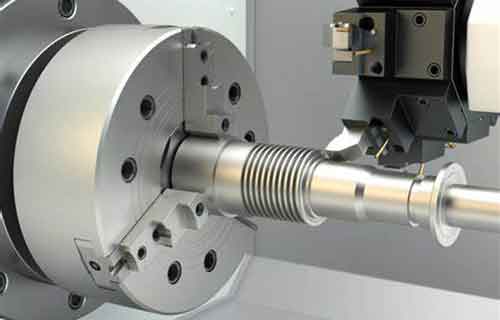
Vertical Machining is a subtractive manufacturing process where a rotating cutting tool, held by a vertical spindle, removes material from a workpiece. The workpiece is fixed on a table that moves in the X (left-right) and Y (front-back) axes, while the spindle moves in the Z (up-down) axis. This configuration is the hallmark of a Vertical Machining Center (VMC).
The primary alternative is the Horizontal Machining Center (HMC), where the spindle is oriented horizontally. The choice between them isn't about which is better universally, but which is more suitable for specific applications.
| Feature | Vertical Machining Center (VMC) | Horizontal Machining Center (HMC) |
|---|---|---|
| Spindle Orientation | Vertical | Horizontal |
| Chip Evacuation | Relies on gravity; chips fall away from the workpiece and tool. | Excellent; chips fall clear into the bed, ideal for heavy cutting. |
| Typical Workpiece | Ideal for flat plates, molds, and parts where machining is primarily on the top face. | Best for cube-shaped parts requiring machining on multiple sides in one setup. |
| Table Access | Generally single-station table. | Often features a rotary pallet changer for high-volume, unattended production. |
| Cost | Lower initial investment and generally lower operating costs. | Higher initial cost, but potentially higher throughput for complex parts. |
- In Practice: For a job shop machining aluminum brackets or plastic injection molds where setup simplicity and visibility are key, a VMC is often the perfect, cost-effective choice. For an automotive supplier producing engine blocks that need milling on four faces, an HMC with tombstone fixtures and automatic pallet changers would provide superior efficiency.
What are the core components of a vertical machining center?
Understanding a VMC's anatomy is crucial for operation and troubleshooting. Its robustness and precision are built on several integrated subsystems:
- Machine Frame & Base: The foundational structure, typically made of cast iron or polymer concrete, provides the mass and rigidity necessary to dampen vibrations and maintain accuracy under heavy cutting loads.
- Spindle & Spindle Drive: The heart of the machine. It houses the motor (often a high-speed, integrated spindle motor) and the tool-holding mechanism (like a BT or CAT taper). Spindle power (kW/HP) and maximum speed (RPM) define its capability range.
- Axis Motion System: Comprises:
- Linear Guides: Precision rails and bearings (often linear motion guides) that allow smooth, frictionless movement.
- Ball Screws: Convert the rotary motion of servo motors into precise linear motion for the X, Y, and Z axes.
- Servo Drives & Motors: Provide the power and closed-loop feedback for accurate positioning.
- Tool Magazine & ATC (Automatic Tool Changer): A carousel or arm that stores multiple cutting tools and automatically exchanges them into the spindle as programmed, enabling complex, multi-operation machining without manual intervention.
- CNC Control Unit: The "brain" (e.g., Fanuc, Siemens, Heidenhain). It interprets the G-code program and coordinates all machine functions—axis movement, spindle speed, coolant flow, and tool changes.
- Coolant System: Delivers cutting fluid to the machining area to cool the tool and workpiece, lubricate the cut, and flush away chips.
How does the spindle orientation impact machining operations?
The vertical spindle orientation is not a minor design detail; it fundamentally shapes the VMC's operational strengths and workflow.
- Workpiece Visibility & Setup: The open-top design offers excellent operator visibility. Loading a 500kg steel plate onto the bed using a crane is straightforward, and verifying tool paths is easier, enhancing safety and reducing setup errors.
- Gravity-Assisted Machining: This is a critical advantage. Chips fall away from the cut due to gravity. In our experience machining graphite electrodes for EDM, this is essential to prevent conductive chips from recutting and damaging the delicate workpiece surface. Similarly, when drilling deep holes, chips are expelled more effectively.
- Force Direction: Cutting forces are primarily directed downward into the sturdy machine bed and column, promoting inherent stability. This makes VMCs exceptionally good for heavy face milling operations where large, flat surfaces need to be finished.
- Limitation & Workaround: The main limitation is single-side access. You typically machine only the top and sides of a part. To machine the bottom, you must flip it. Advanced 5-axis VMCs or machines with integrated rotary tables (trunnion style) overcome this by tilting the spindle or rotating the workpiece.
What materials can be processed using vertical machining?
VMCs are remarkably versatile. The key is pairing the machine's capabilities with the correct cutting tools, parameters, and fixturing. Here’s a breakdown:
- Metals:
- Aluminum & Non-Ferrous Alloys: The sweet spot for many VMCs. High spindle speeds and appropriate tools allow for high-speed machining (HSM), achieving excellent surface finishes and high material removal rates.
- Steel, Stainless Steel, & Cast Iron: Require robust, rigid machines with ample torque. Slower speeds, heavier cuts, and premium coated carbide tools are used. A rigid VMC with a 30+ HP spindle can efficiently machine 4140 steel for automotive components.
- Exotic Alloys: (e.g., Titanium, Inconel) Demand specialized knowledge. They require low speeds, high rigidity, constant coolant flow, and extremely wear-resistant tooling to manage heat and work hardening.
- Plastics & Composites: Easily machined but require sharp tools, high speeds, and often specialized vacuum fixturing to hold delicate parts. Managing heat is crucial to prevent melting.
- Other Materials: Wood, foam (for prototyping), and certain ceramics. Each requires specific tool geometries and machining strategies to prevent chipping, melting, or excessive tool wear.
What industries rely most heavily on vertical machining technology?
VMCs are ubiquitous due to their adaptability and value. Key sectors include:
- Aerospace: For machining airframe components, brackets, and housings from aluminum and titanium. High-precision 5-axis VMCs are vital for complex geometries.
- Automotive: A massive consumer. Used for prototyping, machining engine parts, transmission components, and custom aftermarket pieces.
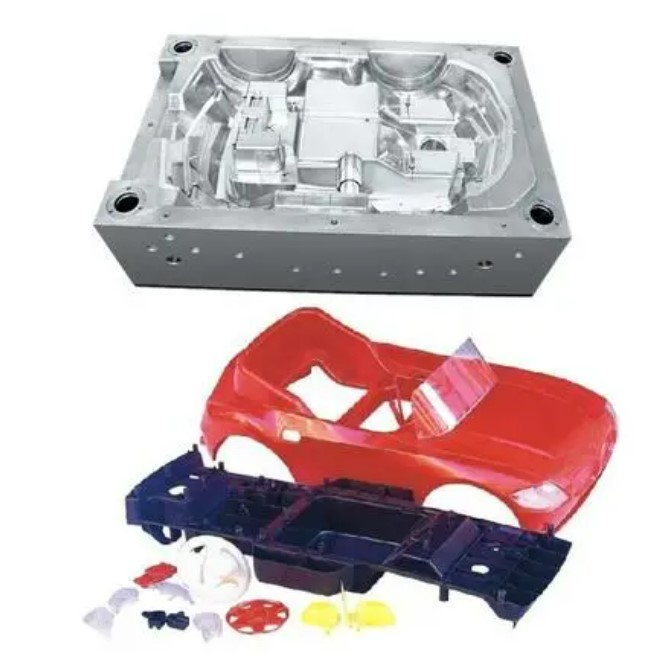
- Mold & Die: The backbone of this industry. VMCs are used for milling complex cavities and cores for plastic injection molds, die-casting dies, and stamping dies, often from hardened tool steels.
- Medical Device Manufacturing: Produces highly precise, small-scale components like orthopedic implants and surgical instrument parts from stainless steel and titanium, requiring extreme accuracy and fine surface finishes.
- General Job Shops & Contract Manufacturing: The most common application. VMCs are the workhorses for handling a wide variety of short to medium-run parts for diverse clients, prized for their quick setup and operational flexibility.
Key factors for optimizing cutting parameters and tool selection
Success in vertical machining hinges on the synergy between the machine, the tool, and the programmed parameters. Here’s a professional framework:
- Define the Goal: Is it maximum metal removal, best surface finish, longest tool life, or shortest cycle time? You often must balance these.
- Select the Tool Material & Geometry:
- Material: Carbide is standard. Use coatings (TiAlN, AlCrN) for hardness and heat resistance in steel/iron.
- Geometry: A high helix, polished flute tool is ideal for aluminum. A strong, positive rake geometry works for general steel.
- Calculate Cutting Parameters (Speed, Feed, Depth of Cut):
- Surface Speed (SFM or m/min): Provided by tooling manufacturers based on workpiece material. Example: 6061 Aluminum might be 800-1500 SFM.
- Spindle Speed (RPM): Calculate from SFM and tool diameter.
RPM = (SFM x 3.82) / Tool Diameter (in inches). - Feed Rate (IPM):
IPM = RPM x # of Flutes x Chip Load (inch per tooth). Chip load is critical—too small causes rubbing and heat; too large breaks tools. - Depth of Cut (Axial & Radial): Start conservative. For roughing, a deeper axial cut with a smaller radial step-over is often more efficient and stable than a shallow, full-width cut.
- Consider the Setup & Machine Condition: A poorly fixtured part or a worn-out machine will ruin even the best calculations. Ensure rigid workholding and machine maintenance.
Optimization Case Study: When we increased the surface speed by 20% and simultaneously reduced the radial depth of cut by 30% for a finishing pass on an aluminum aerospace part, we achieved a 50% improvement in surface finish (from Ra 32 to Ra 16 µin) and extended tool life by 15%, simply by generating a thinner, cooler-cutting chip.
Conclusion
Vertical machining remains a fundamental and highly adaptive technology in modern manufacturing. From its gravity-friendly design and operator-centric layout to its ability to handle a vast spectrum of materials, the VMC offers an unmatched blend of precision, versatility, and value. By understanding its core principles—from the impact of its vertical spindle orientation to the science of optimizing cutting parameters—engineers and machinists can unlock its full potential. Whether you are producing intricate medical devices or robust automotive components, mastering the vertical machining center is key to achieving efficiency, quality, and competitiveness in today's demanding industrial landscape.
FAQ
Q: What are the main advantages of a vertical machining center?
A: The primary advantages are lower initial cost, excellent visibility and ease of setup for the operator, effective chip evacuation due to gravity, and inherent stability for heavy face milling operations.
Q: Can a vertical machining center do 5-axis work?
A: Absolutely. Modern 5-axis VMCs integrate a rotary/tilt table (trunnion) or a tilting spindle head. This allows for machining complex contours on five sides of a part in a single setup, eliminating the need for multiple fixtures and significantly improving accuracy for parts like impellers or turbine blades.
Q: How do I choose between a VMC and an HMC for my shop?
A: Analyze your typical workpiece geometry and volume. Choose a VMC for flat parts, molds, and lower-volume jobs where cost and simplicity are key. Choose an HMC for cube-shaped parts, high-volume production requiring multi-face machining, and applications where superior chip evacuation for heavy cuts is critical.
Q: What is the most common problem in vertical machining?
A: Beyond general mechanical issues, a frequent challenge is poor chip management. If chips are not effectively cleared by coolant or air blast, they can be recut, leading to poor surface finish, accelerated tool wear, and even workpiece damage. Proper tool path strategies and coolant pressure are vital.
Contact Yigu Technology for Custom Manufacturing
Are you looking for a reliable manufacturing partner with deep expertise in vertical machining and advanced CNC machining solutions? At Yigu Technology, we combine state-of-the-art VMCs with seasoned engineering experience to deliver high-precision, custom components that meet your exact specifications.
From prototype to production, we handle complex materials and tight tolerances across aerospace, automotive, medical, and industrial sectors. Let us optimize your design for manufacturability and provide a seamless, quality-driven production process.
Reach out today for a consultation and quote. Transform your designs into reality with precision and reliability.