Introduction
You have a design. It looks perfect on the screen. The dimensions are right. The tolerances are specified. But one question remains: what metal should you use? Choose wrong, and your part fails in service. Choose over-specified, and your budget evaporates. Choose poorly matched to your process, and machining takes twice as long.
Machined metal selection is one of the most critical decisions in any manufacturing project. According to industry statistics, about 40% of machining project failures trace back to improper material selection. Ordinary steel used in a corrosive environment fails prematurely. High-density metal used where weight matters adds unnecessary cost.
At Yigu Technology, we machine metals daily across automotive, aerospace, medical, and industrial sectors. This guide walks you through the selection logic—from understanding metal types to matching project requirements to processing capabilities.
What Are the Different Types of Machined Metals?
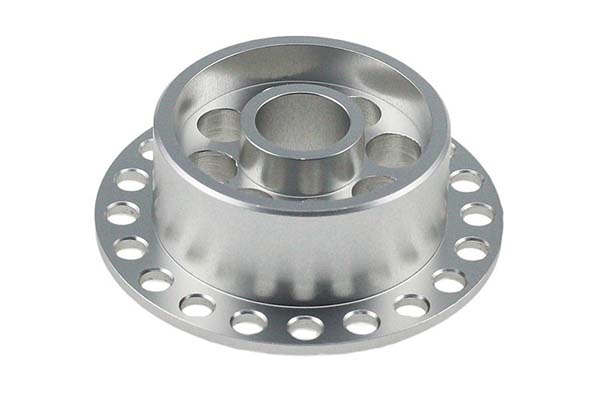
Aluminum Alloys: Lightweight and Machinable
Aluminum alloys are based on aluminum with magnesium, silicon, and other elements. Their core characteristics:
- Density: 2.7 g/cm³ (only 35% of steel)
- Machinability: Excellent; low tool wear, high speeds possible
- Corrosion resistance: Good; forms protective oxide layer
Advantages:
- Significant lightweight effect
- High machining efficiency
- Good thermal conductivity
Disadvantages:
- Lower strength than steel
- Performance degrades at high temperatures (above 200°C)
| Alloy | Strength | Best For |
|---|---|---|
| 6061 | Moderate | General purpose; structural; enclosures |
| 7075 | High | Aerospace; high-stress applications |
| 2024 | Very high | Aircraft structures; fatigue-resistant parts |
Case Study:
A new energy vehicle manufacturer chose 6061 aluminum for battery pack brackets. Results compared to steel:
- Weight reduced by 42%
- Machining efficiency increased by 30%
- Unit cost reduced by 25%
Stainless Steel: Corrosion Resistance
Stainless steel contains ≥10.5% chromium, forming a protective oxide layer. Classified by structure:
- Austenitic (304, 316): Most common; excellent corrosion resistance
- Ferritic (430): Moderate corrosion; lower cost
- Martensitic (410, 420): Hard; can be heat-treated
| Grade | Properties | Best For |
|---|---|---|
| 304 | Good corrosion resistance; moderate machinability | General purpose; food equipment; architectural |
| 316 | Added molybdenum; superior salt spray and heat resistance | Marine; chemical; medical |
Advantages:
- Long service life
- Low maintenance
- Aesthetic appearance
Disadvantages:
- Difficult to machine (work hardens)
- Higher cost than carbon steel
Steel: The Workhorse
Steel is the most widely used machined metal. Classified by:
- Carbon content: Low carbon (mild), medium carbon, high carbon
- Alloy content: Carbon steel; alloy steel (40Cr, 20CrMnTi)
| Grade | Properties | Best For |
|---|---|---|
| 45# (1045) | Moderate strength; good machinability | Shafts, gears, general machinery |
| 40Cr | High strength after heat treatment; tough | Heavy-duty parts, drive shafts |
| GCr15 | Bearing steel; high hardness | Bearings, precision rollers |
Advantages:
- Cost-effective
- Wide availability
- Good strength and toughness
Disadvantages:
- High density (7.85 g/cm³)
- Poor corrosion resistance; requires coating or plating
Copper and Copper Alloys: Conductivity
Copper and its alloys offer exceptional electrical and thermal conductivity.
| Material | Properties | Best For |
|---|---|---|
| Copper | Highest conductivity; good thermal | Electrical components; heat sinks |
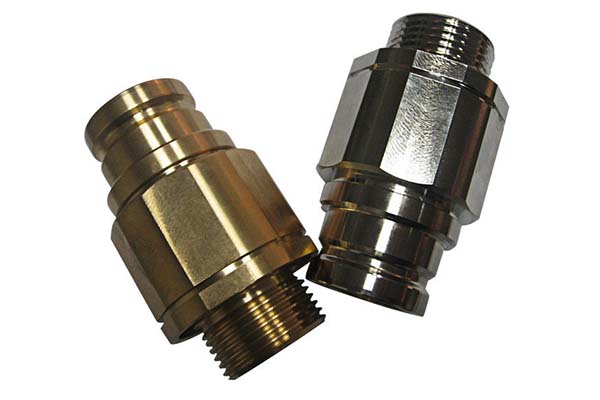
| Brass (copper-zinc) | Good machinability; lower cost | Fittings; decorative; valves |
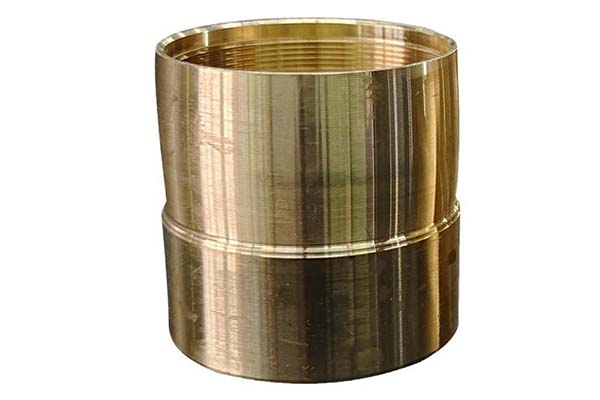
| Bronze (copper-tin) | High strength; wear-resistant | Bearings; bushings; gears |
Advantages:
- Excellent electrical and thermal conductivity
- Good corrosion resistance
- Machinable
Disadvantages:
- High density (8.9 g/cm³)
- Higher cost than steel and aluminum
Case Study:
An electronics manufacturer chose copper for heat sinks. Thermal conductivity was 60% higher than aluminum alloy, ensuring reliable heat dissipation for long-term equipment operation.
Special Alloys: Extreme Conditions
Special alloys are designed for demanding applications where standard metals fail.
| Material | Properties | Best For |
|---|---|---|
| Titanium alloys | High strength; low density; excellent corrosion resistance | Aerospace; medical implants; high-performance |
| Superalloys (Inconel, Hastelloy) | Maintain strength at 600–1000°C | Jet engines; gas turbines; chemical processing |
| Tungsten carbide | Extreme hardness; wear resistance | Cutting tools; wear parts |
Advantages:
- Meet extreme condition requirements
- Exceptional performance
Disadvantages:
- Very difficult to machine
- Extremely high cost
- Long lead times
How Do You Match Project Requirements?
Strength and Durability
Clarify strength requirements early. Use tensile strength and yield strength as screening criteria.
| Application | Material | Tensile Strength |
|---|---|---|
| Heavy-duty drive shaft | 40Cr alloy steel | ≥980 MPa |
| General machinery shaft | 45# steel | ≥600 MPa |
| Light-load bracket | 6061 aluminum | ≥205 MPa |
Durability considerations:
- Parts under high-frequency vibration need good toughness to avoid fatigue fracture
- Impact-resistant parts require high impact strength
Weight and Density
For weight-sensitive projects (aviation, new energy vehicles, drones), prioritize low-density materials.
| Material | Density | Weight vs. Steel (same volume) |
|---|---|---|
| Steel | 7.85 g/cm³ | Baseline |
| Aluminum | 2.7 g/cm³ | 65% lighter |
| Titanium | 4.5 g/cm³ | 43% lighter |
Case Study:
A drone project initially used steel for propeller shafts. Battery life was only 20 minutes. After switching to titanium, weight reduced by 50%, battery life increased to 35 minutes.
For non-weight-sensitive projects (fixed machinery bases), steel is preferred for stability and cost.
Corrosion and Heat Resistance
Match material to environmental conditions:
| Environment | Recommended Material |
|---|---|
| Humid, acid-alkali | 316 stainless steel; aluminum |
| Marine (salt spray) | 316 stainless steel; Hastelloy |
| High temperature (engine perimeter) | Superalloys (Inconel) |
| High temperature (moderate) | Heat-resistant steel; titanium |
Data point: Ordinary steel in a humid environment lasts less than 1 year. 304 stainless steel extends life to 10+ years.
Cost-Benefit Analysis
Balance material cost with project value. Avoid over-specifying.
| Material | Relative Cost |
|---|---|
| Steel, aluminum | Baseline (1×) |
| 304 stainless | 1.2–1.5× |
| 316 stainless | 1.5–2× |
| Titanium | 15–20× |
| Superalloys | 20–30× |
Case Study:
A civil pipeline project chose 304 stainless steel over 316. Under the same corrosion resistance requirements, material cost reduced by 30%.
How Does Processing Technology Affect Selection?
Common Machining Methods
Different machining methods have different material compatibility.
| Method | Best For | Limitations |
|---|---|---|
| Turning, milling | Aluminum, steel, brass | Hard materials cause tool wear |
| Grinding | Stainless, hardened steel, bearing steel | Slower; higher cost |
| EDM | Hard-to-machine alloys, complex shapes | Slow; limited to conductive materials |
| Laser cutting | Thin sheets; stainless, steel | Thickness limits; heat-affected zone |
Material Adaptability to Processes
| Metal | Adaptable Processes | Challenges |
|---|---|---|
| Aluminum | Turning, milling, stamping | Prone to burrs; sharp tools needed |
| Stainless steel | Turning, grinding, laser | High cutting temperature; tool adhesion; requires cooling |
| Steel | Turning, milling, grinding | High carbon steel is brittle; control cutting speed |
| Special alloys | EDM, laser processing | Low efficiency; specialized equipment needed |
Precision and Surface Treatment Requirements
For high-precision projects (instrument parts, bearings), choose materials that are machinable and stable.
| Material | Achievable Tolerance | Surface Treatment |
|---|---|---|
| 45# steel, 6061 aluminum | ±0.005 mm (grinding) | Plating, painting |
| Stainless steel | ±0.01 mm | Passivation; polishing |
| Bearing steel (GCr15) | Ra 0.025 μm surface finish | None (as-ground) |
Case Study:
A precision bearing project used GCr15 bearing steel. After grinding, surface roughness of Ra 0.025 μm achieved the high-speed rotation accuracy requirements.
What Is the Decision Framework?
Step-by-Step Selection Logic
- Define core requirements: Strength, weight, corrosion resistance, temperature, cost
- Screen material families: Aluminum for lightweight; steel for strength; stainless for corrosion; special alloys for extreme conditions
- Evaluate processing compatibility: Can the material be machined with available equipment?
- Balance cost vs. performance: Avoid over-specifying
- Validate with small-batch trial: Test material suitability before full production
Selection Matrix
| Requirement | Primary Choice | Alternative | Considerations |
|---|---|---|---|
| Lightweight, general | 6061 aluminum | 7075 aluminum (higher strength) | Machinability excellent |
| Lightweight, high strength | 7075 aluminum | Titanium (costly) | Titanium harder to machine |
| Strength, low cost | 45# steel | 40Cr (higher strength) | Heat treatment may be needed |
| Strength, wear resistance | 40Cr (heat-treated) | GCr15 bearing steel | Grinding required |
| Corrosion resistance | 304 stainless | 316 stainless (marine) | 316 more expensive |
| Extreme conditions | Superalloys (Inconel) | Titanium | EDM or laser processing |
Yigu Technology's Perspective
At Yigu Technology, we believe the core of machined metal selection is precise matching, not "the higher the better." The most common mistake in material selection is pursuing high performance while ignoring cost and processing feasibility.
Our recommendations:
- Clarify core working condition indicators early in the project
- Verify material adaptability through small-batch trial machining
- Match material to process—the best material is worthless if it cannot be machined efficiently
Future trends:
- As demand for high-end equipment increases, processing costs for special materials like titanium and superalloys will gradually decrease
- Application scenarios for these materials will expand
- New alloys with improved machinability will emerge
Conclusion
Choosing the right machined metal follows a simple logic: material properties → project requirements → processing technology.
- Understand metal types: Aluminum (lightweight), steel (strength, cost-effective), stainless (corrosion resistance), copper (conductivity), special alloys (extreme conditions)
- Match project requirements: Strength, weight, corrosion, heat, cost
- Consider processing: Machinability, available equipment, precision needs
- Balance cost and performance: Avoid over-specifying
Ordinary projects prioritize cost-effectiveness with steel and aluminum. Special conditions require targeted selection of stainless or special alloys. Reasonable material selection improves product quality, extends service life, and maximizes project value.
FAQ
In civil projects, considering cost and corrosion resistance, which machined metal is most suitable?
304 stainless steel or 6061 aluminum are the best choices.
- 304 stainless: Good corrosion resistance, low maintenance, suitable for humid environments
- 6061 aluminum: Cost similar to 304 stainless, lighter weight, good for lightweight needs
Both have moderate machinability and suit conventional processing.
Which special alloy should I choose for mechanical parts in a high-temperature environment (800°C)?
Inconel 718 superalloy is recommended. It maintains excellent strength and oxidation resistance at 800°C. It is the mainstream material in aerospace and high-end engine applications. Use EDM or laser processing to ensure machining accuracy.
How do I choose between aluminum and steel under the same strength requirements?
- If lightweight is critical (transportation, drones): Choose high-strength aluminum (7075). Higher cost than steel but significantly reduces weight.
- If no weight limits: Choose 40Cr alloy steel. Lower cost, more mature processing technology.
How can I control processing costs for difficult-to-machine special alloys?
Three strategies:
- Optimize the process: Use "roughing + semi-finishing + finishing" segmented processing to reduce high-precision machining margin
- Choose professional coated tools: Extend tool life; reduce replacement frequency
- Batch processing: Share equipment setup costs; avoid cost increases from small-batch customization
Contact Yigu Technology for Custom Manufacturing
At Yigu Technology, we specialize in machining a wide range of metals—aluminum, steel, stainless steel, copper, titanium, and special alloys. Our capabilities include 5-axis CNC milling, CNC turning, grinding, and EDM for complex components.
We serve the aerospace, automotive, medical, and industrial sectors. Our team helps you select the right material for your application, balancing performance, cost, and machinability.
Contact us today to discuss your machined metal project. Let us help you choose wisely.