Cryogenic milling is a precision machining process that transforms the way we handle challenging materials. By integrating extreme cold into the cutting operation, it solves problems of heat generation, tool wear, and material damage that plague conventional methods. This article delves into the science behind cryogenic cooling, the materials that benefit most, its key advantages, and its critical role in advanced manufacturing. Whether you're an engineer facing production hurdles or a designer exploring new material possibilities, understanding cryogenic milling unlocks a new tier of manufacturing capability.
Introduction
In the relentless pursuit of manufacturing excellence, heat has always been the enemy. It dulls tools, warps workpieces, and limits the metals and polymers we can effectively machine. Cryogenic milling emerges as a sophisticated solution, leveraging the power of extreme cold—typically using liquid nitrogen at -196°C (-321°F)—to suppress heat at its source. This isn't just a niche technique; it's a paradigm shift for industries demanding ultra-precision, superior surface finishes, and the ability to process next-generation materials. From aerospace components to biomedical implants, cryogenic milling is redefining what's possible on the machining floor.
What Is Cryogenic Milling?
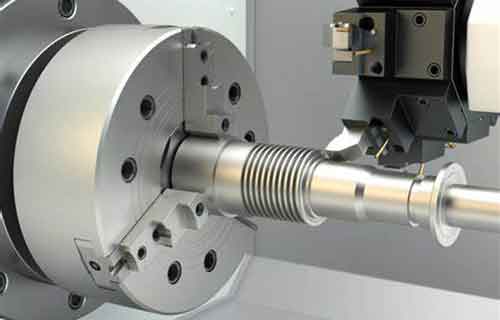
Cryogenic milling is a subtractive manufacturing process where the cutting zone is continuously cooled with a cryogenic fluid, most commonly liquid nitrogen (LN2). Unlike traditional flood coolant, which primarily lubricates and removes heat through convection, cryogenic cooling fundamentally changes the physical state of the material at the point of cut. The intense, directed cold embrittles the workpiece material, making it easier to shear, while simultaneously creating a thermal barrier that protects both the tool and the part from destructive heat. This process enables the high-precision machining of materials that are otherwise considered difficult, gummy, or heat-sensitive.
How Does Cryogenic Cooling Work?
The effectiveness of cryogenic milling hinges on a precise, controlled delivery system. Understanding the mechanism is key to appreciating its benefits.
The Science of Heat Suppression
At the moment a cutting tool engages a workpiece, localized temperatures can exceed 1000°C. Cryogenic cooling works through several simultaneous physical principles:
- Heat Extraction: Liquid nitrogen absorbs immense latent heat as it vaporizes, providing instant cooling at the interface.
- Material Embrittlement: The extreme cold alters the ductility of many materials, transforming them from gummy to brittle, which promotes cleaner chip formation and reduces cutting forces.
- Tribological Effects: The nitrogen atmosphere can minimize oxidation and act as a pseudo-lubricant in certain materials.
Delivery Systems in Practice
There are two primary setups, each with distinct advantages:
| System Type | Description | Best For |
|---|---|---|
| Jet-Nozzle System | Precise jets of LN2 are directed at the cutting edge and/or the back of the chip. | High-precision milling, research applications, complex toolpaths. |
| Through-Tool System | LN2 is delivered through internal channels in the spindle and tool, directly to the cutting edges. | Deep cavity milling, maximizing tool life, high-volume production. |
A real-world case study from a turbine blade manufacturer illustrates this: They struggled with tool wear and burr formation when milling intricate cooling channels in a nickel-based superalloy. Switching to a through-tool cryogenic system increased tool life by 300% and completely eliminated post-machining de-burring operations, saving over 40 hours per batch.
Which Materials Benefit Most from Cryogenic Milling?
While beneficial for many metals, cryogenic milling is transformative for specific material families.
Metals and Alloys
- Heat-Resistant Superalloys (HRSA): Materials like Inconel 718, Ti-6Al-4V, and Waspaloy are notorious for work hardening and causing rapid tool failure. Cryogenic milling prevents work hardening by controlling temperature, enabling feasible machining.
- Stainless Steels: Grades like 304 or 316, known for being gummy, become much more manageable, producing clean chips and better finishes.
- Tool Steels and Hardened Metals: Allows for machining in a hardened state, often eliminating post-heat treatment distortion.
Polymers and Composites
- Thermoplastics (e.g., PEEK, UHMWPE): Conventional milling melts or deforms these materials. Cryogenic keeps them well below their glass transition temperature, allowing for crisp, precise cuts.
- Carbon Fiber Reinforced Polymers (CFRP): Prevents matrix melting and delamination, preserving the composite's structural integrity.
What Are the Key Advantages?
The shift to cryogenic milling is driven by a compelling set of performance and quality benefits.
- Dramatically Extended Tool Life: By eliminating high-temperature tool wear mechanisms like diffusion and plastic deformation, tools last significantly longer—often 2 to 5 times—reducing cost and downtime.
- Enhanced Material Removal Rates (MRR): The ability to maintain higher cutting speeds and feeds without thermal damage boosts productivity.
- Superior Surface Integrity: Parts exhibit excellent surface finish, minimal residual stress, and no thermal alteration of the subsurface microstructure. This is critical for fatigue-critical components like aircraft landing gear.
- Environmentally Friendly Process: It eliminates the need for traditional oil-based coolants and their associated disposal costs, health hazards, and mess. The byproduct is simply nitrogen gas.
Equipment and Setup Requirements
Implementing cryogenic milling requires more than just liquid nitrogen. It's a systems integration challenge.
- CNC Machine: A robust, sealed machining center is recommended to manage condensation and contain nitrogen gas.
- Cryogenic Delivery System: This includes an LN2 dewar or generator, vacuum-insulated delivery lines, a precision control valve, and the nozzle or through-tool hardware.
- Safety Considerations: Proper ventilation to prevent oxygen displacement, training for handling cryogenic fluids, and the use of personal protective equipment (PPE) are non-negotiable.
- Process Expertise: Success depends on optimizing parameters like LN2 flow rate, nozzle positioning, and cutting speeds/feeds—a task for experienced engineers.
Applications and Industries
The unique capabilities of cryogenic milling make it indispensable in high-tech sectors.
- Aerospace & Defense: For machining titanium alloys and superalloys into engine components, structural frames, and landing gear with unmatched reliability.
- Medical & Dental: Essential for producing precise, burr-free surgical tools, orthopedic implants from PEEK or cobalt-chrome, and custom dental prosthetics.
- Automotive (Performance & EV): Used for machining lightweight, high-strength components for motorsports and electric vehicle battery housings.
- Tool & Die Making: Enables the direct machining of hardened die steels, improving accuracy and reducing lead times.
- Research & Development: Allows laboratories to prototype and test new, hard-to-machine materials that were previously unworkable.
Conclusion
Cryogenic milling is far more than a "cool" trick; it is a fundamental advancement in machining technology. By mastering the application of extreme cold, it overcomes the thermal barriers that have long constrained design and manufacturing. The results are clear: longer tool life, faster production, exceptional part quality, and the ability to conquer the most demanding materials. As industries continue to push the boundaries of performance and sustainability, cryogenic milling will undoubtedly play a central role in shaping the future of precision manufacturing.
FAQ
Is cryogenic milling expensive to implement?
The initial investment in delivery equipment and machine adaptation is higher than traditional cooling. However, the long-term ROI is often positive due to massive savings on tooling costs, reduced waste, increased throughput, and the elimination of coolant disposal.
Can any CNC machine be converted for cryogenic milling?
While many machines can be adapted with a jet-nozzle system, optimal performance comes from machines designed or retrofitted for it. Key factors include spindle compatibility, effective sealing against moisture, and a control system that can integrate with the cryogenic controls.
Is liquid nitrogen the only coolant used?
Liquid nitrogen is the most common due to its extremely low temperature, inert properties, and availability. Liquid carbon dioxide (LCO2) is sometimes used for milder cooling applications, but LN2 remains the standard for deep cryogenic processing.
Does cryogenic milling make the entire part extremely brittle?
No. The cooling is highly localized to the immediate cutting zone. The bulk of the workpiece remains at ambient temperature, so there is no risk of embrittling the entire component. Process control ensures only the material being removed is affected.
What happens to the nitrogen after use?
The liquid nitrogen vaporizes instantly upon contact with the tool and workpiece, returning to the atmosphere as inert, non-toxic nitrogen gas. This makes it a very clean process with no contaminated wastewater to treat.
Contact Yigu for Custom Manufacturing
Pushing the boundaries of material science requires a manufacturing partner who masters advanced processes. At Yigu, we combine engineering expertise with state-of-the-art cryogenic milling capabilities to turn your most challenging designs into reality. Whether you're developing a prototype from a new superalloy or scaling production of a precision medical device, our team is equipped to deliver superior results.
Let's solve your toughest machining challenges together. Contact our engineering team today for a consultation on your custom manufacturing project.