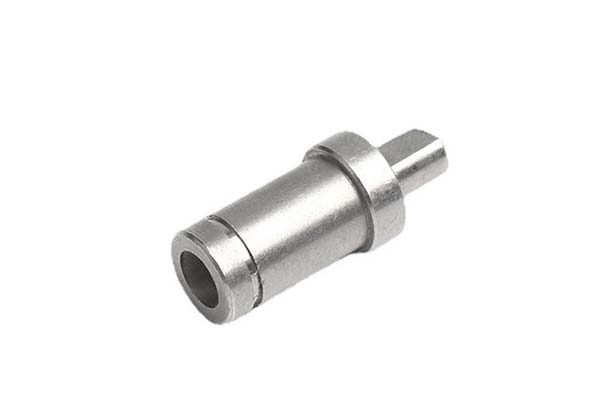
Introduction
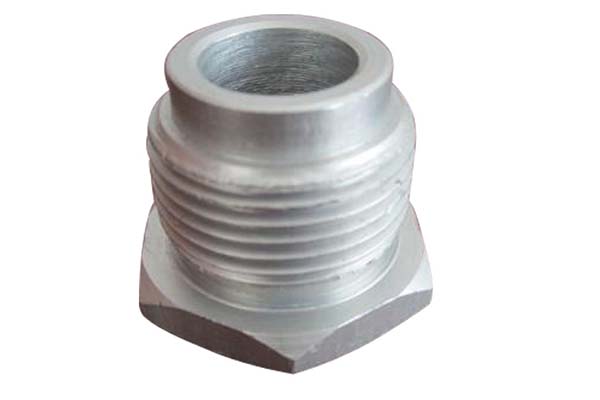
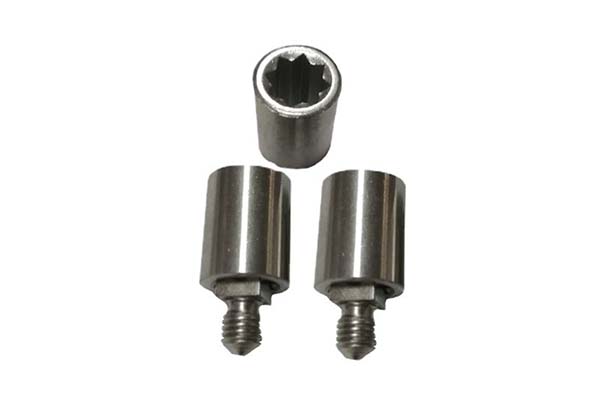
Turning is one of the most fundamental machining processes. A workpiece rotates on a lathe while a cutting tool removes material to create cylindrical shapes—shafts, bushings, threaded components, and more. Over 60% of mechanical parts require some form of turning during production. In automotive, engine components like crankshafts and camshafts depend on turning for their precision. In aerospace, turbine shafts demand tolerances measured in microns. Modern turning companies have transformed this age-old process through advanced equipment, stringent quality control, and skilled expertise—delivering precision that traditional methods cannot match. This guide explores how turning companies achieve precision, the technologies they employ, and how they compare to traditional approaches.
What Makes Turning a Critical Manufacturing Process?
The Fundamentals of Turning
Turning is a subtractive machining process where the workpiece rotates while a stationary cutting tool removes material. It produces cylindrical or conical surfaces, internal bores, threads, and complex contours.
Key applications:
- Automotive: Crankshafts, camshafts, transmission shafts, wheel hubs
- Aerospace: Turbine shafts, landing gear components, engine mounts
- Industrial: Pump shafts, hydraulic cylinders, valve stems
Precision requirements: Modern turning achieves tolerances as low as ±0.001 mm —an order of magnitude tighter than traditional methods.
| Turning Method | Average Error Margin |
|---|---|
| Traditional manual turning | ±0.1 mm |
| CNC turning | ±0.001 mm |
Why Precision Matters
A slight deviation in a crankshaft can cause engine vibrations, reduced performance, and premature wear. In aerospace, a turbine shaft with a 0.01 mm deviation can affect engine balance, leading to inefficiency and safety risks. Turning companies bridge the gap between design intent and reliable, functional components.
What Advanced Equipment and Tools Enable Precision?
CNC Lathes
CNC lathes are the cornerstone of modern turning. They are far more advanced than traditional manual lathes, offering:
- Programmable operations: Complex turning sequences executed automatically
- High repeatability: ±0.0005 mm consistency across production runs
- Multi-axis capability: Live tooling for milling, drilling, and tapping in the same setup
Example: A high-end CNC lathe can create helical grooves on a shaft with repeatability of ±0.0005 mm —essential for precision power transmission components.
Precision Cutting Tools
Tool selection directly impacts surface finish, tolerance, and tool life.
| Tool Type | Best For | Surface Finish Capability |
|---|---|---|
| Carbide-tipped | General machining, stainless steel | Ra <0.8 μm |
| Diamond-coated | Non-ferrous metals, plastics | Ra <0.2 μm |
| Ceramic | High-speed turning, hardened materials | Ra <0.4 μm |
Why it matters: A carbide-tipped tool maintains a sharp cutting edge even when machining tough materials like stainless steel. A diamond-coated tool achieves surface finishes below Ra 0.2 μm —critical for bearing surfaces and sealing faces.
Advanced Measuring Instruments
Precision turning requires precision measurement. Modern turning companies use:
Coordinate Measuring Machines (CMMs):
Measure dimensions with accuracy up to ±0.001 mm . Complex geometries, tight tolerances, and critical features are verified before parts leave the shop.
Laser interferometers:
Measure position and motion of machine axes with nanometer-level accuracy. Detect minute deviations, allowing real-time adjustments to maintain precision.
On-machine probes:
Measure dimensions while the part is still in the machine. If a diameter drifts, the control adjusts tool offsets immediately—no waiting for post-process inspection.
How Do Turning Companies Ensure Quality?
Raw Material Inspection
Quality control begins before machining. Raw materials are inspected for:
- Dimensions: Length, diameter, straightness measured with calipers and micrometers
- Chemical composition: Spectrometers verify element percentages. A deviation in alloy composition affects machinability and final part properties
In-Process Inspection
During turning, on-machine probes measure critical dimensions while the workpiece is still in the chuck. If deviation is detected, the machine adjusts tool offsets or feed rates immediately.
Example: If the diameter of a cylindrical part is slightly larger than specified, the control system reduces the feed rate to bring dimensions back within tolerance—before the part is completed.
Final Inspection
After machining, each part undergoes comprehensive inspection:
- Dimensional accuracy: CMMs verify all critical dimensions
- Surface finish: Profilometers measure roughness (Ra)
- Defect detection: Ultrasonic testing for internal flaws; magnetic particle inspection for surface cracks
- Visual inspection: Optical comparators compare actual shape to design blueprint
Result: Leading turning companies maintain rejection rates below 1% —a testament to effective quality control.
How Do Modern Turning Companies Compare to Traditional?
Efficiency
| Aspect | Traditional Turning | Modern CNC Turning |
|---|---|---|
| Production speed | 50–100 simple parts/day | 200–500 simple parts/day |
| Setup time | 2–4 hours per job | 0.5–1 hour per job |
| Downtime | 8–12 hours/month (mechanical wear) | 2–4 hours/month (predictive maintenance) |
Why modern wins: High-speed CNC lathes enable faster spindle speeds and feed rates. Automated tool setting and program loading reduce setup time by 75%. Predictive maintenance catches issues before breakdowns occur.
Precision
| Metric | Traditional Turning | Modern CNC Turning |
|---|---|---|
| Typical tolerance | ±0.05 mm | ±0.002–0.005 mm |
| Surface finish (Ra) | 1.6–3.2 μm | 0.2–0.8 μm |
Aerospace example: Turbine shafts require tolerances of ±0.002 mm. Traditional methods struggle to achieve this consistently. Modern turning companies using advanced CNC lathes and precision tooling maintain this tolerance across production runs.
What Role Does a Skilled Workforce Play?
Deep Equipment Knowledge
Skilled operators optimize machine performance based on material and operation. When machining titanium—difficult due to high strength and low thermal conductivity—they adjust parameters:
- Reduce feed rate to prevent overheating
- Adjust spindle speed for optimal cutting
- Ensure adequate coolant delivery
These adjustments prevent tool wear, maintain precision, and extend tool life.
Programming Expertise
CNC programming is essential for complex turning operations. Skilled programmers:
- Define toolpaths for multiple contours and features
- Account for tool radius, depth of cut, and surface finish requirements
- Optimize cycles to minimize time while maintaining quality
Example: Programming a part with multiple diameters, tapers, and threads requires precise toolpath definition. A skilled programmer ensures the final product meets exact specifications.
Problem-Solving
Issues arise during machining. Skilled workers diagnose and resolve them quickly.
Example: Chatter—unwanted vibrations affecting surface finish and accuracy—may be caused by:
- Improper tool holder setup
- Incorrect spindle speed
- Lack of workpiece rigidity
A skilled operator identifies the cause and takes corrective action: tightening the tool holder, adjusting speed, or adding workpiece support.
Impact: Studies show companies with highly skilled workforces have defect rates 30–50% lower than those with less-skilled employees.
A Real-World Turning Company Success
A turning company received an order for 500 aerospace-grade turbine shafts with:
- ±0.002 mm tolerance on critical diameters
- Ra 0.4 μm surface finish
- Inconel 718 material (difficult to machine)
Approach:
- Used high-rigidity CNC lathe with live tooling
- Selected carbide-tipped tools with TiAlN coating for heat resistance
- Implemented on-machine probing for real-time verification
- Skilled programmer optimized toolpaths to minimize tool engagement time
Results:
- All 500 parts met tolerance requirements
- Surface finish consistently Ra 0.3–0.4 μm
- Rejection rate: 0.8%
- Delivered 2 weeks ahead of schedule
Conclusion
Turning companies are shaping precision in manufacturing through advanced equipment, rigorous quality control, and skilled expertise. CNC lathes achieve tolerances of ±0.001 mm—100 times tighter than traditional methods. Precision cutting tools—carbide-tipped, diamond-coated—deliver surface finishes below Ra 0.2 μm. In-process inspection with on-machine probes catches deviations immediately. Skilled operators and programmers optimize parameters, diagnose issues, and ensure consistent quality. The result: components that meet the most demanding requirements across automotive, aerospace, and industrial sectors. As manufacturing continues to demand tighter tolerances and greater complexity, turning companies equipped with advanced technology and skilled talent will remain essential partners in precision production.
FAQs
What are the key factors that contribute to the high precision of turning companies?
Advanced equipment like high-end CNC lathes with multi-axis capability, precision cutting tools (carbide-tipped, diamond-coated), and accurate measuring instruments (CMMs, laser interferometers) are crucial. A skilled workforce—with deep knowledge of equipment operation, programming, and problem-solving—combines with stringent quality control measures at every production stage to achieve and maintain high precision.
How does a turning company ensure the quality of its products during the manufacturing process?
Quality control starts with raw material inspection (dimensions, chemical composition). During turning, in-process inspections use on-machine probes to verify dimensions in real time. After machining, comprehensive final inspection includes CMM dimensional verification, surface finish measurement, non-destructive testing for internal defects, and visual inspection. Only parts passing all inspections are released.
Can turning companies handle large-scale production while maintaining high precision?
Yes. Modern turning companies use advanced CNC lathes with high-speed capabilities and automated tool-changing systems, increasing production speed without sacrificing precision. Skilled workers optimize processes for large-scale runs. Continuous monitoring and quality control ensure high-precision standards are maintained across the entire production volume.
What is the difference between traditional turning and modern CNC turning?
Traditional turning relies on manual operation, with average error margins of ±0.1 mm, surface finishes of 1.6–3.2 Ra, and setup times of 2–4 hours per job. Modern CNC turning uses computer-controlled machines achieving tolerances of ±0.001–0.002 mm, surface finishes below 0.8 Ra, and setup times under 1 hour. Production speed is 2–5 times higher, with significantly lower downtime.
How do skilled workers impact turning precision?
Skilled workers optimize machine parameters for specific materials, write efficient CNC programs for complex geometries, and diagnose issues like chatter or tool wear quickly. They understand how material properties affect machining and adjust accordingly. Studies show companies with highly skilled workforces have defect rates 30–50% lower than those with less-skilled employees.
Contact Yigu Technology for Custom Manufacturing
At Yigu Technology, we combine advanced turning capabilities with skilled expertise to deliver precision components for automotive, aerospace, and industrial applications. Our CNC lathes achieve tolerances down to ±0.002 mm. We use carbide-tipped and diamond-coated tooling to achieve surface finishes as low as Ra 0.2 μm. Quality control includes in-process probing, CMM inspection, and full documentation. Whether you need shafts, bushings, or complex custom components, we deliver turning precision that meets your specifications. Contact us to discuss your turning project.