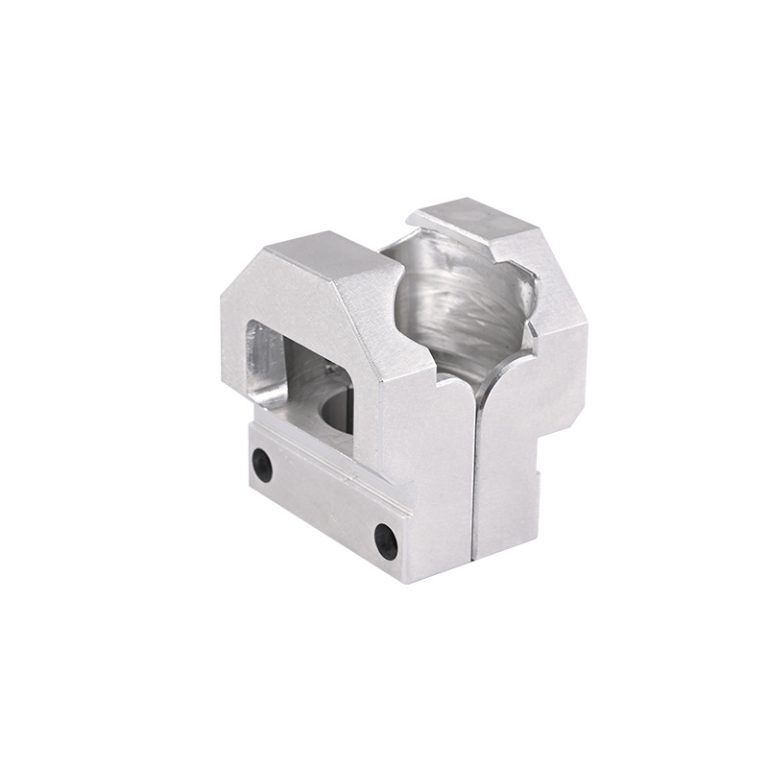
You have heard the term “3D printing” for years. But what started as a tool for hobbyists and prototype makers is now transforming industrial production. Additive manufacturing (AM) —building objects layer by layer from digital models—is rewriting the rules of design, material efficiency, and supply chains. Aerospace companies print lighter components. Medical device manufacturers create patient-specific implants. Automotive makers produce end-use parts. This guide explores how AM is driving a revolution across industries, the technologies behind it, and why it matters for the future of manufacturing.
What Makes Additive Manufacturing Different?
Traditional manufacturing is subtractive. You start with a block of material—metal, plastic, wood—and cut away what you do not need. This wastes material, limits design complexity, and requires expensive tooling.
Additive manufacturing reverses this. You start with nothing. You add material only where needed, layer by layer, following a digital blueprint.
| Aspect | Traditional Manufacturing | Additive Manufacturing |
|---|---|---|
| Material Waste | 30–95% | 5–10% |
| Design Freedom | Limited by tool access | Unlimited geometric complexity |
| Tooling Cost | $10,000–50,000 per mold | $0–1,000 (supports) |
| Lead Time | 2–4 weeks | 24–72 hours |
| Cost Scaling | Exponential (tooling dominates) | Linear (per-part cost stable) |
Data point: Airbus found that traditional machining of a titanium alloy component wasted 95% of raw material. Additive manufacturing reduced waste to less than 10% while enabling complex internal geometries that improved performance.
What Are the Core Additive Manufacturing Technologies?
Different technologies serve different materials and applications. Understanding them helps you choose the right process.
Fused Deposition Modeling (FDM)
FDM melts thermoplastic filament and extrudes it layer by layer. It is the most accessible AM technology.
| Aspect | Details |
|---|---|
| Materials | PLA, ABS, PETG, TPU, nylon, polycarbonate |
| Layer Thickness | 50–400 μm |
| Pros | Low cost, wide material range |
| Cons | Visible layer lines, supports required |
| Best for | Prototyping, jigs, low-volume production |
Stereolithography (SLA)
SLA uses a UV laser to cure liquid resin. It delivers high detail and smooth surfaces.
| Aspect | Details |
|---|---|
| Materials | Standard resins, tough, high-temp, biocompatible |
| Layer Thickness | 10–100 μm |
| Pros | Excellent surface finish, high precision |
| Cons | Resin cost, post-processing required |
| Best for | Dental models, jewelry, high-detail prototypes |
Selective Laser Melting (SLM)
SLM uses a high-power laser to melt metal powder into fully dense parts. It is the standard for metal additive manufacturing.
| Aspect | Details |
|---|---|
| Materials | Titanium, stainless steel, aluminum, Inconel |
| Layer Thickness | 20–100 μm |
| Pros | High strength, complex geometries |
| Cons | High equipment cost, supports required |
| Best for | Aerospace components, medical implants, industrial parts |
Binder Jetting
Binder jetting deposits a liquid binder onto powder, creating a “green part” that is later sintered.
| Aspect | Details |
|---|---|
| Materials | Metals, sand, ceramics |
| Layer Thickness | 100–300 μm |
| Pros | Large-scale parts, no supports |
| Cons | Shrinkage during sintering, lower density |
| Best for | Sand molds, automotive castings, large metal parts |
How Is Additive Manufacturing Transforming Industries?
The impact of AM varies by industry. Each sector leverages its strengths differently.
Aerospace and Defense
Aerospace demands lightweight, high-performance components. AM delivers.
GE Aviation’s LEAP Engine Nozzles: By merging 150 traditional parts into one using SLM, GE achieved:
- 15% weight reduction
- 8% fuel efficiency improvement
- Reduced assembly time and failure points
Relativity Space’s Terran 1 Rocket: The first nearly fully 3D printed rocket (85% of components). AM enabled:
- 40% reduction in part count
- Rapid design iteration
- Simplified assembly
Data point: NASA reported that AM components in aircraft can reduce fuel consumption by 5–10% over the lifetime of the vehicle.
Healthcare
AM enables patient-specific solutions that traditional manufacturing cannot.
Stryker’s Cobalt-Chrome Knee Implants: Using SLM, Stryker produces implants with trabecular structures that mimic natural bone. Results:
- 30% increase in osseointegration (bone bonding)
- Custom fit for each patient
- Reduced risk of implant rejection
Bioprinting: Dutch researchers created functional liver tissue using AM in 2022. This breakthrough enables:
- 80% reduction in drug testing costs compared to animal trials
- Potential for printed replacement organs
Automotive
Automotive uses AM for prototyping, tooling, and end-use parts.
Tesla: Uses FDM-printed ABS prototypes to cut component validation time by 70% . Rapid iteration enables faster development cycles.
BMW: Uses recycled nylon via SLS for interior parts. Results:
- 25% reduction in carbon footprint
- Tensile strength of 85 MPa (comparable to injection molding)
- Design freedom for ergonomic, aesthetic components
How Does AM Compare to Traditional Manufacturing?
The differences are not just technical—they reshape business models.
Design Freedom
Traditional manufacturing is constrained by molds, tools, and machining access. AM has no geometric limits.
Example: Lattice structures for weight reduction. Airbus printed brackets with lattice structures, achieving 40% weight reduction compared to machined counterparts—without sacrificing strength.
Material Waste
Traditional subtractive processes waste 30–70% of raw material. AM wastes 5–10% .
Example: In metal machining, up to 70% of the original block becomes chips. In SLM, excess powder is recycled and reused.
Tooling Costs
Traditional tooling—molds, dies, fixtures—costs $10,000–50,000 per part family. AM has zero tooling costs.
Example: A startup creating a new consumer product prototype can print directly without investing in expensive molds. This lowers barriers to entry for small businesses.
Production Time
Traditional lead times range from 2–4 weeks for medium-complexity parts. AM delivers in 24–72 hours.
Example: A new smartphone accessory prototype printed overnight; design iteration completed in days instead of weeks.
Cost Scaling
Traditional manufacturing has exponential cost scaling—tooling dominates small batches. AM has linear cost scaling—per-part cost remains stable across volumes.
| Volume | Traditional Cost | AM Cost |
|---|---|---|
| 1 unit | High (tooling amortized) | Low (no tooling) |
| 100 units | Moderate | Moderate |
| 10,000 units | Low | Higher (unless complex) |
What Does the AM Production Pipeline Look Like?
From digital file to physical part, AM follows a consistent workflow.
Design and Slicing
Engineers create a 3D CAD model (SolidWorks, Fusion 360, Rhino). Slicing software (Cura, PrusaSlicer, Magics) divides the model into layers and generates toolpaths.
Key parameters:
- Layer thickness: 0.1 mm for detail; 0.3 mm for speed
- Supports: Generated for overhangs >45°
- Infill: 10–100% depending on strength requirements
Additive Fabrication
The printer builds the part layer by layer.
Example: An SLM machine builds a titanium aerospace bracket at 20 μm layer thickness. An FDM printer constructs a plastic prototype at 200 μm for faster turnaround.
Post-Processing
Most AM parts require finishing:
- Support removal: Cutting or dissolving temporary structures
- Surface finishing: Sanding, vapor smoothing, polishing
- Heat treatment: Stress relief, annealing (critical for metals)
- Machining: Critical surfaces to final tolerance
Example: Vapor smoothing reduces SLA surface roughness from Ra 20 μm to Ra 1 μm. Heat treatment of SLM metal parts relieves internal stress and improves durability.
What Are the Environmental Benefits?
AM is often more sustainable than traditional manufacturing.
Material Efficiency
AM uses only the material that becomes the part. Waste is 5–10% vs. 30–70% for traditional methods.
Recyclability
Excess metal powder and thermoplastic filaments can be recycled. SLS nylon powder is typically recycled at 70–90% efficiency.
Local Production
AM enables distributed manufacturing. Parts can be printed near the point of use, reducing shipping distances and associated emissions.
Lightweighting
Lighter parts mean lower fuel consumption in aerospace and automotive. A 5% weight reduction in an aircraft can reduce fuel consumption by 3–5% over its lifetime.
What Does the Future Hold?
AM is still evolving. Several trends will shape its trajectory.
AI-Driven Design
Generative design software creates optimized geometries that humans would not conceive. AI-driven designs reduce weight while maintaining strength.
Sustainable Materials
Bio-based polymers, recycled powders, and low-carbon materials are expanding. BMW’s use of recycled nylon is one example.
Hybrid Manufacturing
Combining AM with CNC machining in a single machine. Print near-net shape, then machine critical surfaces to final tolerance.
Large-Scale Production
Binder jetting and multi-laser SLM systems are increasing throughput, making AM competitive for medium-volume production (1,000–10,000 units).
Yigu Technology’s Perspective
As a custom manufacturer, Yigu Technology sees additive manufacturing as a complementary capability, not a replacement for traditional methods. We use:
- FDM for rapid prototypes and tooling
- SLA for high-detail parts and dental models
- SLM for metal components in aerospace and medical applications
- Binder jetting for large-scale parts and sand molds
We guide clients on selecting the right technology based on part complexity, material requirements, volume, and budget. In our experience, the most successful AM projects are those where the technology is matched to the application—not forced where it does not belong.
Conclusion
Additive manufacturing is driving a transformative revolution across industries. It enables designs that were previously impossible. It reduces waste from 70% to 10%. It eliminates tooling costs and slashes lead times. Aerospace, healthcare, and automotive sectors are already reaping the benefits.
AM is not replacing traditional manufacturing—it is adding new capabilities. The future belongs to manufacturers who understand both additive and subtractive methods, and who choose the right tool for each job.
FAQ
What are the most common materials used in additive manufacturing?
Common materials include plastics (PLA, ABS, PETG, nylon), resins (standard, tough, high-temp, biocompatible), metals (titanium, stainless steel, aluminum, Inconel), ceramics, and composites (carbon fiber nylon). Material selection depends on application requirements for strength, heat resistance, and biocompatibility.
Is additive manufacturing suitable for large-scale production?
Yes, for certain applications. Binder jetting and multi-laser SLM systems are increasingly used for medium-volume production (1,000–10,000 units). However, for very high volumes (100,000+), traditional methods like injection molding and casting remain more cost-effective. The break-even point depends on part complexity and material.
How does additive manufacturing impact the environment?
AM is generally more sustainable than traditional manufacturing. It reduces material waste from 30–70% to 5–10%. Excess powder and filament can be recycled. Local production reduces shipping emissions. Lightweight components reduce fuel consumption in transportation. However, energy consumption per part can be higher for metal AM; the net environmental impact depends on the application.
What industries benefit most from additive manufacturing?
Aerospace uses AM for lightweight, complex components. Healthcare uses it for patient-specific implants and surgical guides. Automotive uses it for prototyping, tooling, and low-volume production. Industrial manufacturing uses it for jigs, fixtures, and end-use parts. Any industry that values complexity, customization, or rapid iteration can benefit.
How do I choose the right additive manufacturing technology?
Consider three factors: material, geometry, and volume. FDM for large plastic parts and prototypes. SLA for high-detail, smooth surfaces. SLM for metal parts requiring high strength. SLS for complex nylon parts without supports. Binder jetting for large-scale or sand-casting applications. When in doubt, consult with a manufacturing engineer who can match technology to your specific requirements.
Contact Yigu Technology for Custom Manufacturing
Yigu Technology specializes in non-standard plastic and metal custom manufacturing across additive and traditional processes. Whether you need rapid prototypes, production parts, or guidance on technology selection, our engineering team delivers. Contact us today to discuss your manufacturing project.