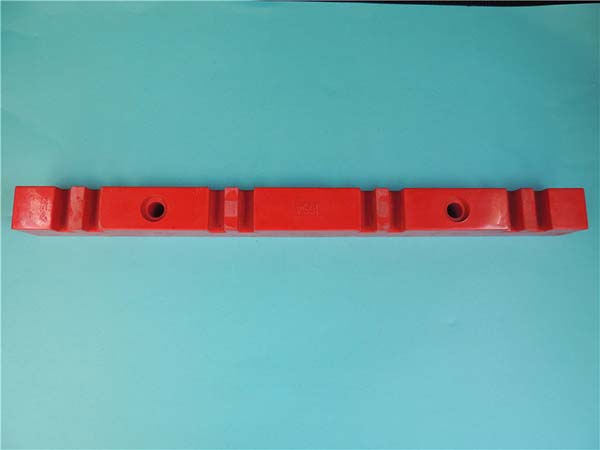
Introduction
Choosing the right material for a project can feel overwhelming. With countless options available—metals, thermoplastics, composites—how do you decide? Bakelite parts offer a unique combination of properties that have kept them in use for over a century. But they are not right for every application. This guide helps you understand what bakelite is, where it excels, where it falls short, and how to determine if it is the right choice for your specific project.
What Are Bakelite Parts?
Definition and Basic Composition
Bakelite is a thermosetting plastic—the first fully synthetic plastic ever invented. It is formed by a chemical reaction between phenol and formaldehyde in the presence of a catalyst. This reaction creates a cross-linked polymer structure.
What does "cross-linked" mean? Unlike thermoplastics that can be melted and reshaped, bakelite undergoes a permanent chemical change during curing. Once set, it cannot be remelted. This gives bakelite its heat resistance and dimensional stability.
The chemistry matters because:
- Phenol provides aromatic rings that contribute to rigidity and heat resistance
- Formaldehyde acts as a cross-linking agent, forming strong chemical bonds between polymer chains
This structure can withstand temperatures up to 150–180°C (302–356°F) without significant degradation—far higher than common thermoplastics like polyethylene or polypropylene.
Key Properties at a Glance
| Property | Bakelite Performance |
|---|---|
| Heat Resistance | Up to 150–180°C |
| Electrical Insulation | Excellent (10¹²–10¹⁴ ohm-cm) |
| Mechanical Strength | Moderate (tensile 30–70 MPa) |
| Chemical Resistance | Good against many acids, alkalis |
| Impact Resistance | Low (brittle) |
| Recyclability | Not recyclable (thermoset) |
Where Are Bakelite Parts Used?
Electrical and Electronic Industry
Bakelite's outstanding electrical insulating properties make it a natural fit for electrical applications. It prevents current flow, ensuring safety and proper function.
Key applications include:
- Switch housings: Withstand high voltages without conducting electricity
- Power line insulators: Maintain integrity under high humidity and temperature fluctuations
- Transformer components: Provide reliable insulation in high-voltage environments
- Connectors and sockets: Dimensional stability ensures secure connections
Industry data shows that in the past decade, bakelite has maintained about 30% market share in certain electrical insulator applications. In high-frequency circuit boards, bakelite-based connectors reduce signal interference while providing stable electrical connections.
Automotive Industry
Bakelite has served the automotive industry for decades. Common applications include:
Distributor caps: These components distribute high-voltage current from the ignition coil to spark plugs. Bakelite withstands the heat (up to 150–180°C) and electrical arcing generated in the ignition system without deforming.
Automotive knobs: Radio, heater controls, gearshift. Bakelite molds easily into ergonomic shapes, provides comfortable grip, and resists wear. A study on automotive interior components showed bakelite knobs had a failure rate of only 5% after 100,000 cycles of use—compared to 15% for some plastic alternatives.
Household and Consumer Goods
Bakelite parts have been in homes for generations.
Kitchenware handles: Pot handles and utensil handles. Heat resistance ensures handles stay cool to the touch when pots are on the stove. Durability means handles resist breaking or cracking over years of use.
Vintage electronics: Radios, telephones, and other consumer electronics once used bakelite cases. The material molded into attractive, streamlined designs while providing protection against electrical interference and mechanical damage. Vintage bakelite-cased radios remain collectible today for their aesthetic and historical value.
Other Industries
Aerospace: Bakelite appears in some non-critical interior trim components where heat resistance and dimensional stability matter. Its light weight compared to metals is an advantage.
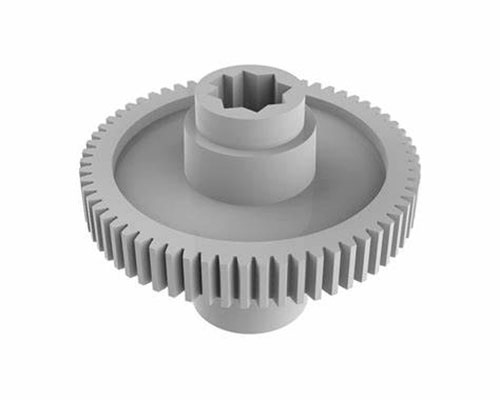
Mechanical manufacturing: In low-load applications, bakelite serves as material for gears and bearings. Its self-lubricating properties reduce the need for external lubricants, and wear resistance extends component life in less demanding environments.
What Are the Advantages of Bakelite Parts?
Heat Resistance
Bakelite maintains structural integrity up to 150–180°C. This makes it suitable for applications where other plastics soften or melt. In automotive ignition systems, kitchen cookware, and electrical enclosures, this heat tolerance is essential.
Electrical Insulation
With volume resistivity of 10¹²–10¹⁴ ohm-cm and dielectric strength of 10–30 kV/mm, bakelite is an excellent electrical insulator. It does not conduct electricity, even under high voltage, and resists arcing and tracking.
Dimensional Stability
Once cured, bakelite does not creep or deform under load. It maintains its shape across temperature changes and prolonged stress. This stability is critical in precision components like connectors and mechanical parts.
Chemical Resistance
Bakelite resists many common chemicals, including dilute acids, alkalis, and solvents. In automotive and industrial environments, this resistance protects components from oils, fuels, and cleaning agents.
Cost-Effectiveness
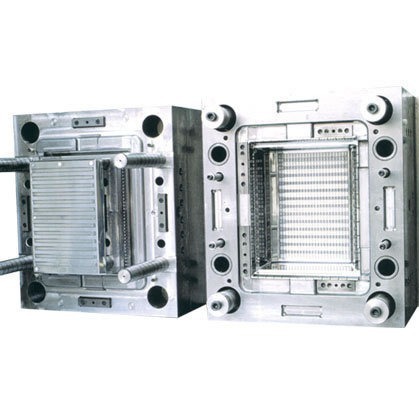
For medium to high volumes, compression molding makes bakelite parts affordable. Tooling costs are amortized across thousands or millions of units. Bakelite is generally less expensive than high-performance engineering plastics or machined metal parts.
What Are the Limitations of Bakelite Parts?
Brittleness
Bakelite is rigid but brittle. It does not flex under impact. Thin sections or sharp corners can chip or crack if subjected to sudden force. For applications requiring impact resistance—such as handheld devices or components exposed to vibration—bakelite may not be suitable.
Not Recyclable
As a thermosetting plastic, bakelite cannot be melted and remolded. Once cured, the cross-linked structure is permanent. This makes bakelite less attractive in applications where end-of-life recyclability is a priority.
Limited Strength Compared to Metals
Tensile strength of bakelite (30–70 MPa) is far below that of steel (200–2000 MPa). For high-load structural applications—heavy machinery, load-bearing components—metals or advanced composites are necessary.
Moisture Sensitivity
While bakelite resists moisture better than some materials, it can absorb small amounts over prolonged exposure. In precision applications, this may cause dimensional changes. For continuous water immersion, other materials may be more suitable.
How Do Bakelite Parts Compare to Alternatives?
| Property | Bakelite | Common Thermoplastics (PE, PP) | Metals (Steel, Aluminum) |
|---|---|---|---|
| Heat Resistance | High (150–180°C) | Low–Moderate (80–130°C) | Very High |
| Electrical Insulation | Excellent | Good | Poor (conductive) |
| Mechanical Strength | Moderate | Low–Moderate | Very High |
| Impact Resistance | Low | Moderate–High | High |
| Weight | Light | Light | Heavy |
| Cost | Low–Moderate | Low | Moderate–High |
| Recyclability | No | Yes | Yes |
How Do You Choose the Right Material for Your Project?
Step 1: Define Your Requirements
Start by clearly documenting your project requirements.
Mechanical requirements:
- What loads will the part bear? (tensile, compressive, bending)
- Will it experience impact or vibration?
- What is the expected service life?
Environmental requirements:
- What is the maximum operating temperature?
- Will the part be exposed to moisture, chemicals, or UV?
- What are the humidity conditions?
Electrical requirements:
- Will the part need to insulate or conduct?
- What voltages are present?
- Is arc resistance important?
Economic requirements:
- What is the target production volume?
- What is the budget per part?
- What are the tooling cost constraints?
Step 2: Evaluate Bakelite Against Requirements
| If your project requires… | Bakelite is suitable? | Alternative to consider |
|---|---|---|
| High heat resistance (150°C+) | ✓ Yes | PEEK, ceramics |
| Electrical insulation | ✓ Yes | Other thermosets, glass |
| Impact resistance | ✗ No | Polycarbonate, ABS, metals |
| High mechanical strength | ✗ No (moderate only) | Steel, aluminum, glass-filled composites |
| Low cost, moderate volume | ✓ Yes | Polypropylene, polyethylene |
| Recyclability | ✗ No | Thermoplastics |
Step 3: Conduct Sample Tests
Whenever possible, test samples under conditions matching your actual application.
For heat resistance: Heat samples to expected operating temperature. Check for deformation, softening, or property changes.
For mechanical performance: Apply forces similar to service conditions. Measure deflection, strength, and wear.
For electrical applications: Test insulation resistance, dielectric strength, and arc resistance under operating voltages.
Step 4: Consult with Experts
Material selection benefits from experienced guidance. Engineers and material suppliers can:
- Share lessons from similar applications
- Identify potential failure modes you might overlook
- Suggest alternatives that better match your requirements
- Provide data sheets and test reports
What Real-World Experience Shows?
Case Study: Automotive Ignition Components
A manufacturer of aftermarket distributor caps faced a choice: continue with bakelite or switch to a modern engineering plastic. Bakelite had performed reliably for decades, but a newer material promised slightly higher heat resistance.
Testing revealed:
- Bakelite withstood under-hood temperatures without deformation
- The alternative plastic showed slight softening at peak temperatures
- Bakelite's dielectric strength exceeded requirements
- Tooling costs for the alternative would have required significant investment
The manufacturer stayed with bakelite. Five years later, field failure rates remained below 1%.
Case Study: Kitchen Utensil Handles
A cookware company explored replacing bakelite handles with a modern thermoplastic. The goals: reduce cost and offer more color options.
The thermoplastic met the color requirement. But testing revealed:
- Handles became uncomfortably hot during stovetop use
- The material softened slightly when pots were left on high heat
- Long-term durability was unproven
The company retained bakelite for heat-critical applications while using thermoplastics for items not exposed to direct heat.
Yigu Technology's Perspective
At Yigu Technology, we have supplied bakelite parts across electrical, automotive, and industrial applications for years. Our experience confirms that bakelite remains relevant not despite its age, but because of its predictable performance.
We recently worked with a transformer manufacturer needing high-voltage insulating rods. The requirements were demanding:
- Continuous operation at 160°C
- Dielectric strength above 20 kV/mm
- Dimensional stability under load for 20+ years
Bakelite met these requirements. Modern alternatives either cost significantly more or could not match the long-term stability.
We also help clients recognize when bakelite is not the right choice. For a robotics project requiring impact-resistant gears, we recommended glass-filled nylon instead. For a marine application, we suggested corrosion-resistant thermoplastics.
The key is matching material properties to application requirements—not assuming newer is always better.
Conclusion
Bakelite parts offer a unique combination of heat resistance, electrical insulation, dimensional stability, and chemical resistance. They have served industries for over a century and continue to perform reliably in applications where these properties matter. However, bakelite has limitations: it is brittle, cannot be recycled, and offers only moderate mechanical strength compared to metals.
Whether bakelite is the right choice for your project depends entirely on your requirements. If your application demands high-temperature stability, electrical insulation, and dimensional precision—and can accommodate bakelite's brittleness—it may be an excellent choice. If you need impact resistance, high strength, or recyclability, other materials may serve you better. By carefully defining requirements, testing samples, and consulting with experts, you can make an informed decision that balances performance, cost, and sustainability.
FAQ About Bakelite Parts
What are bakelite parts used for?
Bakelite parts are used in electrical insulators, switch housings, automotive distributor caps, appliance handles, vintage electronics, gears for low-load applications, and components requiring heat resistance and dimensional stability.
What are the main advantages of bakelite?
Bakelite offers excellent heat resistance (up to 150–180°C), outstanding electrical insulation, dimensional stability under load, good chemical resistance, and cost-effectiveness for medium to high volumes.
What are the limitations of bakelite?
Bakelite is brittle and has low impact resistance. It cannot be recycled. Its mechanical strength is moderate—significantly lower than metals. It may absorb small amounts of moisture over time.
Is bakelite still used today?
Yes. While replaced by modern plastics in some applications, bakelite remains in use where heat resistance, electrical insulation, and dimensional stability are critical—including electrical components, automotive parts, and industrial applications.
How do I know if bakelite is right for my project?
Define your requirements for heat, mechanical load, impact, electrical properties, and budget. If high heat resistance and electrical insulation are priorities, and brittleness is acceptable, bakelite may be suitable. Test samples under actual operating conditions before committing to production.
Contact Yigu Technology for Custom Manufacturing
Need bakelite parts for your project—or help determining if bakelite is the right choice? Yigu Technology provides custom manufacturing of bakelite and engineered materials. From electrical insulators to automotive components, we help you select the right material and produce parts that meet your performance requirements. Contact us today to discuss your project.