Author name: mold7

mold7.com Focus on Plastic Metal Part Custom Solution One-stop Manufacturing technology article. email: info@mold7.com

Is Bakelite Molding the Right Choice for Your Manufacturing Needs?​

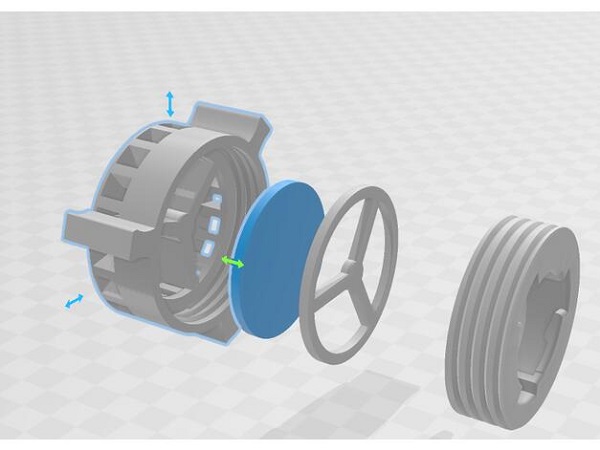
Can Additively Manufactured Materials Really Transform Modern Manufacturing?

Introduction Manufacturing is changing right before our eyes. For decades, we made things by cutting away material (subtractive manufacturing) or by shaping it with molds (formative processes). Both methods work, but they waste a lot. Think of machining a metal part: you start with a big block and cut until only 10-30% remains. The rest […]
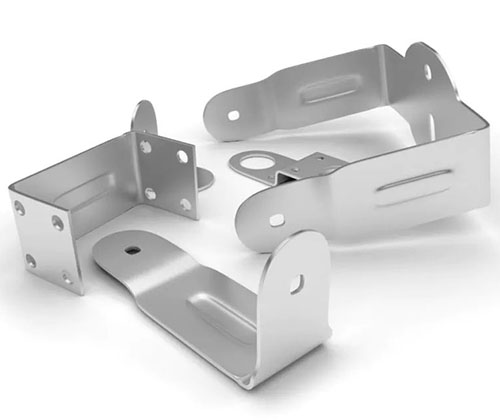
Metal stamping 2

What Exactly Is 16 Gauge Sheet Metal and Why Does It Matter?

Introduction If you have ever worked with metal, you have probably heard the term "gauge." It sounds simple, but it can be confusing. A higher gauge number actually means thinner metal. For example, 16 gauge sheet metal strikes a popular balance—it is thick enough to be strong, yet thin enough to be shaped easily. In

How Does Glass CNC Machining Revolutionize Precision Glassworking?

Introduction Glass has been shaped by human hands for thousands of years—blown, molded, cut, and ground by skilled artisans. But traditional glassworking has limits. Precision is inconsistent. Complex geometries are difficult or impossible. And scaling production while maintaining quality is a constant challenge. Glass CNC machining changes this. By combining computer-controlled automation with specialized diamond

Cnc Machining For Medical

How Is Rapid Prototyping Engineering Shaping the Future of Innovation?

Introduction Innovation demands speed. In the race to bring new products to market, the ability to iterate quickly, test concepts, and refine designs is everything. Rapid Prototyping Engineering (RPE) is not just a tool for making models—it is a catalyst for innovation. It enables faster iteration, cost-effective experimentation, and cross-industry collaboration. As technologies evolve to

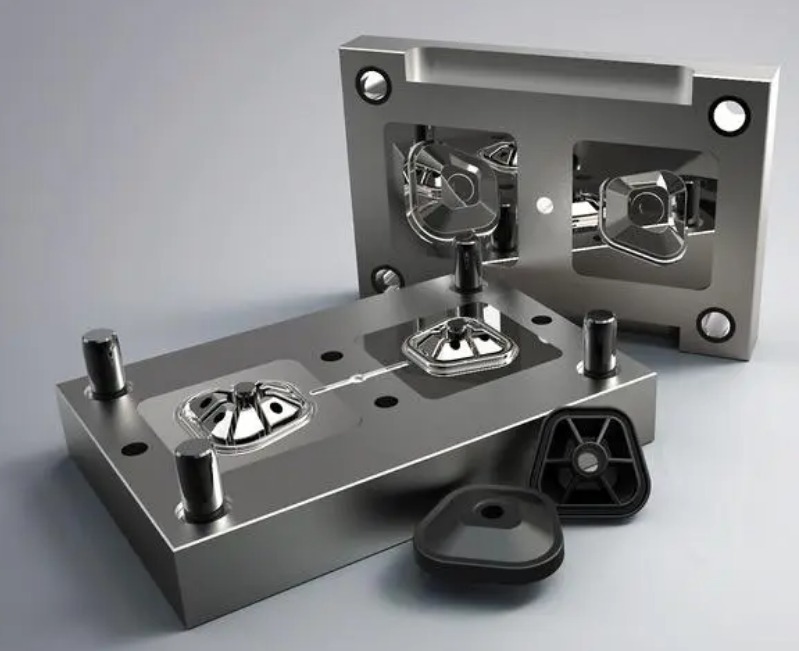
Customized opening mold for household appliances, pointed bottle cap plastic mold, pacifier bottle plastic mold, injection molding processing

What Is P20 (1.2311) Steel and Why Is It a Mold Making Workhorse?

Introduction You need a mold for a new product. Production volume is moderate—not a few hundred prototypes, not millions of parts. You want reliability without overpaying for features you don’t need. What steel do you choose? For thousands of manufacturers worldwide, the answer is P20 (1.2311) . It’s the most widely used plastic mold steel—found

Metal extrusion 1

What Do You Need to Know About Rapid Prototype Machined Parts?

Introduction You need a prototype that behaves like the final product—same material, same strength, same precision. 3D printing gives you form. CNC machining gives you function. Rapid prototype machined parts are components produced through machining processes during the rapid prototyping stage. They are made with high precision using advanced CNC (Computer Numerical Control) techniques, delivering

3D printing material - stainless steel 316

How Does Precision Advanced Machining Achieve Micron-Level Accuracy in High-Tolerance Manufacturing?

Introduction A medical device manufacturer needs a 0.1 mm diameter hole in a titanium implant with ±0.001 mm tolerance. Any error risks patient safety. An aerospace engineer requires a turbine blade with Ra 0.02 μm surface finish to reduce air resistance, but traditional machining cannot achieve that smoothness. These challenges demand precision advanced machining. This

Injection molding products

How Can You Master CNC Machining of High-Performance Plastics for Precision Components?

Introduction High-performance plastics have revolutionized manufacturing. They combine strength, chemical resistance, thermal stability, and lightweight properties that metals cannot match. PEEK withstands 260°C continuous use. PTFE resists almost all chemicals. UHMWPE offers exceptional wear resistance with a friction coefficient of 0.05–0.15. But machining these advanced materials comes with distinct challenges. Excessive heat generation can cause

Injection blow moulding products

How Is Injection Molding Shaping Precision and Efficiency in Modern Manufacturing?

Introduction Injection molding is the backbone of modern plastic manufacturing. It produces billions of parts annually—from tiny medical components to large automotive panels—with remarkable speed and consistency. But the true power of injection molding lies in its ability to deliver two essential qualities simultaneously: precision and efficiency. Precision ensures parts meet exact specifications, fit together

Metal Cnc Machining

How to Choose the Right Prototyping Materials for Your Project?

Introduction You have a product design. Now you need to choose the material for your prototype. The decision is critical. The right material allows accurate testing of form, fit, and function. The wrong one leads to misleading results, wasted time, and unnecessary cost. Prototyping materials range from plastics to metals to silicone rubber—each with unique

Reverse Injection Molding: A Guide for Beginners

What Is Reverse Injection Molding and How Does It Work?

Introduction Traditional injection molding is straightforward. Melt plastic, inject into a closed mold cavity, cool, and eject. It works for countless applications. But some parts—those with complex internal channels, intricate hollow structures, or embedded features—push traditional methods to their limits. They require complex core-pulling mechanisms, multi-piece molds, or secondary assembly. Reverse injection molding offers a

Cnc Precision Engineering

How Do You CNC Machine the Exotic Alloy Invar for Precision Applications?

Introduction Invar is not like ordinary steel. Its coefficient of thermal expansion (CTE) is as low as 1.2 × 10⁻⁶ K⁻¹ —approximately one-tenth that of carbon steel. This means it barely expands or contracts with temperature changes. Engineers choose it for satellite components that must maintain alignment in space, for precision instruments that must remain

Metal extrusion 1

What Is 20 Gauge Sheet Metal and Why Does Thickness Matter?

Introduction You are looking at a material specification sheet, and you see "20 gauge." What does that number actually mean? If you have ever ordered sheet metal, you know that choosing the wrong thickness can lead to parts that are too weak for the job or unnecessarily heavy and expensive. Maybe you have received material

Polyester Plastic Parts 2

How Is CNC Precision Manufacturing Inc. Driving Excellence in Advanced Machining?

Introduction In aerospace, a 1% reduction in aircraft weight leads to a 0.7% reduction in fuel consumption. In medical devices, a tolerance deviation of 0.0005 inches can mean the difference between a successful implant and a failed surgery. In automotive, high-performance engines demand components that withstand extreme temperatures and stresses. Advanced machining is the foundation

Cold Slug Injection Molding: What It Is and How to Avoid It

How Does Insert Molding Injection Enhance Manufacturing Efficiency?

Introduction Insert molding injection is a specialized manufacturing process that combines the versatility of plastic injection molding with the strength and functionality of pre-formed inserts—typically metal, but also glass, ceramic, or other plastics. By embedding inserts directly into plastic parts during molding, this technique creates integrated components that would otherwise require multiple assembly steps. The

Cnc Machining Bronze

How Do You Choose the Right CNC Machining Parts Manufacturer in China?

Introduction China has emerged as a global powerhouse in CNC machining. It offers cost-effective production without compromising on quality—when you choose the right partner. But with thousands of manufacturers, each claiming to be the best, how do you separate reliable suppliers from those that cut corners? The right manufacturer delivers precision parts on time, communicates

Sls Printed For Automotive Parts

How Is 3D Printing Changing the Way We Make Bike Parts?

Introduction You have likely noticed that bikes are getting lighter, more comfortable, and frankly cooler looking than ever before. A big part of that shift comes from 3D printing technology moving out of prototype labs and onto factory floors. The bicycle industry now uses additive manufacturing to create parts that were impossible to make just

Aluminum Cnc Milling

What Are the Best Practices for CNC Prototyping in Modern Product Development?

Introduction In product development, getting the prototype right is critical. The prototype stage can make or break a product—whether in automotive, aerospace, medical, or consumer goods. Traditional prototyping methods come with challenges. Manual crafting is time-consuming and lacks precision. Injection molding is costly for small batches. CNC prototyping changes this. Using computer-controlled machines to cut,

Cnc Machining Usa

How Do You CNC Machine Grade 9 Titanium (Ti-3Al-2.5V) for Precision Applications?

Introduction Grade 9 titanium—Ti-3Al-2.5V—sits in a sweet spot among titanium alloys. It is stronger than commercially pure titanium (Grade 2) by 50% , yet more ductile and easier to machine than Grade 5 (Ti-6Al-4V). Its density is 4.5 g/cm³ —40% lighter than steel while offering comparable strength. Engineers choose it for aerospace hydraulic lines, medical

3d printing custom parts

Is 3D Printing Really Changing How We Make Things?

Introduction Manufacturing companies today face real pressure. Customers want products faster. They want things made just for them. Supply chains keep breaking. Traditional manufacturing wasn't built for this world. Think about how we've always made things. You design a part. You make a mold. That takes weeks and costs thousands. Then you produce thousands of

Cnc Machining Materials

How Can You Master CNC Machining of Nickel Alloy Inconel 718?

Introduction Inconel 718 is a premier nickel alloy. It offers exceptional high-temperature performance, corrosion resistance, and high strength—properties that make it indispensable in aerospace, energy, and chemical processing. It retains 80% of its strength at 650°C , far exceeding stainless steels and titanium alloys. But these same attributes create significant machining challenges. Its high nickel

Scroll to Top