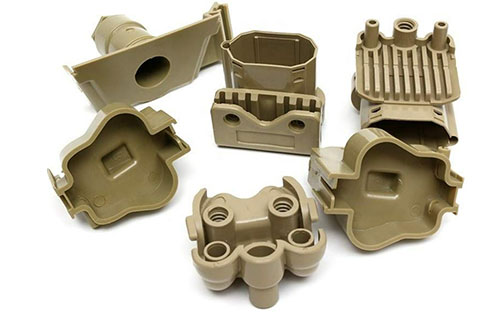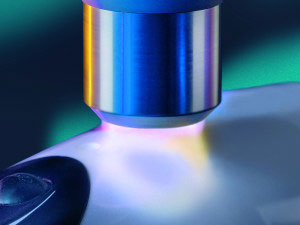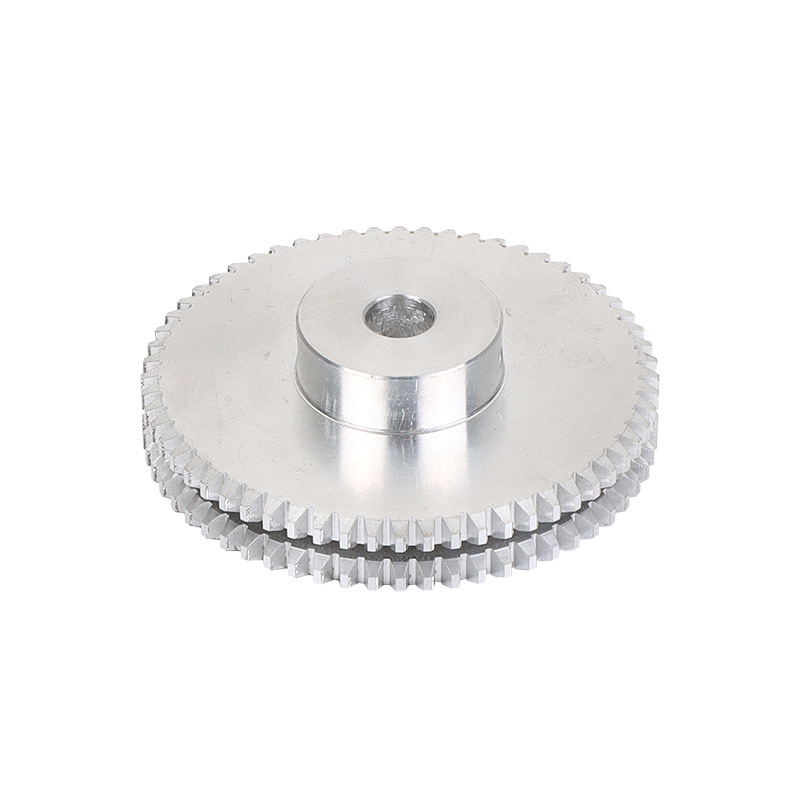
The world of manufacturing constantly demands solutions for shaping incredibly tough, heat-resistant, and complex materials. Traditional cutting tools often fail or wear out rapidly when faced with these challenges. This leads to high costs and limitations in design. What you need is a process that can shape these materials without physical force or heat. This is where Electrochemical Machining (ECM) emerges as a transformative, non-conventional process. Unlike methods that rely on physical force and heat, ECM utilizes controlled electrochemical dissolution to remove material with remarkable precision. It leaves no tool marks and induces zero thermal stress. In this guide, we will explore how the ECM machining process works, its principles, ideal applications, critical parameters, and comparative advantages.
Introduction
Electrochemical Machining (ECM) is a non-traditional, subtractive manufacturing process. It removes conductive material through anodic dissolution in an electrolytic cell. In simple terms, it works like controlled reverse electroplating. Instead of adding material to a workpiece as in electroplating, ECM deliberately removes material from the workpiece.
The key distinction from mechanical machining is the complete absence of direct physical contact between the tool and the workpiece. This eliminates tool wear, mechanical stresses, and heat-affected zones. It makes ECM uniquely suited for difficult-to-machine materials and complex geometries that are otherwise expensive or impossible to produce.
What Is the ECM Machining Process?
ECM is a precise, non-contact material removal process. It uses an electrochemical reaction rather than mechanical force.
Definition: ECM is a process where a conductive workpiece (anode) and a pre-shaped tool (cathode) are placed in an electrolyte solution. When a high-amperage, low-voltage DC current is applied, the workpiece material dissolves. The tool's shape is precisely copied onto the workpiece as it is fed forward, maintaining a constant, small gap.
Basic principles: The process follows Faraday's laws of electrolysis. Material removal rate is predictable and controllable based on electrical current and the material's electrochemical equivalent. There is no heat, no tool wear, and no mechanical stress on the workpiece.
Industrial significance: ECM is essential for aerospace, medical, and automotive industries. It enables the production of intricate components like turbine blades, spinal implants, and fuel injection nozzles that would be impossible to machine conventionally.
Environmental considerations: Modern ECM systems use closed-loop filtration to recycle electrolyte. Dissolved metal sludge can often be reclaimed. Systems comply with environmental regulations through proper waste management.
How Does Electrochemical Dissolution Enable ECM?
The core of ECM is a well-controlled electrochemical reaction. Understanding this mechanism reveals why the process is so powerful.
The Electrochemical Cell
The workpiece acts as the anode (positive electrode). The tool acts as the cathode (negative electrode). They are placed close together—typically 0.1–0.5 mm apart—in an electrolyte solution, usually a conductive saltwater-like fluid.
The Dissolution Reaction
When a high-amperage, low-voltage DC current is applied, the workpiece material undergoes oxidation. Metal atoms lose electrons and dissolve as positive ions into the electrolyte. These ions combine with the electrolyte to form sludge, which is filtered out.
The Role of Electrolyte Flow
The electrolyte is pressurized and circulated at high speeds—often 10–30 m/s—through the inter-electrode gap. This flow serves two purposes:
- It completes the electrical circuit
- It rapidly flushes away dissolved material and heat
This ensures a stable, efficient process with consistent results.
Which Materials Are Ideal for ECM?
ECM excels with materials that are electrically conductive and often challenging for conventional machining. Its performance is not limited by material hardness, strength, or thermal resistance.
Superalloys
These are extensively used for turbine blades and aerospace components. Machining Inconel 718 via ECM avoids the work-hardening and micro-cracking caused by traditional methods.
Titanium and Its Alloys
These are critical in biomedical implants—like spinal fusion cages—and aerospace. ECM produces burr-free, stress-free surfaces on Ti-6Al-4V, which is vital for fatigue performance.
Tool Steels and Carbides
These are used for creating complex die cavities and molds with excellent surface finish.
Nickel-Based and Cobalt-Based Alloys
These high-temperature alloys are notoriously difficult to machine with conventional tools.
Soft but Sticky Materials
A less obvious but powerful application is for certain aluminum alloys. ECM prevents material adhesion to cutting tools, which is a common problem in conventional machining.
Primary limitation: Materials like ceramics or plastics cannot be processed with standard ECM because they are non-conductive.
What Electrolyte Systems Drive Efficient ECM?
The electrolyte is the lifeblood of the operation. Its selection directly impacts machining rate, surface finish, accuracy, and environmental handling.
| Electrolyte Type | Typical Composition | Best For | Key Consideration |
|---|---|---|---|
| Neutral Salt | Sodium Nitrate (NaNO₃), Sodium Chloride (NaCl) solutions | High-precision machining, excellent surface integrity | NaNO₃ offers better dimensional control and is safer (passivating) |
| Acidic | Sulfuric Acid, Hydrochloric Acid | High dissolution rates, alloy machining | Highly corrosive; requires advanced safety and disposal |
| Basic | Sodium Hydroxide | Tungsten, Molybdenum | Caustic; requires careful handling |
In practice, a 10–20% Sodium Nitrate solution is widely used in aerospace for machining turbine blades. It offers an excellent balance of control and safety.
The electrolyte system is pressurized and circulated at high speeds through the inter-electrode gap. This ensures efficient debris removal and temperature control.
How to Design Electrodes for Complex ECM?
Electrode (tool) design is a critical, knowledge-intensive step. The electrode shape is not a direct 1:1 copy of the final workpiece cavity. It requires precise reverse engineering and simulation.
Key Principles
- Machining gap: The electrode is designed to account for the overcut effect. The final workpiece cavity will be larger than the tool by the gap distance.
- Electrode material: Electrodes are typically made from copper, brass, or copper-tungsten for good conductivity and stability.
Complex Geometry
For parts like integrated centrifugal compressor wheels with twisted blades, the electrode design must incorporate optimized fluid channels. This ensures uniform electrolyte flow into every intricate passage, preventing uneven machining or sparking.
Simulation
Modern 3D CFD (Computational Fluid Dynamics) simulations are now essential. They model flow and predict outcomes before costly trials, reducing development time and improving accuracy.
What Parameters Control Accuracy in ECM?
Achieving tight tolerances—often within ±0.05 mm—in ECM requires balancing multiple interactive parameters.
Electrical Parameters
- Current density: Higher density increases removal rate but can affect finish
- Voltage: Must be stable to maintain a consistent gap
Electrolyte Parameters
- Flow rate, pressure, temperature, and concentration must be controlled. Inconsistent flow leads to variable dissolution and poor accuracy.
- For drilling small cooling holes, a pressure drop across the hole length can cause taper. This is compensated by tapering the electrode.
Gap Control
The inter-electrode gap is maintained via a servo control system responding to changes in voltage or current. A smaller gap improves accuracy but risks short-circuiting.
Feed Rate
The tool must feed into the workpiece at a rate equal to the material dissolution rate to maintain equilibrium.
A real-world example: a medical implant manufacturer achieved ±0.03 mm tolerance on titanium spinal cages using ECM. Conventional milling could not maintain this accuracy due to tool deflection on thin-walled features.
How to Maintain Surface Integrity During ECM?
Surface integrity—encompassing roughness, residual stress, and metallurgical state—is a prime advantage of ECM. Since there is no mechanical force or high heat, surfaces are typically stress-free and free of recast layers.
However, improper parameters can cause defects:
- Stray current etching: Unwanted material removal away from the target area. Mitigated by using passivating electrolytes like NaNO₃ and proper insulation.
- Pitting or selective etching: Caused by non-uniform dissolution in heterogeneous materials. Controlled by optimizing electrolyte chemistry and current waveform.
Best practice: A leading manufacturer of surgical stainless steel bone rasps uses ECM to achieve a uniform, non-directional matte finish directly on the cutting teeth. This eliminates post-process blasting and preserves sharp, clean edges without burrs.
How Does ECM Compare to EDM and Traditional Methods?
Understanding where ECM fits in the manufacturing landscape requires a clear comparison.
| Aspect | ECM | EDM | Traditional Machining |
|---|---|---|---|
| Material Removal | Electrochemical dissolution | Thermal erosion (sparking) | Mechanical shearing |
| Tool Contact | No contact | No contact | Direct physical contact |
| Material Limits | Electrically conductive only | Electrically conductive only | Any, but hard materials wear tools |
| Tool Wear | Virtually none | Electrode wear occurs | Significant wear on hard materials |
| Surface Finish | Very good, matte finish | Good, but may have recast layer | Good, but may have tool marks |
| Heat-Affected Zone | None | Present (recast layer) | Possible with poor cooling |
| Speed/Rate | Very high for bulk removal | Slow to moderate | High for soft materials, low for superalloys |
| Geometry Complexity | Excellent for 3D contours, internal features | Excellent for complex cavities | Limited by tool access and rigidity |
What Are the Main Applications of ECM?
ECM is indispensable in industries where material hardness and geometric complexity meet.
Aerospace
Turbine blades, compressor discs, and cooling holes in combustion chambers use ECM to achieve complex profiles without thermal stress. One aerospace manufacturer reduced blade production time by 60% after switching from conventional milling to ECM.
Medical Devices
Spinal implants, bone screws, and surgical instruments benefit from ECM's burr-free, stress-free surfaces. The process eliminates secondary finishing operations.
Automotive
Fuel injection nozzles, gears, and turbocharger components use ECM for precision internal features that cannot be reached with conventional tools.
Energy
Turbine components for power generation and pump impellers for oil and gas use ECM to maintain performance under extreme conditions.
Conclusion
The ECM machining process stands as a uniquely capable manufacturing solution for the most demanding materials and geometries. By harnessing controlled electrochemical dissolution, it overcomes the limitations of force and heat inherent in traditional methods. While it requires significant expertise in electrolyte management, tool design, and parameter optimization, its benefits—no tool wear, exceptional surface integrity, and the ability to machine complex shapes in ultra-hard materials—make it indispensable in high-tech industries. As materials science advances and components become more intricate, the role of ECM is poised to expand, driving innovation in aerospace propulsion, medical implants, and energy systems.
FAQs
What are the main advantages of the ECM machining process?
The primary advantages are the ability to machine extremely hard or tough conductive materials without inducing thermal or mechanical stress, virtually no tool wear, high material removal rates for bulk operations, and excellent surface finish free of burrs.
What is a key disadvantage or limitation of ECM?
It can only machine electrically conductive materials. The process also requires significant upfront engineering for tool design and electrolyte system setup. The handling and disposal of spent electrolyte must be managed responsibly.
How does the accuracy of ECM compare to traditional milling?
While ECM can achieve high accuracy—±0.05 mm or better—it is generally less accurate than modern precision CNC milling for simple geometries. However, for complex 3D shapes in hard materials where milling struggles with tool deflection and wear, ECM can provide superior and more consistent results.
Can ECM create sharp internal corners?
No. A characteristic of ECM is that it produces rounded internal corners due to the nature of the electric field and electrolyte flow. The corner radius is approximately equal to the machining gap. Designers must account for this inherent radius.
Is the ECM process environmentally friendly?
It can be managed responsibly. The primary environmental consideration is the electrolyte, which becomes a waste stream containing dissolved metal hydroxides. Modern closed-loop systems filter and recirculate electrolyte, and the metal sludge can often be reclaimed, mitigating the environmental impact.
Contact Yigu Technology for Custom Manufacturing
At Yigu Technology, we view the ECM machining process not just as a technique, but as a fundamental enabler of innovation in engineering. In an era where performance boundaries are pushed by advanced materials like nickel-based superalloys and complex monolithic components, traditional manufacturing hits a wall. ECM provides the key to unlocking these designs.
Our expertise goes beyond operating machinery. We integrate advanced simulation for electrode and flow path design, employ in-process monitoring for consistent quality, and manage the full electrolyte lifecycle. This holistic approach ensures that our clients—whether in aerospace, medical, or energy—receive components that meet the highest standards of precision, surface integrity, and performance reliability.
If your project involves materials that defy conventional machining or geometries that demand a stress-free finish, contact us. Let's discuss how our electrochemical machining capabilities can provide the optimal solution for your most demanding custom manufacturing needs.