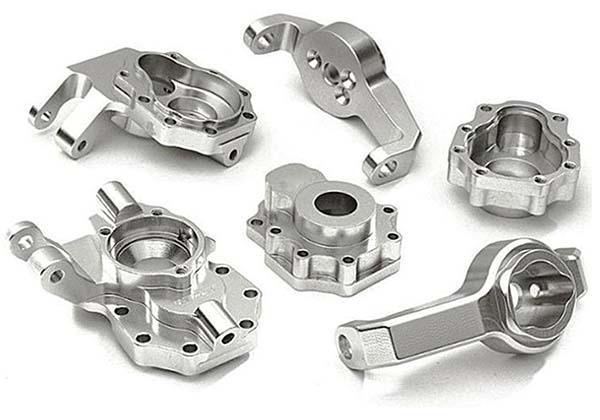
Discover why surface roughness matters for performance, appearance, and reliability in precision manufacturing.
Introduction
A gearbox whines louder than it should. A smartphone casing feels rough to the touch. A medical instrument fails to meet sterilization requirements. These problems often trace back to one overlooked factor: machined surface finish.
Many manufacturers focus on dimensional accuracy but neglect surface quality. The result is products that underperform, wear prematurely, or fail to meet customer expectations.
What is needed is a clear understanding of how surface finish impacts product quality. This guide explains what surface finish is, how to measure it, and how to optimize it for your applications.
What Is Machined Surface Finish?
Machined surface finish refers to the microscopic texture of a surface after processing. It describes the peaks and valleys left by cutting tools, abrasives, or other machining operations.
The core evaluation indicators are:
- Surface roughness: The microscopic peak-to-valley height difference
- Surface texture uniformity: How consistent the pattern is across the surface
Many people confuse "surface finish" with "surface roughness." In practice, the former is a common industry term, while the latter is the internationally accepted quantitative indicator. Together, they form the core evaluation dimensions of processing quality.
Why Does Surface Finish Matter?
Surface finish affects product quality in three key dimensions.
Product Performance
Low roughness surfaces reduce friction and wear. An engine block with smooth cylinder walls experiences less friction. This extends service life by 30% or more. Rough surfaces create hot spots and accelerate failure.
Appearance Requirements
Consumer products demand visual appeal. The aluminum alloy casing of a smartphone needs a mirror-like finish through precision polishing. Customers equate smooth surfaces with quality.
Compliance with Standards
Most industries have mandatory surface requirements for critical components. The ISO 8503 standard specifies sandblasting cleanliness. Medical and aerospace applications have even stricter requirements.
A Real-World Example
An auto parts manufacturer faced a serious problem. Gear noise complaints increased by 40% within six months. Customers reported whining sounds during acceleration.
Investigation revealed the gear surface roughness was Ra 3.2 μm. The specification required Ra 1.6 μm. The gears were twice as rough as they should have been.
The manufacturer optimized the grinding process. They adjusted wheel speed, coolant flow, and feed rates. Surface roughness dropped to Ra 0.8 μm—half the specification.
The result? Noise complaints disappeared. Gears lasted longer. The manufacturer saved millions in warranty costs.
This example shows that surface finish directly determines product reliability.
How Do You Measure Surface Finish?
Measuring surface roughness requires the right tools and methods.
Core Evaluation Indicators
| Indicator | Description | Best For |
|---|---|---|
| Ra Value | Arithmetic mean of peak-to-valley heights | Most mechanical parts like shafts, gears |
| Rz Value | Vertical distance from highest peak to lowest trough | Components under shock loads, piston rings |
| Rq | Root mean square deviation | Precision manufacturing, advanced analysis |
| Rmr | Material ratio (bearing area) | Sealing surfaces, bearing applications |
Ra is the most commonly used indicator. It provides a reliable average across the measured surface.
Measurement Tools and Applications
| Application | Measurement Tool | Accuracy | Key Advantage |
|---|---|---|---|
| General machining | Portable contact roughness meter | ±10% error | Easy operation, shop floor use |
| Aerospace components | Laser profiler | ±2% Ra error | Non-contact, no surface damage |
| Medical devices | Atomic force microscopy | 0.003 nm resolution | Nanoscale measurement |
| Mold manufacturing | Contact high-precision machine | 0.0001 μm Z-axis resolution | Balances precision and speed |
Measurement Standards and Process
Common international standards include:
- ISO 4287: Surface roughness terms and definitions
- GB/T 1031: Chinese national standard for surface roughness
When measuring, follow these guidelines:
- Select sampling length based on part size (typically 0.8 to 8 mm)
- Measure parallel to machining texture
- Take at least 3 measurements per part and average the results
How Do Different Processes Affect Surface Finish?
Different machining and finishing processes produce vastly different surface results.
Core Processes Compared
| Process | Typical Ra Range | How It Works | Best Applications |
|---|---|---|---|
| Grinding | 0.4-1.6 μm | Abrasive wheel cutting | Steel materials, machine tool spindles |
| Mechanical Polishing | 0.02-0.1 μm | Wool wheels with compounds | Optical components, molds |
| Chemical Polishing | 0.02-0.1 μm | Chemical solution dissolves bumps | Delicate parts, complex geometries |
| Electrochemical Polishing | <0.1 μm | Anodic dissolution with DC current | Surgical instruments, medical devices |
| Shot Peening | 1.6-3.2 μm | High-speed projectiles impact surface | Aero engine blades, strengthening applications |
Process Selection Guide
| Surface Requirement | Recommended Process | Suitable Materials | Cost Factor |
|---|---|---|---|
| Ra < 0.1 μm | Electrochemical / ultra-fine polishing | Stainless steel, aluminum alloy | 3-5x normal polishing |
| Ra 0.1-0.4 μm | Precision grinding + mechanical polishing | Mold steel, titanium alloy | Moderate |
| Ra 1.6-3.2 μm | Shot peening / blasting | Carbon steel, cast iron | 1/3 of normal polishing |
Case Study: Combining Processes
A wind turbine tower manufacturer needed surface roughness of Ra 2.0 μm for coating adhesion. They also required 1,000 hours of salt spray test performance.
Instead of expensive polishing, they used a combination:
- Shot blasting to achieve the target roughness
- Plastic spraying for corrosion protection
The result: 40% lower cost compared to pure polishing, with superior corrosion performance.
How Do Material Properties Affect Surface Finish?
Material characteristics directly determine how easily a surface can be finished.
Processing Rules by Material
Metal Processing
Harder materials are more difficult to finish. Hardened steel (HRC 55 and above) requires diamond grinding wheels to achieve Ra below 0.8 μm. Soft materials like aluminum alloys tend to form built-up edges. Cutting speed must be controlled to avoid surface defects.
Stainless Steel
Stainless steel has high toughness and tends to form burrs during grinding. Recommended approaches:
- Use wet grinding with coolant
- Use cubic boron nitride (CBN) tools
- This effectively reduces Ra values
Composite Materials
Carbon fiber reinforced plastic (CFRP) is prone to fiber pullout during machining. Low-speed cutting with diamond tools is essential. Target surface accuracy is typically Ra 1.6 μm.
Material Hardness and Roughness
Experimental data shows: when material hardness increases from HRC 30 to HRC 60, surface roughness under the same cutting parameters increases by 30 to 50%.
High-hardness materials require compensation through:
- Optimized cutting parameters (reduced feed rates)
- More refined machining processes
- Specialized tool materials
What Factors Affect Surface Finish Most?
Several key factors influence the final surface quality.
Cutting Parameters
Feed rate has the greatest impact on roughness. In turning operations:
- Feed rate: 0.03 mm/r → Roughness: 200 nm
- Feed rate: 0.18 mm/r → Roughness: 1,650 nm
Cutting speed must match material characteristics. Too high, and built-up edges form. Too low, and efficiency suffers.
Tool Selection
The cutting edge radius determines achievable surface quality:
- Single crystal diamond turning tool edge radius: 0.04 μm
- Suitable for precision machining
Tool material must match the workpiece. For stainless steel, use carbide tools. High-speed steel tools wear too quickly.
Coolant Use
Proper coolant reduces cutting temperature and friction:
- Emulsion: Suitable for ordinary steel processing
- Cutting oil: Better for superalloy processing
The right coolant can reduce roughness by 15 to 20%.
Machining Vibration Control
Machine tool spindle vibration and unstable workholding create surface ripple defects. Solutions include:
- Optimizing fixture design (hydraulic fixtures)
- Adjusting spindle speed to avoid resonance frequencies
How Do You Optimize Surface Finish?
A systematic approach yields consistent results.
Practical Optimization Steps
Step 1: Pre-treatment
Adjust tool angle based on material hardness. Use negative rake angle for hard materials.
Step 2: Parameter Debugging
First reduce feed rate (for fine turning, ≤0.05 mm/r). Then optimize cutting speed.
Step 3: Process Monitoring
Use portable roughness meters for real-time detection. Adjust processes promptly when deviations occur.
Step 4: Post-processing
For high-requirement parts, add polishing or electrochemical treatment.
Case Study: Brittle Material Processing
A precision machinery factory processed beryllium—a brittle material. Early attempts caused microcracks on the surface.
The solution:
- Reduced feed rate to 0.03 mm/r
- Controlled cutting speed at 40 m/s
- Used single crystal diamond tools
Final surface roughness: Ra 0.2 μm. The parts met aerospace standards.
What Are Industry Standards and Requirements?
Surface finish requirements vary significantly by industry.
Key Industry Requirements
| Industry | Requirement | Why It Matters |
|---|---|---|
| Aerospace | Turbine blades: Ra < 0.8 μm, shot peening residual stress to -800 MPa | Crack propagation resistance increased by 50% |
| Automotive | Engine block: Ra 0.8-1.6 μm, piston rings: Rz 5-20 μm | Sealing performance, wear resistance |
| Medical | Orthopedic implants: Ra < 0.1 μm | Reduces bacterial attachment, tissue irritation |
| Mold Manufacturing | Injection molds: Ra 0.1-0.4 μm | Product release, surface reproduction accuracy |
Core International Standards
- ISO 8503: Surface cleanliness and roughness correspondence
- ISO 4287: Surface roughness parameters and measurement methods
- ASTM B464: Electrochemical polishing surface quality for metallic materials
Yigu Technology's Perspective
At Yigu Technology, we view surface finish control as the result of synergy between materials, processes, and equipment. The goal is not always the lowest possible roughness. It is the most cost-effective solution that meets product function requirements.
We recommend this approach:
- Start with low-cost methods—optimize cutting parameters and tool selection
- For high-demand scenarios, adopt composite machining technology
- Use real-time measurement and data traceability to ensure consistency
- Intelligent measurement equipment (online profilers) will become industry standard
Our experience shows that proper surface finish control reduces warranty claims, improves product reliability, and enhances customer satisfaction.
Conclusion
Machined surface finish is not a cosmetic detail. It directly impacts product performance, service life, and customer perception. Understanding how to measure, control, and optimize surface roughness is essential for quality manufacturing.
By selecting the right processes, tools, and parameters for your material and application, you can achieve the surface quality your products need—without overpaying for unnecessary precision.
FAQs
How should I choose between Ra and Rz values?
Ra is suitable for most general parts like shafts and gears. It reflects the overall roughness level. Rz is better for parts under shock loads or with high sealing requirements, such as piston rings or sealing ring contact surfaces. Rz focuses on the maximum peak-to-valley difference.
How can stainless steel machining avoid excessive surface roughness?
Use carbide or diamond tools. Use wet cutting with stainless steel-specific coolant. Control cutting speed at 80 to 120 m/min with feed ≤ 0.1 mm/r. After machining, electrochemical polishing can further optimize the surface.
What is the core difference between shot peening and polishing?
Shot peening is for surface strengthening. It creates medium roughness (Ra 1.6-3.2 μm) while inducing compressive stress. Polishing focuses on reducing roughness to achieve a mirror effect (Ra < 0.1 μm). Polishing provides limited improvement to surface strength.
What is the most critical factor affecting surface finish?
Feed rate is the most important factor, especially in turning and milling operations. Tool edge quality and machining vibration control follow closely. Together, these factors account for more than 70% of surface finish outcomes.
Can surface finish be too smooth?
Yes. In some applications, moderate roughness is required for coating adhesion, lubrication retention, or sealing. The optimal surface finish is not always the lowest possible Ra value. It is the value that balances function, cost, and manufacturability.
Contact Yigu Technology for Custom Manufacturing
At Yigu Technology, we apply rigorous surface finish control across all precision manufacturing projects. Our capabilities include grinding, polishing, electrochemical finishing, and shot peening. We serve automotive, aerospace, medical, and consumer electronics industries.
We use in-process measurement with portable and online profilometers. Our quality system meets ISO 9001 standards. We help clients select the right processes to achieve required surface specifications without unnecessary cost.
Ready to improve your product quality through better surface finish? Contact Yigu Technology today to discuss your requirements.