Introduction
The aerospace industry demands precision, durability, and innovation. Every component must withstand extreme conditions—high temperatures, intense pressure, and relentless vibration. Traditional manufacturing methods have served the industry well, but they are slow and expensive. Design changes require new tooling. Prototypes take months. Development cycles stretch for years.
Rapid prototyping technology is changing this. Also known as additive manufacturing or 3D printing, it enables engineers to create complex components faster, more cost-effectively, and with greater design freedom than ever before. This guide explores how rapid prototyping is transforming aerospace—from engine components to lightweight structures, tooling, and maintenance.
Why Does Aerospace Need Rapid Prototyping?
The aerospace industry operates on long development cycles. A new aircraft can take 5 to 7 years from concept to certification. Traditional manufacturing involves creating blueprints, building physical prototypes through machining or casting, and conducting extensive testing. Each design iteration repeats these steps—slow and expensive.
Rapid prototyping compresses this timeline. Engineers can turn digital designs into physical prototypes in days, not months. This allows earlier testing, faster iteration, and reduced development costs. Design concepts can be evaluated and refined much earlier, catching flaws when fixes are cheap.
What Key Technologies Are Transforming Aerospace?
Several rapid prototyping technologies are reshaping aerospace manufacturing.
Selective Laser Sintering (SLS)
SLS uses a laser to sinter powdered materials—titanium, aluminum, composites—layer by layer. The laser fuses particles according to cross-sectional data from the 3D model.
- Applications: Engine parts, lightweight brackets
- Advantages: Complex internal structures, optimized performance
- Impact: SLS-produced engine parts can reduce fuel consumption by up to 10% through optimized internal cooling channels
Stereolithography (SLA)
SLA uses a UV laser to cure liquid photopolymer resin, creating high-detail prototypes with smooth surfaces.
- Applications: Aerodynamic models, custom tooling
- Advantages: High precision, fine details
- Impact: A UAV manufacturer used SLA custom tooling to reduce production time for a critical component by 30%
Fused Deposition Modeling (FDM)
FDM extrudes melted thermoplastic filament—PLA, ABS, carbon-fiber composites—layer by layer.
- Applications: Non-structural components, interior parts
- Advantages: Lightweight, customizable
- Impact: An aircraft manufacturer used FDM for interior panels, reducing weight by 20% compared to traditional methods
| Technology | Process | Materials | Aerospace Applications |
|---|---|---|---|
| SLS | Laser sinters powdered materials | Titanium, aluminum, composites | Engine parts, lightweight brackets |
| SLA | UV laser cures liquid resin | Photopolymers | Aerodynamic models, custom tooling |
| FDM | Extrudes melted thermoplastic | PLA, ABS, carbon-fiber composites | Non-structural components, interior parts |
What Material Advancements Are Critical?
Materials are the foundation of aerospace innovation. Rapid prototyping enables the use of advanced materials that improve performance.
Titanium Alloys
Titanium offers an exceptional strength-to-weight ratio, making it ideal for critical engine components. Titanium alloy compressor blades withstand high rotational speeds and temperatures while remaining lightweight.
A comparison of traditional steel blades and titanium blades in one engine model showed that titanium reduced the weight of the compressor section by 35%, leading to a 15% improvement in fuel efficiency.
Carbon-Fiber-Reinforced Polymers (CFRPs)
CFRPs reduce component weight by up to 40% while maintaining stiffness. A major aircraft manufacturer reported that using CFRPs in a new wing structure increased payload capacity by 20% due to weight reduction—without sacrificing structural integrity.
How Is Rapid Prototyping Reshaping Engine and Propulsion Systems?
The engine is the heart of any aerospace vehicle. Rapid prototyping is transforming how these critical components are made.
GE Aviation: 3D-Printed Fuel Nozzles
GE Aviation pioneered the use of SLS for fuel nozzles—critical components in jet engines. Traditional fuel nozzles were assembled from multiple parts. SLS integrates them into a single, complex component.
- Part count reduction: 90%
- Development time reduction: 50%
- Performance improvement: Improved fuel atomization, reducing fuel consumption by up to 5% in some engine models
SpaceX: Rapid Rocket Component Production
SpaceX uses rapid prototyping for combustion chambers—among the most challenging components in rocket engines. Traditional manufacturing took months. Rapid prototyping cuts production time to days.
When developing the Super Heavy booster, SpaceX quickly produced and tested different combustion chamber designs. After a test flight revealed a potential issue, they produced a redesigned version within a week. This agility is crucial for their ambitious plans, including reusable rockets for interplanetary travel.
How Does Rapid Prototyping Enable Lightweight Structures?
Weight reduction directly improves fuel efficiency and performance.
Airbus A350 XWB: 3D-Printed Brackets
The Airbus A350 XWB features 3D-printed aluminum brackets that support various components. By optimizing the design for additive manufacturing, Airbus reduced bracket weight while maintaining strength.
- Weight savings: Up to 600 kg per aircraft
- Fuel efficiency: Approximately 5% less fuel consumed on a typical 10,000 km long-haul flight
Drones: Carbon-Fiber Frames
Drone frames made from carbon-fiber composites via FDM offer enhanced maneuverability. The lightweight frames reduce drag and improve flight performance. A racing drone with a 3D-printed carbon-fiber frame achieves higher speeds and more precise maneuvers.
A commercial drone used for aerial photography increased flight time by 20% after switching to a 3D-printed carbon-fiber frame, enabling it to cover more area and capture more detailed images per flight.
How Is Rapid Prototyping Used for Tooling and Maintenance?
Tooling and maintenance are critical for aerospace operations. Rapid prototyping provides innovative solutions.
Boeing: 3D-Printed Jigs
Boeing uses SLS to produce lightweight ABS jigs—tools used to hold and position components during assembly.
- Weight reduction: 50% compared to traditional jigs
- Assembly efficiency: Reduced assembly time for a wing section by 15%
- Flexibility: New jigs can be designed and printed in days, not weeks or months
The U.S. Navy uses portable metal printers to produce spare parts on-site during missions. Previously, a failed component would require returning to port—disrupting operations and risking mission success.
Now, a replacement part can be produced within hours. This reduces aircraft downtime by 70% and reduces the need to carry large spare parts inventories on naval vessels.
What Challenges Remain?
Despite its advantages, rapid prototyping faces hurdles in aerospace.
Certification
Components must meet FAA and EASA standards. While companies like GE and Airbus have certified 3D-printed parts for commercial use, the certification process remains rigorous and time-consuming.
Material Properties
Some 3D-printed materials have different properties than traditionally manufactured equivalents. Fatigue behavior, heat resistance, and long-term durability require extensive testing.
Build Volume
Current 3D printers have size limitations. Large components may require assembly from smaller printed pieces or alternative manufacturing methods.
How Does Yigu Technology Support Aerospace Prototyping?
At Yigu Technology, we support aerospace clients with precision prototyping across all key technologies.
We Offer Aerospace-Grade Capabilities
- SLS: Titanium and aluminum components with complex internal structures
- SLA: High-detail aerodynamic models and custom tooling
- FDM: Lightweight interior components and non-structural parts
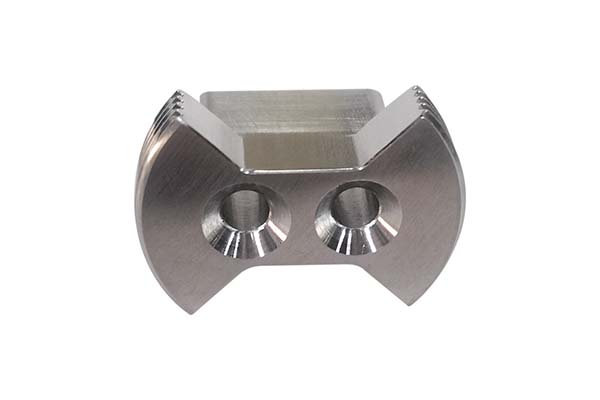
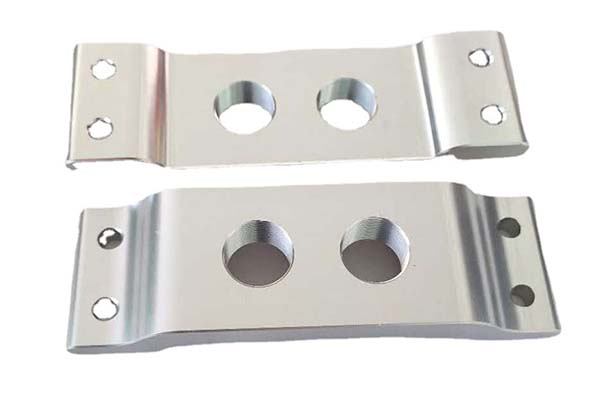
- CNC machining: Precision metal components with tight tolerances
We Understand Certification Requirements
We work with clients to document materials, processes, and testing—supporting the certification path for flight-worthy components.
We Provide DFM Expertise
Our engineers review designs for manufacturability, optimizing for additive processes while maintaining structural integrity and performance.
Conclusion
Rapid prototyping technology is revolutionizing aerospace. It reduces development time from years to months or weeks. It enables design freedom previously impossible, creating lighter, stronger, more aerodynamic components. It transforms engine production, lightweight structures, tooling, and maintenance.
While challenges in certification and material properties remain, the trajectory is clear. Companies like GE, Airbus, Boeing, and SpaceX have proven that 3D-printed components can meet the rigorous demands of flight. As technology advances and certification pathways mature, rapid prototyping will become an indispensable part of aerospace manufacturing.
Frequently Asked Questions
How does rapid prototyping compare to traditional manufacturing in cost and time?
Rapid prototyping reduces tooling costs and speeds up prototyping, making it ideal for low-volume, complex parts. A small batch of complex aerospace brackets through traditional casting and machining might cost $50,000 and take 8–10 weeks. With rapid prototyping, cost could be $20,000 with production in 2–3 weeks. For high-volume production, traditional methods remain more economical.
What materials are commonly used in aerospace rapid prototyping?
Common materials include titanium alloys (high strength-to-weight ratio), aluminum (lightweight), carbon-fiber composites (stiffness with reduced weight), and high-temperature resins (for aerodynamic models and tooling). Titanium alloys have a strength-to-weight ratio 30% higher than traditional steel alloys used in some aerospace applications.
Are rapid-prototyped components safe for flight?
Yes. Components undergo rigorous testing to meet FAA and EASA standards. Companies like GE and Airbus have successfully certified 3D-printed parts for commercial use. GE’s fuel nozzles have been flight-tested in multiple engine models, showing consistent performance over thousands of flight hours.
What is the typical weight reduction achieved with 3D-printed aerospace components?
Weight reductions vary by application. Airbus achieved 600 kg savings per aircraft with 3D-printed brackets. Carbon-fiber composite parts can reduce weight by up to 40% compared to traditional materials. Lightweighting directly improves fuel efficiency and payload capacity.
Can rapid prototyping be used for large aerospace components?
Current build volumes limit single-piece size. Large components may require assembly from smaller printed pieces or alternative manufacturing methods. However, printer sizes are increasing, and hybrid approaches combine additive manufacturing with traditional processes for large-scale components.
Contact Yigu Technology for Custom Manufacturing
Ready to apply rapid prototyping to your aerospace project? Yigu Technology offers SLS, SLA, FDM, and CNC machining services for precision aerospace components. Our engineers help you select the right technologies and materials for your application. Contact us today to discuss your project.