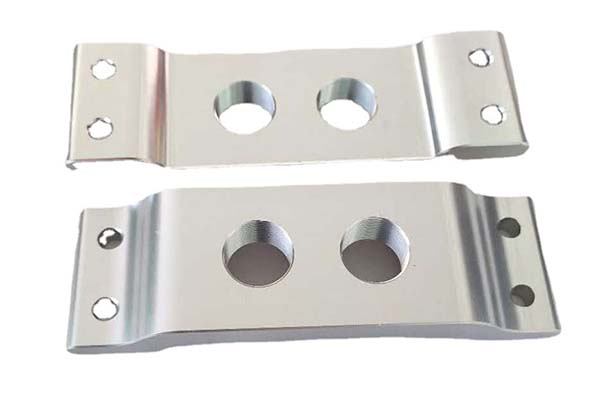
Precision stamping parts are everywhere. They are in the connectors of your phone, the brackets of your car, and the mechanisms of life-saving medical devices. These components are produced through a specialized manufacturing process that uses precision-made dies to shape and cut metal sheets into complex forms. The process delivers highly accurate, repeatable, and cost-effective parts. It is the backbone of industries that demand tight tolerances and consistent quality. This guide explains what precision stamping parts are, how they are made, and where they are used.
What Defines a Precision Stamping Part?
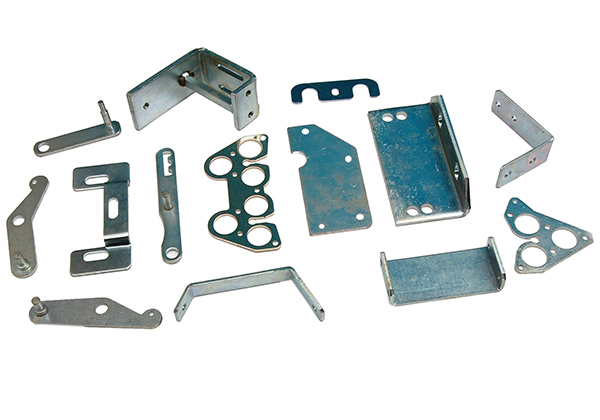
A precision stamping part is a metal component produced by stamping—a process that uses a press and a die to shape flat metal sheet into a finished part. The "precision" part matters. These parts are manufactured to tight tolerances, often ±0.01 mm or better. They are produced in high volumes with every piece identical to the last.
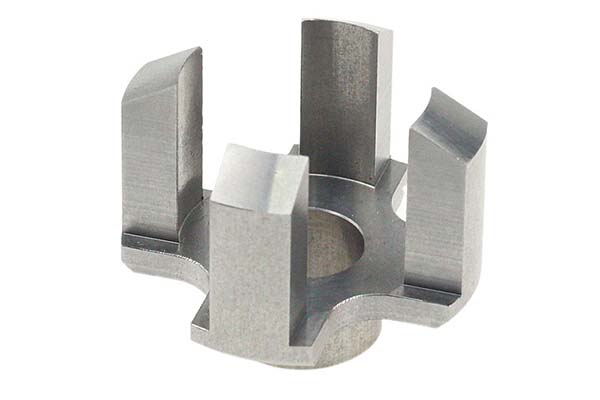
Precision stamping parts range from simple washers to complex three-dimensional shapes. They can be as small as a grain of rice or as large as an automotive body panel. What unites them is the method of production and the level of accuracy achieved.
How Are Precision Stamping Parts Manufactured?
The manufacturing process for precision stamping parts involves several critical steps. Each step affects the final quality of the part.
Material Selection and Preparation
The process begins with choosing the right material. Common options include:
| Material | Properties | Typical Applications |
|---|---|---|
| Steel | Strength, versatility | Automotive structural parts |
| Stainless steel | Corrosion resistance | Medical devices, food equipment |
| Aluminum | Lightweight, formable | Electronics enclosures |
| Brass | Conductivity, formability | Electrical terminals, fittings |
| Copper | Highest conductivity | RF shielding, battery contacts |
| Titanium | Strength-to-weight ratio | Aerospace, medical implants |
Material is typically supplied in coils for high-volume production. Before stamping, the material is cleaned to remove oils, dirt, and other contaminants. A lubricant is applied to reduce friction during stamping and protect the dies.
Die Design and Fabrication
The die is the heart of precision stamping. It is a custom-made tool that defines the shape and dimensions of the final part. Die design begins with CAD software, where engineers create detailed 3D models of the part and the tooling that will form it.
Die fabrication uses precision machining techniques:
- CNC milling: For rough shaping and basic geometry
- Surface grinding: For achieving flatness and parallelism
- Electrical discharge machining (EDM) : For intricate features, sharp corners, and fine details
- Wire EDM: For cutting complex profiles with high accuracy
Die materials are chosen for wear resistance and dimensional stability. Tool steel (D2, A2) is common for moderate volumes. Carbide is used for high-volume runs. Both are heat-treated to HRC 58 to 62 for hardness and durability.
Stamping Machinery and Equipment
The stamping press applies the force that shapes the metal. Press types include:
| Press Type | Characteristics | Best For |
|---|---|---|
| Mechanical | High speed, consistent force | High-volume, simple parts |
| Hydraulic | Variable speed and force | Deep drawing, thick materials |
| Servo | Programmable speed throughout stroke | Complex parts, precision control |
Press sizes range from 10 tons for small electronic parts to 1,000 tons or more for large automotive components. Modern presses are equipped with automated feed systems that advance the metal strip through the die with precision.
The Stamping Sequence
As the press cycles, the metal moves through the die. In progressive dies, each station performs a specific operation:
- Pilot holes: Establish alignment for subsequent stations
- Piercing: Cuts holes and slots
- Blanking: Cuts the rough shape
- Forming: Bends and shapes
- Coining: Compresses for fine detail
- Cutoff: Separates finished part from the strip
The strip advances one station per press stroke. At the final station, a finished part falls into a collection bin.
Quality Control and Inspection
Quality control is integrated throughout the process. First article inspection measures the first parts from a new die setup. Coordinate measuring machines (CMMs) verify every critical dimension. Optical inspection systems check surface finish and detect defects. Non-destructive testing (NDT) methods like ultrasonic or eddy current testing find internal flaws in critical parts.
Statistical process control (SPC) tracks measurements over time. If a trend moves toward a limit, the process is adjusted before defects occur.
What Types of Precision Stamping Parts Exist?
Flat and Simple Parts
Flat and simple parts are the most common type. They include:
- Washers and spacers
- Simple brackets and clips
- Basic connectors
- Shims and gaskets
These parts are produced using blanking and piercing operations. The geometry is straightforward, and tolerances are typically moderate. They are used in countless applications where basic structural support or spacing is needed.
Complex and Three-Dimensional Parts
Complex parts require multiple stamping operations. Examples include:
- Automotive body panels (doors, hoods, fenders)
- Fuel tanks and enclosures
- Electronic housings and shields
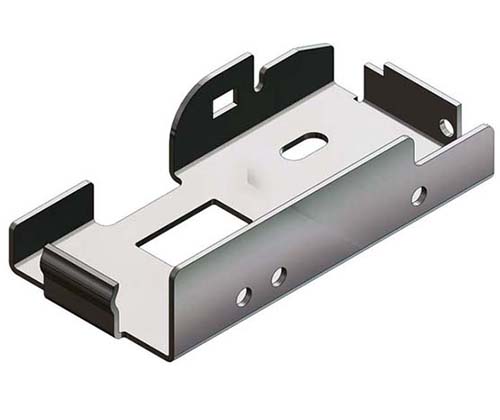
- Structural brackets with multiple bends
These parts often require drawing, forming, and bending operations. The dies are more complex. The process must be carefully controlled to prevent tearing, wrinkling, or springback.
Miniature and Micro Parts
Miniature and micro parts are designed for small-scale applications. Examples include:
- Micro-electromechanical systems (MEMS) components
- Micro-surgical instruments
- Electronic connector pins
- Watch and clock components
These parts require specialized tooling and extremely tight tolerances. Techniques like micro-stamping and laser cutting are often used. Parts can be as small as 0.1 mm in size.
Where Are Precision Stamping Parts Used?
Automotive Components
The automotive industry is the largest consumer of precision stamping parts. Applications include:
- Engine components: Fuel injector cups, valve guides, gaskets
- Transmission parts: Clutch plates, gear components
- Body panels: Doors, hoods, fenders
- Safety systems: Airbag housings, seat belt components
- Structural parts: Chassis brackets, suspension components
A typical vehicle contains hundreds of stamped parts. Each must meet strict quality standards for safety and performance.
Electronics and Appliances
Electronics demand tiny, precise components in massive volumes. Stamped parts include:
- Connectors and terminals: For smartphones, computers, and networking equipment
- Shielding cans: To block electromagnetic interference
- Lead frames: For semiconductor packages
- Battery contacts: For portable devices
Household appliances use stamped parts for:
- Control panels
- Hinges and brackets
- Motor mounts
- Structural frames
Aerospace and Defense
Aerospace applications demand the highest levels of precision and reliability. Stamped parts include:
- Structural brackets: For interior and exterior applications
- Engine components: Seals, shims, and small structural parts
- Avionics housings: Protecting sensitive electronics
- Fastener components: Locking features and retainers
Parts must meet AS9100 standards and often require full traceability from raw material to finished part.
Medical Devices and Equipment
Medical applications require precision, biocompatibility, and reliability. Stamped components include:
- Surgical instruments: Handles, blades, and small mechanisms
- Implants: Orthopedic and dental components (with proper finishes)
- Diagnostic equipment: Structural parts for MRI and CT scanners
- Drug delivery devices: Precision mechanisms for insulin pumps and injectors
The medical industry often requires ISO 13485 certification and complete documentation of materials and processes.
What Are the Key Advantages of Precision Stamping?
| Advantage | Description |
|---|---|
| High accuracy | Tolerances as tight as ±0.01 mm |
| Repeatability | Millions of identical parts |
| Cost efficiency | Low per-part cost at volume |
| Speed | High-speed presses produce parts per second |
| Material utilization | Minimal scrap with optimized nesting |
| Complexity | Combine multiple operations in one die |
Conclusion
Precision stamping parts are the unsung heroes of modern manufacturing. They are produced by a process that combines custom-engineered dies, advanced presses, and rigorous quality control. The result is components that meet tight tolerances, perform reliably, and do so at a cost that makes high-volume production possible.
From simple washers to complex automotive panels, from micro-surgical instruments to aerospace structural brackets, precision stamping parts are essential to the products we use every day. Understanding how they are made helps engineers design better parts, choose the right materials, and work effectively with stamping suppliers.
FAQ About Precision Stamping Parts
What are the common materials used in precision stamping parts?
Common materials include steel, stainless steel, aluminum, brass, copper, and specialized alloys like titanium. The choice depends on the required strength, corrosion resistance, conductivity, and formability for the specific application.
How does precision stamping ensure high accuracy and repeatability?
Accuracy comes from the die. Dies are machined to tighter tolerances than the parts they produce. Repeatability comes from the press and process control. Modern presses deliver consistent force and speed. In-process monitoring and statistical process control ensure that every part meets specifications.
What is the difference between progressive stamping and transfer stamping?
Progressive stamping uses a single die with multiple stations. The metal strip moves through the die, and the part remains attached until the final station. Transfer stamping uses separate dies in separate presses or stations. Parts are transferred between stations by automation. Progressive stamping is faster and more cost-effective for high volumes. Transfer stamping offers more flexibility for large or complex parts.
What is the typical minimum volume for precision stamping?
Precision stamping is most cost-effective at volumes above 10,000 to 50,000 parts. Tooling costs are significant—often $10,000 to $100,000 or more. The cost per part drops as volume increases. For lower volumes, alternative processes like CNC machining or additive manufacturing may be more economical.
How do you ensure quality in precision stamping parts?
Quality is ensured through first article inspection, in-process monitoring, statistical process control, and final inspection. Coordinate measuring machines verify dimensions. Optical inspection checks surface finish. Non-destructive testing finds internal flaws. Tooling is maintained on a regular schedule to prevent wear-related defects.
Contact Yigu Technology for Custom Manufacturing
Precision stamping requires expertise, advanced equipment, and a commitment to quality. At Yigu Technology, we specialize in custom precision stamping for automotive, medical, electronics, and aerospace clients. Our team designs and builds tooling with tolerances that match your part requirements. We run parts on modern servo and mechanical presses with in-process monitoring. Our quality control includes CMM inspection, optical measurement, and statistical process control. Whether you need simple washers, complex formed components, or micro parts, we have the capabilities to deliver precision at scale. Contact us today to discuss your project.