Introduction
In modern manufacturing, the difference between success and struggle often comes down to precision, speed, and consistency. CNC turning lathes have emerged as a transformative technology, replacing manual methods with computer-controlled precision. Where a manual lathe operator might spend 30 minutes producing a simple cylindrical part—with variations between each piece—a CNC lathe produces identical parts in seconds, with minimal human intervention.
This guide explores the benefits of CNC turning lathes: high precision, enhanced efficiency, cost-effectiveness, complex geometry capabilities, safety, and repeatability. You will also learn about different types of CNC lathes and how to choose the right one for your application.
What Is a CNC Turning Lathe?
A CNC turning lathe is a sophisticated machine tool that operates under computer control. Unlike traditional manual lathes, which rely on operator skill to adjust tool position, feed rate, and spindle speed, CNC lathes execute pre-programmed instructions with exceptional accuracy.
Comparison with Traditional Lathes
| Aspect | CNC Turning Lathe | Traditional Manual Lathe |
|---|---|---|
| Control | Computer-controlled; pre-programmed | Operator-controlled; manual adjustments |
| Precision | ±0.001 mm or better | ±0.1 mm typical |
| Consistency | Identical parts across production runs | Variations between parts |
| Speed | Fast; high spindle speeds (up to 10,000+ RPM) | Slower; operator-dependent |
| Operator skill | Basic training for programming | Highly skilled craftsmen needed |
Example: A simple cylindrical part that takes 30–60 minutes on a manual lathe can be completed in seconds on a CNC lathe—with identical dimensions across thousands of parts.
What Are the Key Benefits of CNC Turning Lathes?
High Precision and Accuracy
Tolerance Capabilities
CNC turning lathes achieve tolerances as tight as ±0.001 mm or better. This precision is essential for industries where even minor deviations cause performance issues.
| Industry | Application | Tolerance Requirement |
|---|---|---|
| Aerospace | Turbine engine shafts | ±0.001 mm; prevents vibration, ensures efficiency |
| Medical | Implants, surgical instruments | Micron-level accuracy; patient safety |
| Automotive | Engine components | Consistent dimensions; reliability |
Minimizing Human Error
Manual lathes depend on operator skill. A small tremor, misread measurement, or momentary lapse can ruin a part. CNC lathes eliminate these risks. Once programmed, the machine executes operations with consistent precision—regardless of fatigue or operator variation.
Enhanced Efficiency and Productivity
Fast Operation Speeds
Modern CNC lathes achieve spindle speeds up to 10,000 RPM or higher. In mass production of small parts (e.g., electronics components), a CNC lathe completes a part in seconds—compared to minutes on a manual lathe.
| Operation | CNC Lathe | Manual Lathe |
|---|---|---|
| Small cylindrical part | Seconds | Several minutes |
| Complex part with multiple features | Single setup; continuous operation | Multiple setups; longer cycle |
Multi-Operation Capability in One Setup
A CNC lathe performs multiple operations without removing the workpiece:
- Turning
- Boring
- Threading
- Grooving
- Drilling
Example: Machining an automotive cylinder sleeve: rough-turn outer diameter, bore inner diameter, create threads and grooves—all in one continuous operation. This eliminates setup time and reduces errors from repositioning.
Cost-Effectiveness
Reducing Labor Costs
Once programmed, CNC lathes require minimal human intervention. A single operator manages multiple machines simultaneously.
| Scenario | CNC Lathe | Manual Lathe |
|---|---|---|
| Operator-to-machine ratio | 1 operator : 3–5 machines | 1 operator : 1 machine |
| Continuous operation | Runs 24/7 with minimal oversight | Requires constant operator attention |
Lower Error-Related Costs
High precision reduces defect rates significantly.
| Method | Typical Defect Rate |
|---|---|
| Manual lathe | 5–10% |
| CNC lathe | <1% |
Savings:
- Reduced material waste
- Less rework labor
- Lower scrap disposal costs
- Consistent quality reduces warranty claims
Handling Complex Designs
Intricate Geometries
CNC turning lathes create complex shapes that manual methods cannot achieve.
| Industry | Complex Feature | How CNC Enables It |
|---|---|---|
| Medical | Hip implants with curved surfaces | Precise tool paths follow intricate contours |
| Electronics | Miniature motor shafts with multiple features | Multi-operation capability in small diameters |
| Aerospace | Components with internal profiles | Boring, threading, and contouring in one setup |
Customization Possibilities
CNC lathes offer flexibility for custom parts:
- Modify designs quickly through programming
- No expensive custom tooling for each order
- Ideal for one-off or small-batch production
- Fast turnaround for unique customer requirements
Safety and Repeatability
Operator Safety
CNC lathes enhance safety through automation:
- Operator has minimal direct contact with cutting tools and rotating parts
- Protective enclosures contain chips and coolant
- Machines stop automatically in case of malfunctions
- Remote monitoring reduces exposure to hazards
Consistent Quality
Repeatability ensures every part matches the first.
| Application | Why Consistency Matters |
|---|---|
| Automotive | Identical engine components ensure smooth operation and reliability |
| Aerospace | Consistent parts maintain safety margins across thousands of components |
| Medical | Every implant must meet exact specifications; no variation allowed |
Data point: A CNC lathe produces hundreds or thousands of components with identical dimensions, reducing variation and improving final product quality.
How Do You Choose the Right CNC Turning Lathe?
Different applications require different machine types.
Horizontal CNC Lathes
| Aspect | Details |
|---|---|
| Design | Horizontally oriented spindle |
| Best for | General-purpose turning; shafts, automotive components |
| Advantages | High precision; cost-effective; easy access to workpiece and tooling |
Vertical CNC Lathes
| Aspect | Details |
|---|---|
| Design | Vertically oriented spindle |
| Best for | Large, heavy workpieces (shipbuilding, heavy machinery) |
| Advantages | Better stability and rigidity; chips fall freely; improved chip evacuation |
Example: Machining large-diameter propeller shafts—vertical orientation supports workpiece weight and provides stability.
Swiss-Type CNC Lathes
| Aspect | Details |
|---|---|
| Design | Sliding headstock; high-precision control |
| Best for | Small, intricate parts (medical devices, electronics) |
| Advantages | Extremely tight tolerances; complex operations on miniature parts |
Example: Producing guide wires for minimally invasive surgery—Swiss-type lathes achieve the precision required for these delicate components.
Comparison Table
| Type | Key Features | Typical Applications |
|---|---|---|
| Horizontal CNC Lathe | Horizontal spindle; high precision; cost-effective | General turning; electric motor shafts; automotive components |
| Vertical CNC Lathe | Vertical spindle; stability for heavy workpieces; good chip evacuation | Large-diameter parts; shipbuilding; heavy machinery |
| Swiss-Type CNC Lathe | Sliding headstock; ultra-precision; small parts | Medical devices; miniature screws; electronics components |
Conclusion
CNC turning lathes have revolutionized manufacturing through:
- High precision: Tolerances to ±0.001 mm; essential for aerospace, medical, automotive
- Enhanced efficiency: Fast operation speeds; multi-operation capability in one setup
- Cost-effectiveness: Reduced labor costs; lower defect rates (<1% vs. 5–10% manual)
- Complex geometries: Intricate shapes and customization without expensive tooling
- Safety and repeatability: Minimal operator exposure; consistent quality across production runs
Choosing the right lathe—horizontal, vertical, or Swiss-type—depends on your application, workpiece size, and precision requirements. When matched correctly, CNC turning lathes deliver the precision, efficiency, and reliability that modern manufacturing demands.
FAQs
What is the difference between a CNC turning lathe and a traditional manual lathe?
A CNC turning lathe operates under computer control, following pre-programmed instructions. It achieves tighter tolerances (±0.001 mm vs. ±0.1 mm), higher speed, and consistent results across production runs. A manual lathe requires operator skill to adjust tool position and feed rates; results vary between parts and operators.
What tolerances can a CNC turning lathe achieve?
High-precision CNC lathes achieve tolerances of ±0.001 mm or better. Standard CNC lathes typically achieve ±0.005–0.01 mm. This level of precision is essential for aerospace, medical, and high-performance automotive applications.
How does a CNC turning lathe improve efficiency?
CNC lathes offer fast operation speeds (spindle speeds up to 10,000+ RPM) and multi-operation capability—turning, boring, threading, grooving—in a single setup. This eliminates time-consuming workpiece repositioning and reduces cycle times from minutes to seconds for small parts.
What types of parts can be made with a CNC turning lathe?
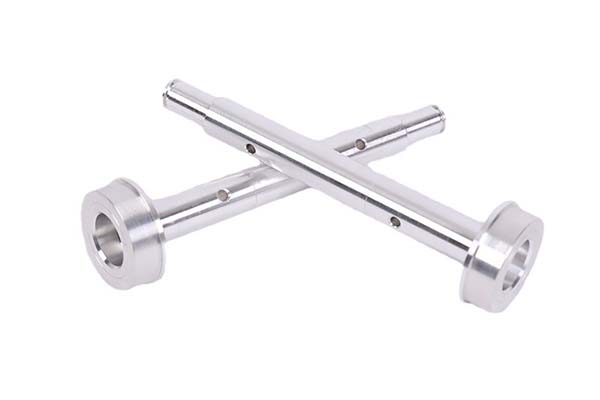
CNC lathes produce rotationally symmetrical parts: shafts, cylinders, bushings, gears, threaded components, and complex profiles. Industries include aerospace (turbine shafts), automotive (engine components), medical (implants, surgical instruments), and electronics (miniature connectors, screws).
How do I choose between a horizontal and vertical CNC lathe?
Choose a horizontal CNC lathe for general-purpose turning, smaller parts, and cost-effective production. Choose a vertical CNC lathe for large, heavy workpieces where stability and chip evacuation are critical. For small, intricate parts requiring ultra-precision, consider a Swiss-type CNC lathe.
Contact Yigu Technology for Custom Manufacturing
At Yigu Technology, we specialize in precision CNC turning for aerospace, medical, automotive, and industrial applications. With 15 years of experience, advanced horizontal, vertical, and Swiss-type CNC lathes, and ISO 9001 certification, we deliver components that meet the tightest tolerances.
Our team helps you select the right machine and optimize processes for your application. Contact us today to discuss your CNC turning project.