Introduction
In the dynamic landscape of advanced manufacturing, plastic milling has emerged as a pivotal process, revolutionizing how high-precision components are produced. As industries strive for greater efficiency, design flexibility, and cost-effectiveness, plastic milling offers advantages that bridge traditional manufacturing techniques with the demands of modern production.
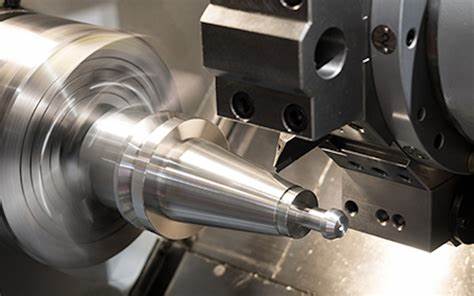
Plastic milling is a subtractive manufacturing process using CNC technology. Rotating cutting tools precisely remove material from a plastic workpiece—creating parts with complex geometries, high dimensional accuracy, and smooth surface finishes. The process is highly versatile, accommodating a wide range of plastic materials.
Applications span multiple industries. In aerospace, lightweight yet durable components are crucial for fuel efficiency and performance. PEEK, for example, is milled into intricate parts for aircraft interiors due to its excellent heat resistance, chemical stability, and mechanical strength.
This guide explores the advantages of plastic milling, compares it with alternative methods, and demonstrates its role in unlocking advanced manufacturing techniques.
What Are the Advantages of Plastic Milling?
Unmatched Precision and Surface Finish
| Method | Tolerance Range | Surface Finish (Ra) |
|---|---|---|
| Plastic milling | ±0.05 mm | 0.8–1.6 μm |
| FDM 3D printing | ±0.2–0.5 mm | 1.6–6.3 μm |
Precision: Plastic milling achieves tolerances as tight as ±0.05 mm—far surpassing additive manufacturing methods like FDM (±0.2–0.5 mm). This precision is attributed to state-of-the-art CNC machines with high-speed spindles (up to 24,000 RPM) and carbide tools (extremely hard, wear-resistant).
Surface finish: Smooth finishes (Ra 0.8–1.6 μm) are critical for:
- Aerospace components—smooth mating surfaces prevent air leakage
- Medical implants—smooth surfaces minimize tissue irritation; improve biocompatibility
Material Versatility
Plastic milling supports over 50 engineering plastics, catering to a wide range of mechanical, chemical, and thermal requirements.
| Category | Materials | Applications |
|---|---|---|
| High-strength polymers | PEEK, PEI, PA (nylon) | Aerospace, automotive—extreme conditions |
| Thermoplastics | ABS, acrylic, polycarbonate | Consumer electronics—impact resistance, optical clarity |
| Composites | Carbon fiber-reinforced plastics (CFRP) | Aerospace, high-performance automotive—lightweight, high strength |
Benefit: Engineers can test prototypes under real-world conditions—e.g., mill a chemically resistant prototype using PEEK for aggressive environments—reducing costly material substitutions.
Rapid Prototyping and Cost Efficiency
| Production Volume | Plastic Milling | Injection Molding |
|---|---|---|
| Low-volume (1–100 units) | 1–7 days turnaround | Weeks to months (tooling) |
| Tooling cost | Low (machine-based) | High (mold design/fabrication) |
Case study: XYZ Manufacturing compared prototyping costs for custom medical device components—plastic milling reduced prototyping costs by 60% , mainly due to elimination of injection molding tooling costs.
Additional benefit: Easy design changes—no tooling involved; engineers can quickly modify CAD models and mill new prototypes—saving time and money during iterative development.
How Does Plastic Milling Compare to Alternative Methods?
Plastic Milling vs. Injection Molding
| Aspect | Plastic Milling | Injection Molding |
|---|---|---|
| Tolerance | ±0.05 mm | ±0.1–0.3 mm |
| Material compatibility | Wide range—thermoplastics, composites | Requires moldable resins |
| Design flexibility | Undercuts, threads, fine details—no complex mold designs | Limited by draft angles, ribs |
| Production volume | Small-batch production, prototyping | Mass production (1000+ units) |
| Tooling cost | Low | High—$10,000 to hundreds of thousands |
Key insight: Plastic milling delivers tighter tolerances and greater design flexibility with lower upfront costs—ideal for small-batch production and prototyping.
Plastic Milling vs. 3D Printing (FDM)
| Aspect | Plastic Milling | 3D Printing (FDM) |
|---|---|---|
| Tolerance | ±0.05 mm | ±0.1–0.2 mm |
| Material compatibility | Wide range—thermoplastics, composites | Limited to specific filaments |
| Design flexibility | Good—undercuts, fine details | High—organic shapes, internal cavities, lattice structures |
| Surface finish | Smooth (Ra 0.8–1.6) | Rough (Ra 1.6–6.3) |
| Production speed | Faster for simple to moderately complex parts | Slower—layer-by-layer process |
| Cost (small batch) | $2,500–5,000 machine + material | $1,500–3,000 (material-based for small parts) |
Key takeaways:
- Precision: Plastic milling outperforms 3D printing—critical for applications requiring tight tolerances
- Material compatibility: Plastic milling handles a vast array of plastics; 3D printing is more limited
- Surface finish: Plastic milling delivers smooth finish directly; 3D printing often requires post-processing (sanding, polishing)
- Production speed: Plastic milling is generally faster for simple to moderately complex parts
- Design flexibility: 3D printing excels at organic, free-form shapes; plastic milling handles undercuts and fine details well
Conclusion: The Unlocking Potential of Plastic Milling
Plastic milling is a transformative force in advanced manufacturing—unlocking innovation and efficiency:
- Precision: Tolerances ±0.05 mm; surface finishes Ra 0.8–1.6 μm—crucial for aerospace, medical, high-end electronics
- Material versatility: Supports over 50 engineering plastics—high-strength polymers (PEEK, PEI), thermoplastics (ABS, polycarbonate), composites (CFRP)
- Rapid prototyping: 1–7 days turnaround; no tooling costs—60% cost reduction vs. injection molding for prototyping
- Design flexibility: Undercuts, threads, fine details—without complex mold designs
- Comparative advantages: Tighter tolerances than injection molding and 3D printing; wider material compatibility; better surface finish than FDM; faster production than 3D printing for simple to moderately complex parts
Plastic milling holds the key to unlocking advanced manufacturing techniques—empowering engineers, designers, and manufacturers to push boundaries and create high-quality, precision components for the industries of tomorrow.
FAQs
What tolerances can plastic milling achieve?
Plastic milling achieves tolerances as tight as ±0.05 mm—significantly tighter than FDM 3D printing (±0.2–0.5 mm) and comparable to or better than injection molding (±0.1–0.3 mm). This precision is critical for aerospace, medical, and high-end electronics applications.
What materials can be used in plastic milling?
Plastic milling supports over 50 engineering plastics, including:
- High-strength polymers: PEEK, PEI, nylon (PA)—aerospace, automotive
- Thermoplastics: ABS, acrylic, polycarbonate—consumer electronics, medical
- Composites: Carbon fiber-reinforced plastics (CFRP)—lightweight, high-strength applications
How does plastic milling compare to injection molding for prototyping?
For prototyping and small-batch production (1–100 units), plastic milling offers significant advantages:
- Lower upfront costs: No expensive molds ($10,000 to hundreds of thousands)
- Faster turnaround: 1–7 days vs. weeks to months
- Easy design changes: Modify CAD model and re-mill—no tooling modifications
- Case study: 60% cost reduction for medical device prototypes vs. injection molding
What surface finish can plastic milling achieve?
Plastic milling achieves surface finishes of Ra 0.8–1.6 μm—smooth enough for aerospace sealing surfaces and medical implants (minimizing tissue irritation). In contrast, FDM 3D printing typically produces rough finishes (Ra 1.6–6.3 μm) requiring post-processing.
When should I choose plastic milling over 3D printing?
Choose plastic milling when you need:
- Tighter tolerances (±0.05 mm vs. ±0.1–0.2 mm)
- Wider material selection (over 50 engineering plastics vs. limited filaments)
- Better surface finish (Ra 0.8–1.6 μm vs. rough layer lines)
- Faster production for simple to moderately complex parts
- Functional prototypes requiring material properties matching production parts
Choose 3D printing when you need highly complex organic shapes, internal cavities, or lattice structures that would be difficult or impossible to machine.
Contact Yigu Technology for Custom Manufacturing
At Yigu Technology, we specialize in plastic milling for aerospace, medical, automotive, and industrial applications. With 15 years of experience, advanced CNC machining capabilities, and ISO 9001 certification, we deliver precision plastic components with tolerances to ±0.05 mm and surface finishes to Ra 0.8 μm.
Our expertise includes high-strength polymers (PEEK, PEI), thermoplastics (ABS, polycarbonate), and composites (CFRP). Contact us today to discuss your plastic milling project.