Introduction
You have a design. You need a prototype that behaves like the final product—same strength, same material, same performance. 3D printing can show you form. But for functional testing, you need something that withstands real-world stress, heat, and wear. This is where the CNC prototype becomes essential. A CNC prototype is a physical sample created through Computer Numerical Control (CNC) machining—a subtractive process where solid material is precisely carved away by computer-controlled tools. The result is a part with exceptional mechanical properties, accuracy, and surface quality, made from the same materials as production parts. At Yigu Technology, we produce CNC prototypes daily for aerospace, automotive, medical, and industrial clients. This article explains what CNC prototyping is, how it compares to other methods, and how to leverage it for successful product development.
What Exactly Is a CNC Prototype?
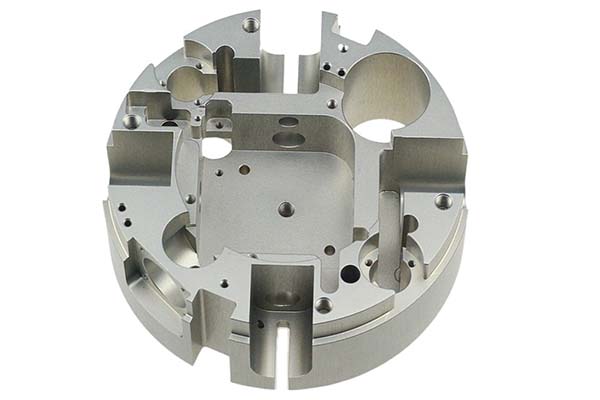
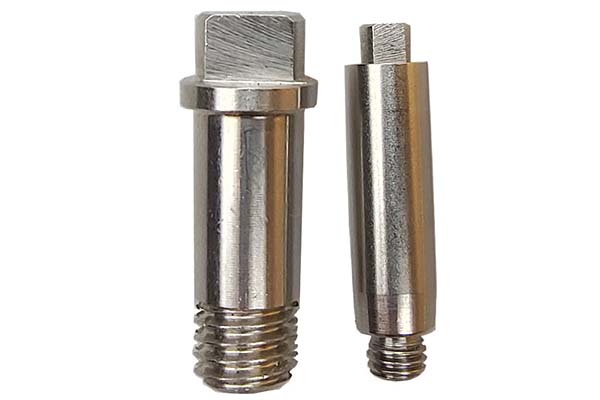
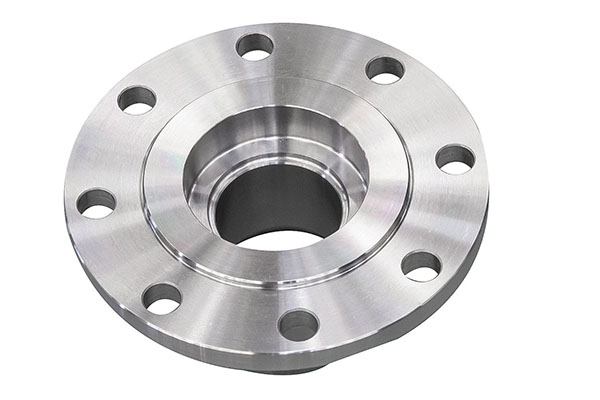
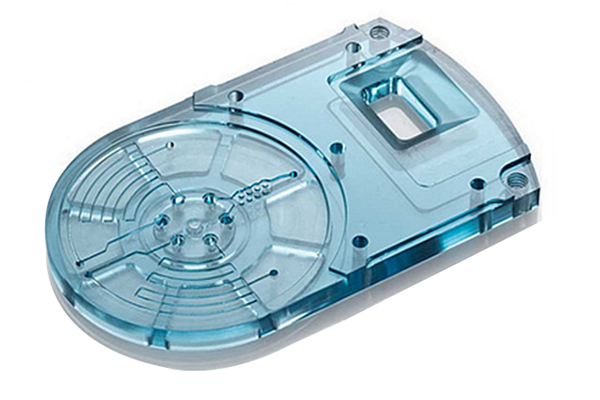
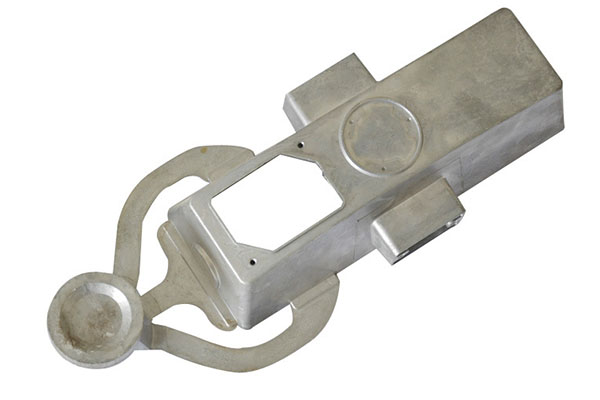
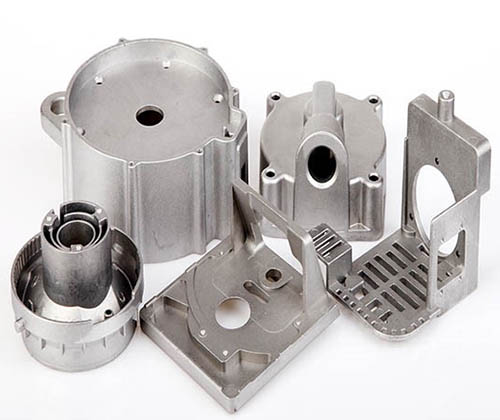
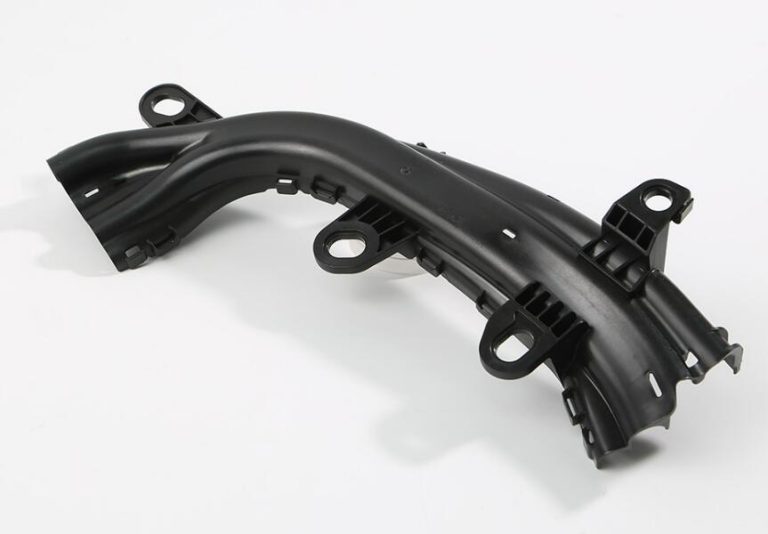
A CNC prototype is a physical sample of a part or product created through Computer Numerical Control (CNC) machining. This is a subtractive manufacturing process where blocks of solid material (metal or plastic) are precisely carved away by computer-controlled cutting tools to form the desired shape.
Key advantage: Functional testing. Because a CNC-machined prototype is made from the same solid materials as final production parts (e.g., aluminum 6061, POM, stainless steel), it can be subjected to real-world stresses, thermal conditions, and assembly checks.
Example: An automotive engineer might create a CNC-machined aluminum prototype of a bracket to test its vibration resistance and fit within an engine bay—providing confidence before committing to high-volume tooling.
How Does CNC Prototyping Compare to 3D Printing?
Choosing between CNC and 3D printing depends on your prototype's purpose.
| Feature | CNC Prototyping | 3D Printing (FDM, SLA, SLS) |
|---|---|---|
| Process | Subtractive (material removed) | Additive (material added in layers) |
| Materials | Wide range of solid plastics and metals (ABS, nylon, aluminum, steel, brass). Parts are isotropic. | More limited, often specific plastics/resins. Some metals possible but costly. Can be anisotropic. |
| Strength & durability | Superior mechanical properties identical to final production parts | Varies; often weaker along layer lines; not always suitable for functional testing |
| Surface finish | Excellent, smooth finishes right off the machine. Can be polished to mirror-like surface. | Often shows layer lines; requires post-processing for smoothness |
| Speed & cost for simple shapes | Slower setup, faster for single complex parts. Cost-effective for 1–10 units. | Faster setup, slower print time per part. Very cost-effective for 1–2 units of geometrically complex parts. |
| Geometric complexity | Excellent for complex designs, but undercuts and internal channels may require special tooling or multi-axis setups | Unmatched for organic shapes, intricate lattices, and internal geometries with no added cost |
| Best for | Functional prototypes, durability testing, parts requiring tight tolerances | Concept models, visual prototypes, parts with impossible-for-CNC geometries |
Which Industries Rely on CNC Prototypes Most?
| Industry | Applications | Why CNC? |
|---|---|---|
| Aerospace & Defense | Flight-worthy prototype parts, titanium components | Withstand extreme forces, meet stringent certifications |
| Automotive | Engine components, brackets, interior elements | Fit, form, and function testing under real-world conditions |
| Medical Devices | Surgical instruments, diagnostic equipment housings | Biocompatibility, ultra-precision |
| Consumer Electronics | Smartphone enclosures, wearable prototypes | Aesthetics, button feel, heat dissipation testing |
| Industrial Machinery | Gears, housings, fixtures | Robust, high-tolerance parts mimicking production runs |
What Materials Can Be Chosen for a CNC Prototype?
Plastics
| Material | Properties | Applications |
|---|---|---|
| ABS | Good toughness, impact resistance, easy to machine | Durable housings |
| POM (Delrin) | Excellent dimensional stability, low friction | Gears, bushings, snap-fits |
| PEEK | High-performance, thermally stable, chemically resistant | Aerospace, medical prototypes |
| Polycarbonate (PC) | High impact strength, transparency | Clear covers, lenses |
Metals
| Material | Properties | Applications |
|---|---|---|
| Aluminum 6061 | Excellent strength-to-weight, good machinability, corrosion resistance | Aerospace, automotive, consumer electronics |
| Aluminum 7075 | Higher strength than 6061 | High-stress structural components |
| Stainless Steel 304/316 | Great corrosion resistance, strength | Medical, marine, food-grade prototypes |
| Brass | Easy to machine, excellent aesthetic finish | Electrical components, decorative prototypes |
How Tight Can Tolerances Go in CNC Prototyping?
Tolerances refer to the permissible limit of variation in a physical dimension.
| Machining Type | Typical Tolerance |
|---|---|
| Standard machining | ±0.005 inches (±0.127 mm) |
| Precision machining | ±0.0005 inches (±0.0127 mm) or less for critical features |
Factors influencing achievable tolerance:
- Machine capability: High-precision 5-axis machines offer better accuracy than basic 3-axis mills
- Material: Stable materials like aluminum and POM hold tighter tolerances than materials prone to warping
- Part geometry: Tiny, deep features are harder to hold to tight tolerances than larger, accessible ones
- Temperature control: Shop temperature fluctuations can cause material expansion/contraction
What Design Tweaks Speed Up CNC Prototype Machining?
Implementing Design for Manufacturability (DFM) principles reduces cost and lead time.
| DFM Principle | Why It Matters |
|---|---|
| Avoid deep, narrow cavities | Require long, thin tools that break easily and cut slowly. Use radii matching standard tool sizes. |
| Limit tight tolerances | Only apply where absolutely necessary. Every ±0.001" callout increases cost. |
| Design with standard tooling | Holes and threads should align with standard drill and tap sizes to avoid custom tool fabrication. |
| Minimize setup changes | Design parts that can be machined in as few orientations as possible. Multi-axis CNC helps. |
| Add fillets to internal vertical edges | Sharp internal corners force smaller tools. Fillets allow larger, stronger tools and faster machining. |
What Surface Finishes Suit CNC Prototypes Best?
| Finish | Description | Best For |
|---|---|---|
| As-machined | Directly off the machine; visible tool marks | Functional testing, most economical |
| Bead blasting | Matte, uniform satin finish; hides minor tool marks | Aluminum enclosures, good grip |
| Anodizing (Type II & III) | Electrochemical process; increases corrosion resistance; allows color dyeing (Type II); hard anodizing (Type III) provides wear-resistant surface | Aerospace, consumer electronics |
| Powder coating | Thick, durable polymer coating; any color and texture | Industrial, outdoor applications |
| Polishing & buffing | Mirror-like, reflective surface | Decorative parts, low-friction applications |
Yigu Technology's Perspective
As a custom manufacturer of non-standard plastic and metal products, Yigu Technology specializes in CNC prototyping.
What we have learned:
- Material truthfulness matters: A CNC prototype from the same material as production provides accurate functional test data.
- DFM saves time and money: Early design feedback prevents costly machining issues.
- Tolerances should be intentional: Specify tight tolerances only where needed.
- Surface finish affects function: Not just aesthetics—friction, corrosion resistance, and assembly are impacted.
We provide DFM feedback, select optimal materials, and deliver functional prototypes that give clients confidence to move forward.
Conclusion
A CNC prototype is far more than a visual model. It is a functional, high-precision representation of your final product, machined from real engineering materials. While 3D printing excels at rapid conceptual models, CNC machining for prototypes is unmatched when you need to test strength, fit, thermal performance, or durability.
Key takeaways:
- Process: Subtractive—material removed from solid block
- Materials: Wide range—plastics (ABS, POM, PEEK, PC) and metals (aluminum, stainless steel, brass)
- Tolerances: Standard ±0.005"; precision ±0.0005"
- DFM: Design for manufacturability reduces cost and lead time
- Finishes: As-machined, bead blasting, anodizing, powder coating, polishing
By understanding the process, material options, DFM principles, and finishing techniques, you can effectively leverage CNC prototyping to de-risk product development, accelerate time-to-market, and ensure your design is ready for manufacturing success.
Frequently Asked Questions
How much does a CNC prototype typically cost?
Cost varies widely based on size, material, complexity, and quantity. A simple aluminum bracket may cost $100–$300. A complex, tight-tolerance aerospace component could be several thousand dollars. Provide a 3D model for an accurate quote.
How long does it take to get a CNC-machined prototype?
Lead time typically ranges from 2 to 10 days, depending on part complexity, material availability, and shop workload. Simple parts can be turned around quickly once the CNC program is set up.
Can a CNC prototype be made from the same material as my final injection-molded or die-cast part?
Often, yes. If your final part will be die-cast aluminum, you can machine the prototype from a solid aluminum billet (like 6061) with similar mechanical properties. This allows highly accurate functional testing.
Is CNC prototyping suitable for very large parts?
Yes, but depends on the machine's work envelope. Large-format CNC mills can handle parts several feet in dimension. For extremely large parts, fabrication from multiple machined components may be more practical.
What file format is best to provide for a CNC prototyping quote?
STEP or IGES files are preferred as they contain complete 3D geometry data. Include a 2D drawing (PDF or DWG) if you have specific tolerances, threads, or critical notes.
Contact Yigu Technology for Custom Manufacturing
At Yigu Technology, we understand that a high-quality CNC prototype is the critical bridge between a brilliant idea and a successful product. Our expertise extends beyond operating advanced multi-axis CNC machines—we provide DFM feedback that makes your part stronger, faster to produce, and more cost-effective. We partner with you to refine your design, select the optimal material and finish, and deliver a functional prototype that gives you uncompromised confidence to move forward.
Let's turn your vision into a tangible, testable reality. Contact Yigu Technology today.