Introduction
In manufacturing, machining costs often determine whether a project succeeds or fails financially. A part that costs too much to produce erodes profit margins. A process that runs inefficiently makes you less competitive. Yet many manufacturers struggle to understand exactly where their machining costs come from—and how to control them.
This guide breaks down machining costs into their core components, identifies the key drivers that push costs up or down, and provides practical techniques for cost reduction. We will cover estimation methods, analysis tools, and industry-specific considerations. Whether you are running a job shop or managing production for a large enterprise, you will find actionable insights to improve your cost position.
What Are the Core Cost Components?
Material Costs
Material costs often represent the largest single expense in machining, particularly when working with high-value materials. Titanium, superalloys, and certain engineering plastics can account for a significant portion of total project cost.
In aerospace manufacturing, where materials must meet stringent quality and performance standards, material costs can reach up to 50% of total machining cost. Prices fluctuate based on type, quality, availability, and market demand.
Managing material costs requires a multi-pronged approach. Consider alternative materials that meet performance requirements at lower cost. Negotiate favorable pricing with suppliers based on volume commitments. And optimize material utilization through efficient nesting, near-net shapes, and scrap reduction.
Labor Costs
Labor costs typically range from 20–30% of total machining cost. This includes wages, benefits, training, and overtime. Complex or high-precision operations demand skilled operators, and that expertise comes at a premium.
To manage labor costs, consider automation for repetitive tasks. Advanced manufacturing technologies can perform operations more efficiently with less human intervention. At the same time, invest in continuous training. Skilled operators work faster, make fewer mistakes, and produce higher quality work—all of which reduce effective labor costs.
Overhead Costs
Overhead costs include all indirect expenses required to run a machining operation. Rent, utilities, equipment maintenance, insurance, and administrative salaries fall into this category.
These costs are often fixed and not directly tied to production volume, making them challenging to manage. However, opportunities exist. Energy-efficient lighting and equipment reduce utility bills. Facility layout optimization improves workflow and reduces wasted space. Preventive maintenance extends equipment life and reduces unexpected repair costs.
Tooling Costs
Tooling costs cover the purchase, maintenance, and replacement of cutting tools, fixtures, and workholding equipment. These expenses can be substantial for high-volume production runs or complex machining tasks requiring specialized tools.
High-quality tools often cost more upfront but deliver lower cost per part through longer life and better performance. Implement a tool management system that tracks usage, monitors wear, and schedules replacements. This prevents unexpected downtime and ensures you are not running tools beyond their effective life.
Maintenance Costs
Maintenance costs keep equipment in good working order. Routine tasks—oil changes, filter replacements, calibration—are predictable. Complex repairs and major overhauls are less so.
Maintenance costs can be significant, especially for older or frequently used equipment. A preventive maintenance program is essential. Schedule regular inspections to identify and address potential issues before they escalate. Investing in high-quality, reliable equipment also reduces long-term maintenance expense.
Energy Costs
Energy costs cover power for machining equipment and facility operations. For high-power equipment or facilities running extended hours, these costs add up quickly.
Energy-saving measures pay dividends. Install energy-efficient lighting. Use variable-speed drives to control motor speed based on demand. Optimize facility layout to minimize heating, cooling, and lighting requirements. Some manufacturers are even switching to renewable energy sources like solar to reduce long-term costs and carbon footprint.
Waste Disposal Costs
Waste disposal costs include handling metal chips, spent coolant, lubricants, and other byproducts. Hazardous waste materials require special handling and disposal, increasing costs significantly.
Waste reduction and recycling programs minimize disposal needs. Metal chips can be collected and sold to recyclers. Coolant can be filtered and reused. Ensure compliance with environmental regulations to avoid fines and penalties that can dwarf disposal costs themselves.
What Factors Drive Machining Costs Up or Down?
Machine Utilization
Machine utilization directly impacts equipment productivity. High utilization rates indicate effective use of capital assets. Low rates mean idle time and underutilization, which drive up per-unit costs.
A production scheduling system that optimizes equipment use is essential. Flexible, adaptable equipment that handles multiple production requirements also improves utilization. When machines sit idle, you are still paying for them through depreciation, maintenance, and floor space.
Production Volume
Production volume has a powerful effect on unit cost. Higher volumes spread fixed costs—equipment depreciation, setup costs, overhead—across more units, reducing cost per part.
Strategies to increase volume include expanding your customer base, introducing new products, or increasing production capacity. Higher volumes also strengthen your negotiating position with material suppliers.
Material Quality
Material quality creates a trade-off. Higher-quality materials cost more upfront but may reduce rework, scrap, and warranty claims. Lower-quality materials may cause tool wear, machine downtime, and quality issues.
Conduct a cost-benefit analysis to determine the optimal material quality for your application. Work closely with suppliers to ensure you receive consistent quality at competitive prices.
Process Complexity
Process complexity drives costs in multiple ways. Multi-axis machining, micro-machining, and tight-tolerance operations require specialized equipment, skilled operators, and advanced programming. All of these add cost.
Simplify product designs and machining processes whenever possible. Sometimes a small design change—adding a radius, reducing depth-to-width ratio—can dramatically reduce machining time and cost.
Labor Skills
Labor skills are essential for complex or high-precision operations. Skilled labor commands higher wages but delivers higher productivity, better quality, and lower long-term costs.
Attract and retain skilled labor with competitive compensation, ongoing training, and a positive work environment. At the same time, invest in automation to reduce reliance on scarce skills for repetitive tasks.
Technology Level
Technology level influences both cost and capability. Advanced technologies—robotics, artificial intelligence, connected systems—can dramatically improve efficiency and quality. But implementation and maintenance costs are significant.
Conduct a cost-benefit analysis before investing in new technology. Evaluate potential benefits against costs. Stay current on industry advancements, but invest only in technologies that offer a clear competitive advantage for your specific operation.
Supply Chain Efficiency
Supply chain efficiency affects material availability, cost, and quality. An optimized supply chain minimizes inventory levels, improves delivery times, and secures favorable pricing.
Implement a supply chain management system that streamlines procurement, inventory, and logistics. Build strong relationships with key suppliers to ensure priority service and competitive pricing.
What Techniques Reduce Machining Costs?
Lean Manufacturing
Lean manufacturing systematically eliminates waste from production processes. Value stream mapping identifies non-value-added activities. 5S (sort, set in order, shine, standardize, sustain) organizes the workplace for efficiency. Continuous improvement culture drives ongoing gains.
In machining operations, lean principles reduce cycle times, increase throughput, and minimize errors and defects. A manufacturer that eliminated unnecessary setup steps reduced setup time by 50% and increased available machining hours by 15%.
Automation
Automation reduces labor costs, improves quality, and increases productivity. Robotic arms load and unload parts. CNC machines run unattended. Automated material handling systems move workpieces between operations.
Automation also reduces the risk of errors and injuries associated with manual labor. Consistency improves. Scrap rates drop. The initial investment is significant, but the return often comes quickly in high-volume applications.
Process Optimization
Process optimization involves analyzing and improving individual machining operations. Cutting parameters can be adjusted to balance speed against tool life. Toolpaths can be optimized to reduce air cutting. Fixturing can be improved to reduce setup time.
A shop that optimized cutting parameters for a stainless steel part reduced cycle time by 25% while extending tool life by 40%. The changes cost nothing—only analysis and adjustment.
Value Engineering
Value engineering analyzes product functions and costs to find improvements. The goal is to maintain or improve performance while reducing cost.
Examples include using a less expensive material that still meets requirements, simplifying product design to reduce part count, or consolidating multiple components into a single machined part. Value engineering often requires collaboration between design and manufacturing teams early in the product development cycle.
Bulk Purchasing
Bulk purchasing leverages volume discounts. Buying larger quantities reduces per-unit material cost. It also reduces purchase frequency, saving on transportation and handling costs.
The trade-off is inventory carrying costs. Balance volume discounts against the cost of holding inventory. For high-volume, stable products, bulk purchasing often makes sense.
Energy Efficiency
Energy efficiency reduces operating costs. Energy-efficient lighting and motors consume less power. Variable-speed drives match motor speed to load requirements. Facility layout optimization reduces heating and cooling needs.
Some manufacturers have reduced energy costs by 15–25% through these measures. Renewable energy investments offer long-term savings and sustainability benefits.
Waste Minimization
Waste minimization reduces disposal costs and recovers valuable materials. Metal chips can be collected and sold to recyclers. Coolant can be filtered and reused. Segregating waste streams may reduce hazardous waste classification and disposal costs.
A machining operation that implemented coolant recycling reduced fresh coolant purchases by 70% and disposal costs by 50%.
How Do You Estimate Machining Costs Accurately?
Historical Data
Historical data provides a foundation for cost estimation. Analyzing past projects reveals trends in material costs, labor hours, and overhead allocation. However, historical data may not account for changes in material prices, labor rates, or production methods.
Standard Costing
Standard costing sets predetermined costs for each component based on industry benchmarks, historical data, or engineering estimates. Actual costs are compared to standards to identify variances.
Standard costing is useful for cost control but requires regular updates to remain accurate. Material prices change. Labor rates increase. Processes improve.
Activity-Based Costing
Activity-based costing (ABC) assigns costs to specific activities based on resource consumption. Rather than allocating overhead broadly, ABC traces costs to the activities that drive them.
ABC provides more accurate cost estimates, especially for complex operations with diverse products. It requires more data collection and analysis but delivers better insight into true costs.
Parametric Estimation
Parametric estimation uses statistical models to predict costs based on parameters like part size, complexity, and material type. Historical data establishes relationships between these parameters and actual costs.
Parametric models are quick to use once developed. They are most accurate for products similar to those in the historical database.
Bottom-Up Estimation
Bottom-up estimation calculates costs for each individual task or component and sums them. This approach requires detailed understanding of machining processes and resource requirements.
Bottom-up estimation is time-consuming but highly accurate. It is often used for complex or high-value projects where precision is essential.
Top-Down Estimation
Top-down estimation starts with high-level factors—project scope, part complexity, expected volume—and applies broad cost factors. It is quick and useful for preliminary estimates when detailed information is not yet available.
Accuracy is lower than bottom-up estimation, but top-down estimates can be refined as more information becomes available.
Simulation
Simulation creates virtual models of machining processes to predict costs and performance. Different scenarios can be evaluated without physical trials.
Simulation is powerful but requires specialized software and expertise. It is most valuable for complex operations where many variables interact.
What Analysis Tools Help Control Costs?
Break-Even Analysis
Break-even analysis determines the point where total revenue equals total costs. It shows the minimum production volume or sales price needed to avoid losses.
This analysis is useful for evaluating new products, setting prices, and assessing the impact of cost changes.
Cost-Benefit Analysis
Cost-benefit analysis compares the costs of an investment to the benefits it is expected to generate. Quantifying both in monetary terms allows evaluation of economic viability.
Use cost-benefit analysis when considering new equipment, technologies, or process improvements.
Sensitivity Analysis
Sensitivity analysis evaluates how changes in key variables—material costs, labor rates, production volume—affect total costs and profitability.
Identifying the most sensitive variables helps prioritize management attention and develop contingency plans.
Variance Analysis
Variance analysis compares actual costs to budgeted or standard costs. Understanding the reasons for variances enables corrective action.
Regular variance analysis identifies cost problems early, before they become significant.
Life Cycle Costing
Life cycle costing evaluates total cost over a product’s entire life—design, production, use, maintenance, and disposal.
This approach often reveals that higher initial costs (for better materials or more precise machining) reduce long-term costs through longer life and lower maintenance.
Cost Benchmarking
Cost benchmarking compares your costs to industry averages or best-in-class performers. It identifies gaps and suggests improvement opportunities.
Benchmarking requires reliable industry data. Trade associations, consultants, and public company financial reports can provide benchmarks.
How Do Costs Vary by Industry?
Aerospace Machining Costs
Aerospace machining costs are typically higher due to stringent quality and performance requirements. Materials like titanium, nickel alloys, and carbon fiber composites are expensive and difficult to machine. Precision requirements demand specialized equipment and skilled operators.
Managing aerospace costs requires working with suppliers who specialize in these materials and processes. Design optimization that reduces material waste and machining complexity also helps.
Automotive Machining Costs
Automotive machining costs benefit from high production volumes that spread fixed costs across many units. However, advanced materials like aluminum and high-strength steel increase costs. Component complexity continues to rise with electric vehicle adoption.
Lean manufacturing, automation, and supply chain optimization are key strategies for automotive cost management.
Medical Device Machining Costs
Medical device machining costs reflect the need for high precision, strict quality control, and regulatory compliance. Biocompatible materials are often expensive. Machining processes must be validated and documented.
Design optimization, working with regulatory-savvy suppliers, and efficient quality control processes help manage these costs.
Electronics Machining Costs
Electronics machining costs are driven by miniaturization, advanced materials, and high-precision requirements. As components shrink, machining becomes more demanding and specialized equipment is required.
Investment in advanced machining technologies and design for manufacturability are essential for cost control in this fast-moving industry.
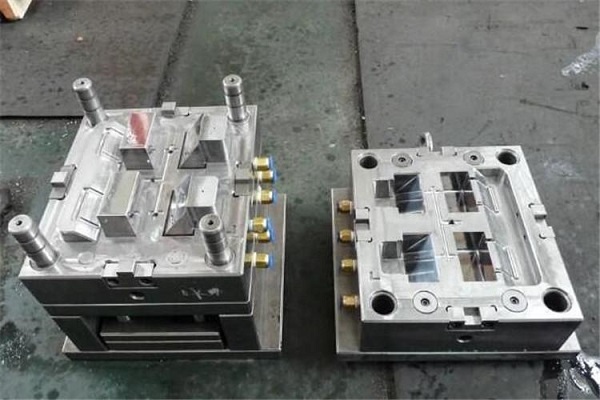
Mold and Die Machining Costs
Mold and die machining costs are driven by complexity, materials, and precision requirements. Tool steel is expensive. Complex geometries demand skilled operators and advanced equipment.
Simplifying mold designs where possible, using cost-effective materials without sacrificing quality, and implementing efficient machining processes are key strategies.
Conclusion
Machining costs are determined by a complex interplay of materials, labor, overhead, tooling, and operational factors. Understanding these components and drivers is the first step toward effective cost management.
The key to cost control lies in multiple approaches working together. Lean manufacturing eliminates waste. Automation reduces labor costs and improves consistency. Process optimization squeezes inefficiency out of individual operations. Value engineering reduces cost without sacrificing quality. Supply chain management secures favorable material pricing and reliable delivery.
Cost estimation and analysis tools—from break-even analysis to life cycle costing—provide the visibility needed to make informed decisions. And industry-specific strategies address the unique requirements of aerospace, automotive, medical, and other sectors.
For manufacturers willing to invest the effort, machining costs can be managed and reduced without compromising quality or capability. The result is better profitability, stronger competitiveness, and a more resilient operation.
FAQ
What percentage of machining cost is typically labor?
Labor costs typically account for 20–30% of total machining cost. This includes wages, benefits, training, and overtime. The percentage varies by industry and operation complexity—higher for custom job shops, lower for high-volume automated production.
How can I reduce tooling costs without sacrificing quality?
Use high-quality tools designed for longer life. Implement a tool management system to track usage and schedule replacements before failure. Optimize cutting parameters to balance tool life against cycle time. Consider tool coatings that reduce wear. For high-volume operations, regrinding and recoating can extend tool life significantly.
What is the most effective way to estimate machining costs for new products?
For new products, a combination approach works best. Use bottom-up estimation for direct costs like materials and labor. Use parametric estimation based on similar historical products for indirect costs. Validate with prototype runs before committing to full production. Refine estimates as actual data becomes available.
How does production volume affect unit machining cost?
Higher production volumes reduce unit cost by spreading fixed costs—equipment depreciation, setup costs, overhead—across more units. The effect is most pronounced when moving from prototype quantities to low-volume production. Additional volume beyond certain thresholds yields diminishing returns as variable costs dominate.
What are the biggest cost drivers in aerospace machining?
Material costs are the largest driver, often reaching 50% of total cost due to expensive alloys like titanium and Inconel. Process complexity—tight tolerances, complex geometries, specialized equipment—adds significant cost. Quality requirements and certification costs also contribute substantially.
Contact Yigu Technology for Custom Manufacturing
Need help managing machining costs for your next project? Yigu Technology provides custom manufacturing solutions across aerospace, automotive, medical, and industrial sectors. Our engineers work with you from design through production to optimize manufacturability and control costs. Contact us today to discuss your requirements.