Introduction
In product development, ideas are cheap. Execution is everything. But how do you know if your mechanical design will actually work before you spend thousands on tooling and mass production? The answer lies in mechanical prototypes. These physical models bridge the gap between a digital design and a market-ready product. At Yigu Technology, we have spent years helping engineers and entrepreneurs validate their concepts through precision prototyping. This article walks you through what a mechanical prototype truly is, how it is made, and—most importantly—how it can save your project from costly mistakes.
What Exactly Is a Mechanical Prototype?
A mechanical prototype is a physical, working model of a mechanical design. It is built to test how a product performs under real-world conditions. Unlike a static mockup that only shows appearance, a mechanical prototype focuses on function, fit, and motion.
For example, when developing a new cordless drill, a mechanical prototype includes the actual motor, gearbox, trigger mechanism, and battery housing. Engineers use it to check if the drill delivers enough torque, if the grip feels comfortable, and if the battery stays secure during use. Without this step, a design flaw might only be discovered after mass production—when fixing it becomes ten times more expensive.
Why It Matters More Than a Digital Model
A 3D CAD file looks perfect on screen. But screens do not show friction, tolerance issues, or material behavior. A mechanical prototype reveals these hidden problems. It answers questions like:
- Do the moving parts interfere with each other?
- Can the housing withstand a drop?
- Does the assembly process work in the real world?
Key Components of a Mechanical Prototype
A well-built prototype consists of several critical elements. Missing any of them can lead to incomplete testing.
| Component | Purpose | Example |
|---|---|---|
| Structural elements | Provide strength and support | Metal frame of a robotic arm |
| Moving parts | Enable motion and mechanical action | Gears, bearings, linkages in a conveyor system |
| Power systems | Supply energy for operation | Battery pack in a portable medical device |
| Control systems | Manage behavior and feedback | PCB with sensors in an automated door lock |
| Enclosures | Protect internal components | Injection-molded casing for a smart thermostat |
Each of these must work together. A prototype with a strong frame but a weak power connection will fail testing. A prototype with excellent electronics but poor ergonomics will frustrate users.
How Are Mechanical Prototypes Created?
The process follows a logical flow. Rushing any step increases risk.
1. Design Phase
Everything starts with concept sketching. Designers explore rough shapes, layouts, and mechanisms on paper. This step is low-cost and encourages creativity.
Next comes 3D modeling using CAD software. Here, every dimension is defined. In a high-performance drone prototype, CAD helps optimize propeller placement and battery positioning for balance and lift.
Then, simulation and analysis occur. Engineers run stress tests, thermal simulations, and motion studies. For a prototype of a hydraulic press, stress analysis ensures the frame can handle maximum load without cracking.
2. Material Selection
Choosing the right material is a balancing act.
- Aluminum alloys are popular for aerospace and automotive parts because they are lightweight and strong.
- Plastics like ABS or polycarbonate work well for consumer products due to low cost and ease of molding.
- Titanium appears in medical implants or high-end sports equipment where corrosion resistance and strength are critical.
Cost and manufacturability matter too. A material that requires five-axis CNC machining may be too expensive for early-stage testing. In many cases, Yigu Technology recommends starting with a cost-effective material to validate geometry before moving to final-spec materials.
3. Manufacturing Phase
Physical production of a prototype typically falls into two categories.
Traditional Machining:
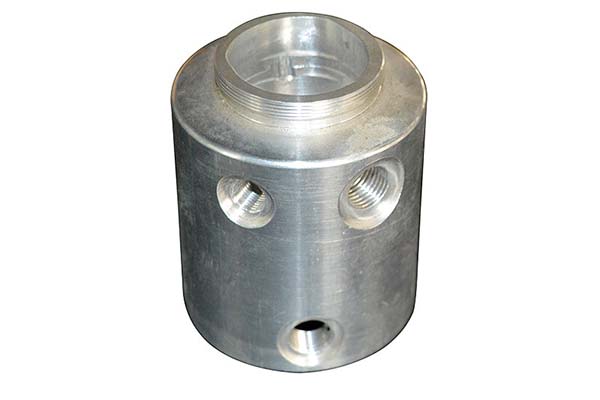
- CNC machining offers high precision for metal and plastic parts. A custom gear for an automotive transmission can be milled to tight tolerances.
- Lathe work creates cylindrical components like shafts and rollers.
- Milling produces complex shapes such as engine block cavities or mounting brackets.
Additive Manufacturing (3D Printing):
- FDM (Fused Deposition Modeling) is fast and affordable. It is ideal for form-fit testing, such as checking if a housing aligns with internal components.
- SLS (Selective Laser Sintering) uses nylon or metal powders. It builds strong parts with complex geometries. In aerospace, SLS produces brackets with internal lattice structures to reduce weight without sacrificing strength.
A hybrid approach often yields the best results. For instance, CNC-machined metal parts can be combined with 3D-printed plastic components to balance cost and functionality during testing.
What Are the Real Benefits?
Investing in a mechanical prototype delivers measurable returns.
Cost Savings
Finding a design flaw early is far cheaper than fixing it after production begins. Consider this: a mold for injection molding can cost $10,000 to $100,000. If that mold is built based on an untested design, any mistake means expensive rework. A prototype costing a few thousand dollars can prevent that risk entirely.
Faster Time to Market
Prototypes allow parallel development. While the design is being refined, marketing materials, packaging, and supply chain plans can move forward. Companies that skip prototyping often face delays when unexpected issues surface late in the process.
Better Product Performance
Testing a physical model reveals what simulations cannot. For example, a consumer electronics company developed a new handheld gaming device. The CAD model showed no issues. But the mechanical prototype revealed that the shoulder buttons felt stiff after 10 minutes of use. A small spring adjustment fixed the problem before mass production.
Investor and Stakeholder Confidence
A working prototype is far more convincing than a render. It demonstrates that your idea is real. For startups seeking funding, a functional model can make the difference between securing investment or being turned away.
Case Studies: Learning from Real Projects
Automotive Industry: A New Transmission System
Challenge: An automotive manufacturer wanted to develop a more efficient 7-speed dual-clutch transmission. They needed to validate shift smoothness, durability, and thermal performance.
Approach: The team built a mechanical prototype using CNC-machined metal gears and a 3D-printed housing for non-structural parts. They tested it on a dynamometer that simulated city driving, highway cruising, and aggressive acceleration.
Outcome: Testing revealed that the shift fork geometry caused occasional misalignment under high load. The design was modified, and the final transmission achieved a 12% improvement in fuel efficiency compared to the previous model. The prototype prevented a recall-level issue.
Aerospace Industry: A Lightweight Wing Component
Challenge: An aerospace firm designed a new wing bracket to reduce weight while maintaining structural integrity. The component had complex internal channels for hydraulic lines.
Approach: Engineers used SLS 3D printing with a titanium alloy to create the prototype. They tested it in a wind tunnel and subjected it to cyclic loading that simulated 10 years of flight stress.
Outcome: The prototype identified a localized stress concentration that was not evident in simulation. After redesign, the final part was 23% lighter than the original cast version, contributing to overall fuel savings for the aircraft.
Medical Device: A Portable Infusion Pump
Challenge: A medical startup needed to create a compact, battery-operated infusion pump that could be worn on the body. The device had to be waterproof and reliable.
Approach: Yigu Technology helped produce a series of prototypes using CNC-machined ABS for the housing and silicone overmolding for seals. Each iteration was tested for water resistance, battery life, and button durability.
Outcome: The third prototype passed all regulatory testing requirements. The product launched on schedule and gained FDA clearance with no major design changes required after tooling began.
Common Challenges and How to Overcome Them
Prototyping is not without obstacles. Being aware of them helps you plan effectively.
| Challenge | Impact | Solution |
|---|---|---|
| Material limitations | Early prototypes may not match final material properties | Use additive manufacturing for form testing, then CNC with final material for functional testing |
| Precision issues | Misalignment or loose fits | Specify tighter tolerances in CAD and use advanced machining like 5-axis CNC |
| Intellectual property risk | Design exposure when outsourcing | Sign NDAs, work with trusted partners, and consider provisional patents before sharing files |
| Cost creep | Prototyping budget exceeds expectations | Define clear testing goals; build only what is necessary to answer critical questions |
Conclusion
A mechanical prototype is not a luxury. It is a risk-reduction tool. It turns assumptions into evidence. It reveals problems when they are still cheap to fix. Whether you are developing a consumer gadget, an industrial machine, or a medical device, the right prototyping approach saves time, money, and reputational damage.
At Yigu Technology, we have seen how a well-executed prototype transforms a project. It aligns teams, impresses stakeholders, and paves the way for smooth production. The key is to start early, choose the right manufacturing methods, and test with real-world conditions in mind. When you do, your final product will be stronger, more reliable, and ready for market success.
Frequently Asked Questions
What is the difference between a prototype and a mockup?
A mockup focuses on appearance and form. A mechanical prototype focuses on function, fit, and motion. Mockups are often non-working; prototypes are built to be tested.
How much does a mechanical prototype cost?
Costs vary widely based on size, complexity, material, and manufacturing method. A simple 3D-printed part may cost under $100. A complex CNC-machined assembly with multiple components can range from $2,000 to $20,000 or more.
How long does it take to build a mechanical prototype?
Lead times depend on the manufacturing process. 3D printing can produce parts in 1 to 3 days. CNC machining typically takes 5 to 10 business days. Assemblies with multiple custom parts may require 2 to 4 weeks.
Can I use a prototype for production?
Generally, no. Prototypes are built with different processes and materials than mass-production parts. However, a high-quality prototype can closely simulate production parts for testing and validation purposes.
What should I prepare before requesting a prototype?
Provide a detailed 3D CAD file (STEP format is preferred), a clear list of required materials, functional testing goals, and any tolerance specifications. The more information you share, the more accurate the prototype will be.
Contact Yigu Technology for Custom Manufacturing
At Yigu Technology, we specialize in turning engineering concepts into precision mechanical prototypes. Whether you need CNC machining, 3D printing, or sheet metal fabrication, our team delivers quality parts with fast lead times. We work with startups, medical device companies, automotive suppliers, and aerospace firms to reduce risk and accelerate development.
If you have a project in mind or need guidance on the best prototyping approach, reach out to our engineering team. We are ready to help you move from idea to reality with confidence.