Introduction
Threads are everywhere. They hold together aircraft engines, secure automotive transmissions, anchor medical implants, and assemble the devices you use every day. But how are these threads made? While traditional methods like tapping and die threading have served manufacturing for decades, thread milling has emerged as a superior alternative—offering precision, versatility, and reliability that traditional methods cannot match.
Thread milling uses a rotating milling cutter that follows a helical path to cut threads into the workpiece. Unlike tapping, which requires a tool matched exactly to the thread size, thread milling uses a single tool to produce a wide range of thread sizes and types. This makes it particularly valuable in industries where high-quality, reliable threaded components are critical: aerospace, automotive, medical, and beyond.
This guide explores the thread milling process, applications, benefits, and why it has become the preferred choice for modern manufacturing.
What Is Thread Milling and How Does It Differ from Traditional Methods?
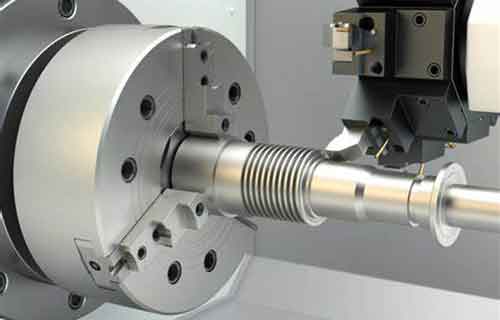
Thread milling is a machining process that uses a rotating milling cutter to create threads on a workpiece. The cutter follows a helical path—moving in a circular arc while simultaneously moving axially—to cut the thread profile.
Comparison: Thread Milling vs. Traditional Threading
| Aspect | Thread Milling | Tapping / Die Threading |
|---|---|---|
| Tool type | Rotating milling cutter | Tap (internal) or die (external) |
| Tool-to-thread size | One tool can produce multiple thread sizes | Tool matched exactly to thread size |
| Precision | High; CNC-controlled helical path | Limited by tool geometry |
| Thread types | Internal, external, left-hand, right-hand, tapered | Primarily standard profiles |
| Chip evacuation | Excellent; chips are ejected | Can be problematic; chips may clog |
| Tool life | Longer; less stress on tool | Shorter; high stress in single pass |
| Thread strength | Superior; smooth, defect-free profile | May have burrs, defects |
How Does the Thread Milling Process Work?
Milling Machine Setup
The first step is setting up the milling machine. The workpiece is secured in the chuck or vise and properly aligned. Thread milling requires a machine with high precision and rigidity. Modern CNC milling machines are preferred because they precisely control tool paths and cutting parameters.
Tool Selection and Geometry
Thread milling cutters come in various shapes and sizes to match specific thread profiles and pitches.
| Cutter Type | Best For | Characteristics |
|---|---|---|
| Single-flute cutters | Internal threads | Good chip evacuation; smaller diameters |
| Multi-flute cutters | External threads | Higher feed rates; better surface finish |
| Tapered thread mills | Pipe threads, NPT | Cuts tapered threads in one operation |
Key geometry features:
- Helix angle matches thread pitch
- Cutting edge design ensures accurate thread profile
- Tool diameter determines thread size range
Feed Rates and Spindle Speeds
Optimizing feed rates and spindle speeds is crucial for efficient thread milling.
| Parameter | Effect | Considerations |
|---|---|---|
| Feed rate | Speed along helical path | Too high → poor finish or tool breakage; Too low → inefficient, longer cycles |
| Spindle speed | Rotation speed of cutter | Based on material, tool geometry, thread quality |
Coolant Usage
Coolant is essential in thread milling:
- Reduces friction and heat generation
- Flushes away chips (critical for thread quality)
- Extends tool life
| Material | Recommended Coolant |
|---|---|
| Steel, stainless | Water-soluble oil |
| Aluminum | Synthetic fluid, mist |
| Superalloys (Inconel, titanium) | High-pressure coolant |
Where Is Thread Milling Applied?
Aerospace Industry
Aerospace relies on thread milling for high-strength, precision-engineered threaded components.
| Components | Requirements | Why Thread Milling |
|---|---|---|
| Fasteners, landing gear parts, engine components | Stringent quality and reliability standards | Complex thread geometries; high precision; secure connections |
Automotive Industry
Thread milling is used for a wide range of automotive threaded components.
| Components | Benefits |
|---|---|
| Engine parts, transmission components, suspension systems | High-quality threads; minimal tool wear; cost-effective for difficult-to-machine materials (high-strength alloys, composites) |
Medical Industry
Medical applications demand high precision and reliability.
| Components | Requirements |
|---|---|
| Bone screws, dental implants, surgical instruments | Precise fit and function; critical for patient safety; thread milling provides necessary accuracy and repeatability |
Other Industries
| Industry | Applications |
|---|---|
| Electronics | Precision threads in connectors, housings |
| Machinery | Threads for cutting tools, jigs, fixtures |
| Toolmaking | High-quality threads for precision tooling |
What Are the Advantages of Thread Milling?
High Precision and Repeatability
CNC-controlled thread milling ensures consistent thread quality—even in complex geometries. Each threaded component meets required specifications, reducing assembly failures and improving product reliability.
Ability to Create Complex Thread Geometries
| Thread Type | Feasibility with Thread Milling |
|---|---|
| Standard (UN, metric) | Yes |
| Left-hand threads | Yes (program change) |
| Tapered threads (NPT) | Yes |
| Custom profiles | Yes (special tooling) |
| Multiple-start threads | Yes |
Traditional methods are limited to standard profiles. Thread milling offers unmatched versatility.
Improved Thread Strength and Reliability
Precise cutting action produces threads with minimal burrs and defects. The result:
- Smooth, accurate thread profile
- Stronger thread connections
- Reduced risk of thread failure under load
Reduced Tool Wear and Setup Time
| Factor | Benefit |
|---|---|
| Tool life | Thread milling tools last longer than taps/dies; less stress on tool |
| Setup time | One tool produces multiple thread sizes; minimizes changeovers |
| Efficiency | Cost-effective for high-volume production |
How Does Thread Milling Compare to Tapping?
| Factor | Thread Milling | Tapping |
|---|---|---|
| Tool cost | Higher initial cost per tool | Lower per tool, but dedicated to one size |
| Flexibility | One tool for many thread sizes | One tool per thread size |
| Chip control | Excellent; chips ejected | Can clog; chip evacuation issues |
| Thread quality | Superior; smooth, precise | Good, but can have burrs |
| Material suitability | Works with difficult-to-machine materials (titanium, Inconel) | Limited with hard materials |
| Setup time | Minimal | Higher; tool changes for different sizes |
Conclusion
Thread milling has transformed thread production in modern manufacturing. Its advantages over traditional methods are clear:
- High precision and repeatability: CNC-controlled helical path ensures consistent thread quality
- Versatility: One tool produces internal/external threads, standard/custom profiles, left/right-hand, tapered
- Superior thread strength: Smooth, defect-free threads reduce failure risk
- Reduced tool wear: Longer tool life than taps/dies
- Efficient setup: Minimal tool changes; cost-effective for high-volume production
From aerospace fasteners to medical bone screws, thread milling is the preferred choice for industries demanding high-quality, reliable threaded components. As manufacturing technology advances, thread milling will continue to play a critical role in producing the precision threads that hold modern industry together.
FAQs
What is the main difference between thread milling and traditional threading methods?
Thread milling uses a rotating milling cutter that follows a helical path to cut threads. Traditional methods like tapping or die threading use a single tool that cuts or deforms the material in a single pass. Thread milling offers higher precision, versatility (one tool for multiple thread sizes), and reduced tool wear compared to traditional methods.
Can thread milling be used for both internal and external threads?
Yes. Thread milling can create both internal and external threads. Single-flute cutters are commonly used for internal threads; multi-flute cutters are preferred for external threads. The same machine and programming approach work for both.
What are the key benefits of thread milling in manufacturing?
Key benefits include:
- High precision and repeatability—consistent thread quality
- Ability to create complex thread geometries—custom profiles, left-hand, tapered
- Improved thread strength and reliability—smooth, defect-free threads
- Reduced tool wear and setup time—longer tool life; one tool for multiple sizes
What materials can be thread milled?
Thread milling works with a wide range of materials: steel, stainless steel, aluminum, titanium, superalloys (Inconel, Hastelloy) , and composites. It is especially valuable for difficult-to-machine materials where tapping would cause rapid tool wear.
When should I choose thread milling over tapping?
Choose thread milling when:
- Working with hard or difficult-to-machine materials (titanium, Inconel)
- Multiple thread sizes are required (one tool for many)
- Complex thread geometries (left-hand, tapered, custom profiles)
- High precision and thread quality are critical
- Chip evacuation is a concern (thread milling chips are ejected, not trapped)
Contact Yigu Technology for Custom Manufacturing
At Yigu Technology, we specialize in precision thread milling for aerospace, medical, automotive, and industrial applications. With 15 years of experience, advanced CNC milling capabilities, and ISO 9001 certification, we deliver threaded components with exceptional precision and reliability.
Our expertise includes internal/external threads, custom profiles, and difficult-to-machine materials (titanium, Inconel, stainless steel). Contact us today to discuss your thread milling project.