Introduction
In modern manufacturing, precision machining companies stand as indispensable pillars. They are the driving force behind high-quality, custom-engineered components that meet the most exacting standards. From aerospace to medical, automotive to electronics, these companies provide the expertise and resources to produce parts with tight tolerances and complex geometries.
In aerospace, where the margin for error is minuscule, a precision machining company manufactures turbine blades with tolerances as low as a few micrometers—ensuring optimal engine performance and safety. In medical, components for surgical instruments and implants require extreme precision to function correctly and avoid patient harm.
Precision machining companies are involved in the entire product development cycle—from initial design concept to final production. This guide explores the full spectrum of services they offer: design and engineering, prototyping, production machining, and assembly.
What Design and Engineering Services Do They Offer?
CAD/CAM Design and Simulation
CAD/CAM services are the cornerstone of modern precision machining. Engineers use advanced software (SolidWorks, CATIA, AutoCAD) to create detailed 3D models with precise dimensions, geometric shapes, and material properties.
| Capability | Benefit |
|---|---|
| 3D modeling | Virtual prototype—turbine blade with airfoil profile, cooling channels, attachment points |
| CAM simulation | Virtual machining—tool movement, material removal, tool-workpiece interaction |
| Error detection | Identifies tool collisions, incorrect paths, uneven material removal |
| Process optimization | Before physical work begins—reduces errors, shortens production cycles |
Data point: Companies using CAD/CAM simulation reduce machining errors by up to 30% and shorten production cycles by an average of 25% (Society of Manufacturing Engineers).
Reverse Engineering and Custom Design
| Service | Process | Applications |
|---|---|---|
| Reverse engineering | 3D scanning → point cloud data → CAD model | Replacement parts for older vehicle models without original design files |
| Custom design | Client concept → engineering expertise (materials, processes, ergonomics) → tailored solution | Custom orthopedic implant for unique bone structure—successful surgical outcome |
Material Selection and Analysis
Precision machining companies have deep understanding of materials—metals (aluminum, titanium, stainless steel), plastics, and composites.
| Material | Properties | Applications |
|---|---|---|
| Aluminum alloys | Lightweight (1/3 density of steel) | Aerospace wings, weight-critical components |
| Titanium | High strength; corrosion resistance | Aerospace, medical implants |
| Nickel-based superalloys | High-temperature resistance | Aerospace engine components, automotive |
| ABS, polypropylene | Cost-effective | Mass-produced consumer electronics components |
Material analysis: Testing mechanical properties (tensile strength, hardness, fatigue resistance) and chemical properties (corrosion resistance)—ensures material meets exact requirements.
What Prototyping Services Are Available?
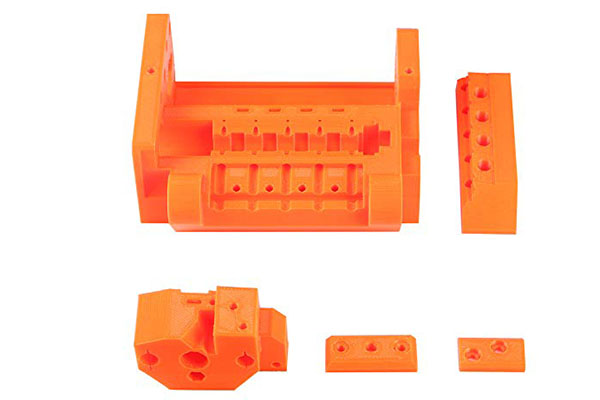
Rapid Prototyping and 3D Printing
| Advantage | Impact |
|---|---|
| Speed | Reduces time to market by up to 50% (Wohlers Associates) |
| Design freedom | Intricate internal structures; undercuts; complex shapes—aerospace engine components with optimized internal cooling channels |
| Cost-effectiveness | No expensive molds or tooling—ideal for startups, SMEs |
Example: Consumer electronics company developing smartphone case—3D printed prototype within hours; quick testing; design adjustments; faster iteration.
CNC Machining Prototypes
| Aspect | CNC Machining Prototypes | 3D Printed Prototypes |
|---|---|---|
| Precision | ±0.001 mm (medical devices) | ±0.1–0.3 mm |
| Surface finish | Excellent—smooth; critical for optics | Can be rough; post-processing required |
| Material range | Metals, plastics, composites—mimics final product material properties | Limited material range |
Example: Automotive engine component prototype—CNC-machined from same alloy as production part—accurate testing of strength and durability under real-world conditions.
Testing and Validation
| Test | Method | Impact |
|---|---|---|
| Dimensional inspection | CMM (Coordinate Measuring Machine)—accuracy up to 0.0001 mm | Identifies deviations; ensures proper fit in assembly |
| Functional testing | Load conditions; performance testing—automotive transmission: gear shifting, torque transfer, durability | 30% lower failure rate in final products (American Society of Mechanical Engineers) |
What Production Machining Services Do They Offer?
High-Precision Machining and Turning
| Operation | Capability | Applications |
|---|---|---|
| High-precision machining | Tolerances ±0.001 mm | Aerospace components, medical implants |
| Turning | High-precision lathes; adjustable feed rate, spindle speed | High-performance engine shafts; crankshafts—20% longer lifespan (ISO) due to reduced stress concentrations, better fit |
Multi-Axis Machining and Milling
| Axis Configuration | Capability | Applications |
|---|---|---|
| 3-axis | X, Y, Z linear axes | Limited capabilities |
| 4-axis, 5-axis | Adds rotational axes (A, B, C) | Tool approaches workpiece from multiple angles; single setup; complex features |
Example: Aerospace turbine blades—complex airfoil shapes with twisted surfaces, internal cooling channels—multi-axis milling machines with precision; ensures optimal performance.
Assembly and Sub-Assembly Services
| Benefit | Impact |
|---|---|
| One-stop solution | Eliminates coordinating multiple suppliers |
| Reduced errors | Ensures proper alignment, electrical connection, mechanical fastening |
| Streamlined manufacturing | Saves time; reduces risk during assembly |
Example: Smartphone manufacturer outsources assembly of internal components (motherboard, battery, camera module)—precision machining company ensures quality standards; seamless integration.
Conclusion
Precision machining companies offer a comprehensive suite of services integral to modern manufacturing success:
- Design and engineering: CAD/CAM design and simulation (30% error reduction; 25% shorter production cycles); reverse engineering; custom design; material selection and analysis (mechanical, chemical properties)
- Prototyping: Rapid prototyping and 3D printing (50% faster time to market; design freedom; cost-effective); CNC machining prototypes (±0.001 mm precision; excellent surface finish; wide material range); testing and validation (CMM to 0.0001 mm; functional testing—30% lower failure rate)
- Production machining: High-precision machining and turning (±0.001 mm; 20% longer component lifespan); multi-axis machining (4/5-axis; complex geometries—turbine blades); assembly and sub-assembly services (one-stop solution; reduced errors; streamlined manufacturing)
These services—from initial concept to finished product—ensure components meet exact specifications with the highest precision and quality.
FAQs
What is the difference between 3-axis and 5-axis machining?
3-axis machining moves along X, Y, Z linear axes—limited capabilities. 5-axis machining adds two rotational axes (A, B, or C), allowing the cutting tool to approach the workpiece from multiple angles. This enables complex geometries (turbine blades with twisted surfaces, internal cooling channels) in a single setup—reducing errors and improving precision.
How does CAD/CAM simulation reduce machining errors?
CAD/CAM simulation virtually models the machining process—tool movement, material removal, tool-workpiece interaction—before physical work begins. It identifies potential issues: tool collisions, incorrect machining paths, uneven material removal. Companies using simulation reduce machining errors by up to 30% and shorten production cycles by 25% (Society of Manufacturing Engineers).
What materials can precision machining companies work with?
Precision machining companies work with a wide range of materials:
- Metals: Aluminum (lightweight, 1/3 steel density); titanium (high strength, corrosion resistance); stainless steel; nickel-based superalloys (high-temperature resistance)
- Plastics: ABS, polypropylene (cost-effective for mass production)
- Composites: Carbon fiber, fiberglass
Material analysis ensures chosen material meets exact requirements (tensile strength, hardness, fatigue resistance, corrosion resistance).
What tolerances can precision machining achieve?
CNC machining prototypes: ±0.001 mm (medical devices, aerospace components). 3D printed prototypes: ±0.1–0.3 mm. High-precision turning: 20% longer component lifespan due to reduced stress concentrations and better fit (ISO).
What is reverse engineering and when is it used?
Reverse engineering involves taking an existing component, 3D scanning it to capture exact geometry (point cloud data), and creating a detailed CAD model. It is used when:
- Original design files no longer exist (replacement parts for older vehicles)
- Improving original component design
- Quality control—comparing new model to original specifications
Contact Yigu Technology for Custom Manufacturing
At Yigu Technology, we offer comprehensive precision machining services—from design and prototyping to production and assembly. With 15 years of experience, advanced 5-axis machining, CNC turning, and ISO 9001 certification, we deliver components with tolerances to ±0.001 mm and surface finishes to 0.4 μm Ra.
Our services include CAD/CAM design and simulation, reverse engineering, material selection, rapid prototyping (3D printing and CNC machining), testing and validation, and assembly. Contact us today to discuss your precision machining project.