CNC Swiss precision machining is a specialized turning process that uses a sliding headstock and guide bushing to support the workpiece extremely close to the cutting tool, enabling the production of long, slender, and intricate components with exceptional precision, concentricity, and surface finish.
When your project requires small-diameter, high-precision components with complex features along their entire length—such as medical bone screws, aerospace fasteners, or fluidic connectors—conventional CNC lathes often fall short. CNC Swiss precision machining, performed on Swiss-type automatic lathes (or "Swiss screw machines"), is specifically engineered for this challenge. This guide provides an in-depth look at the unique mechanics of Swiss machining, the tolerances and materials it masters, and the programming strategies that maximize efficiency. For design engineers and manufacturers, understanding this technology is key to unlocking new possibilities in miniaturization and precision for critical applications.
Introduction
In the world of precision manufacturing, CNC Swiss precision machining occupies a unique niche. At its core, it solves a fundamental problem: how to machine a long, slender rod of metal or plastic without it bending away from the cutting tool under pressure. While a standard lathe supports the workpiece only at the headstock and possibly a tailstock, a Swiss machine introduces a guide bushing that fully surrounds and supports the material mere millimeters from where the cutting action occurs. This simple yet revolutionary concept allows for incredibly precise machining of features along the entire length of the part, all in a single, continuous operation. This article will explain the mechanics of the sliding headstock, detail the impressive tolerances achievable, explore optimal materials, and compare guide-bush versus guide-bushless configurations. Whether you are designing a new medical device or sourcing complex pins and shafts, this knowledge is essential for leveraging the full potential of Swiss machining.
What Is CNC Swiss Precision Machining?
CNC Swiss precision machining is a specialized subset of CNC turning. The machine is characterized by a sliding headstock (also called a sliding headstock lathe) that moves the bar stock axially (in the Z-direction) through a stationary guide bushing. The cutting tools are arranged radially around the guide bushing on a multi-station tool turret or gang plate.
The primary distinction is the support system:
- In a conventional lathe, the workpiece rotates between centers, and the tool moves. Deflection increases with the unsupported length of the workpiece.
- In a Swiss-type lathe, the material is fully supported by the guide bushing right up to the cut. The unsupported length is effectively zero, eliminating deflection regardless of the part's overall length-to-diameter ratio.
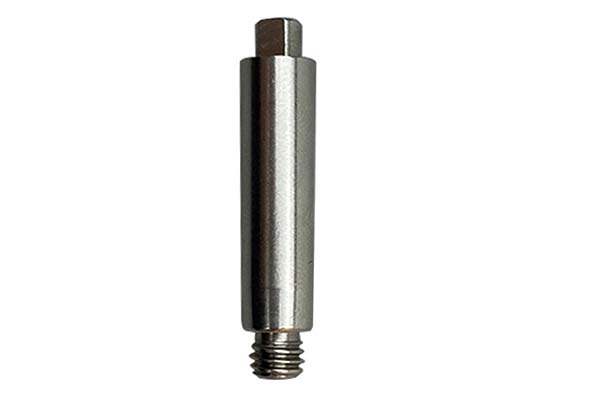
This makes Swiss machining the go-to process for producing parts like shafts, pins, screws, and connectors that are long and slender (with length-to-diameter ratios of 5:1 or much higher) and require intricate secondary operations like cross-drilling, slotting, and milling off the centerline.
How Does Sliding Headstock Technology Work?
The operation of a Swiss machine is a synchronized ballet of movements:
- Material Feed: The bar stock (typically 1-32mm in diameter) is loaded into the sliding headstock spindle. The headstock slides forward, pushing the stock through the guide bushing.
- Cutting Action: The part rotates, and stationary cutting tools mounted on the tool turret engage the material as it protrudes from the guide bushing. Because the bushing supports the material directly behind the cut, even deep grooves and fine threads can be machined without chatter or deflection.
- Parting Off & Transfer: Once the features on the front section are complete, a parting tool cuts the finished part from the bar. On machines equipped with a sub-spindle (or "pick-off" spindle), the part is grabbed by the sub-spindle before being cut off. This allows the machine's backworking tools to immediately begin machining the backside of the part (drilling, tapping, chamfering), completing the entire component in one continuous cycle.
This "done-in-one" capability drastically reduces handling, setup errors, and total production time for complex parts.
What Tolerances Can Be Held?
The exceptional support of the guide bushing allows Swiss machines to achieve remarkable dimensional consistency.
- Dimensional Tolerances: It is routine to hold diameter tolerances of ±0.0005 inches (±0.0127 mm) and, with careful process control, ±0.0002 inches (±0.0051 mm) is achievable on critical features.
- Geometric Tolerances: The process excels at concentricity and true position between features machined on the main and sub-spindle. Concentricity of 0.0005 inches (0.0127 mm) TIR (Total Indicator Runout) or better between front and back features is standard.
- Surface Finish: Excellent surface finishes are produced directly from the machine, typically in the range of 8-32 µin Ra (0.2-0.8 µm Ra). For medical implants or hydraulic components, secondary processes like vibratory finishing or electropolishing can achieve mirror finishes below 4 µin Ra (0.1 µm Ra).
Which Materials Excel on Swiss-Type Lathes?
Swiss machines are versatile but are particularly well-suited to materials that are challenging on conventional lathes due to their tendency to deflect or work-harden.
| Material Category | Common Alloys/Grades | Why They Excel on Swiss | Typical Swiss-Machined Parts |
|---|---|---|---|
| Stainless Steels | 303, 304, 316, 17-4 PH | The guide bushing prevents deflection during machining of these tough, gummy materials, enabling excellent chip control and surface finish. | Surgical instrument pins, dental implants, fluidic fittings, fasteners. |
| Titanium Alloys | Ti-6Al-4V (Grade 5) | Titanium's poor thermal conductivity and spring-back are mitigated by the rigid setup and close tool support, allowing for precise, cool cutting. | Aerospace fasteners, orthopedic bone screws, camera lens barrels. |
| Superalloys | Inconel 718, Hastelloy | The ability to maintain rigidity and use high-pressure coolant effectively makes Swiss machining a preferred method for these extremely hard, heat-resistant materials. | Jet engine fuel injector nozzles, downhole tool components. |
| Aluminum & Brass | 6061, 7075, C360 | Machines very efficiently with high surface speeds and excellent chip evacuation. Ideal for high-volume electronic and consumer parts. | Connector pins, electrical contacts, miniature shafts. |
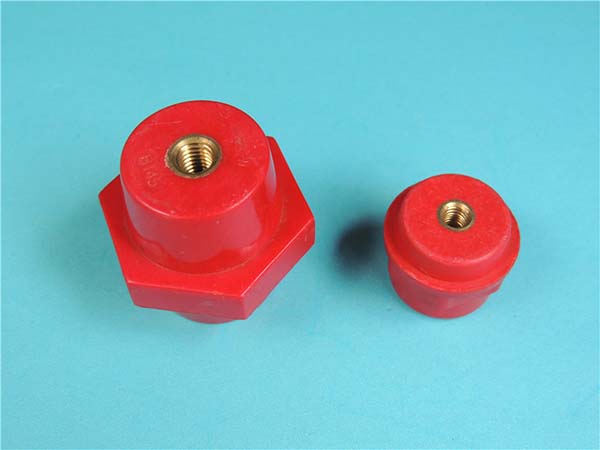
| Engineering Plastics | PEEK, Acetal, Ultem | The guide bushing provides necessary support to prevent these flexible materials from bending or vibrating during cutting. | Insulating spacers, endoscopic tool components, drug delivery parts. |
How Many Tools Can Machine Simultaneously?
Modern CNC Swiss machines are productivity powerhouses due to their simultaneous machining capability.
- Tooling Configuration: Machines are equipped with a main tool turret (often with 8-16 stations) located in front of the guide bushing and a backworking tool turret for the sub-spindle.
- Simultaneous Operations: While the main tools are machining the front of a part, the backworking tools can be machining the rear of the previous part held in the sub-spindle. Furthermore, multiple tools on the main turret can often operate at the same time (e.g., a turning tool and a drill working on different sections of the protruding material).
- Live Tooling: Most stations can be equipped with CNC live tooling—motored tools that can drill, mill, or tap off-axis holes and slots without needing a secondary milling machine setup. This is key to the "done-in-one" philosophy.
Guide-Bush vs. Guide-Bushless Configurations
The industry is evolving with the introduction of guide-bushless machines, offering distinct trade-offs.
| Feature | Guide-Bush Configuration | Guide-Bushless Configuration |
|---|---|---|
| Primary Support Method | Hardened guide bushing (typically tungsten carbide) fully surrounds the bar stock. | A hydrodynamic bearing or mechanical bushing supports the stock with pressurized oil or a segmented design. |
| Best For | Smaller diameters (< 20mm), long, slender parts, and materials prone to deflection. Highest precision for concentric turning. | Larger diameters, shorter parts, and applications requiring quick bar changes or where bushing wear is a concern. |
| Advantages | Ultimate rigidity and support. Unmatched for holding tight concentricity over long lengths. Minimal vibration. | Faster setup. No need to change physical bushings for different bar sizes. Reduced friction can allow for higher RPM. |
| Disadvantages | Bushing wear requires maintenance/replacement. Setup time to change bushings for different bar diameters. | Slightly less rigid support than a physical bushing, which may limit achievable tolerances on very slender, long parts. |
How to Program for Sub-Spindle Efficiency?
Effective programming harnesses the full potential of the sub-spindle to minimize cycle time.
- Synchronized Transfer: The program must precisely coordinate the main spindle stop, sub-spindle advance and chucking, part-off cut, and sub-spindle retraction with tool clearance.
- Overlapping Operations: The goal is to keep all spindles and turrets busy. While the sub-spindle machines the back of Part A, the main spindle should be machining the front of Part B. Advanced CAM software for Swiss machining automatically optimizes this toolpath synchronization.
- Balanced Cycle Times: Programmers strive to balance the machining time on the main and sub-spindles so neither is waiting for the other, maximizing machine utilization.
What Surface Finishes Are Possible?
Swiss machines produce excellent as-machined finishes, and a range of secondary finishing options are available:
- As-Machined: A fine, consistent finish directly from the turning or milling tool, typically 16-32 µin Ra.
- Tumbling/Vibratory Finishing: Used to deburr and impart a uniform matte or satin finish. Essential for medical parts to remove all microscopic sharp edges.
- Electropolishing (for Stainless & Titanium): An electrochemical process that removes a thin surface layer, improving corrosion resistance and achieving a bright, ultra-smooth finish.
- Passivation (for Stainless Steel): A chemical treatment that removes free iron from the surface, enhancing the natural chromium oxide layer for maximum corrosion resistance.
- Plating: Applications like gold (for conductivity) or nickel (for wear resistance) can be applied to Swiss-machined electrical contacts or bearing surfaces.
Conclusion
CNC Swiss precision machining is a uniquely capable process that solves specific, high-value manufacturing challenges. Its sliding headstock and guide bushing technology provide an unmatched solution for producing long, slender, and intricate components with exceptional concentricity and dimensional stability. By understanding its strengths in handling difficult materials like titanium and stainless steel, leveraging simultaneous machining with live tooling, and selecting the right configuration (guide-bush vs. guide-bushless) for the application, engineers and manufacturers can achieve levels of precision and complexity that are simply not possible with conventional turning. For industries where miniaturization, reliability, and "done-in-one" production are critical, Swiss machining remains an indispensable and sophisticated manufacturing resource.
Frequently Asked Questions (FAQ)
When should I choose Swiss machining over a conventional CNC lathe?
Choose Swiss machining when your part has a high length-to-diameter ratio (typically > 4:1), requires complex off-center features along its length (cross-holes, flats, slots), or is made from a material that deflects easily (like thin stainless steel or titanium). For shorter, simpler parts, a conventional lathe is more cost-effective.
What are the limitations on part size for Swiss machining?
Swiss machines are designed for small to medium-sized parts. While machines exist for bars up to about 32mm (1.25 inches) in diameter, the most common range is 3mm to 20mm. The maximum part length is determined by the machine's guide bushing travel and is often around 12-15 inches (300-380mm) for standard machines.
How does material choice affect the guide bushing?
Abrasive materials (like certain stainless steels or glass-filled plastics) will cause faster guide bushing wear. For these materials, shops may use harder bushings (like tungsten carbide) or more frequent inspection schedules. Softer materials like aluminum or brass are very gentle on bushings. This wear is a key factor in process cost and consistency.
Can Swiss machines perform milling and drilling operations?
Absolutely. Modern CNC Swiss machines are almost always equipped with CNC live tooling (motored tools) on their turrets. This allows them to perform a wide range of milling, drilling, and tapping operations on the part's circumference or end face without ever removing the part from the machine. This is central to completing complex parts in a single setup.
Contact Yigu Technology for Custom Manufacturing.
At Yigu Technology, we specialize in CNC Swiss precision machining for the most demanding applications in medical, aerospace, and electronics. Our facility is equipped with advanced multi-axis Swiss-type lathes with live tooling and sub-spindles, enabling us to produce complex, high-tolerance components complete in a single, efficient cycle.
Our engineers are experts in designing for Swiss manufacturability and programming for optimal efficiency and precision. We understand the critical importance of material selection, tooling strategy, and secondary finishing for components where reliability is non-negotiable.
If your project requires the unique capabilities of Swiss precision machining, partner with Yigu Technology. Contact us today to discuss your component specifications and receive a detailed engineering analysis and quote.