Introduction
Bakelite plastic occupies a unique place in materials history. It was the world’s first synthetic plastic—a breakthrough that launched the modern plastics industry in 1907. Today, over a century later, it remains in use across electrical, automotive, and consumer applications. But with so many materials available now, what actually makes Bakelite special? Is it still relevant, or has it been completely replaced? This guide answers those questions, helping you understand what Bakelite is, how it performs, and where it still matters.
What Exactly Is Bakelite Plastic?
Bakelite is a thermosetting phenol-formaldehyde resin. That name describes both its chemistry and its behavior: it’s made from phenol and formaldehyde, and once cured, it cannot be remelted or reshaped.
Chemical Foundation
The material forms through a two-stage polymerization process:
- Novolac formation: Phenol and formaldehyde react at 80–100°C, creating a low-molecular-weight resin
- Cross-linking: Additional formaldehyde and heat create a three-dimensional network that permanently sets the material
This cross-linked structure is what gives Bakelite its distinctive properties. Unlike thermoplastics that soften when heated, Bakelite maintains its shape and strength up to its thermal decomposition point.
A Brief History
| Year | Milestone |
|---|---|
| 1907 | Leo Baekeland invents Bakelite, the first synthetic plastic |
| 1910s | Adopted for electrical insulators |
| 1920s | Expands into consumer goods: radios, telephones, jewelry |
| 1930s–40s | Peak production; used in automotive, appliances, and military applications |
| Present | Still manufactured for specialized electrical and industrial applications |
What Properties Define Bakelite Plastic?
Mechanical Properties
Bakelite is known for its hardness and rigidity. Rockwell hardness ranges from M80 to M120 depending on formulation.
| Material | Hardness (Rockwell/Shore) | Notes |
|---|---|---|
| Bakelite | M80–M120 | Hard, resists scratching |
| Low-density polyethylene | 40–50 Shore D | Significantly softer |
| Polycarbonate | 70–80 Shore D | Tougher but less rigid |
Tensile strength falls between 40–80 MPa, sufficient for many structural applications. The trade-off is brittleness. Under sudden impact or high bending stress, Bakelite cracks rather than deforms—unlike tougher plastics like polycarbonate.
Thermal Properties
Heat resistance is one of Bakelite’s standout features.
| Property | Bakelite | Typical Thermoplastics |
|---|---|---|
| Continuous operating temperature | 150–200°C | 80–120°C |
| Coefficient of thermal expansion | 20–60 × 10⁻⁶/°C | Higher for most plastics |
This heat resistance makes Bakelite suitable for applications near heat sources where thermoplastics would soften or deform. Its low thermal expansion helps maintain dimensional stability across temperature changes.
Electrical Properties
Bakelite is an excellent electrical insulator. Volume resistivity typically ranges from 10¹² to 10¹⁴ ohm-cm.
| Material | Electrical Resistivity | Application |
|---|---|---|
| Bakelite | 10¹²–10¹⁴ Ω·cm | Insulators, switch housings |
| Aluminum | 2.82 × 10⁻⁸ Ω·cm | Conductor (not insulation) |
Dielectric constant falls between 4 and 6, providing efficient energy storage in capacitors with minimal losses.
Chemical Resistance
Bakelite resists many common chemicals:
- Acids: Dilute hydrochloric, sulfuric
- Alkalis: Dilute sodium hydroxide
- Solvents: Many organic solvents
Limitations: Strong oxidizing agents like concentrated nitric or sulfuric acid can degrade the material over time.
How Is Bakelite Manufactured?
Raw Materials
- Phenol: Derived from coal tar; white crystalline solid
- Formaldehyde: Produced from methanol; colorless gas
- Catalysts: Hydrochloric acid, sulfuric acid, or ammonia to control reaction rate
Production Steps
- Synthesis: Phenol and formaldehyde react with catalyst to form novolac resin
- Cross-linking: Additional formaldehyde under heat creates the cured thermoset
- Compounding: Fillers (wood flour, cotton fibers, glass fibers) are added to modify properties
Molding Methods
| Method | Process | Best For |
|---|---|---|
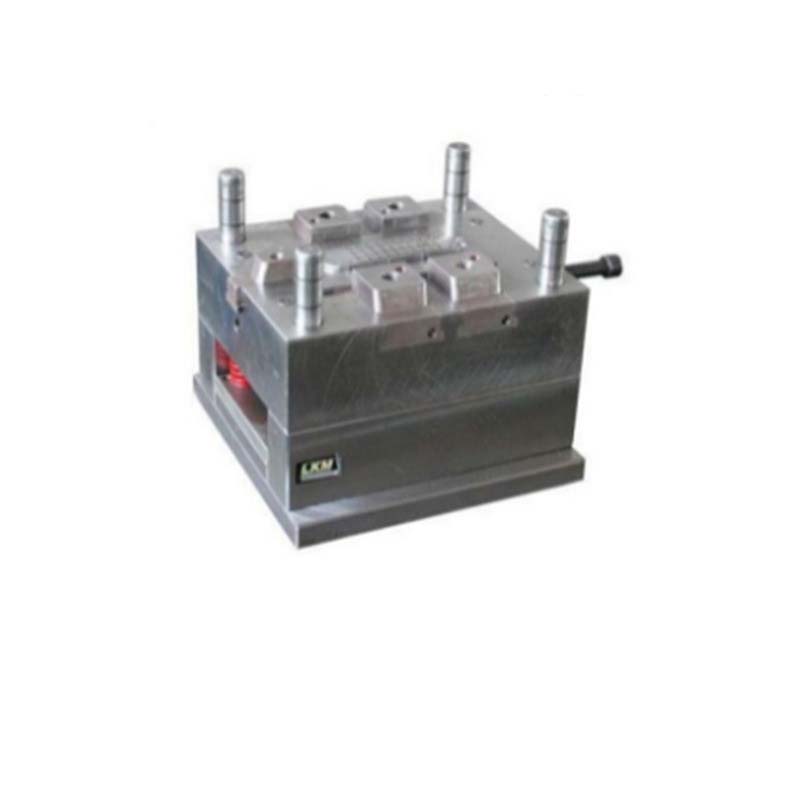
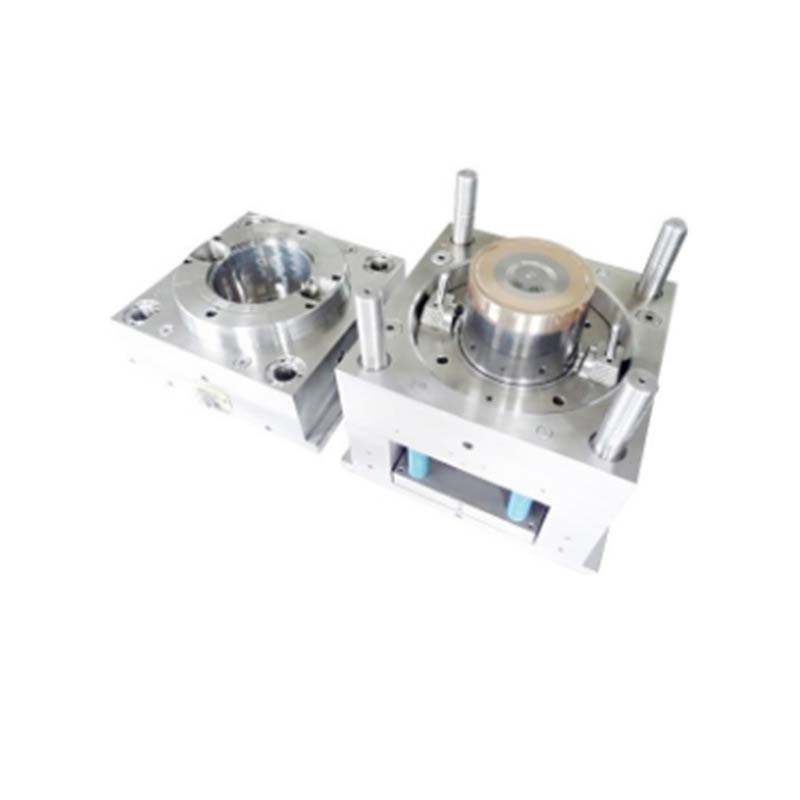
| Compression molding | Powder or preform placed in heated mold, pressure applied (10–30 MPa) | High-volume, consistent shapes |
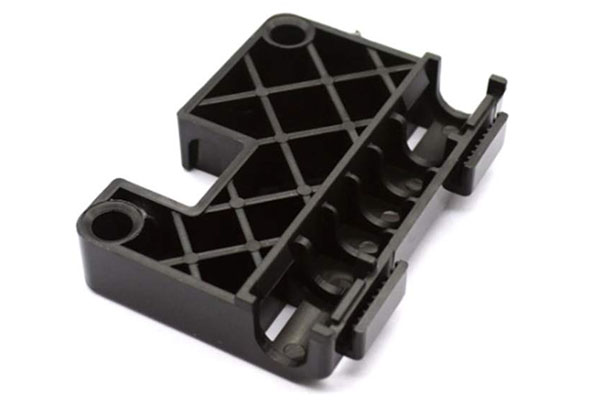
| Transfer molding | Pre-heated material transferred into closed mold | Complex shapes, inserts |
| Injection molding | Molten material injected under high pressure | Requires specialized equipment due to high viscosity |
Where Is Bakelite Used Today?
Electrical Industry
Bakelite remains common in electrical applications where insulation and heat resistance matter:
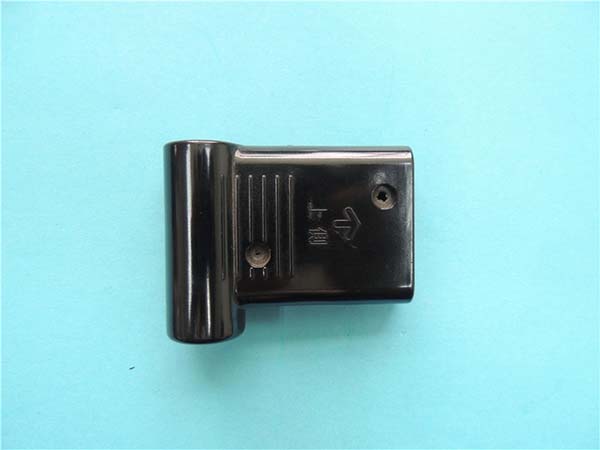
- Electrical sockets and switches
- Circuit breaker housings
- Transformer bushings
- High-voltage insulators
In older equipment like vintage radios and televisions, bakelite housings provided both insulation and heat resistance—critical given the heat generated by early electronics.
Automotive Industry
Applications include:
- Distributor caps: Require both electrical insulation and heat resistance in engine compartments
- Interior knobs and handles: Hardness and moldability make it suitable
- Brake components: Heat resistance and stable frictional properties
Consumer Goods
While largely replaced by modern plastics in new production, bakelite remains:
- Vintage restoration: Authentic material for antique radios, telephones, and appliances
- Collectibles: Jewelry, decorative items, and toys from the early to mid-20th century
How Does Bakelite Compare to Other Plastics?
Material Comparison Table
| Property | Bakelite | Polyethylene | Polypropylene | Polycarbonate |
|---|---|---|---|---|
| Tensile strength (MPa) | 40–80 | 10–30 | 30–40 | 60–90 |
| Heat resistance (°C) | 150–200 | 80–120 | 130–150 | 130–140 |
| Electrical resistivity (Ω·cm) | 10¹²–10¹⁴ | 10¹³–10¹⁶ | 10¹³–10¹⁵ | 10¹⁴–10¹⁶ |
| Chemical resistance | Good | Good | Good | Moderate |
| Impact resistance | Poor | Fair | Fair | Excellent |
| Relative cost | Medium | Low | Low–Medium | High |
Analysis
Where Bakelite wins:
- Heat resistance exceeds most thermoplastics
- Electrical insulation is excellent and stable
- Dimensional stability under load and temperature
- Good chemical resistance for many applications
Where Bakelite loses:
- Brittleness limits impact-prone applications
- Higher cost than commodity plastics like polyethylene
- Non-recyclable due to thermoset nature
How Do You Identify Bakelite?
Visual Identification
- Colors: Black, brown, red, yellow—often deep, rich tones
- Finish: Smooth, slightly glossy surface
- Patterns: May have marbled or swirled appearance, especially in jewelry
- Imperfections: Small air bubbles visible under magnification (normal for period manufacturing)
Odor Test
When gently heated—by rubbing between your fingers or holding near a mild heat source—Bakelite emits a distinct sweet, sickly odor. This comes from decomposition of the phenolic resin.
Caution: Perform in well-ventilated area. Do not overheat.
Density Test
Bakelite density ranges from 1.25 to 1.35 g/cm³. To test:
- Measure mass with a scale
- Measure volume by water displacement
- Calculate density = mass / volume
- Compare to known range
Professional Testing
For definitive identification:
- Infrared spectroscopy: Detects characteristic phenolic resin bonds
- Chemical spot tests: Using concentrated sulfuric acid (professional use only)
Is Bakelite Plastic Worth Anything?
Antique and Collectible Value
Bakelite items from the early 20th century can be highly valuable:
| Item Type | Typical Value Range | Factors |
|---|---|---|
| Vintage jewelry | $50–500+ | Color, design, condition, rarity |
| Classic radios | $100–2,000+ | Model, condition, originality |
| Telephones | $50–1,000+ | Rarity, condition, color |
| Figural items | $20–300+ | Unusual shapes, good condition |
A rare Bakelite radio in mint condition recently sold at auction for over $4,000. Bakelite jewelry by notable designers can command similar prices.
Value Factors
- Age: Older pieces generally more valuable
- Condition: Minimal wear, no cracks, original finish
- Rarity: Unusual colors, limited production runs
- Design: Unique patterns or historical significance
- Provenance: Association with known designers or events
What Are the Advantages and Disadvantages?
Advantages
| Advantage | Why It Matters |
|---|---|
| Heat resistance | Operates at 150–200°C where thermoplastics fail |
| Electrical insulation | Proven reliability over a century of use |
| Chemical resistance | Survives exposure to many industrial chemicals |
| Dimensional stability | Low thermal expansion, maintains shape |
| Hardness | Resists scratching and wear |
| Moldability | Complex shapes possible |
Disadvantages
| Disadvantage | Why It Matters |
|---|---|
| Brittleness | Cracks under impact; not for shock-prone applications |
| Non-recyclable | Environmental concerns; disposal challenges |
| Limited colors | Mostly dark colors; limited range |
| Higher cost than commodity plastics | Not for cost-driven applications where performance isn’t needed |
| Processing limitations | Cannot be thermoformed; requires molding |
Conclusion
Bakelite plastic is not obsolete—it’s specialized. Its heat resistance, electrical insulation, and dimensional stability make it the right choice for applications where those properties matter. Its brittleness and cost mean it’s not the right choice for everything.
For electrical components operating at elevated temperatures, for vintage restoration requiring authentic materials, and for applications demanding proven reliability, Bakelite delivers. For impact-prone, cost-sensitive, or sustainability-focused applications, modern alternatives may serve better.
Understanding what Bakelite is—and what it isn’t—helps you make informed choices. A century after its invention, this first synthetic plastic still has a place in the materials landscape.
FAQ
Is Bakelite a plastic?
Yes. Bakelite is the world’s first synthetic plastic—a thermosetting phenol-formaldehyde resin. Unlike thermoplastics, it cannot be remelted after curing.
How can you tell Bakelite from other plastics?
Several methods: visual inspection (characteristic colors, smooth glossy finish), odor test (sweet sickly smell when heated), density test (1.25–1.35 g/cm³), and professional tests like infrared spectroscopy.
Is Bakelite plastic worth anything?
Yes, particularly antique and collectible items. Vintage Bakelite jewelry, radios, telephones, and other items can be valuable depending on age, condition, rarity, and design.
Is Bakelite heat resistant?
Yes. Bakelite operates continuously at 150–200°C, far exceeding most thermoplastics. This makes it suitable for applications near heat sources.
Can Bakelite be recycled?
No. As a thermoset plastic, Bakelite cannot be melted and reformed. Disposal typically involves industrial waste management, not conventional plastic recycling.
Contact Yigu Technology for Custom Manufacturing
At Yigu Technology, we bring deep experience with Bakelite and other materials to help you make the right choice for your application. Whether you need Bakelite components for electrical insulation, vintage restoration, or specialized industrial use, our engineering team provides practical guidance and quality manufacturing.
We offer:
- Bakelite sheets, rods, and custom-molded components
- Multiple grades for electrical, mechanical, and high-temperature applications
- Material selection support based on your operating requirements
- Fabrication and finishing services
Ready to discuss your Bakelite needs? Contact us with your application requirements—temperature, electrical needs, environment—and we’ll provide material recommendations and competitive quotes within 24–48 hours.