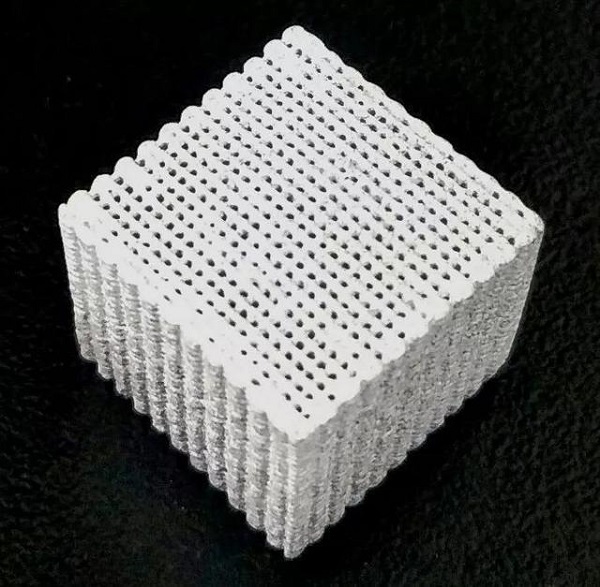
Introduction
Magnesium is the lightest structural metal on Earth. It's about two-thirds the weight of aluminum and one-quarter the weight of steel. For industries where every gram counts—aerospace, automotive, robotics—this matters enormously.
Now combine magnesium's lightness with 3D printing's design freedom. Internal lattice structures that save even more weight. Complex geometries impossible to machine. Customized components optimized for specific functions.
That's 3D printed magnesium—a material and process combination that's opening new possibilities.
But magnesium is also highly reactive. It burns if you're not careful. It corrodes easily. Printing it requires specialized equipment and processes.
At Yigu technology, we've worked with 3D printed magnesium for demanding clients. This guide covers what you need to know—properties, processes, challenges, and applications.
What Is 3D Printed Magnesium?
The Basic Idea: Printing with the Lightest Structural Metal
3D printed magnesium uses additive manufacturing to create parts from magnesium or magnesium alloys. The same 3D printing technologies that work with titanium, aluminum, and steel can work with magnesium—with important modifications.
Magnesium's density: 1.74 g/cm³
- Compare to aluminum: 2.7 g/cm³
- Compare to titanium: 4.43 g/cm³
- Compare to steel: 7.8 g/cm³
For weight-critical applications, this difference is huge.
Common 3D Printing Technologies for Magnesium
Powder Bed Fusion (SLM, EBM):
- A thin layer of magnesium powder is spread across a build platform
- A laser (SLM) or electron beam (EBM) selectively melts the powder
- Layer by layer, the part builds
- Unmelted powder supports the part
Directed Energy Deposition (DED):
- A laser melts magnesium wire as it's deposited
- Builds up material on a substrate
- Good for repairs, adding features to existing parts
Key Challenges
Magnesium is highly reactive. It oxidizes easily. In powder form, it's even more reactive—and can be explosive.
Special precautions required:
- Inert atmosphere (argon) to prevent oxidation
- Careful powder handling to avoid explosions
- Fire safety measures—magnesium fires are difficult to extinguish
- Specialized equipment designed for reactive materials
Not every 3D printing facility can handle magnesium. It requires expertise and proper safety systems.
How Is 3D Printed Magnesium Manufactured?
Step 1: Raw Material Preparation
Powder characteristics:
- Particle size: 15-53 μm typical for powder bed fusion
- Shape: Spherical for good flowability
- Purity: High-purity required—impurities affect properties
Pre-treatment:
- Drying in vacuum oven at 80-100°C to remove moisture
- Moisture causes oxidation and defects
- Drying takes several hours
Step 2: Digital Model Preparation
A 3D model is created in CAD software. The model is sliced into thin layers—typically 20-100 μm thick.
Step 3: Printing Parameter Settings
| Parameter | Typical Range | Notes |
|---|---|---|
| Laser power (SLM) | 200-400W | Melts magnesium powder (melting point ~650°C) |
| Scan speed | 50-200 mm/s | Slower for better fusion, less porosity |
| Layer thickness | 20-100 μm | Thinner for detail, thicker for speed |
| Atmosphere | Inert gas (argon) | Prevents oxidation—oxygen must be <0.1% |
Step 4: Printing
The printer builds the part layer by layer. For SLM, the laser melts powder exactly where the part should be. For EBM, an electron beam does the melting in vacuum.
Step 5: Post-Processing
After printing:
- Powder removal—unmelted powder is recovered and recycled
- Support removal—if any supports were used
- Heat treatment—to relieve stress, optimize properties
- Surface finishing—machining, polishing as needed
- Coating—to improve corrosion resistance
How Does 3D Printed Magnesium Compare to Traditional Manufacturing?
| Aspect | 3D Printed Magnesium | Traditional Casting | Traditional Machining |
|---|---|---|---|
| Production efficiency | Lower for high volumes, faster for small batches | High for large volumes with molds | Low for complex shapes—multiple operations |
| Material utilization | >90%—unused powder recycled | 30-50%—waste from runners, risers | Low—material removed as chips |
| Complex shapes | Excellent—internal lattices, hollow structures | Difficult—draft angles required, complex internal features limited | Limited—tool access constraints |
| Design changes | Free—update digital file | Costly—new molds required | Moderate—reprogramming |
| Surface finish | Rough as-printed | Good (from mold) | Excellent |
| Part size | Limited by build volume | Limited by mold size | Limited by machine size |
3D printing wins for:
- Complex geometries
- Low-volume production
- Customization
- Material efficiency
Traditional methods win for:
- High-volume simple parts
- Very large parts
- Applications requiring as-cast or as-machined surface finish
What Are the Properties of 3D Printed Magnesium?
Mechanical Properties
| Property | 3D Printed Magnesium Alloy | 3D Printed Titanium (Ti-6Al-4V) | 3D Printed Aluminum (AlSi10Mg) |
|---|---|---|---|
| Tensile strength | 150-250 MPa | 900-1100 MPa | 250-350 MPa |
| Hardness (HV) | 40-80 | 300-400 | 80-120 |
| Elongation | 5-15% | 10-20% | 8-20% |
Key observations:
- Magnesium is significantly weaker than titanium
- Comparable to some aluminum alloys
- Lower ductility than titanium or aluminum
- But much lighter—strength-to-weight ratio matters
Physical Properties
Density: 1.74 g/cm³—lowest of structural metals
- 35% lighter than aluminum
- 60% lighter than titanium
- 78% lighter than steel
Thermal expansion coefficient: 26×10⁻⁶/°C—relatively high
- Expands and contracts more with temperature than titanium or steel
- Important for applications with wide temperature ranges
Chemical Properties
Corrosion resistance: Poor in many environments
- Reacts with oxygen to form magnesium oxide
- Reacts with water to form magnesium hydroxide and hydrogen
- In humid or salty environments, corrosion can be rapid
Improving corrosion resistance:
- Anodizing—forms protective oxide layer
- Plating—coat with more corrosion-resistant metal
- Protective coatings—paints, sealants
- Alloying—adding elements that improve corrosion resistance
Special case: Biomedical applications
- Magnesium corrodes slowly in the body
- For temporary implants, controlled degradation can be beneficial
- Implant provides support while bone heals, then gradually dissolves
What Are the Advantages of 3D Printed Magnesium?
Unmatched Lightness
Magnesium is the lightest structural metal. For applications where weight is critical, it's the ultimate choice.
Aerospace: Every kilogram saved reduces fuel consumption.
Automotive: Lighter parts improve performance and efficiency.
Robotics: Lighter arms move faster, use less energy.
Portable devices: Lighter components improve user experience.
Design Freedom
3D printing enables geometries impossible with traditional methods:
Lattice structures: Reduce weight further while maintaining strength. Internal networks of struts that carry loads efficiently.
Internal channels: Cooling passages, fluid paths, or hollow sections that would be impossible to machine.
Organic shapes: Optimized for function, not manufacturability.
Material Efficiency
3D printing uses only the material that becomes the part. Unused powder is recycled. Material utilization >90%.
For expensive materials, this matters. For magnesium, which is relatively affordable, it's still a benefit.
Customization
Each part can be different at no extra cost. For applications where components need to be tailored—patient-specific implants, custom brackets—this is huge.
Rapid Iteration
Change the design, print a new part. No waiting for new molds. Prototype and refine quickly.
What Are the Challenges and Limitations?
Reactivity and Safety
Magnesium powder is dangerous. It can ignite or explode if not handled properly.
Requirements for safe magnesium 3D printing:
- Inert atmosphere during printing (argon)
- Specialized equipment designed for reactive materials
- Fire suppression systems for magnesium fires
- Training for operators
- Proper powder storage and handling
Not every facility can meet these requirements.
Corrosion
As-printed magnesium corrodes easily in many environments. Without protection, parts may degrade quickly.
Solutions:
- Protective coatings
- Alloying for better corrosion resistance
- Design for the environment—avoid applications where corrosion is inevitable
Mechanical Properties
Magnesium is weaker than titanium and many steels. For high-stress applications, it may not be suitable.
But for applications where weight is the primary concern and stresses are moderate, it's ideal.
Print Size
Most metal 3D printers have build volumes under 400 x 400 x 400 mm. Large magnesium parts must be printed in sections and joined.
Cost
3D printing magnesium is more expensive than traditional manufacturing for simple parts. For complex, lightweight components, it's often worth it.
Where Is 3D Printed Magnesium Used?
Aerospace
Weight is everything in aerospace. Every gram saved reduces fuel consumption.
Applications:
- Satellite components: Lightweight structures that reduce launch costs
- Brackets and housings: Optimized for minimal weight
- Prototypes: Test designs before committing to production
Automotive
Performance vehicles benefit from lighter components:
- Engine parts: Where weight affects performance
- Suspension components: Reducing unsprung weight improves handling
- Custom brackets: For specialty and racing applications
Medical
Biodegradable implants are a unique application:
- Bone screws and plates: Provide temporary support while bone heals, then gradually dissolve
- No second surgery to remove hardware
- Controlled degradation rate can match healing timeline
Research applications: Scaffolds for tissue engineering, where the structure provides support while cells grow, then degrades.
Robotics
Lighter robot arms:
- Move faster
- Use less energy
- Allow smaller motors
End-of-arm tooling: Custom grippers and fixtures that are light enough for quick movement.
Consumer Electronics
Lightweight housings for portable devices. Every gram counts in smartphones, laptops, and wearables.
Yigu Technology's Perspective
At Yigu technology, we've watched 3D printed magnesium evolve from research curiosity to practical manufacturing solution. Here's what we've learned:
Safety first. Magnesium printing requires specialized equipment and protocols. We maintain strict safety standards for reactive materials.
Match material to application. Magnesium isn't for everything. But for weight-critical applications where corrosion can be managed, it's unbeatable.
Design for the process. Lattice structures, thin walls, and complex internal features—all possible with 3D printing. Design with manufacturing in mind.
Protect against corrosion. For most applications, coatings are essential. We guide clients to the right protection for their environment.
Applications we serve:
- Aerospace prototypes where weight matters
- Medical research for biodegradable implants
- Automotive components for performance vehicles
- Robotics parts requiring lightness
3D printed magnesium isn't the answer for everything. But for the right applications, it's transformative.
Conclusion
3D printed magnesium combines the lightest structural metal with the design freedom of additive manufacturing:
- Unmatched lightness: Density 1.74 g/cm³—35% lighter than aluminum
- Design freedom: Lattice structures, internal channels, organic shapes
- Material efficiency: >90% utilization, powder recycled
- Customization: Each part unique at no extra cost
- Rapid iteration: Changes in days, not weeks
Properties:
- Tensile strength: 150-250 MPa
- Elongation: 5-15%
- Hardness: 40-80 HV
Challenges:
- Reactivity: Requires specialized equipment and safety protocols
- Corrosion: Needs protection in most environments
- Mechanical limits: Weaker than titanium and steel
Applications across aerospace, automotive, medical, robotics, and consumer electronics prove the value—especially where weight is critical.
For anyone designing parts where every gram counts, 3D printed magnesium deserves serious consideration.
FAQ
What is 3D printed magnesium?
3D printed magnesium uses additive manufacturing to create parts from magnesium or magnesium alloys. Common technologies include Selective Laser Melting (SLM) , Electron Beam Melting (EBM) , and Directed Energy Deposition (DED) . Magnesium is the lightest structural metal, making it ideal for weight-critical applications.
How strong is 3D printed magnesium?
Tensile strength typically ranges 150-250 MPa for common magnesium alloys. This is lower than titanium (900-1100 MPa) but comparable to some aluminum alloys. Strength-to-weight ratio is excellent due to magnesium's low density.
Is 3D printed magnesium safe?
With proper equipment and protocols, yes. Magnesium powder is highly reactive and can be explosive if mishandled. Printing requires:
- Inert atmosphere (argon)
- Specialized printers designed for reactive materials
- Fire safety systems
- Trained operators
Not all facilities are equipped for magnesium printing.
Does 3D printed magnesium rust?
Magnesium doesn't "rust" like iron, but it corrodes. It reacts with oxygen and water, forming oxides and hydroxides. In humid or salty environments, corrosion can be rapid. Protective coatings—anodizing, plating, painting—are usually required for long-term use.
What are the advantages of 3D printed magnesium?
- Lightest structural metal—density 1.74 g/cm³
- Design freedom—complex geometries impossible with traditional methods
- Material efficiency—>90% utilization, powder recycled
- Customization—each part can be unique
- Biodegradable options for medical implants
Where is 3D printed magnesium used?
- Aerospace: Satellite components, brackets, prototypes
- Automotive: Lightweight parts for performance vehicles
- Medical: Biodegradable implants, surgical guides
- Robotics: Lightweight arms, end-of-arm tooling
- Consumer electronics: Lightweight housings
Contact Yigu Technology for Custom Manufacturing
Ready to explore 3D printed magnesium for your application? Yigu technology specializes in custom manufacturing with advanced materials and processes.
We offer:
- Free quotes within 24 hours—just send your CAD file
- Design for magnesium—optimizing for weight and performance
- Specialized equipment for reactive materials
- Safety protocols for magnesium printing
- Post-processing—heat treatment, coating, finishing
- Testing support—verify properties before production
Contact us to discuss your project. Tell us what you're making and what it needs to do. We'll help bring your lightweight design to life.