Introduction
In the modern industrial system, machined metal has become the foundational material supporting core industries due to its excellent mechanical properties, machinability, and reliability. From aerospace equipment soaring in the sky, to cars on the road, to medical devices protecting health, machined metals play an irreplaceable role.
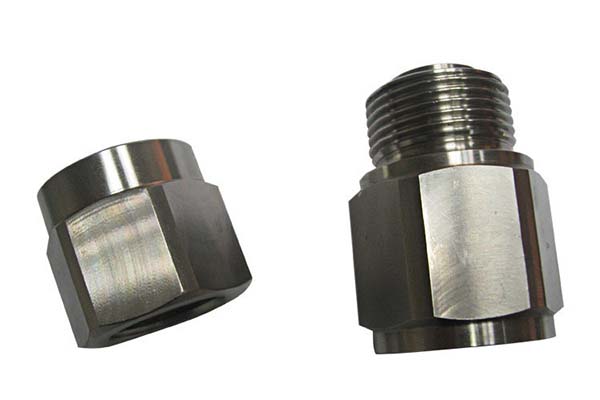
Machined metal refers to metal products or semi-finished products transformed through turning, milling, grinding, stamping, and other processes to meet specific industrial needs. Its core feature is the ability to precisely match performance requirements of different working conditions through material selection and process optimization.
According to industry data:
- 65% of core components in global industrial fields rely on machined metal manufacturing
- In high-end equipment, this proportion exceeds 80%
This guide focuses on three core areas—aerospace, automotive manufacturing, and medical equipment—analyzing application logic, material selection, and practical cases.
Aerospace Industry: Precision Under Extreme Conditions
Aerospace equipment operates under extreme conditions—high temperature, high pressure, high vibration—for extended periods. Requirements for machined metals are exceptionally strict.
Precision Requirements
| Parameter | Requirement |
|---|---|
| Dimensional tolerance | ≤0.001 mm for critical components |
| Surface roughness | Ra 0.025 μm |
| Strength-to-weight | Reduce weight while ensuring structural strength |
| Corrosion resistance | Resist high-altitude UV, temperature fluctuations, fuel corrosion |
Commonly Used Materials
| Material | Core Features | Applications |
|---|---|---|
| Titanium alloy (Ti-6Al-4V) | High strength; low density (4.5 g/cm³); excellent corrosion resistance | Aircraft fuselage structural parts; engine blades |
| Superalloy (Inconel 718) | High temperature resistance (800°C+); strong oxidation resistance | Engine combustion chambers; turbine blades |
| Aluminum alloy (7075) | Lightweight; good machinability | Aircraft wings; landing gear auxiliary parts |
Application Example: Passenger Aircraft Wing Structural Parts
Challenge: An aerospace company needed wing structural parts with high strength, low weight, and corrosion resistance for extended service life.
Solution: 7075 aluminum alloy machined via milling roughing + grinding finishing combination, using five-axis linkage processing equipment.
Results:
- Dimensional tolerance controlled within 0.005 mm
- Weight reduced by 55% compared to traditional steel structural parts
- Anodized surface treatment improved corrosion resistance
- Service life in high-altitude complex environments: 20+ years
Impact: Improved passenger aircraft endurance; reduced operating costs.
Automotive Manufacturing: Strength, Durability, and Cost-Effectiveness
Automotive manufacturing demands high strength, durability, and cost-effectiveness for mass production.
Requirements for Machined Metals
| Requirement | Detail |
|---|---|
| High strength | Transmission and chassis components need sufficient tensile/yield strength to resist torque and impact |
| High durability | No fatigue failure over 100,000+ km service life |
| Cost-effectiveness | Suitable for large-scale mass production |
Role of Machined Metals
| Vehicle Type | Machined Metal Proportion |
|---|---|
| Traditional fuel vehicle | 60–70% of vehicle weight |
| New energy vehicle | 50+% of vehicle weight |
Core function: Transform metal materials into functional parts through precise processing—ensuring power output, driving stability, and safety.
Application Example: Gearbox Spindle
Challenge: An automotive manufacturer needed a gearbox spindle with high strength, wear resistance, and precision.
Solution: 40Cr alloy steel processed via turning roughing + milling keyway + grinding finishing route.
Results:
- Tensile strength: >980 MPa
- Roundness error: ≤0.003 mm
- High-frequency quenching: surface hardness HRC 58–62
- No obvious wear after 150,000 km road testing
- Transmission efficiency increased by 8%
- Failure rate reduced by 60%
Lightweight Application: Engine Block
Challenge: Reduce vehicle weight for improved fuel economy.
Solution: 6061 aluminum alloy engine block replacing traditional cast iron.
Results:
- Weight reduced by 40%
- Fuel economy improved by 12%
Medical Equipment: Biocompatibility and Ultra-Precision
Medical equipment directly impacts human health and safety. Requirements for machined metals far exceed other fields.
Strict Standards
| Requirement | Detail |
|---|---|
| Biocompatibility | No allergic or toxic reactions when contacting human tissue/body fluids |
| Corrosion resistance | Resists erosion from body fluids and sterilization reagents |
| Ultra-high precision | Dimensional tolerance ≤0.001 mm for implantable devices |
| Surface finish | Prevents bacterial growth and tissue adhesion |
Applications in Medical Devices
| Category | Examples | Materials |
|---|---|---|
| Implantable devices | Artificial joints, orthopedic screws, heart stents | Titanium alloy (Ti-6Al-4V ELI), medical stainless steel (316L), cobalt-chromium alloy |
| Diagnostic/treatment equipment | CT machines, MRI equipment structural parts | Stainless steel, aluminum alloys |
Application Example: Artificial Hip Joint
Challenge: A medical device company needed artificial hip joints with excellent biocompatibility, wear resistance, and long service life.
Solution: Medical titanium alloy (Ti-6Al-4V ELI) processed via five-axis grinding technology.
Results:
- Spherical roundness error: ≤0.0005 mm
- Surface roughness: Ra 0.01 μm
- Plasma spraying on processed surface: improved biocompatibility and wear resistance
- Bone fusion time: 3 months (vs. traditional)
- Service life: 15+ years—50% longer than traditional stainless steel hip joints
Personalization Advancement
With 3D printing + machining integration, personalized artificial joints can be mass-produced—accurately matching bone sizes of different patients.
Result: Surgical success rate increased by 25%.
Conclusion
The core application of machined metals in modern industry is concentrated in three major fields:
| Field | Focus | Materials |
|---|---|---|
| Aerospace | Lightweight; extreme environmental adaptability | Titanium alloys, superalloys, 7075 aluminum |
| Automotive | Strength + cost-effectiveness | Alloy steel (40Cr), aluminum alloys (6061, 7075) |
| Medical | Biocompatibility; ultra-high precision | Medical titanium alloy (Ti-6Al-4V ELI), 316L stainless steel |
Application Logic Framework
Working condition requirements → Material selection → Process optimization
Beyond These Fields
Machined metals are also widely used in:
- Electronic equipment
- Construction machinery
- Marine engineering
Future Trends
| Trend | Direction |
|---|---|
| Higher precision | Dimensional tolerances breaking through to 0.0001 mm |
| Intelligent processing | AI + big data for automatic process optimization |
| Greening | Eco-friendly cutting fluids; energy-saving equipment |
As processing technology advances, machined metals will move toward more precise, more efficient, and more environmentally friendly—further supporting innovation and upgrading of high-end industries.
FAQs
What are the core advantages of using titanium alloy as a machined metal in aerospace?
Three core advantages:
- Lightweight: Density 4.5 g/cm³—43% lighter than steel; improves endurance and payload
- Corrosion resistance: Resists complex high-altitude environments and fuel corrosion
- High strength: Tensile strength >900 MPa—meets extreme working condition requirements
How do machined metals balance strength and lightweight requirements in automotive manufacturing?
Achieved through material selection + process optimization:
- Power transmission components: high-strength alloy steel (40Cr)—ensures strength
- Body and engine components: high-strength aluminum alloys (7075, 6061)—achieves lightweight
- Precise cutting + heat treatment processes: reduce material waste while improving strength—balancing performance and cost
Why are medical titanium alloys preferred for machined metals in medical equipment?
Three core advantages:
- Excellent biocompatibility: No rejection with human tissues; suitable for long-term implantation
- Strong corrosion resistance: Resists erosion from body fluids and sterilization reagents
- Strength close to bone: Reduces stress damage to bone after implantation; improves safety
What are future trends for machined metals in industrial applications?
Three core trends:
- Higher precision: Dimensional tolerances breaking through to 0.0001 mm—meeting high-end equipment needs
- Intelligent processing: AI + big data for automatic process optimization
- Greening: Eco-friendly cutting fluids; energy-saving processing equipment—reducing environmental impact
Contact Yigu Technology for Custom Manufacturing
At Yigu Technology, we specialize in precision machined metal components for aerospace, automotive, medical, and industrial applications. With 15 years of experience, advanced 5-axis machining, CNC turning/milling, and ISO 9001 certification, we deliver components with tolerances to ±0.001 mm and surface finishes to Ra 0.01 μm.
Our expertise includes titanium alloys, superalloys, aluminum alloys, stainless steel, and alloy steel—matched to your application requirements. Contact us today to discuss your machined metal project.