Introduction
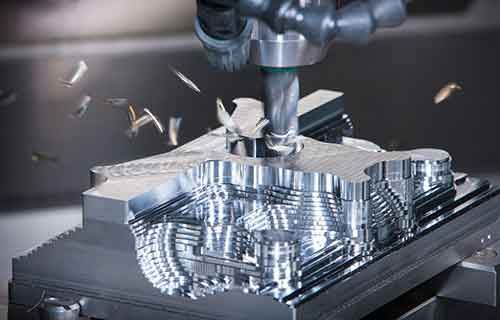
In modern CNC manufacturing, efficiency and precision go hand in hand. Insert machining has become a cornerstone of this balance, offering a smarter way to remove material compared to traditional solid tools. Instead of discarding an entire cutting tool when it dulls, insert machining uses replaceable, indexable cutting inserts that deliver multiple cutting edges per insert. When one edge wears, you simply rotate or replace the small insert—not the entire tool holder.
This approach reduces downtime, lowers tooling costs, and maintains consistent performance across high-volume production runs. From turning and milling to threading and grooving, insert machining serves industries ranging from automotive and aerospace to medical devices and consumer electronics.
This guide provides a comprehensive overview of insert machining. We will cover core concepts, insert nomenclature, types, materials, applications, selection criteria, and optimization strategies. Whether you are a product engineer, manufacturing manager, or CNC operator, you will find practical insights to improve your machining operations.
What Is Insert Machining? Core Concepts
The Definition
Insert machining refers to the use of replaceable, indexable cutting inserts in CNC machining operations. Unlike solid cutting tools, where the entire tool is discarded or reground when dull, indexable inserts feature multiple cutting edges. When one edge wears, the insert is rotated—or indexed—to a fresh edge, or replaced entirely.
This approach offers several advantages over solid tools. Tool change time decreases dramatically. Tooling costs drop because only the small insert is replaced, not the entire tool holder. And consistency improves because the tool holder remains fixed while the insert provides fresh cutting geometry.
Key Working Principles
Indexability is the primary advantage. Inserts are designed with 2 to 8 cutting edges, depending on geometry. Each edge can be used until worn, then the insert is indexed to the next edge. This multiplies tool life per insert and reduces the frequency of tool changes.
Tool holder compatibility ensures consistent positioning. Inserts are precision-engineered to fit specific tool holders. The holder provides stability, often includes coolant delivery passages, and connects to the CNC machine’s spindle. Proper mating between insert and holder is essential for accuracy.
Material removal happens as the insert’s sharp edge shears material from the workpiece. Insert geometry—rake angle, clearance angle, cutting edge preparation—is optimized for specific materials and operations to reduce cutting forces and improve surface finish.
Wear resistance comes from advanced materials and coatings. Inserts are made from carbide, ceramic, PCD (polycrystalline diamond), or CBN (cubic boron nitride), often with coatings like TiN or TiAlN that withstand high temperatures and abrasion.
According to the Precision Machining Technology Association, insert machining reduces tooling costs by 30–50% compared to solid tool machining for high-volume production. A study by Sandvik Coromant found that indexable inserts improve machining efficiency by up to 40% due to reduced tool change time and consistent cutting performance.
How Do You Decode CNC Insert Nomenclature?
Understanding insert nomenclature is essential for selecting the right insert. Manufacturers use a standardized alpha-numeric code—typically 7 to 10 characters—to denote insert characteristics.
| Position | Symbol Type | Description | Common Symbols & Meanings |
|---|---|---|---|
| 1 | Insert Shape | Basic geometric shape | C = 80° diamond; D = 55° diamond; R = Round; S = Square; T = Triangle |
| 2 | Clearance Angle | Angle between flank face and cutting surface | 0 = 0°; 1 = 1°; 5 = 5°; 7 = 7°; 15 = 15° |
| 3 | Tolerance Class | Dimensional accuracy of seating surface and cutting edge | H = High precision; M = Medium precision; G = General precision |
| 4 | Insert Size | Inscribed circle diameter (mm) | 06 = 6.35mm; 08 = 8.0mm; 10 = 10.0mm; 12 = 12.7mm |
| 5 | Insert Thickness | Body thickness (mm) | 03 = 3.18mm; 04 = 4.76mm; 05 = 5.0mm; 08 = 8.0mm |
| 6 | Cutting Edge Type | Edge preparation | E = Sharp edge; T = T-land (chamfered); S = Honed |
| 7 | Insert Type | Rake angle type | P = Positive; N = Negative; M = Mixed |
| 8 | Coating | Surface coating for wear resistance | T = TiN; A = TiAlN; Z = ZrN; D = DLC |
Example: The code “CNMG 120408-TA” translates to:
- C = 80° diamond shape
- N = 0° clearance angle
- M = medium tolerance
- G = groove type
- 12 = 12.7mm inscribed circle
- 04 = 4.76mm thickness
- 08 = 8mm cutting edge length
- T = T-land edge
- A = TiAlN coating
This insert is ideal for medium-precision turning of steel and cast iron.
What Types of CNC Inserts Exist?
Turning Inserts
Turning inserts are the most widely used type in insert machining. They are designed for CNC lathe operations—external turning, internal boring, facing, and grooving. Various shapes (diamond, square, round) accommodate different workpiece geometries.
Subtypes include external turning (CNMG, DNMG), internal boring (CCMT, DCMT), grooving (GTN), and threading (16ER, 22ER). Applications include machining cylindrical parts like shafts, bolts, and hydraulic cylinders from steel, aluminum, cast iron, and plastics.
Case Study: An automotive supplier switched from solid carbide turning tools to CNMG 120408-TA turning inserts for machining steel drive shafts. The insert machining approach reduced tool change time by 60% and increased production output by 25% while maintaining a surface finish of Ra 0.8 μm.
Milling Inserts
Milling inserts are used in CNC milling machines for face milling, shoulder milling, end milling, and slotting. They are available in square, round, or octagonal shapes and handle high feed rates and heavy material removal.
Subtypes include face milling (APKT, RCKT), shoulder milling (SEKT, HELI), and end milling (EMKT, FMKT). Applications include machining flat surfaces, slots, and contours in aluminum, steel, titanium, and composites—such as aerospace brackets and automotive engine blocks.
Expert Tip: Round milling inserts are ideal for contouring and 3D machining, as their curved edge reduces cutting forces and improves surface finish. Square inserts are better for high-feed face milling of flat surfaces.
Threading Inserts
Threading inserts are specialized for creating internal or external threads. They feature precise thread profiles (metric, UNC, UNF) and are available in different pitches to match specific thread requirements.
Subtypes include external threading (16ER, 22ER), internal threading (16IR, 22IR), and multi-thread options for faster threading. Applications include machining bolts, nuts, pipe threads, and threaded holes in automotive, aerospace, and industrial components.
Grooving and Parting Inserts
Grooving inserts create grooves, recesses, or slots in workpieces. Parting inserts (also called cutoff inserts) separate the workpiece from stock material. Both feature narrow cutting edges to minimize material waste.
Subtypes include external grooving (GTN, GDN), internal grooving (GTI, GDI), and parting (PWN, PDN). Applications include creating O-ring grooves, oil grooves, and parting off small to medium-sized workpieces like shafts and bushings.
Specialized Inserts
Specialized inserts address niche applications. Inconel machining inserts feature advanced coatings like AlTiN to withstand high temperatures when machining superalloys. Aluminum machining inserts have sharp edges and positive rake angles to prevent built-up edge (BUE). Deep hole drilling inserts are designed for gun drills or BTA drills to machine precise, deep holes.
What Materials Are Used for CNC Inserts?
Base Materials
| Base Material | Key Properties | Ideal Workpiece Materials | Typical Applications | Cost |
|---|---|---|---|---|
| Cemented Carbide | High wear resistance, good toughness, withstands up to 1000°C | Steel, cast iron, aluminum, plastics | General turning, milling, threading | Moderate |
| Ceramic (Alumina/Zirconia) | Extreme heat resistance (1600°C), high hardness, low toughness | Hardened steel (HRC 50+), cast iron | High-speed machining of hard materials | High |
| PCD (Polycrystalline Diamond) | Exceptional hardness, wear resistance, low friction; poor toughness | Aluminum, copper, composites, plastics | High-speed milling, turning of non-ferrous materials | Very High |
| CBN (Cubic Boron Nitride) | Second-hardest material after diamond; heat resistance to 1500°C | Hardened steel, tool steel, superalloys | Hard turning, milling of heat-resistant alloys | Very High |
| High-Speed Steel (HSS) | Good toughness, easy to regrind; lower heat resistance (650°C) | Mild steel, aluminum, plastics | Low-speed, low-volume applications | Low |
Coatings
Coatings enhance insert performance by improving wear resistance, reducing friction, and increasing heat resistance. The right coating can extend insert life by 2 to 5 times.
TiN (Titanium Nitride): Gold-colored coating with good wear resistance and low friction. Ideal for machining steel, cast iron, and aluminum. Cost-effective for general-purpose applications.
TiAlN (Titanium Aluminum Nitride): Purple-gray coating with excellent heat resistance (1100°C) and oxidation resistance. Ideal for high-speed machining of steel, stainless steel, and superalloys.
AlTiN (Aluminum Titanium Nitride): Similar to TiAlN with higher aluminum content, offering better heat resistance (1200°C). Ideal for machining Inconel and other superalloys.
ZrN (Zirconium Nitride): Blue-gray coating with low friction and good corrosion resistance. Ideal for machining aluminum, copper, and plastics—prevents built-up edge.
DLC (Diamond-Like Carbon): Amorphous carbon coating with extreme hardness and low friction. Ideal for machining non-ferrous materials and plastics.
Where Is Insert Machining Applied?
Automotive Industry
The automotive industry relies on insert machining for high-volume production of engine components, transmission parts, and chassis components. Turning inserts machine crankshafts, camshafts, and drive shafts from steel and cast iron. Milling inserts machine engine blocks and cylinder heads from aluminum. Threading inserts produce bolts, nuts, and threaded holes in suspension components.
Case Study: A major automotive manufacturer used TiAlN-coated turning inserts (CNMG 120408-TA) to machine 50,000 steel crankshafts per month. The insert machining approach reduced tooling costs by 35% and improved production throughput by 20% compared to solid carbide tools.
Aerospace Industry
Aerospace applications demand ultra-precision and reliability. Insert machining processes superalloys like Inconel and titanium, as well as composites. CBN and ceramic inserts machine turbine blades and engine components. PCD inserts machine aluminum aerospace brackets and structural components. Milling inserts machine composite fuselage parts.
Medical Device Industry
Medical device manufacturing requires tight tolerances and biocompatible materials. CBN inserts machine stainless steel and titanium medical implants—hip joints, knee replacements. Threading inserts produce threaded components in surgical tools. Precision milling inserts machine small, complex parts like catheters and endoscopes.
Consumer Electronics Industry
Consumer electronics use insert machining for high-precision components. PCD inserts machine aluminum smartphone casings and laptop frames to high surface finish requirements. Grooving inserts machine small slots in electronic connectors. Milling inserts machine plastic components like keyboard parts and mouse housings.
How Do You Choose the Right CNC Insert?
Step 1: Define the Machining Operation
Identify the specific operation—turning, milling, threading, grooving. Each requires a specialized insert type.
Step 2: Identify the Workpiece Material
Material properties drive insert selection. For soft materials like aluminum and plastics, choose inserts with sharp edges, positive rake angles, and PCD or ZrN coatings to prevent BUE. For medium-hard materials like steel and cast iron, choose carbide inserts with TiN or TiAlN coatings for balanced wear resistance. For hard materials like hardened steel and Inconel, choose ceramic, CBN, or AlTiN-coated carbide inserts for heat resistance.
Step 3: Determine Insert Geometry
Match insert shape to workpiece geometry. External turning uses diamond-shaped inserts (C, D) for general use; square inserts (S) for large depths. Internal boring uses small diamond-shaped inserts (CCMT, DCMT). Contouring uses round inserts (R) for smooth surfaces. High-feed machining uses inserts with positive rake angles and large cutting edge angles to reduce forces.
Step 4: Select Insert Size and Tolerance
Choose size matching the tool holder and cutting depth. For precision parts, select high-tolerance inserts (class H). For general-purpose applications, medium-tolerance (class M) suffices.
Step 5: Choose the Right Coating
Select coating based on material and cutting speed. Low to medium speed: TiN coating. High speed: TiAlN or AlTiN coating. Non-ferrous materials: ZrN or DLC coating to prevent BUE.
Step 6: Validate with Testing
Before full production, test the selected insert in a prototype run. Evaluate tool life, surface finish, cutting forces, and part accuracy. Adjust selection if needed—change coating, geometry, or material.
How Do You Optimize Insert Machining Performance?
Optimize Cutting Parameters
Adjust cutting speed, feed rate, and depth of cut to match insert material, workpiece material, and operation. Cutting speed: higher speeds increase productivity but can shorten insert life. Follow manufacturer recommendations—carbide inserts: 300–500 SFM for steel; 1000–2000 SFM for aluminum. Feed rate: balance with surface finish. Higher feeds increase production but roughen finish; lower feeds improve finish but slow production. Depth of cut: avoid excessive depth, which increases cutting forces and wear. Use multiple passes for deep cuts.
Ensure Proper Tool Holder Setup
A secure, precise tool holder is critical. Use clean, undamaged holders to ensure proper insert seating. Torque the insert clamp to manufacturer’s recommended value—over-tightening damages the insert; under-tightening causes vibration. Align the tool holder correctly to avoid runout. Runout should be less than 0.0005 inches.
Use Coolant Effectively
Coolant reduces cutting temperatures, lubricates the cutting edge, and flushes chips. Use the correct coolant type—oil-based for high-temperature machining; water-based for general-purpose. Direct the coolant stream to the cutting zone. Maintain proper concentration and cleanliness—contaminated coolant reduces effectiveness.
Monitor Insert Wear
Regularly inspect inserts to avoid catastrophic failure. Common wear patterns include flank wear (abrasion), crater wear (high temperatures), chipping (excessive forces or brittle inserts), and built-up edge (soft materials). Replace inserts when flank wear reaches 0.010–0.015 inches—sooner for precision parts. Use CNC machines with tool wear sensors for real-time monitoring in high-volume production.
Index Inserts Properly
When indexing inserts, clean the insert seat and clamp before indexing to remove chips and debris. Align the insert so the cutting edge is parallel to the workpiece surface. Retorque the clamp to the recommended value after indexing.
Conclusion
Insert machining has transformed CNC manufacturing by offering a more efficient, cost-effective alternative to solid tool machining. The ability to index or replace small inserts rather than entire tools reduces downtime, lowers tooling costs, and maintains consistent performance across production runs.
Understanding insert nomenclature enables precise selection. Knowing insert types—turning, milling, threading, grooving, specialized—ensures the right tool for each operation. Selecting appropriate base materials and coatings matches the insert to workpiece material and cutting conditions. And optimizing cutting parameters, tool holder setup, coolant delivery, and wear monitoring maximizes tool life and part quality.
For manufacturers facing high-volume production, difficult-to-machine materials, or tight tolerance requirements, insert machining offers proven solutions. When combined with proper selection and optimization, inserts deliver the precision, efficiency, and cost-effectiveness that modern manufacturing demands.
FAQ
What is the difference between positive and negative inserts?
Positive inserts have a positive rake angle—cutting edge above the insert’s center line—which reduces cutting forces and is ideal for soft materials like aluminum and light machining. Negative inserts have a negative rake angle—cutting edge below center line—which offers better stability and is ideal for hard materials like steel and heavy machining. Positive inserts are more prone to chipping; negative inserts have longer tool life in demanding applications.
How long do CNC inserts last?
Insert life varies based on workpiece material, cutting parameters, insert material, and coating. For general machining of steel with carbide inserts, life ranges from 30–60 minutes of cutting time. For aluminum with PCD inserts, life can exceed 10 hours. For hard materials like Inconel with ceramic inserts, life may be 15–30 minutes. Regular monitoring and optimized parameters can extend insert life by 20–30%.
Can insert machining be used for high-precision parts?
Yes. Insert machining achieves tight tolerances—±0.0005 to ±0.001 inches—when using high-precision inserts (tolerance class H), properly aligned tool holders, and optimized cutting parameters. It is widely used in aerospace, medical, and automotive industries for high-precision components.
What causes insert chipping?
Common causes include excessive cutting forces (too high depth of cut or feed rate), brittle insert material (ceramic used for heavy machining), poor tool holder alignment (runout), workpiece hard spots, and insufficient coolant. To prevent chipping, use a more ductile insert material, reduce cutting forces, improve tool holder alignment, and ensure adequate coolant delivery.
What is the best insert material for machining aluminum?
PCD (polycrystalline diamond) inserts are the best choice for aluminum. They offer exceptional wear resistance, low friction, and prevent built-up edge, resulting in high surface finish and long tool life. For low-volume applications, carbide inserts with ZrN or DLC coatings are cost-effective alternatives.
Contact Yigu Technology for Custom Manufacturing
Need insert machining solutions for your next project? Yigu Technology specializes in precision CNC manufacturing across automotive, aerospace, medical, and electronics industries. Our engineers help select, optimize, and implement the right inserts and processes for your specific requirements. Contact us today to discuss your project.