Introduction
CNC machining aluminum is one of the most common and critical processes in modern manufacturing—from aerospace components to consumer electronics. Its popularity stems from a unique combination of machinability, strength, and lightness. However, achieving optimal results—excellent surface finishes, tight tolerances, and efficient production—requires more than loading a block into a mill.
This guide is designed for engineers, machinists, and procurement specialists who need to master CNC machining aluminum. We explore alloy selection, tool choice, parameters, cooling strategies, tolerances, and post-processing—providing actionable knowledge to improve quality, reduce cost, and accelerate projects.
What Makes Aluminum Ideal for CNC Machining?
| Property | Advantage |
|---|---|
| Excellent machinability | Soft; lower cutting forces; higher spindle speeds and feed rates—faster cycle times; higher throughput |
| Superior strength-to-weight ratio | 6061, 7075 offer substantial strength while lightweight—critical for aerospace, automotive, robotics |
| Good thermal conductivity | Dissipates heat quickly—protects workpiece from heat distortion; can transfer heat to tool if coolant not managed |
| Cost-effectiveness | Raw material costs lower than many metals; fast machining speeds reduce labor and machine-time costs per part |
Which Aluminum Alloys Are Most Common?
6061-T6: The Workhorse
| Characteristics | Best For | Machinability (1–10) |
|---|---|---|
| Good strength, weldability, corrosion resistance | Prototypes, brackets, chassis, automotive parts, consumer products | 9 |
7075-T6: High-Strength
| Characteristics | Best For | Machinability (1–10) |
|---|---|---|
| Very high strength, good fatigue resistance | Aerospace fittings, high-stress structural parts, high-performance automotive | 7 |
2024-T3: High Toughness
| Characteristics | Best For | Machinability (1–10) |
|---|---|---|
| High toughness, excellent fatigue resistance | Aerospace structural components (wing skins) | 8 |
5052-H32: Corrosion Resistance
| Characteristics | Best For | Machinability (1–10) |
|---|---|---|
| Exceptional corrosion resistance, good formability | Marine hardware, electronic enclosures, chemical tanks | 6 |
6082-T6: European Equivalent
| Characteristics | Best For | Machinability (1–10) |
|---|---|---|
| Similar to 6061, slightly higher strength | General engineering, structural applications | 9 |
How to Select the Right Cutting Tools?
Tool Material
| Tool | Best For |
|---|---|
| Solid carbide end mills | Standard—maintains hardness at high temperatures during high-speed machining |
| Polycrystalline diamond (PCD) | Specialized, high-volume operations—unparalleled life; higher upfront cost |
Tool Geometry
| Feature | Benefit |
|---|---|
| High helix angle (40°+) | Efficient chip evacuation—prevents re-cutting chips and built-up edge (BUE) |
| Polished/bright finish flutes | Reduces aluminum adhesion (galling) to tool |
| Sharp cutting edges, large flute valleys | Clean shearing; ample space for chip flow |
Coatings
| Coating | Suitability |
|---|---|
| Uncoated or ZrN (Zirconium Nitride) | Often best—many traditional coatings (TiAlN) can chemically react with aluminum |
| ZrN | Hard, smooth, non-stick surface |
What Speeds and Feeds Optimize Tool Life?
High Surface Speed (SFM)
| Material | Typical SFM |
|---|---|
| 6061 aluminum | 800–1200 SFM for 0.5″ carbide end mill—spindle speeds often exceed 10,000 RPM |
Aggressive Chip Load
| Parameter | Recommendation |
|---|---|
| Chip load | 0.004–0.008 inches per tooth (IPT) for 3-flute, 0.5″ end mill—avoids rubbing; prevents work hardening |
Depth of Cut
| Operation | Engagement |
|---|---|
| Roughing | Radial engagement (stepover) 30–50% of tool diameter; axial engagement (depth) 1–2× diameter—high material removal rates (MRR) |
The Balancing Act
Goal: Form a clean, curled chip that carries heat away. Long, stringy chips or fine dust indicate poor parameters.
Case study: An aerospace machine shop increased tool life for a 7075 part by 300% by increasing feed rate by 20%—produced better-formed chip; reduced heat buildup.
Coolant vs. MQL: Which Strategy Works Best?
| Method | Advantages | Disadvantages |
|---|---|---|
| Flood coolant | Cools tool and workpiece; lubricates; flushes chips; versatile, forgiving | Waste fluid requiring management |
| Minimum Quantity Lubrication (MQL) | Near-dry; excellent lubrication for chip flow; leaves parts nearly dry (reduces cleaning); environmentally friendly; allows higher speeds/feeds | Requires specialized equipment; may not be suitable for all operations |
Standard: MQL is now the standard for high-production aluminum machining.
What Tolerances Can Be Held Consistently?
| Tolerance Level | Achievable | Conditions |
|---|---|---|
| Standard | ±0.005 inches (±0.13 mm) | Readily achievable for most features |
| Precision | ±0.001 inches (±0.025 mm) | Careful process design; temperature control; proper tooling—critical features (bore diameters, locating surfaces) |
| High-precision | ±0.0005 inches (±0.0127 mm) or tighter | Climate-controlled environment; specialized equipment—metrology, optical components |
Note: Thermal expansion of aluminum (~13 μm/m·°C) must be accounted for in ultra-high-precision work.
Cost Analysis: How Does Aluminum Compare to Steel?
| Cost Factor | Aluminum | Steel |
|---|---|---|
| Material cost per pound | Often more expensive than mild steel; comparable to or cheaper than stainless | Mild steel (1018) cheaper; stainless (304) higher |
| Machining cost | 3–5× faster machining speeds—drastically reduces machine time; lower cutting forces reduce tool wear, energy consumption | Slower speeds; higher cutting forces |
| Total part cost | 20–40% lower than stainless steel—due to faster cycle times | Higher—slower machining |
| Shipping cost | Lighter weight—reduces shipping costs | Heavier |
What Are the Deburring and Post-Processing Options?
Deburring Methods
| Method | Best For | Characteristics |
|---|---|---|
| Manual deburring | Very low volumes | Time-consuming; inconsistent |
| Thermal Energy Method (TEM) | Complex internal passages | Controlled explosion melts micro-burrs |
| Vibratory/tumbling | High volumes | Cost-effective; uniform edge break, surface finish |
| Abrasive Flow Machining (AFM) | Difficult-to-reach internal edges | Improves surface finish |
Finishing Options
| Finish | Purpose | Applications |
|---|---|---|
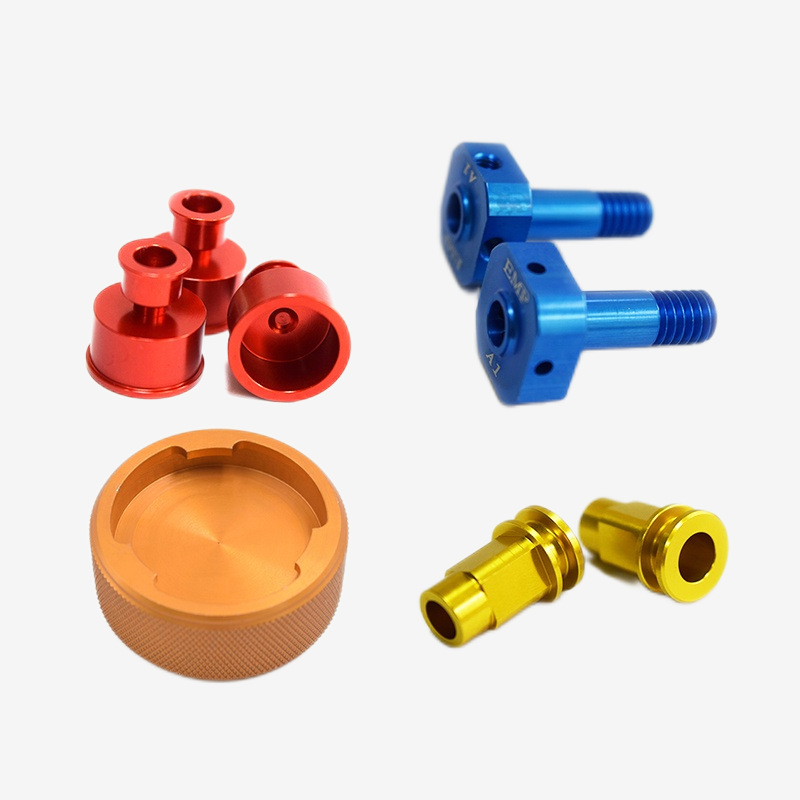
| Anodizing (Type II) | Sulfuric acid; adds hard, protective, decorative oxide layer | Color; corrosion resistance |
| Anodizing (Type III / Hard Coat) | Thicker; more wear-resistant | High-wear applications |
| Powder coating, painting | Durable decorative finish | Consumer products |
| Media blasting (bead, sand) | Uniform matte finish | Pre-coating; aesthetic |
Conclusion
CNC machining aluminum is a cornerstone of modern manufacturing because it marries performance with practicality. Success hinges on understanding the interplay between alloy properties, cutting tool dynamics, and cooling strategies:
- Alloy selection: 6061-T6 (workhorse, 9/10 machinability) for prototypes, brackets; 7075-T6 (high-strength, 7/10) for aerospace, high-stress parts; 5052-H32 (corrosion resistance, 6/10) for marine, electronics
- Tool selection: Solid carbide end mills; high helix angle (40°+); polished flutes; ZrN coating preferred
- Speeds and feeds: 800–1200 SFM; 0.004–0.008 IPT chip load; 30–50% radial engagement; 1–2× diameter axial depth—clean, curled chips indicate optimal parameters
- Cooling: MQL (minimum quantity lubrication) preferred for high-production—near-dry; excellent lubrication; environmentally friendly
- Tolerances: Standard ±0.005″; precision ±0.001″; high-precision ±0.0005″—account for thermal expansion (13 μm/m·°C)
- Cost: 20–40% lower total cost than stainless steel due to 3–5× faster machining speeds
- Post-processing: Anodizing (Type II color, Type III wear); media blasting; thermal deburring; vibratory finishing
By selecting the right alloy, employing high-helix carbide tools with aggressive but controlled speeds and feeds, and implementing efficient cooling strategies, you unlock the full potential of aluminum—delivering cost-effective, lightweight, high-quality components for industries from consumer tech to aerospace.
FAQs
Why does aluminum sometimes weld itself to the cutting tool (built-up edge)?
This occurs when friction heat causes aluminum to soften and adhere to the tool’s cutting edge. Causes: cutting speeds too low; inadequate lubrication/coolant; inappropriate tool coating or geometry. Solution: Increase speed/feed; use polished, high-helix tool with MQL.
Can you machine aluminum without coolant?
Yes, for simple, shallow operations (dry machining). However, for significant material removal, MQL (Minimum Quantity Lubrication) is highly recommended—manages heat, improves finish, extends tool life.
What is the biggest mistake when starting with aluminum?
Using tools and parameters meant for steel. Running aluminum too slowly with low feed rate, using a low-helix tool, or applying TiAlN coating leads to poor chip evacuation, built-up edge, rapid tool failure, and terrible surface finish.
How thin can aluminum walls be when CNC machined?
With careful machining strategies (climb milling, light finishing passes), walls as thin as 0.020 inches (0.5 mm) can be reliably achieved in alloys like 6061. For very thin features, part stability during machining (avoiding vibration) becomes the limiting factor.
Is cast aluminum (like A356) as good for machining as billet?
Machinable cast alloys are generally fine, but they can be more abrasive due to silica content—leading to faster tool wear. Their mechanical properties and surface finish from machining are typically not as high as wrought alloys like 6061 (homogenized, free of porosity).
Contact Yigu Technology for Custom Manufacturing
At Yigu Technology, we specialize in high-precision CNC machining aluminum for demanding industries. With 15 years of experience, advanced CNC mills, and ISO 9001 certification, we deliver components with tolerances to ±0.001 inches and surface finishes to Ra 0.4 μm.
Our expertise includes alloy selection (6061, 7075, 5052, 6082), MQL cooling strategies, and post-processing (anodizing, media blasting). Contact us today for a comprehensive quote and design for manufacturability (DFM) analysis on your aluminum component project.