Introduction
When most people think of laser printing on steel, they picture simple serial numbers or company logos etched onto metal surfaces. While that is certainly a common use, it barely scratches the surface of what modern laser technology can achieve. Today, lasers are not just marking tools—they are precision instruments that can fundamentally change how steel surfaces perform. Instead of only adding visible marks, manufacturers now use laser energy to engineer surfaces with improved wear resistance, better corrosion protection, and even specific visual properties like vibrant colors or deep black contrast. This article explores the full range of laser surface treatments available for steel, from advanced marking techniques to protective coatings, and explains the testing methods that prove these enhancements work in real-world conditions.
What Are the Different Types of Laser Marking?
Not all laser marks are created equal. The process you choose determines how the mark looks, how long it lasts, and how it affects the underlying steel. Understanding these differences helps you select the right solution for your specific application—whether you need bright colors, high-contrast black marks, or a surface that resists rust.
Heat Treatment vs. Material Removal
These two fundamental approaches produce completely different results.
Material removal (engraving) uses a high-power laser beam to vaporize the steel surface. This creates a physical dent with actual depth. While the mark is permanent, the process damages the surface. It removes the natural chromium oxide layer that gives stainless steel its rust resistance. The result is usually a dull gray or whitish mark on a roughened surface.
Heat treatment (annealing) takes a different approach. A lower-power laser heats the steel surface without melting it. This controlled heat grows a thin, transparent oxide layer. The colors you see—brown, blue, purple, or green—come from thin-film interference. Light bounces between the oxide layer and the steel below, and depending on the layer’s thickness, certain colors are reflected back. No material is removed, and the protective chromium layer remains intact.
| Feature | Heat Treatment | Material Removal |
|---|---|---|
| How It Works | Localized heating, oxide growth | Vaporization, material loss |
| Surface Quality | Smooth, protective layer intact | Rough, exposed base metal |
| Result | Colored marks (blue, brown, green) | Gray or white, textured mark |
| Best For | Medical devices, branding, rust-sensitive parts | Deep marks for harsh environments |
How Do You Create True Black Marks?
Making a deep, non-reflective black mark on stainless steel is surprisingly difficult. Traditional fiber lasers often produce a dark gray mark that still reflects light. For applications requiring maximum contrast—such as QR codes for machine vision or parts used in optical instruments—a more advanced solution is needed.
The answer lies in ultrashort pulse lasers, specifically those operating in the picosecond or femtosecond range. A femtosecond is one quadrillionth of a second. At this speed, the laser energy is delivered so quickly that heat does not have time to spread. Instead of melting the surface, the energy creates microscopic nanostructures through a process called Laser-Induced Periodic Surface Structures (LIPSS) .
These structures form a complex landscape of cones and ridges smaller than the wavelength of visible light. This textured surface traps light effectively. Light enters the structure and bounces around, with each bounce absorbing more energy. Very little light escapes back to the viewer. The result is a deep, rich black that appears the same from any angle and does not reflect glare. Importantly, this mark is not a coating—it is part of the steel itself, making it extremely durable.
In a Yigu Technology project for a medical device manufacturer, switching to femtosecond laser marking improved QR code readability from 92% to 100% under harsh lighting conditions, even after repeated sterilization cycles.
How Can Laser Coating Strengthen Steel?
Laser coating goes far beyond marking. Also known as Laser Metal Deposition (LMD) , this process bonds a layer of high-performance material onto a lower-cost steel base. The result is a hybrid component that combines the affordability of mild steel with the surface properties of a superalloy.
How Does the Laser Coating Process Work?
The process is precise and produces a true metallurgical bond—not just a mechanical coating that can chip or peel.
- Preparation: The base material is thoroughly cleaned. The area to be coated is marked.
- Material Application: A fine powder or wire of the coating material is fed into the laser beam path.
- Laser Melting: The laser creates a small molten pool on the base material. The added powder melts as it enters this pool.
- Metal Bonding: The coating material mixes with the thin molten layer of the base material. As the laser moves, the mixture cools and hardens into a dense, fully bonded layer.
What Materials Work Best for Coating?
Stellite (e.g., Stellite 6)
Stellite is a cobalt-chromium alloy known for exceptional hardness and resistance to metal-to-metal wear, especially at high temperatures. A classic application is coating valve seats. The bulk of the valve is made from low-cost mild steel, providing structural strength. The sealing surface receives a thin layer of Stellite 6. This combination withstands repeated opening and closing cycles without wearing out.
Inconel (e.g., Inconel 625)
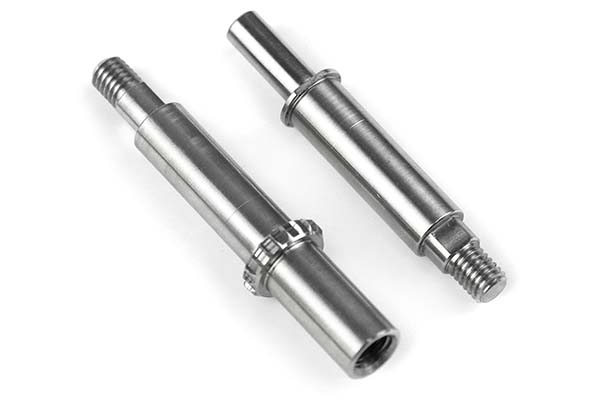
Inconel is a nickel-chromium superalloy with outstanding resistance to corrosion and oxidation, even at extreme temperatures. In marine or chemical processing applications, a mild steel shaft can quickly fail due to saltwater exposure. A laser-coated layer of Inconel 625 creates a protective barrier. The underlying steel remains safe from chemical attack, significantly extending component life.
In one Yigu Technology case study, coating a mild steel shaft with Stellite 6 increased surface hardness from approximately 180 HV to over 400 HV. In high-wear industrial applications, this translated to a 5-fold increase in component service life.
How Do You Test Laser-Treated Surfaces?
Making claims about durability is easy. Proving them requires standardized testing. For laser-treated surfaces to be trusted in critical applications, their performance must be validated against industry-accepted standards.
How Does Corrosion Resistance Compare?
In medical and food processing industries, maintaining corrosion resistance is essential. The marking process must not damage the steel’s protective qualities.
Chemical etching uses strong acids to dissolve the steel surface. This removes the protective chromium oxide layer entirely. It also creates tiny cracks where corrosion can start. Rust often forms within the etched mark and spreads outward.
Laser heat treatment does the opposite. The controlled heating process grows a thicker, more stable chromium-rich oxide layer. This enhanced layer is more resistant to chloride attack than either the original surface or an etched surface.
| Test Parameter | Laser Heat Treated | Chemically Etched |
|---|---|---|
| Protective Layer | Enhanced and intact | Removed or damaged |
| Corrosion Test Result | Pass | Fail |
| Surface Quality | Smooth, original finish | Rough, compromised |
In side-by-side ASTM B117 salt spray tests, chemically etched parts showed rust starting from the mark within 96 hours. Laser heat-treated parts remained completely clean after 500 hours.
How Do You Prove QR Code Permanence?
A QR code on a manufactured part is often a critical data carrier for tracking throughout the product’s entire lifecycle. It must remain scannable through rough handling, chemical washes, and years of use.
The ASTM B117 Salt Spray Test is the gold standard for simulating corrosive environments. Our validation process places a 316L stainless steel sample with a laser-marked QR code into a salt spray chamber. The chamber maintains a continuous fog of 5% sodium chloride solution at 35°C.
We scan the QR code after 96, 240, and 500 hours of continuous exposure. Passing this test requires maintaining 100% scan success—long after printed labels have dissolved and chemically etched marks have become unreadable due to corrosion. This provides clear proof that the laser mark is a permanent part of the steel itself.
Conclusion
Laser printing on steel has evolved far beyond simple marking. Today, it is a precision engineering tool that can fundamentally change how steel surfaces perform. By controlling laser energy with extreme accuracy, manufacturers can create surfaces with specific visual properties, enhanced wear resistance, and superior corrosion protection.
The key takeaways are clear. Laser heat treatment offers colored marks without damaging the steel’s protective layer. Ultrashort pulse lasers produce true black marks with unmatched contrast and durability. Laser coating creates hybrid components that combine low-cost base materials with high-performance surface properties. And standardized testing like ASTM B117 provides the proof that these enhancements deliver real, measurable benefits.
As manufacturing demands continue to push for longer-lasting, higher-performing components, the ability to engineer steel surfaces with precision will only grow in importance. The future of laser technology on steel is not just about the marks you can see—it is about the performance you can measure.
FAQ
What types of steel can be laser marked?
Most steels can be laser marked, including stainless steel, carbon steel, and tool steel. Stainless steel grades like 304 and 316L are particularly well-suited for heat treatment marking because they form consistent, colorful oxide layers.
Is laser marking permanent?
Yes, when done correctly. Laser marking creates marks that are integral to the material itself, not just applied to the surface. Properly laser-marked steel can withstand salt spray testing, abrasion, and repeated cleaning cycles without fading or becoming unreadable.
Can laser marking cause rust?
It depends on the method. Material removal methods that strip away the chromium oxide layer can lead to rust formation. Laser heat treatment, however, grows a thicker oxide layer that actually improves corrosion resistance compared to the original surface.
What is the difference between laser marking and laser engraving?
Laser marking is an umbrella term that includes both heat treatment (annealing) and material removal (engraving) . Engraving physically removes material to create depth. Heat treatment changes the surface color and properties without removing material.
Contact Yigu Technology for Custom Manufacturing
Looking to improve your steel components with laser surface treatment? Yigu Technology offers custom manufacturing solutions tailored to your specific materials and performance requirements. From high-contrast QR codes for traceability to wear-resistant coatings for industrial parts, we provide the technical expertise to deliver consistent, reliable results. Contact us today to discuss your project.