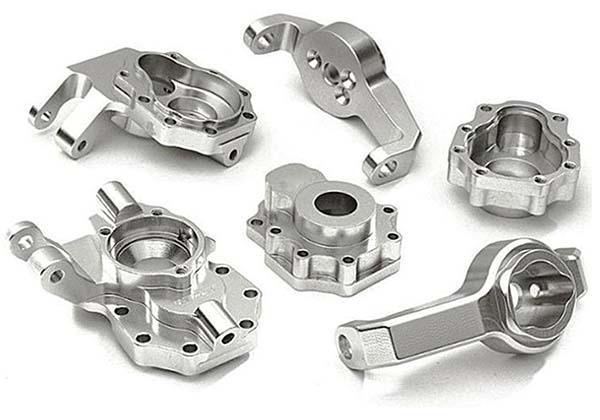
Small batch CNC machining is a specialized production strategy focused on efficiently manufacturing limited quantities (typically 10 to 1,000 units) of precision parts by optimizing processes to minimize the high per-unit impact of setup and programming costs.
For product developers, engineers, and startups, committing to large-scale production before finalizing a design or validating market demand is a significant risk. Small batch CNC machining provides the critical bridge between prototyping and mass production. This guide explores how this approach differs fundamentally from high-volume manufacturing, the specific strategies used to control costs and maintain quality in low volumes, and the industries that depend on it. By understanding the dynamics of setup time, fixture solutions, and per-unit economics, you can leverage small batch machining to iterate faster, reduce upfront investment, and bring products to market with greater agility and confidence.
Introduction
In the modern manufacturing landscape, flexibility is as valuable as scale. Small batch CNC machining is the embodiment of this flexibility, allowing for the production of high-quality, functional parts in quantities that match real-world needs—whether for market testing, pilot runs, or specialized equipment. Unlike traditional high-volume machining where costs are driven down by amortizing expensive tooling over millions of parts, small batch success hinges on minimizing the non-recurring engineering (NRE) costs associated with each unique job. This requires a different mindset and a distinct set of technical solutions. This article will provide a practical framework for navigating small batch production. We will define what constitutes a "small" batch, dissect the cost models that apply, and detail the fixture and quality control strategies that make limited runs economically viable. For anyone moving from a prototype to the next stage of manufacturing, this knowledge is essential for making smart, sustainable decisions.
What Is Small Batch CNC Machining?
Small batch CNC machining refers to the production of a limited number of identical parts using computer-controlled subtractive manufacturing processes. The focus is not on maximizing raw output speed but on optimizing the entire workflow for efficiency at low volumes.
The core challenge is economic: the fixed costs of CAD/CAM programming, machine setup, and first-article inspection are significant. In a batch of 10,000 parts, these costs become negligible per unit. In a batch of 50, they can dominate the total price. Small batch machining succeeds by implementing strategies to reduce these fixed costs and manage the entire process with lean principles.
How Does It Differ from High-Volume Production?
The goals, processes, and economics of small batch work are distinct from mass production.
| Aspect | High-Volume Production | Small Batch CNC Machining |
|---|---|---|
| Primary Goal | Minimize cost per unit at scale. | Minimize total project cost and time-to-market for limited quantities. |
| Tooling/Fixturing | Dedicated, custom hard tooling and fixtures. High upfront cost justified by volume. | Modular, flexible fixturing. Quick-change solutions to avoid custom tooling costs. |
| Process Optimization | Optimized for one part; changes are expensive. Fine-tuned for maximum cycle time reduction. | Optimized for fast changeover between different parts. Balance between cycle time and setup time. |
| Economic Driver | Variable costs (material, machine time). | Fixed costs (setup, programming). The key is to reduce and amortize them effectively. |
| Quality Control | Statistical Process Control (SPC) with sampling. | Often 100% inspection or first/last article inspection due to the limited batch size. |
What Quantities Define a “Small” Batch?
While there's no universal standard, "small batch" in CNC machining typically falls within these ranges:
- Micro-Batch / Bridge Production: 10 to 100 parts. This is common for final design validation, initial beta testing, or producing spare parts for legacy equipment. The per-unit cost is high, but the total project cost remains manageable.
- Pilot Run / Low-Volume Production: 100 to 1,000 parts. This range supports market launch, early-stage manufacturing, or producing components for complex machinery where annual demand is naturally low.
- The Economic Crossover Point: The decision between small batch and investing in production tooling (like injection molds or stamping dies) is a classic break-even analysis. For many metal parts or complex plastics, CNC machining remains competitive up to 1,000-5,000 units before dedicated tooling becomes economical.
Which Industries Rely on Low-Volume Runs?
Several sectors inherently require the flexibility and low minimum order quantities (MOQs) of small batch machining:
- Aerospace & Defense: Prototyping new airframe components, producing flight test hardware, and manufacturing specialized mission-specific parts in limited quantities.
- Medical Devices: Producing surgical instruments, trial implants for surgical planning, and components for diagnostic equipment that is built to order.
- Robotics & Automation: Building custom end-effectors, fixture plates, and prototype robotic arms where designs are constantly iterating.
- Specialized Industrial Machinery: Manufacturing replacement parts for legacy systems, custom gears, and one-off components for R&D test rigs.
- Consumer Electronics: Creating enclosures and internal components for crowdfunded products or premium goods where initial market demand is unknown.
How to Reduce Setup Times Efficiently?
Setup time is the enemy of small batch economics. Reducing it is the most impactful way to lower cost.
- Modular Workholding: Using precision vise jaws, tooling plates with grid patterns, and modular fixturing kits allows a single setup to accommodate a wide variety of part geometries without designing a custom fixture from scratch.
- Standardized Tooling: Maintaining a common set of tools in the machine's carousel that covers 80% of operations (common drill sizes, end mills) eliminates tool-changing time for many jobs.
- CAM Template & Database Use: Creating machining operation templates for common materials (e.g., "Aluminum Roughing") and saving proven toolpaths in a database allows programmers to generate reliable code in minutes, not hours.
- Setup Sheets & Digital Work Instructions: Providing clear, visual setup sheets with photos for the machine operator eliminates guesswork and errors during changeover.
What Cost Models Apply per Unit?
Understanding the cost structure is vital for budgeting and pricing.
Total Job Cost = Fixed Costs + (Variable Cost per Unit × Quantity)
- Fixed Costs (NRE): These are incurred once, regardless of batch size.
- Engineering & CAM Programming
- Setup & Fixturing
- First Article Inspection (FAI)
- Variable Costs: These scale with the number of parts.
- Raw Material
- Machine Cycle Time (the time to machine one part)
- Per-Part Labor (for loading/unloading)
- Final Inspection (can be fixed or variable)
Example: A part has $500 in fixed costs and a $20 variable cost.
- Qty 10: Unit Cost = ($500/10) + $20 = $70
- Qty 100: Unit Cost = ($500/100) + $20 = $25
This illustrates why per-unit cost drops dramatically as quantity increases within a small batch run.
How to Ensure Consistency Across Parts?
Consistency in small batches is achieved through process discipline, not statistical sampling.
- Proven, Conservative CAM Strategies: Using toolpaths and feeds/speeds that are well within the machine and tool's capabilities ensures stability from the first part to the last, even if it adds a few seconds to the cycle time.
- In-Process Tool Management: Monitoring tool wear and using tool presetters to ensure every tool's length and diameter are precisely known before the batch starts.
- Stable Material Supply: Sourcing material from the same supplier and lot when possible to minimize variations in machinability or hardness.
Quick Fixture and Pallet Solutions
Innovative workholding is a hallmark of an efficient small batch shop.
- Machinable Vise Jaws: Soft aluminum or plastic jaws can be quickly machined in the first setup to create a perfect nest for the part, then used to hold all subsequent parts identically.
- Modular Fixturing (e.g., Mitee-Bite, Lang): Systems of clamps, pins, and plates that can be reconfigured in minutes to hold radically different parts on the same base plate.
- Pallet Systems: Machines equipped with automatic pallet changers allow the operator to set up the next batch of parts on a separate pallet while the machine is still running the current one. This reduces machine idle time to mere seconds between jobs.
Quality Control for Limited Runs
With no room for statistical margins, inspection must be both efficient and comprehensive.
- First Article Inspection (FAI): A complete, documented inspection of the first part off the machine against all drawing dimensions is non-negotiable. This validates the entire process.
- In-Process Verification: For critical dimensions, using on-machine probing to check a feature on every 5th or 10th part provides confidence without the time cost of removing every part for a CMM check.
- Final Batch Audit: Measuring the last part in the batch to the same standard as the first ensures no drift occurred during the run.
Conclusion
Small batch CNC machining is a powerful, strategic manufacturing approach that aligns with the needs of agile development, niche markets, and innovative industries. Its value lies not in competing with the per-unit cost of mass production, but in minimizing total project risk, investment, and time-to-market for limited quantities. By mastering the techniques to slash setup times, implement flexible fixturing, and apply targeted quality control, manufacturers can turn small batch production from a costly necessity into a competitive advantage. For product teams, choosing a partner who specializes in this mindset—one that values engineering efficiency over sheer volume—is key to successfully navigating the journey from prototype to sustainable, low-volume production.
Frequently Asked Questions (FAQ)
What is the typical lead time for a small batch CNC machining order?
For standard complexity parts, expect 1 to 3 weeks. This includes time for material procurement (if not in stock), programming, setup, machining, and inspection. Highly complex parts or those requiring special materials may extend to 3-5 weeks. The lead time is less dependent on quantity and more on part complexity and shop workload.
Is 3D printing always cheaper than small batch CNC for low quantities?
Not always. While 3D printing has near-zero setup cost, CNC machining often wins on material properties, precision, and surface finish. For a batch of 10-50 functional metal parts that require strength and accuracy, CNC can be more cost-effective than metal 3D printing (SLM/DMLS). The choice depends on the part's function, material needs, and required tolerances.
How can I reduce the cost of my small batch CNC order?
Key strategies include:
- Design for Machinability (DFM): Simplify geometries, avoid deep pockets, and specify standard hole sizes.
- Relax Tolerances: Only apply tight tolerances where absolutely necessary for function.
- Choose Efficient Materials: Select readily available, easy-to-machine stock (e.g., 6061 Aluminum vs. 7075).
- Order Smarter Quantities: Sometimes ordering 55 parts instead of 50 fits perfectly on a raw material plate, reducing material waste and cost.
Can I get a production quote that includes scaling up from a small batch?
Yes, and you should. A reputable supplier should be able to provide a volume price ladder. This shows the unit price at quantities like 50, 100, 250, and 500 pieces. This transparency helps you plan for growth and understand the true economies of scale for your specific part.
Contact Yigu Technology for Custom Manufacturing.
At Yigu Technology, we specialize in making small batch CNC machining efficient, reliable, and strategically valuable for our clients. We understand that your low-volume runs are not just prototypes—they are critical steps toward market validation and launch.
Our shop is optimized for agility, featuring modular fixturing systems, advanced CAM software, and a streamlined workflow designed to minimize setup times and non-recurring costs. We provide expert Design for Manufacturability (DFM) feedback to ensure your parts are optimized for cost-effective small batch production from the start.
Ready to move from prototype to pilot run with a partner who understands small batch economics? Contact Yigu Technology today to discuss your project and receive a detailed, transparent quote.