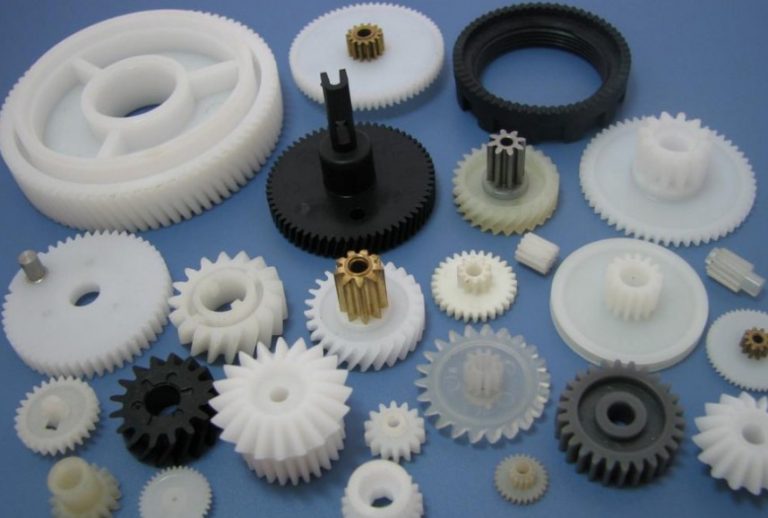
Plastic gear sets have quietly transformed modern machinery. From the tiny mechanisms inside your electric toothbrush to the precision systems in medical devices, these components now handle tasks once reserved for metal gears. The shift is not just about cost—it is about performance, weight reduction, and new design possibilities.
This guide explores what plastic gear sets are, how they work, and where they deliver the greatest value. You will learn material options, design considerations, and real-world applications that demonstrate their capabilities. Whether you are an engineer specifying components or a product developer exploring alternatives, this information helps you make informed decisions.
What Exactly Are Plastic Gear Sets?
Basic Structure and Function
A plastic gear set is a collection of gears made from engineering plastics that work together to transmit motion and torque. These gears mesh with precision—each tooth engaging with its counterpart to transfer rotational force from one shaft to another.
The basic types work together in a system:
| Component | Function | Common Example |
|---|---|---|
| Driving gear | Receives power from motor or source | Motor shaft gear in a drill |
| Driven gear | Transmits output motion | Chuck gear in a drill |
| Rack | Converts rotation to linear motion | Steering system in a car |
| Idler gear | Changes direction or spans distance | Printer paper feed mechanism |
When a driving gear rotates, it transfers motion to driven gears. The ratio of teeth between them determines speed reduction or torque increase. A small driving gear with a large driven gear reduces speed but multiplies torque—essential for applications needing force over speed.
Materials That Make It Possible
Nylon (PA): Known for high strength-to-weight ratio and self-lubricating properties. The amide groups in its molecular structure create a natural lubricating film during operation. This reduces friction without external lubricants.
Polyoxymethylene (POM): Often called acetal or Delrin. Its high crystallinity gives exceptional stiffness and dimensional stability. Friction coefficient is low—typically 0.2–0.3 against steel. This makes it ideal for precision applications.
Other materials: Polypropylene for chemical resistance, PEEK for high-temperature environments, and glass-filled composites for added strength.
What Performance Advantages Do Plastic Gear Sets Offer?
Weight Reduction That Matters
Plastic gears are dramatically lighter than metal equivalents. Density comparison:
| Material | Density (g/cm³) |
|---|---|
| Nylon | 1.15 |
| POM (Acetal) | 1.41 |
| Steel | 7.85 |
| Aluminum | 2.70 |
A plastic gear weighs roughly one-sixth of a steel gear of the same size. This matters in portable devices, automotive applications, and aerospace where every gram counts.
In one automotive project, replacing metal gears with plastic in a seat adjustment mechanism reduced assembly weight by 30%. The motor required less power to move the seat, improving energy efficiency.
Noise Reduction Without Extra Cost
Plastic dampens vibration. Metal transmits it. Testing confirms the difference:
| Gear Type | Noise Level at 1,000 rpm |
|---|---|
| Metal gears | 70–75 dB(A) |
| Plastic gears | 50–55 dB(A) |
A printer manufacturer found that switching to plastic gear sets reduced operating noise by 30% while cutting production costs by 20%. The quieter operation improved user experience without adding sound-damping materials.
Corrosion Resistance in Harsh Environments
Plastic does not rust. This is critical in applications exposed to moisture, chemicals, or sterilization processes.
In windshield wiper systems, plastic gears survive years of rain, road salt, and temperature swings. A five-year field test showed no visible wear or corrosion on plastic wiper gears. Metal gears in the same application showed rust and wear after three years.
Medical devices benefit similarly. Plastic gears withstand autoclave sterilization without degrading. Metal components in the same environment may corrode or require special coatings.
Self-Lubricating Properties
Many engineering plastics have inherent lubricity. Nylon and acetal slide against mating surfaces with minimal friction. This eliminates the need for external lubricants in many applications—reducing maintenance and preventing contamination.
In a food processing application, plastic gears eliminated the risk of lubricant contamination. The self-lubricating property met sanitary requirements while maintaining performance.
How Do Plastic Gear Sets Compare to Metal?
Side-by-Side Analysis
| Aspect | Plastic Gear Sets | Metal Gear Sets |
|---|---|---|
| Cost | 30–50% lower for comparable applications | Higher raw material and machining costs |
| Weight | 1/6 to 1/3 of metal equivalents | Heavy, density 2.7–8.0 g/cm³ |
| Strength | Moderate loads, 50–100 MPa tensile | High loads, 200–1000+ MPa |
| Corrosion resistance | Excellent, no rust | Requires coatings or stainless alloys |
| Noise | Quiet, dampens vibration | Louder, transmits vibration |
| Wear resistance | Good with proper material; self-lubricating | Excellent with hardening; requires lubrication |
| Temperature range | -40°C to 100°C typical; up to 200°C with PEEK | -50°C to 500°C+ depending on alloy |
| Dimensional stability | Affected by temperature and moisture | Stable across wider conditions |
When to Choose Plastic Over Metal
Plastic gear sets excel when:
- Weight reduction is critical
- Noise must be minimized
- Lubrication is undesirable or impossible
- Corrosion resistance is needed
- Production volumes justify molded parts
- Loads are low to moderate
Metal gears remain necessary when:
- Loads are high or impact is severe
- Operating temperatures exceed 150°C
- Extreme precision is required across wide temperature ranges
- Torque requirements exceed plastic material limits
Where Are Plastic Gear Sets Making an Impact?
Electronics and Consumer Devices
Printers: Plastic gear sets drive paper feed, print head movement, and ink delivery systems. A leading printer manufacturer reported 30% quieter operation and 20% production cost reduction after switching to plastic gears.
Electric toothbrushes: High-speed motors spin at 20,000–40,000 rpm. Plastic gear sets reduce speed to 3,000–8,000 rpm at the brush head while multiplying torque. The self-lubricating gears operate in wet environments without corrosion.
Camera lenses: Precision plastic gears enable smooth autofocus and zoom. The lightweight design reduces camera weight while allowing fine adjustments. Focus accuracy of 0.01 mm is achievable with well-designed plastic gear trains.
Automotive Applications
Seat adjusters: Luxury car manufacturers replaced metal gears with plastic in seat mechanisms. Customer feedback showed 40% noise reduction during seat adjustment. The lighter mechanism also improved power efficiency.
Window lift systems: A popular car model using plastic gear sets showed 25% reliability improvement over metal-gear versions. Plastic gears resist jamming and require no lubrication—reducing maintenance calls.
Windshield wipers: Plastic gears survive moisture, road salt, and temperature extremes. After five years of real-world use, plastic wiper gears showed no corrosion or significant wear.
Medical Devices
Infusion pumps: Plastic gear sets control fluid delivery with precision. The low-noise operation improves patient comfort in hospital settings. One hospital reported 30% noise reduction in patient wards after switching to pumps with plastic gears.
Surgical instruments: Micro-motors in minimally invasive tools use plastic gears. Their biocompatibility prevents adverse reactions. A study found plastic gears in surgical drills caused no allergic responses—unlike some metal components.
Dental prosthetics: Adjustable dentures incorporate plastic gear-like components for precise fit adjustments. The lightweight material improves wearing comfort for extended periods.
Industrial Applications
Packaging equipment: Plastic gears in conveyor systems run quietly and require no lubrication. A packaging line using acetal gears operated for three years without gear-related downtime.
Small robotics: Educational and hobby robots benefit from plastic gears' low weight and cost. One educational robot design reduced power consumption by 30–40% using plastic gears, extending battery life significantly.
What Design Considerations Maximize Performance?
Material Selection Based on Application
| Application Requirement | Recommended Material | Rationale |
|---|---|---|
| High speed, light load | POM (Acetal) | Low friction, dimensional stability |
| Moderate load, self-lubricating | Nylon | Wear resistance, natural lubricity |
| Chemical exposure | Polypropylene | Chemical resistance, low cost |
| High temperature | PEEK | Thermal stability up to 250°C |
| Stiffness requirement | Glass-filled nylon or POM | Increased modulus, reduced creep |
| Precision positioning | POM | Low moisture absorption, stability |
Gear Design Best Practices
Tooth profile: Involute profiles work well. For plastic gears, consider modified root fillets to reduce stress concentration. Larger pressure angles (25° vs. 20°) increase tooth strength but increase friction.
Backlash: Account for thermal expansion and moisture absorption. Nylon absorbs moisture and swells—design for 0.05–0.15 mm additional clearance compared to metal gears.
Operating temperature: Plastic properties change with temperature. A gear designed for room temperature may bind at high temperatures or become brittle in cold. Test across your operating range.
Molding Quality Matters
Injection molding parameters directly affect gear performance:
- Mold temperature affects crystallinity and dimensional stability
- Gate location determines weld line positions—keep weld lines away from tooth roots
- Cooling rate creates residual stress that can cause warping
A well-molded plastic gear maintains tooth profile within 0.02–0.05 mm. Poor molding introduces stresses that lead to premature failure.
How Does Yigu Technology Approach Plastic Gear Sets?
At Yigu Technology, we have manufactured plastic gear sets for over a decade across automotive, electronics, and medical industries. Our approach combines material science, precision molding, and application-specific engineering.
Material selection: We help clients select the right plastic for their application. For a high-speed motor application in electronics, we recommended a custom nylon formulation with enhanced wear resistance. The gears met performance requirements and reduced replacement frequency by 50%.
Precision manufacturing: Our injection molding equipment holds tolerances within ±0.02 mm on critical features. This ensures smooth meshing and consistent performance across production runs.
Customization: Each application has unique needs. For an automotive seat adjuster, we designed a POM gear set that reduced weight by 30% while maintaining load capacity. The quieter operation became a selling point for the vehicle.
Simulation and testing: We use CAD and finite element analysis to predict gear performance before molding. This catches issues early—saving time and tooling costs.
Conclusion
Plastic gear sets are transforming precision engineering. Their lightweight construction, noise reduction, corrosion resistance, and self-lubricating properties make them superior to metal in many applications. When properly designed and manufactured, they deliver reliable performance at lower cost.
The choice between plastic and metal depends on your application. For moderate loads, speed ranges under 10,000 rpm, and temperatures below 100°C, plastic gear sets often provide the best solution. For heavy loads, extreme temperatures, or maximum precision across wide conditions, metal remains appropriate.
Advances in materials and manufacturing continue to expand plastic gears' capabilities. As engineering plastics improve, their role in precision mechanisms will only grow.
Frequently Asked Questions
What is the lifespan of plastic gear sets compared to metal?
Lifespan depends on application conditions. In moderate-load, properly designed applications, plastic gears often last 3–5 years of continuous operation—comparable to metal gears in similar conditions. In high-load or abrasive environments, metal typically lasts longer. Proper material selection and design extend plastic gear life significantly.
Can plastic gear sets handle high torque?
Yes, within limits. Glass-filled nylon and PEEK handle torque loads up to 50–100 N·m depending on size. For high-torque applications, consider reinforced materials and larger tooth profiles. For extreme torque requirements, metal gears remain the better choice.
How do temperature and humidity affect plastic gears?
Most engineering plastics operate reliably from -40°C to 100°C. Above 100°C, strength decreases. Nylon absorbs moisture and swells—affecting dimensions. POM absorbs minimal moisture and maintains stability. Design must account for these changes, especially in precision applications.
Are plastic gear sets suitable for medical devices?
Yes. Many plastic gears are biocompatible and withstand sterilization processes. Nylon and PEEK meet medical-grade requirements. Plastic gears in infusion pumps, surgical tools, and diagnostic equipment operate reliably while eliminating corrosion and lubrication concerns.
How much cost savings can I expect with plastic gear sets?
Production cost savings typically range from 30–50% compared to metal equivalents. Injection molding replaces expensive machining operations. Raw materials cost less. Savings vary with volume—higher volumes yield greater cost advantages.
Contact Yigu Technology for Custom Manufacturing
Need plastic gear sets engineered for your specific application? At Yigu Technology, we combine material expertise with precision manufacturing to deliver gears that perform. From material selection to tooth profile optimization, our engineering team helps you get the right solution.
Whether you need high-precision POM gears for electronics, wear-resistant nylon gears for automotive systems, or custom composites for medical devices, we have the experience and equipment to deliver. Contact us today to discuss your requirements.