Introduction
The plastic injection molding industry is a cornerstone of modern manufacturing. From automotive components and medical devices to consumer electronics and packaging, injection-molded products are everywhere. The global market for plastic injection molding was valued at approximately $350 billion in 2023 and is projected to grow at a compound annual growth rate (CAGR) of 5–6% through 2030. For entrepreneurs and manufacturers, this represents a significant opportunity.
But launching a profitable plastic injection molding business requires more than just buying a machine. Success demands careful planning—market research, equipment selection, workforce development, process optimization, and a clear profit model. This guide provides a roadmap for starting and growing a successful injection molding business, with practical insights and real-world examples.
What Is Plastic Injection Molding?
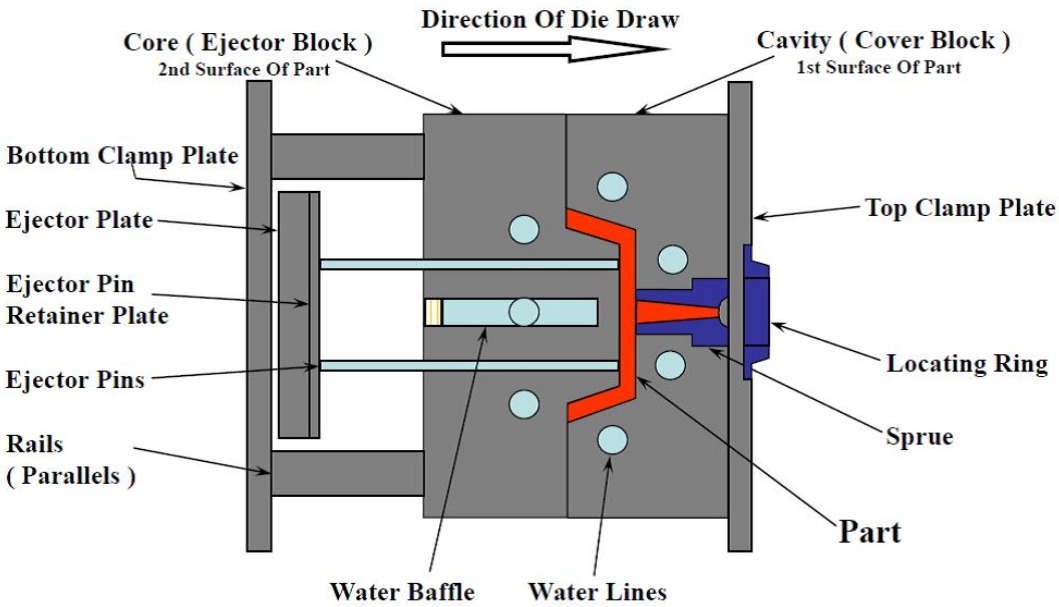
Plastic injection molding is a manufacturing process where molten plastic is injected into a mold cavity under high pressure. The plastic cools and solidifies, taking the shape of the cavity. The mold opens, and the finished part is ejected.
The Process at a Glance
| Stage | Description |
|---|---|
| Material feeding | Plastic pellets are fed into a heated barrel |
| Melting | A reciprocating screw melts the plastic through heat and shear |
| Injection | Molten plastic is forced into the mold cavity under high pressure |
| Cooling | The plastic solidifies; coolant circulates through mold channels |
| Ejection | The mold opens; ejector pins push the finished part out |
Why It Matters
| Advantage | Explanation |
|---|---|
| High-volume production | Thousands to millions of parts per year |
| Precision | Tolerances as tight as ±0.01 mm |
| Complex shapes | Intricate geometries; fine details |
| Material versatility | Wide range of thermoplastics and engineered materials |
| Automation | Minimal labor; consistent quality |
What Are the Key Factors for a Profitable Business?
Market Research
Market research is the foundation of any successful business. Without understanding the market, you risk investing in the wrong equipment, targeting the wrong customers, or missing critical trends.
Analyze the Target Market
Different industries have distinct requirements for injection-molded products:
| Industry | Market Size (2022) | Growth Rate (CAGR) | Key Requirements |
|---|---|---|---|
| Automotive | $46.7 billion | 5.4% (2023–2030) | High strength; heat resistance; precision |
| Medical | $32.1 billion | 6.8% | Biocompatibility; sterility; precision |
| Consumer electronics | $28.5 billion | 5.2% | Aesthetics; thin walls; impact resistance |
| Packaging | $24.3 billion | 4.9% | Low cost; chemical resistance; lightweight |
Identify your niche: Will you serve automotive (high-strength, heat-resistant parts), medical (biocompatible, sterile components), consumer goods (aesthetics, functionality), or packaging (low cost, high volume)?
Understand Customer Needs
Conduct surveys, interviews, and focus groups to gather insights. Key trends:
| Trend | Customer Preference |
|---|---|
| Sustainability | 73% of consumers are willing to pay more for sustainable products |
| Quality | Consistent dimensions; defect-free surfaces |
| Cost | Competitive pricing without sacrificing quality |
| Lead time | Fast turnaround; reliable delivery |
Competitor Analysis
Identify direct and indirect competitors. Analyze:
| Factor | Questions to Ask |
|---|---|
| Product offerings | What parts do they make? What industries do they serve? |
| Pricing strategies | Are they premium or budget-focused? |
| Production capabilities | What machine sizes? What materials? |
| Customer service | How do they handle inquiries and issues? |
Opportunity: If competitors have high-quality but high-priced products, position your business to offer similar quality at competitive prices. If they lack expertise in a specific niche (e.g., biodegradable plastics), fill that gap.
Quality Equipment and Materials
The quality of your equipment and materials directly affects product quality, production efficiency, and profitability.
Injection Molding Machines
| Machine Type | Advantages | Best For |
|---|---|---|
| Hydraulic | High clamping force; lower initial cost | Large-scale production; thick-walled parts |
| Electric | Energy-efficient; high precision (±0.01 mm repeatability) | Small, intricate parts; electronics; medical |
| Hybrid | Combines hydraulic clamping with electric injection | Balanced performance; versatile |
Investment range:
- Small to medium electric machine: $30,000–$50,000
- Large hydraulic machine: $50,000–$150,000+
- High-end multi-material machines: $200,000+
Plastic Materials
| Material | Key Properties | Applications |
|---|---|---|
| ABS | Strength; heat resistance; good surface finish | Computer housings; automotive dashboards |
| Polypropylene (PP) | Low cost; chemical resistance; high-temperature stability | Packaging; medical devices; consumer goods |
| Polycarbonate (PC) | High impact strength; clarity; heat resistance | Safety equipment; medical; electronics |
| Nylon (PA) | Strength; wear resistance; durability | Gears; structural parts |
| Biodegradable materials | PLA; PHA; sustainable | Eco-friendly packaging; consumer goods |
Cost consideration: Using high-quality materials reduces defects and returns, improving profitability. Quality equipment requires less maintenance, has longer lifespan, and delivers consistent results.
Skilled Workforce
A skilled workforce is essential for smooth operations, problem-solving, and continuous improvement.
Key Roles
| Role | Responsibilities |
|---|---|
| Molding technicians | Set up and operate machines; adjust parameters (temperature; pressure; speed); troubleshoot defects |
| Tool and die makers | Design, manufacture, and maintain molds; modify for quality improvements |
| Quality control inspectors | Inspect products (visual; dimensional; material testing); detect defects early |
| Process engineers | Optimize production processes; implement lean principles; drive continuous improvement |
Why Skilled Workers Matter
- Defect reduction: A skilled technician can identify whether short shots are due to low pressure, improper temperature, or mold design—and take corrective action quickly.
- Innovation: Experienced workers suggest process improvements, product design changes, or material alternatives that give your business a competitive edge.
- Efficiency: Properly trained operators run machines at optimal speeds, reducing cycle times and waste.
Efficient Production Process
An efficient production process maximizes profitability by reducing waste, increasing output, and controlling costs.
Lean Manufacturing Principles
| Principle | Application |
|---|---|
| Just-in-time (JIT) inventory | Order materials and produce only when needed; reduces inventory costs; minimizes obsolete stock |
| Value stream mapping | Identify and eliminate non-value-added activities |
| 5S workplace organization | Sort; set in order; shine; standardize; sustain—improves efficiency and safety |
| Continuous improvement (Kaizen) | Encourage employee suggestions; regularly review production data |
Automation
| Automation Area | Benefit |
|---|---|
| Material feeding | Consistent supply; accurate dosing; reduces interruptions |
| Part removal | Robotic arms reduce cycle time; consistent handling |
| Quality inspection | Automated vision systems detect defects at production speed |
| Data collection | Real-time monitoring of temperature; pressure; cycle time |
Process Optimization
| Strategy | Impact |
|---|---|
| Cooling time optimization | Cooling accounts for 50–80% of cycle time; conformal cooling channels can reduce cooling time significantly |
| Parameter fine-tuning | Optimize temperature; pressure; speed for each material and part |
| Mold maintenance | Regular cleaning; inspection; repairs prevent defects and downtime |
Continuous Improvement
- Data analysis: Regularly review production metrics (cycle time; scrap rate; downtime)
- Employee input: Front-line operators often have the best ideas for improvement
- Benchmarking: Compare your performance against industry standards
What Are Case Studies of Successful Businesses?
Case Study 1: XYZ Plastics
Background: A well-established US-based company with over 20 years of experience, serving automotive, electronics, and consumer goods industries across North America.
Business Scope:
- Automotive: Dashboards; door panels; cup holders
- Electronics: Housings for smartphones; tablets; laptops
- Consumer goods: Kitchen utensils; toys; storage containers
Profit Model:
- High-volume production: State-of-the-art machines produce large quantities efficiently
- Cost-effective operations: Long-term contracts with material suppliers secure favorable pricing
- Premium pricing: High-quality reputation enables charging premium prices for durable, precisely fitting parts
- Long-term partnerships: Quality and reliability lead to steady business from major manufacturers
Success Factors:
- R&D investment: Early adopter of biodegradable plastics for consumer products—opened new markets and provided competitive edge
- Skilled workforce: Experienced technicians optimize machine performance; tool makers design high-precision molds; quality inspectors ensure standards
- Continuous innovation: Constantly investing in new technologies and materials
How Does Yigu Technology View the Industry?
As a non-standard plastic metal products custom supplier, Yigu Technology sees significant opportunity in the plastic injection molding industry. Key perspectives:
Industry Trajectory
- Growing demand for customized products drives expansion in non-standard injection molding
- Technological advancement enables more complex geometries; tighter tolerances; new materials
- Sustainability focus creates opportunities in biodegradable and recycled materials
Our Strengths
| Strength | Application |
|---|---|
| Tailored solutions | Professional team understands unique client requirements |
| Advanced equipment | State-of-the-art mold-making technology for complex shapes |
| One-stop services | From design consultation to after-sales support |
| Fast response | Efficient order completion; on-time delivery |
Our Commitment
- Customer satisfaction – Core service concept
- Continuous innovation – Improving processes; expanding capabilities
- Reliable partnership – Helping businesses succeed in injection molding
What Are the Initial Investments Required?
Starting a plastic injection molding business requires significant capital investment.
Equipment Costs
| Item | Cost Range |
|---|---|
| Injection molding machine (small-medium electric) | $30,000–$50,000 |
| Injection molding machine (large hydraulic) | $50,000–$150,000+ |
| High-end multi-material machine | $200,000+ |
| Molds (simple) | $1,000–$5,000 |
| Molds (complex; high-precision) | $10,000–$50,000+ |
| Auxiliary equipment (dryers; chillers; material handling) | $10,000–$30,000 |
Facility Costs
- Factory space: $10–$25 per square foot (depending on location)
- Utilities: Electricity; water; compressed air
- Insurance: Property; liability; workers’ compensation
Personnel Costs
- Skilled technicians: $50,000–$80,000/year
- Tool and die makers: $60,000–$90,000/year
- Quality control inspectors: $40,000–$60,000/year
- Management and administration: Variable
Working Capital
- Raw materials inventory
- Spare parts and maintenance
- Marketing and sales
- Operating expenses (3–6 months)
How Can You Ensure Quality in Injection Molding?
Quality Control Measures
| Stage | Action |
|---|---|
| Raw material inspection | Verify properties; check for contaminants; proper drying |
| In-process inspection | Monitor temperature; pressure; cycle time; part weight |
| Final inspection | Dimensional measurement (calipers; CMM); visual inspection; functional testing |
| Statistical process control (SPC) | Track trends; detect issues before defects occur |
Mold Design
A well-designed mold prevents:
| Defect | Prevention |
|---|---|
| Flash | Proper clamp force; mold alignment |
| Short shots | Adequate venting; gate design |
| Warpage | Balanced cooling channels |
| Sink marks | Proper gate placement; wall thickness |
Skilled Workforce
- Train technicians to optimize parameters
- Work with experienced tool and die makers
- Empower quality inspectors to stop production when defects are detected
Conclusion
Launching a profitable plastic injection molding business requires careful planning across multiple dimensions:
- Market research – Understand target industries; customer needs; competitor landscape
- Quality equipment and materials – Invest in reliable machines; use high-quality resins
- Skilled workforce – Hire and train technicians; tool makers; quality inspectors
- Efficient production process – Apply lean principles; automation; continuous improvement
- Quality control – Rigorous inspection at every stage
The industry offers significant opportunity—growing demand for customized products, technological advancements, and sustainability trends create new markets. With the right strategy, equipment, and team, you can build a successful, profitable injection molding business.
Frequently Asked Questions (FAQ)
What are the initial investments required to start a plastic injection molding business?
Initial investments include equipment (machines: $30,000–$150,000+; molds: $1,000–$50,000+), facility (rent; utilities; insurance), personnel (skilled technicians; tool makers; quality inspectors), and working capital (materials; operating expenses). Total startup costs typically range from $100,000 to $500,000+ depending on scale and capabilities.
How can I ensure the quality of plastic injection molded products?
Ensure quality through high-quality raw materials (select appropriate grades; inspect; dry), strict quality inspection (raw material; in-process; final), well-designed molds (prevent flash; short shots; warpage), skilled operators (optimize parameters; troubleshoot), and statistical process control (SPC) (monitor trends; detect issues early). Implement a quality management system (e.g., ISO 9001).
What is the most profitable niche in plastic injection molding?
Profitability varies by niche. Medical devices (biocompatible; high precision) often command premium pricing. Automotive offers high volume but competitive pricing. Consumer electronics requires thin walls; aesthetics; rapid production. Sustainable packaging (biodegradable materials) is growing rapidly. Success depends on matching your capabilities to market demand and maintaining quality, efficiency, and customer relationships.
How do I choose the right injection molding machine?
Consider part size and complexity (clamping force; shot size), material requirements (temperature; pressure), production volume (hydraulic for high volume; electric for precision), precision needs (electric machines achieve ±0.01 mm repeatability), budget (initial cost vs. long-term efficiency), and energy efficiency (electric and hybrid machines reduce operating costs). Consult with equipment suppliers and run test parts before purchasing.
What are the biggest challenges in starting an injection molding business?
Key challenges include high initial investment (equipment; molds; facility), finding skilled workforce (technicians; tool makers), competition (established players; price pressure), quality consistency (defect prevention; process control), customer acquisition (building reputation; securing contracts), and staying current with technology (new materials; automation; Industry 4.0). Addressing these challenges requires careful planning, continuous improvement, and strong customer focus.
Contact Yigu Technology for Custom Manufacturing
At Yigu Technology, we understand the injection molding business from the inside. As a custom supplier of non-standard plastic and metal products, we help clients succeed with quality manufacturing, expert guidance, and reliable service.
Our services include:
- Custom injection molding – Complex geometries; tight tolerances
- Material expertise – Commodity to engineered plastics; sustainable materials
- Mold design and manufacturing – Precision molds for your applications
- Process optimization – Efficient production; consistent quality
- One-stop solutions – From design to delivery
Whether you are starting a new injection molding business or expanding existing capabilities, we are here to help.
Contact us today to discuss your injection molding needs. Let our expertise help you build a profitable, successful business.