Introduction
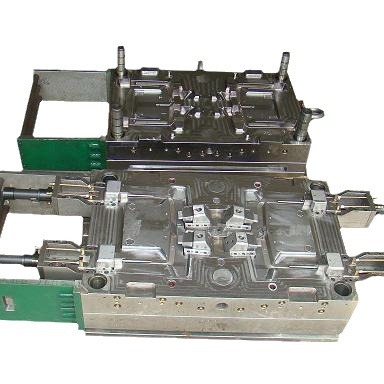
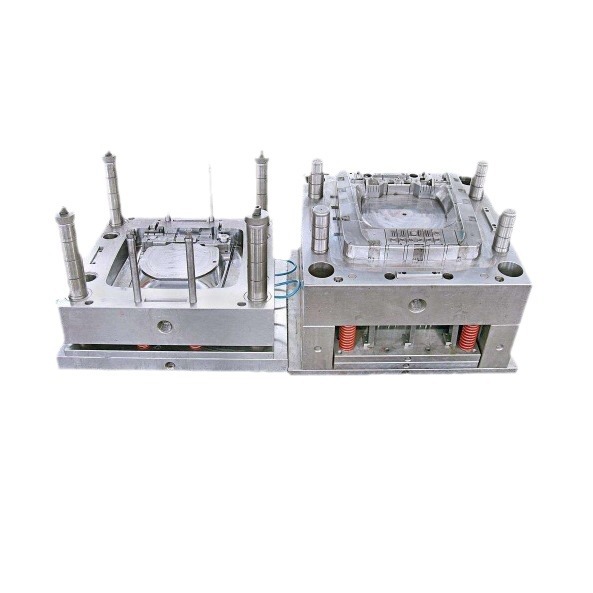
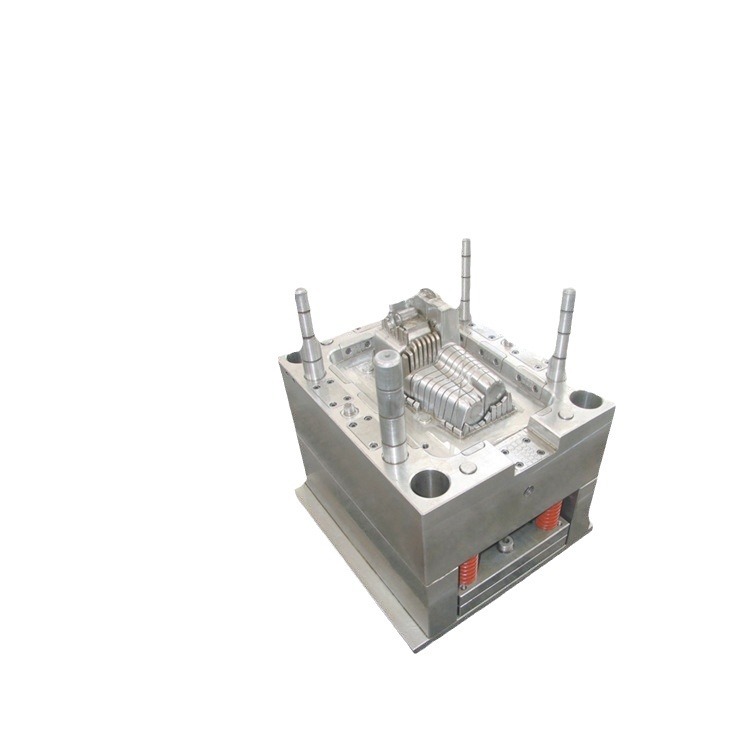
Every plastic product you touch—the smartphone in your pocket, the dashboard of your car, the container holding your food—began with a mold maker. These skilled professionals transform concepts into precision tools that shape millions of parts, yet their work remains largely unseen.
Mold makers are the unsung heroes of modern manufacturing. They combine art and science—engineering precision with craftsmanship honed over decades—to create the tools that produce the products we use every day. From the smallest micro-component in a hearing aid to the largest automotive body panel, molds makers enable the mass production that defines our world.
This guide explores the world of mold makers: their techniques, challenges, and the critical role they play in shaping the future of manufacturing.
What Makes Mold Making Both Art and Science?
The Design Phase: Where It All Begins
The journey starts long before any metal is cut. Mold makers collaborate closely with product designers to understand:
| Consideration | Why It Matters |
|---|---|
| Product function | Determines required precision, strength, and features |
| Dimensions | Defines cavity size and tolerances |
| Material | Influences shrinkage rates and cooling requirements |
| Production volume | Determines mold durability and cavity count |
| Aesthetics | Drives surface finish requirements |
CAD/CAM technology:
Modern mold makers use Computer-Aided Design (CAD) to create detailed 3D models. Parametric design allows changes to propagate throughout the model automatically—saving time and reducing errors. Computer-Aided Manufacturing (CAM) then converts these models into machine-readable instructions for CNC equipment.
What happens during design:
- Simulation: Mold flow analysis predicts how plastic will fill the cavity, identifying potential air traps or weld lines before steel is cut
- Optimization: Gate locations, cooling channels, and ejection systems are refined for efficiency and quality
- Tolerance planning: Critical dimensions are identified; appropriate tolerances (±0.01 mm or looser) are assigned
Material Selection: Choosing the Right Steel
The material choice determines mold life, precision, and cost.
| Material | Hardness (HRC) | Key Properties | Best For |
|---|---|---|---|
| P20 | 28–32 | Good machinability; pre-hardened | Medium-volume; general-purpose |
| 718 | 32–36 | Better wear resistance | Higher-volume; precision |
| H13 | 48–54 | Heat resistance; toughness | High-temperature plastics; die casting |
| NAK80 | 40–42 | Mirror polishability | High-gloss; optical parts |
| S136 (stainless) | 48–52 | Corrosion resistance | Medical; food-grade |
| Copper alloys | Varies | High thermal conductivity | Rapid cooling inserts |
Selection factors:
- Production volume: High volume demands durable materials like H13 or 718
- Plastic type: Abrasive or high-temperature plastics require tougher steels
- Part complexity: Intricate details need materials that machine well
- Cost: Balance performance with budget
Real example: A medical device manufacturer needed a mold for 500,000 syringes. The mold maker selected 718 steel—balancing durability for high volume with machinability for tight tolerances. The result: consistent quality across the entire production run.
What Manufacturing Processes Do Mold Makers Use?
CNC Machining: The Workhorse
Computer Numerical Control (CNC) machining is fundamental to mold making. Computer-controlled machines remove material with exceptional precision.
| Operation | Purpose | Typical Tolerance |
|---|---|---|
| Roughing | Remove bulk material quickly | ±0.1–0.2 mm |
| Finishing | Achieve final dimensions and surface | ±0.001–0.005 mm |
Advantages:
- High precision (tolerances down to ±0.001 mm)
- Complex 3D shapes through multi-axis machining
- Consistent, repeatable results
EDM (Electrical Discharge Machining)
EDM creates features that CNC tools can’t reach—sharp internal corners, deep ribs, and intricate details.
How it works: Electrical sparks erode material. A tool electrode and workpiece are submerged in dielectric fluid. Discharges create sparks reaching 10,000°C, melting and vaporizing material.
| Type | Best For | Precision |
|---|---|---|
| Sinker EDM | 3D cavities; complex shapes | ±0.005–0.01 mm |
| Wire EDM | Cutting precise profiles; sharp corners | ±0.001–0.005 mm |
Application: A mold for an electronic connector with tiny internal features required wire EDM to achieve the necessary precision—impossible with conventional machining.
Injection Molding and Die Casting Molds
Mold makers create the tools used in these processes, not the parts themselves. But understanding the process is essential:
| Process | Mold Requirements |
|---|---|
| Injection molding | Withstand high pressure (500–2,000 bar); efficient cooling; smooth ejection |
| Die casting | Withstand extreme temperatures (600–700°C); thermal fatigue resistance |
| Blow molding | Even wall thickness; precise parting lines |
How Do Mold Makers Ensure Quality?
Precision and Tolerance
Precision and tolerance are fundamental concepts in mold making:
| Term | Definition |
|---|---|
| Precision | The degree of exactness in manufacturing—dimensions, surface finish, feature consistency |
| Tolerance | The allowable deviation from specified dimensions |
Why it matters: In automotive engine pistons, a 0.01 mm deviation in diameter can reduce engine efficiency by up to 2% . In micro-connectors for smartphones, deviations of a few micrometers can cause signal loss or intermittent connectivity.
What mold makers achieve:
- Standard precision: ±0.01–0.05 mm
- High precision: ±0.001–0.005 mm
- Ultra-precision (optical, medical): ±0.0005 mm or better
Testing and Inspection
Mold makers use multiple methods to verify quality:
Pressure testing:
Molds are subjected to simulated production pressures to ensure they can withstand real operating conditions. Molds that undergo proper pressure testing have a 30% lower failure rate during production.
Dimension inspection:
Coordinate Measuring Machines (CMMs) measure three-dimensional dimensions, comparing actual values against design specifications. Over 90% of medical device manufacturers use CMMs for mold inspection.
| Measurement Type | Equipment | Accuracy |
|---|---|---|
| Basic dimensions | Calipers, micrometers | ±0.01 mm |
| Complex geometry | CMM | ±0.001–0.002 mm |
| Surface profile | Optical scanners | ±0.005 mm |
Surface finish inspection:
Visual inspection catches obvious defects. Surface roughness measuring instruments verify finishes—critical for optical components where surface roughness below 0.1 μm is required to prevent light scattering.
What Challenges Do Mold Makers Face?
| Challenge | Impact | Solution |
|---|---|---|
| Increasing precision demands | Tolerances measured in microns require advanced equipment and techniques | Investment in high-end CNC, EDM, and metrology |
| Complex geometries | Undercuts, thin walls, and intricate details push design limits | Side-action mechanisms; multi-axis machining; flow simulation |
| Material advancements | New plastics require new mold materials and cooling strategies | Continuous learning; material testing |
| Shorter lead times | Customers demand faster turnaround | CAD/CAM integration; parallel processing |
| Cost pressures | Balancing quality with affordability | Material optimization; efficient design; lean manufacturing |
How Is Technology Changing Mold Making?
Digital Integration
CAD/CAM integration has transformed mold making. What once required weeks of manual drafting now happens in hours. Changes propagate instantly. Errors are caught in simulation rather than on the shop floor.
Additive Manufacturing (3D Printing)
3D printing enables:
- Conformal cooling channels: Channels that follow part geometry—impossible to drill
- Rapid prototyping: Test designs before committing to production tooling
- Complex geometries: Internal features that traditional machining can’t create
Real impact: A mold with conformal cooling channels reduced cycle time by 25% compared to traditionally drilled channels.
Automation
Robotic cells handle:
- Mold loading and unloading
- Electrode changes in EDM
- Quality inspection
Automation reduces human error, enables 24/7 operation, and allows skilled mold makers to focus on complex tasks.
Yigu Technology’s Perspective
At Yigu Technology, we see mold makers as essential partners in bringing products to life. Our experience has taught us that successful mold making requires:
- Deep collaboration: Mold makers must work closely with product designers from the earliest stages
- Continuous investment: Advanced equipment enables precision that manual methods can’t match
- Material expertise: Understanding how different steels behave under production conditions
- Quality systems: Rigorous inspection at every stage ensures consistent results
We combine these elements with decades of experience to deliver molds that perform—cycle after cycle, year after year.
Conclusion
Mold makers are the craftspeople who enable modern manufacturing. They combine design expertise, material knowledge, and precision machining to create the tools that shape our world.
From the initial CAD model to the final CMM inspection, every step demands attention to detail. The result: molds that produce millions of identical parts with consistent quality—enabling everything from smartphones to medical devices to automotive components.
As products become smaller, more complex, and more demanding, the role of mold makers only grows in importance. They aren’t just building tools. They’re crafting the future, one shape at a time.
FAQ
How to choose the right mold material for my product?
Consider product characteristics (temperature, wear requirements), production volume (high volume demands durable materials like 718 or H13), and cost. For most medium-volume applications with standard plastics, P20 is a reliable, cost-effective starting point. For high-gloss or optical parts, NAK80. For food-grade or medical, stainless steel (S136).
What is the typical lead time for mold production?
Lead times vary by complexity. Simple two-cavity molds: 2–4 weeks. Medium-complexity: 4–8 weeks. Complex, high-precision molds (automotive, medical): 8–16 weeks. Factors affecting lead time: design complexity, material availability, shop workload, and required precision.
What’s the difference between a mold maker and a mold designer?
Mold designers focus on creating the digital model—determining parting lines, gating, cooling channels. Mold makers execute the physical manufacturing—CNC machining, EDM, assembly, and testing. In many shops, experienced professionals do both, ensuring design intent carries through to the finished tool.
How long does an injection mold last?
Mold life depends on material and production conditions. P20 molds for non-abrasive plastics: 100,000–500,000 cycles. 718 or H13 molds: 500,000–1,000,000 cycles. With proper maintenance, high-quality steel molds can exceed 1 million cycles. Abrasive or glass-filled plastics reduce life significantly.
What certifications should I look for in a mold maker?
ISO 9001 indicates a quality management system. For medical applications, ISO 13485. For automotive, IATF 16949. Also look for in-house inspection capabilities (CMM), material certifications, and documented quality processes. Experience in your specific industry is valuable.
Contact Yigu Technology for Custom Manufacturing
At Yigu Technology, we combine decades of mold-making expertise with advanced manufacturing capabilities. Our team works with you from design through production, ensuring your molds deliver consistent quality and long life.
We offer:
- Custom mold design and manufacturing
- Material selection guidance
- Precision CNC machining and EDM
- CMM inspection and full documentation
- Experience across automotive, medical, electronics, and consumer goods
[Contact Yigu Technology today] to discuss your mold-making project. Let’s craft the tool that shapes your success.