Launching or scaling a CNC machining business is a formidable engineering and entrepreneurial challenge. Beyond the mastery of cutting tools and G-code, success demands strategic market positioning, shrewd financial management, and relentless operational efficiency. For shop owners, managers, and aspiring entrepreneurs, the journey from a capable machinist to a profitable business owner requires a new set of skills. This guide cuts through the noise to address the core strategic questions. We will explore how to define your competitive edge, identify lucrative markets, make capital investments wisely, and implement systems that attract premium clients while maximizing profitability. Whether you're starting out or optimizing an existing shop, this framework will help you build a resilient and thriving CNC machining business.
What Defines a Successful CNC Machining Business?
Success is not merely revenue; it's sustainable profitability and a strong market reputation. Key defining traits include:
- Clear Strategic Niche: They are not "all things to all people." They dominate a specific sector (e.g., medical implants, aerospace prototyping, high-volume automotive components) where their specialized capabilities command higher margins.
- Financial Discipline & Transparency: They operate with a clear understanding of their true cost of operation and use data-driven shop rate calculations to ensure profitability on every job, not just the big ones.
- Process-Centric Culture: Success is systemized, not hero-dependent. They implement standardized work instructions, documented setups, and preventive maintenance schedules to ensure consistency and scalability.
- Client Partnership Mindset: They transition from being a "vendor" to a trusted manufacturing partner. This is achieved through proactive communication, engineering collaboration, and consistently delivering on promises.
Which Target Markets Offer the Highest Margins?
Not all machining work is created equal. Profitability is tightly linked to technical complexity, regulatory barriers, and required precision.
- Aerospace & Defense: Demands extreme precision, traceability, and certifications (AS9100). Margins are high due to complex geometries, expensive materials (Inconel, titanium), and rigorous documentation. Volume can be low to medium.
- Medical & Life Sciences: Requires ISO 13485 certification, biocompatible materials, and flawless surface finishes. Margins are premium for complex surgical tools, orthopedic implants, and diagnostic device components. Regulatory hurdles limit competition.
- Advanced Technology: Includes semiconductors, photonics, and robotics. Projects often involve micro-milling, ultra-high tolerances (±0.0005"), and exotic materials. Clients value technical capability over price.
- Automotive (High-Performance & EV): Not the high-volume, low-margin tier. Focus on prototyping for R&D, performance aftermarket parts, or specialized components for electric vehicle systems (e.g., battery enclosures, motor housings).
Warning: The "general job shop" market is highly competitive with compressed margins. Success here requires competing on extreme efficiency, speed, and volume.
How to Select the Right Machine Tools for Your Niche?
Your machine tools are your strategic arsenal. Choose based on your target market's needs, not a generic checklist.
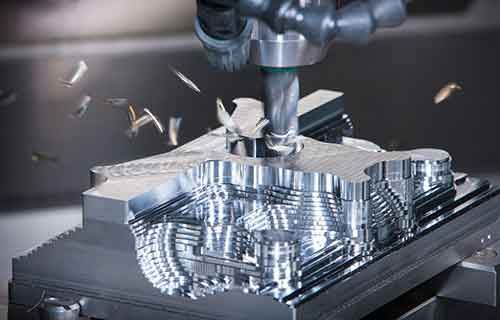
- For Prototyping & Complex Parts: Prioritize flexibility and capability. 5-axis CNC machining centers are essential for complex contours. Look for machines with high spindle speeds (15,000+ RPM) for aluminum and a large work envelope.
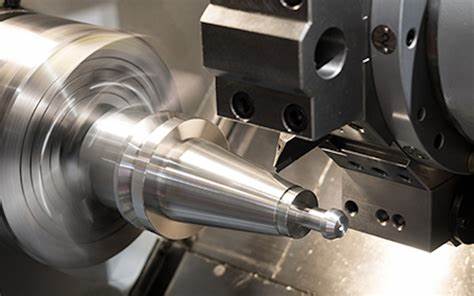
- For High-Volume Production: Prioritize speed, uptime, and automation readiness. Horizontal machining centers (HMCs) with pallet pools are ideal for unattended operation. Multi-spindle lathes can dramatically reduce cycle times for turned parts.
- Key Metrics to Evaluate:
- Positional Accuracy and Repeatability: Crucial for holding tight tolerances.
- Rigidity and Horsepower: For machining tough materials like steel or Inconel.
- Chip Management and Coolant Systems: Essential for maintaining uptime in high-volume work.
- A Strategic Purchase: A shop targeting medical work might invest in a high-precision 5-axis mill with a integrated probe and a high-pressure coolant system for machining titanium, foregoing a large, heavy-duty VMC meant for steel fabrication.
What Automation Level Justifies the Investment?
Automation is an investment in consistency, capacity, and labor cost control.
- Level 1: Basic Productivity Tools: Tool presetters and probe systems. These reduce setup time, increase accuracy, and have a very fast ROI. This is the foundational level of automation for any serious shop.
- Level 2: Machine Automation: Pallet changers or robot integration on a single machine. This enables lights-out machining for a single job or family of parts. Justifies itself by adding an extra shift of unattended production.
- Level 3: Cell and System Automation: Integrated robotic cells loading multiple machines, automated CMMs, and centralized ERP/MES control. This is for high-volume, dedicated production. The justification is based on labor savings, yield improvement, and winning large contracts that require such scalability.
- ROI Calculation: The equation is: (Labor Cost Saved + Scrap Cost Reduced + Revenue from New Capacity) > (Annualized Cost of Investment). Automation for its own sake is a trap; it must solve a specific constraint.
How to Calculate Hourly Shop Rates Accurately?
Underpricing is the #1 killer of machining businesses. The rate must cover all costs and generate profit.
- The Fully Burdened Hourly Rate Formula:
- Direct Machine Costs: Depreciation/lease, maintenance, tooling, power.
- Direct Labor: Wages, benefits, payroll taxes for the machine operator.
- Allocated Overhead: Rent, utilities, management salaries, insurance, sales, quoting, and admin staff. This is often 50-100% of direct labor.
- Calculation Example for a VMC:
- Machine Cost: $30/hr (depreciation, maintenance)
- Direct Labor: $45/hr (burdened rate)
- Allocated Overhead: $35/hr (80% of labor)
- Total Cost Rate: $110/hr
- Target Bill Rate: $140-$165/hr (adding 25-50% gross profit margin).
- Use quoting software that applies this calculated rate based on estimated cycle time, plus material and setup markup.
What Quality Certifications Attract Premium Clients?
Certifications are your ticket to higher-margin markets. They are a marketing tool and a process-improvement framework.
- ISO 9001: The baseline. It shows you have a documented quality management system. Expected by most serious clients.
- AS9100 (Aerospace): Mandatory for aerospace work. Focuses on risk management, configuration control, and traceability.
- ISO 13485 (Medical): Mandatory for medical device manufacturing. Emphasizes validation, documentation, and risk management for patient safety.
- IATF 16949 (Automotive): The automotive standard, demanding rigorous process control and continuous improvement.
- NADCAP (Special Processes): For specific aerospace processes like heat treat or welding. A gold standard that commands premium rates.
What Lean Practices Reduce Lead Times?
Speed is a competitive weapon. Lean manufacturing principles target waste to compress lead times.
- SMED (Single-Minute Exchange of Dies): The systematic reduction of setup time. Use pre-set tooling, standardized workholding, and offline programming to get machines cutting faster. A shop that reduced average setup from 2 hours to 20 minutes effectively added weeks of spindle time per year.
- 5S Workplace Organization: A clean, organized shop minimizes time wasted searching for tools, fixtures, or gauges.
- Visual Management & Kanban: Use visual cues for job status, tool replenishment, and material flow to keep production moving smoothly without constant supervisor intervention.
- Cellular Layout: Organize machines and operations into logical cells to reduce part travel distance and waiting time between operations.
Conclusion
Building a successful CNC machining business is a deliberate strategy of specialization, financial rigor, and continuous improvement. It requires moving from a craftsperson mindset to that of a systems architect. By strategically selecting a high-margin niche, investing in the right technology for that market, pricing services based on true costs, and implementing lean, certified processes, you create a business that is not just busy, but profoundly profitable and resilient. The future belongs to machining businesses that are partners in innovation, not just suppliers of parts. This strategic blueprint provides the foundation for that transition.
FAQ on Starting a CNC Machining Business
What is the biggest financial mistake new shop owners make?
Underestimating working capital needs and underpricing jobs. They focus on machine payments but forget they need 60-90 days of cash to cover payroll, materials, and overhead before client payments arrive. They also often fail to account for all overhead in their shop rate.
Is it better to start as a generalist or a specialist?
For long-term profitability, specialization is almost always superior. Starting as a generalist can generate initial cash flow, but you'll compete on price. A clear specialty allows you to build deep expertise, charge higher rates, and become the "go-to" shop for a specific type of work.
How many clients do I need to start?
It's not about the number, but the security of the pipeline. Ideally, start with 2-3 anchor clients that provide predictable work. A safer model is to have one anchor client covering 40% of capacity, with the rest from a diversified mix, rather than relying on a single client for 80%.
Do I need to offer design/CAD/CAM services?
Increasingly, yes. Offering Design for Manufacturability (DFM) and full CAD-to-part services dramatically increases your value proposition, captures more of the project budget, and helps you avoid unmanufacturable customer designs. It's a key differentiator.
How do I find my first customers?
Leverage your network aggressively. Use platforms like LinkedIn and industry-specific online marketplaces. Consider partnering with larger shops that are overloaded (subcontracting). Most importantly, do exceptional work for your first few clients—they will become your most powerful marketing tool.
Contact Yigu technology for custom manufacturing.
At Yigu Technology, we've navigated the journey from a startup machine shop to a established, AS9100 and ISO 13485 certified manufacturing partner. We understand the challenges of building a profitable CNC machining business because we live them every day. Our expertise in high-value aerospace, medical, and technology sectors is built on a foundation of strategic machine investment, lean operations, and uncompromising quality systems.
If you are looking for a manufacturing partner that operates with the precision and professionalism of a top-tier CNC machining business, look no further. Let's discuss how we can add value to your supply chain.
Contact Yigu Technology today for a capabilities review and quotation on your next project.