Yigu In today's manufacturing landscape, precision, efficiency, and repeatability are paramount. At the heart of this industrial evolution lies CNC production, a technology that has fundamentally transformed how we create everything from simple components to complex aerospace parts. This process moves beyond the limitations of manual machining, offering unparalleled control and consistency. Whether you're a product designer, an engineer sourcing parts, or simply curious about modern fabrication, understanding CNC machining is key to grasping the future of making things. This article delves deep into how it works, why it's superior, and its vast applications, providing a comprehensive guide to this cornerstone of advanced manufacturing.
What Exactly is CNC Production?
CNC production stands for Computer Numerical Control production. It is a subtractive manufacturing process where pre-programmed computer software dictates the movement of factory tools and machinery. This automation enables the precise control of complex, three-dimensional cutting tasks to shape a block of material (called a blank or workpiece) into a finished part. The core principle is the translation of a digital design into physical reality with minimal human intervention during the machining process itself.
Unlike manual operation, where a machinist directly controls levers and wheels, CNC machining relies on coded instructions—a CNC program—that governs everything from the spindle speed and tool path to the feed rate and coolant flow. This method is used across various machinery, including mills, lathes, routers, and grinders, making it incredibly versatile for high-volume production runs and custom one-off prototypes alike.
How Does CNC Machining Work?
The workflow of CNC production is a seamless integration of digital design and physical execution. It can be broken down into several critical stages:
- CAD Model Creation: The process begins with a 2D or 3D Computer-Aided Design (CAD) model of the final part. This digital blueprint defines the part's exact geometry and specifications.
- CAM Programming: The CAD file is imported into Computer-Aided Manufacturing (CAM) software. Here, a programmer (often a CNC machinist or manufacturing engineer) defines the machining operations. This includes:
- Selecting the appropriate cutting tools.
- Calculating tool paths (the route the tool will take).
- Setting machining parameters (speeds, feeds, depth of cuts).
- Generating the G-code—the universal language that CNC machines understand.
- Machine Setup: The operator secures the raw material onto the machine bed or in a vice, loads the necessary tools into the machine's tool changer or spindle, and sets the workpiece zero point (origin).
- Program Execution & Machining: The G-code program is loaded into the CNC machine's controller. Upon starting, the machine executes the instructions automatically, removing material layer by layer with exceptional precision.
- Post-Processing & Inspection: Once machining is complete, the part may require manual deburring, surface finishing, or other treatments. It is then rigorously inspected using tools like coordinate measuring machines (CMMs) or calipers to ensure it meets all design tolerances.
This streamlined process ensures that the first part and the thousandth part are virtually identical, a hallmark of reliable CNC production.
Why Choose CNC Over Traditional Methods?
The shift from manual to CNC machining is driven by compelling advantages that address the needs of modern industry:
| Aspect | CNC Machining | Traditional Manual Machining |
|---|---|---|
| Precision & Complexity | Extremely high. Can produce intricate geometries, contoured shapes, and tight tolerances (often within ±0.001 inches or 0.025mm) consistently. | Limited by operator skill. Complex parts are challenging and time-consuming. |
| Repeatability & Consistency | Perfect for mass production. Once programmed, it can produce identical parts indefinitely. | Prone to variation. Each part can differ slightly depending on the machinist's skill and fatigue. |
| Speed & Efficiency | Faster for medium to high volumes. 24/7 unmanned operation is possible. Setup time is front-loaded in programming. | Slower for multiple copies. Every part requires active operator involvement. |
| Labor & Skill Requirement | Requires highly skilled programmers and setters, but less operator intervention during runtime. | Relies entirely on the continuous skill and attention of a master machinist. |
| Safety | Safer. The operator manages the process from a control panel, away from moving tools and chips. | Higher risk. Operator is in close proximity to cutting tools and moving parts. |
| Cost-Effectiveness | Higher initial setup/programming cost, lower per-unit cost at scale. Ideal for batch production. | Lower setup cost, higher per-unit cost. More economical for very low quantities or simple one-offs. |
An experienced product engineer will quickly note that for a project requiring 500 units of an aluminum housing with precise mating features, CNC production is the unequivocal choice. The upfront investment in programming is amortized over the batch, guaranteeing every unit fits perfectly in assembly, eliminating costly rework.
What Materials Can CNC Machines Handle?
One of the greatest strengths of CNC machining is its remarkable material versatility. It can cut a vast array of engineering materials, each chosen for specific application needs:
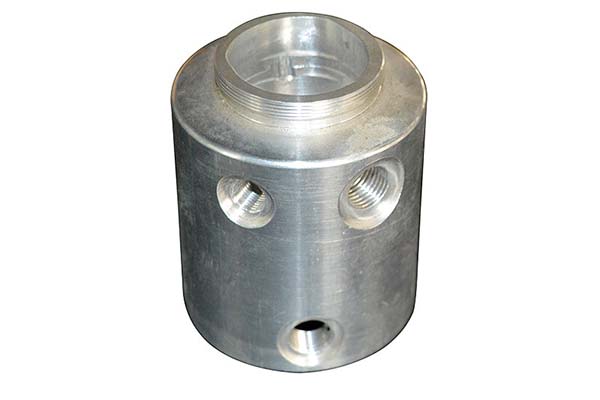
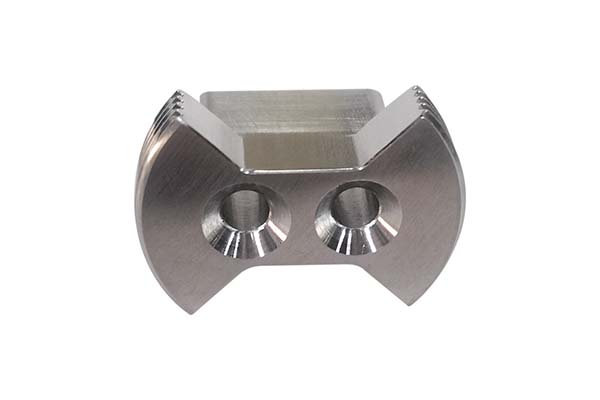
- Metals: The most common category. Includes aluminum (favored for its excellent machinability and strength-to-weight ratio), stainless steel (for strength and corrosion resistance), brass, copper, titanium (aerospace/medical), and various tool steels.
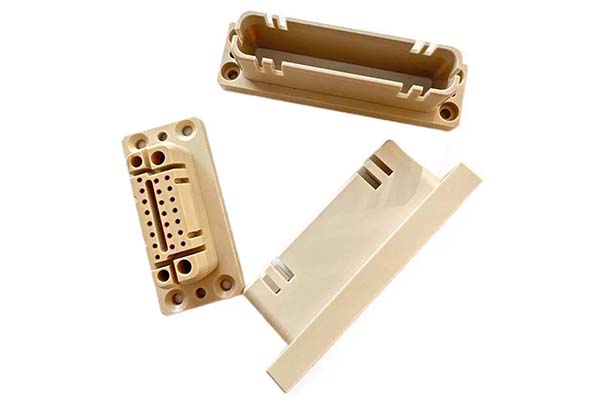
- Plastics: Ideal for insulators, prototypes, and lightweight components. Examples are ABS, Polycarbonate (PC), Nylon (PA), PEEK (high-performance), and Delrin (POM).
- Composites: Such as carbon fiber reinforced polymers (CFRP), used in high-strength, lightweight applications.
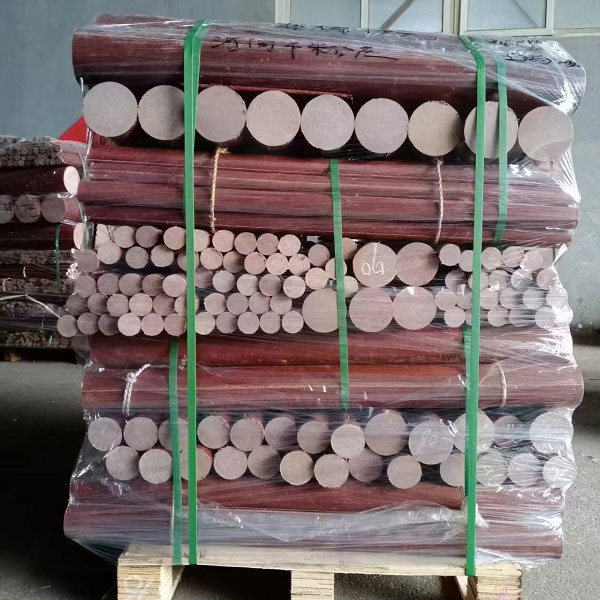
- Wood & Foams: Frequently used in prototyping, modeling, and specialized industries like pattern making.
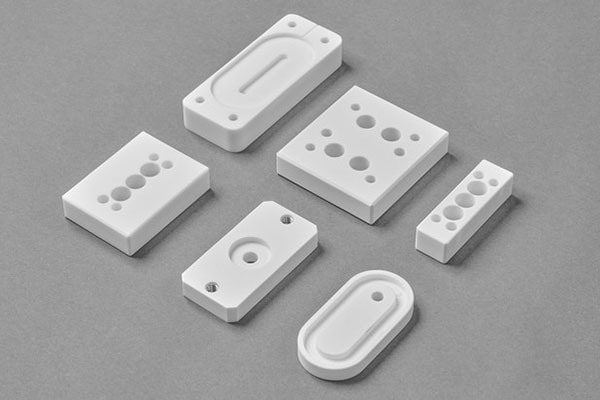
- Advanced Materials: Modern CNC machines can also handle ceramics and certain engineered resins.
The choice of material directly impacts the machining strategy. For instance, machining tough Inconel requires specialized carbide tools, lower cutting speeds, and high-pressure coolant, while cutting acrylic demands sharp tools and specific feed rates to achieve a polished, transparent edge—a nuance well-understood in professional CNC production workshops.
How is CAD/CAM Software Integral to the Process?
CAD and CAM software are the brains behind the CNC machining operation. Their roles are distinct yet interconnected:
- CAD (Computer-Aided Design): This is the creative and engineering stage. Software like SolidWorks, Fusion 360, or AutoCAD is used to create a virtual 3D model with precise dimensions, tolerances, and material properties. This model is the single source of truth for the part.
- CAM (Computer-Aided Manufacturing): This is the manufacturing intelligence stage. CAM software (e.g., Mastercam, Fusion 360 CAM, Siemens NX) takes the inert CAD model and brings it to life for manufacturing. It simulates the machining process, identifies optimal toolpaths to minimize time and tool wear, calculates efficient material removal sequences, and automatically generates the error-free G-code. This simulation can prevent costly collisions and machining errors on the shop floor.
Without this software bridge, CNC production would not exist. The ability to visually simulate a full machining cycle before a single chip is made represents a massive leap in efficiency and risk reduction, embodying the expertise expected in advanced manufacturing.
What Are the Different Types of CNC Machines?
The term "CNC machine" encompasses a family of equipment, each specialized for different tasks:
- CNC Mills (Milling Machines): Use rotating multi-point cutting tools to remove material from a stationary workpiece. They are incredibly versatile for creating slots, holes, pockets, and complex surfaces. 3-axis mills are common, while 5-axis CNC mills can move the tool or part along five different axes simultaneously, allowing for the creation of highly complex geometries in a single setup—a game-changer for aerospace and automotive parts.
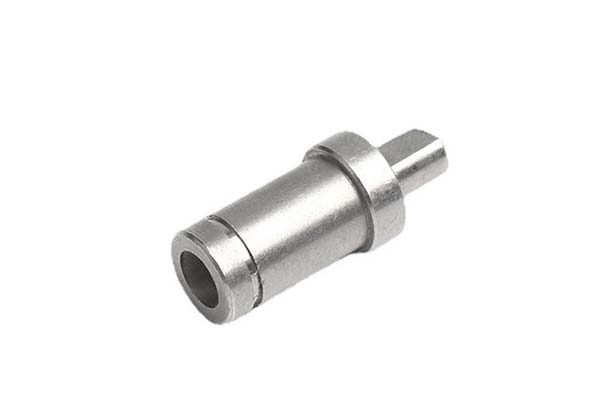
- CNC Lathes (Turning Centers): Rotate the workpiece (bar stock) against a stationary cutting tool. They are ideal for creating cylindrical or conical parts like shafts, bolts, and bushings. Operations include turning, facing, and threading.
- CNC Routers: Similar to mills but typically used for softer materials like wood, plastics, and composites. Common in sign-making, woodworking, and prototyping.
- CNC Plasma/Laser Cutters: Use a high-powered plasma torch or laser to cut through sheet metal. They are primarily for 2D profiling and are known for their speed in sheet metal fabrication.
- CNC Electrical Discharge Machining (EDM): Uses controlled electrical sparks to erode material, capable of machining extremely hard metals and intricate shapes that are difficult for traditional cutting tools.
Selecting the right machine is a critical engineering decision. A complex turbine blade with undercuts and airfoil surfaces would necessitate a 5-axis CNC mill, whereas producing thousands of precision brass connectors would be most efficient on a high-speed CNC Swiss-type lathe designed for small-diameter parts.
Conclusion
CNC production is far more than just a manufacturing method; it is the backbone of precision industrial fabrication. By harmonizing advanced software with robust machinery, it delivers unmatched accuracy, repeatability, and flexibility. From prototyping innovative ideas to sustaining large-scale production lines, CNC machining enables the creation of high-quality parts that power industries from medical devices to consumer electronics and beyond. As materials and software continue to evolve, the capabilities and importance of CNC production will only grow, solidifying its role as an indispensable tool in the modern maker's arsenal.
FAQ
- What does CNC stand for? CNC stands for Computer Numerical Control.
- What is the main advantage of CNC machining? Its main advantage is the ability to produce highly precise and complex parts with exceptional consistency across small or large production runs.
- Can CNC machines work with 3D printed parts? Yes, CNC machines are often used for secondary machining operations on 3D printed metal or plastic parts to achieve critical tolerances or surface finishes that additive processes cannot provide.
- How long does it take to CNC machine a part? The time varies dramatically based on part size, complexity, material, and machine. A simple bracket might take 30 minutes, while a complex aerospace component could require 50+ hours of machining. Programming and setup time are additional upfront factors.
- What is the difference between 3-axis and 5-axis CNC machining? A 3-axis machine moves the tool in three linear directions (X, Y, Z). A 5-axis machine adds two rotational axes, allowing the tool to approach the workpiece from virtually any direction in a single setup, enabling the machining of much more complex geometries.
Contact Yigu for Custom Parts Manufacturing.
At Yigu Technology, we live and breathe precision CNC production. Our perspective, forged through years of engineering and manufacturing experience, is that true manufacturing excellence lies not just in operating advanced multi-axis CNC machines, but in the deep manufacturing expertise that guides the entire process.
We understand that a successful project hinges on Design for Manufacturability (DFM) insights from the very beginning. Our engineers don't just receive your CAD file and press start; we analyze it with a critical eye towards optimizing for strength, efficiency, and cost-effectiveness. We select the ideal material and the most appropriate CNC process—whether it's high-speed milling for aluminum enclosures or precision turning for medical-grade stainless steel components.
We leverage CNC machining for its unparalleled reliability and material integrity, ensuring every part that leaves our facility meets stringent quality standards. If you're looking for a manufacturing partner that adds value through expertise at every stage—from initial consultation to final inspection—let's discuss how Yigu Technology can bring your precise part specifications to life.