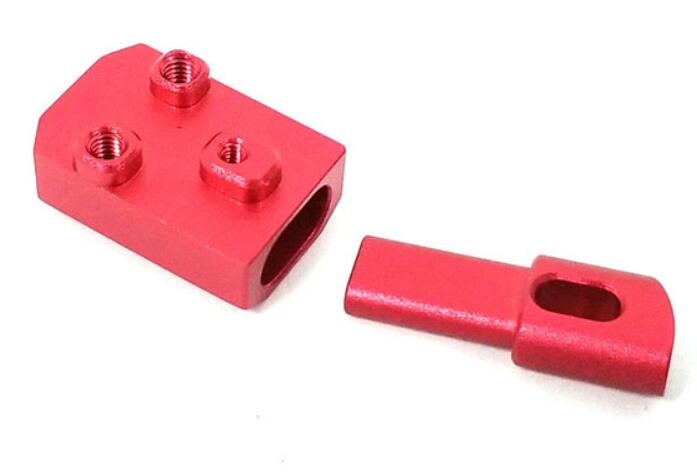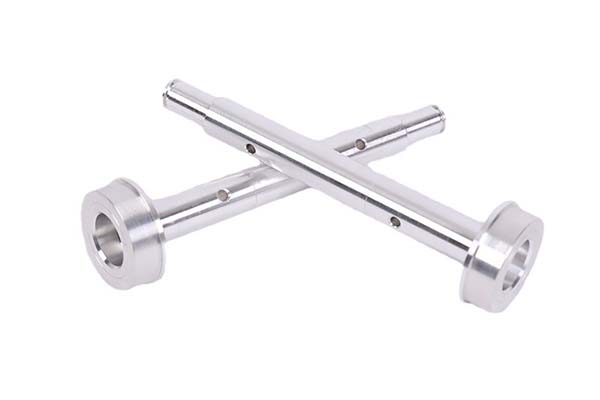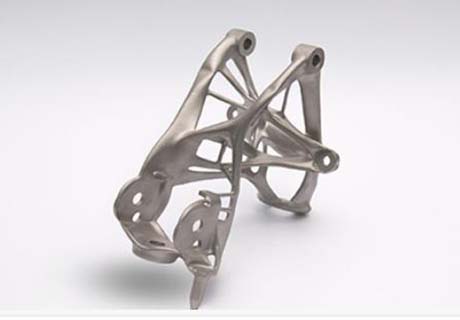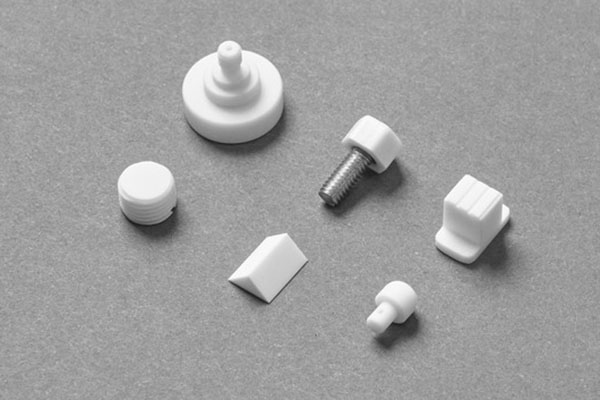
CNC precision machining is a transformative manufacturing process that enables the creation of complex, high-tolerance parts with exceptional accuracy and repeatability. By using computer-controlled machine tools, it converts digital designs into physical components from a vast array of materials. This guide delves into the CNC precision machining process, exploring how it works, its applications across industries, and how to leverage its capabilities for your projects. Understanding its principles and advantages is key to unlocking new levels of product quality and innovation.
What is CNC Precision Machining?
CNC precision machining is a subtractive manufacturing process where computer numerical control (CNC) systems guide machine tools—such as mills, lathes, or grinders—to remove material from a solid block (the workpiece). The goal is to produce a part that matches the exact specifications of a digital 3D model, achieving dimensions and surface finishes that are often impossible with manual methods. The term "precision" refers to the exceptionally tight dimensional tolerances and high repeatability the process can maintain across production runs.
From a single prototype to thousands of parts, this technology is the backbone of modern manufacturing, bridging the gap between design and physical reality.
How Does CNC Precision Machining Work?
The CNC machining process follows a systematic, digitally-driven workflow. It’s more than just a machine cutting metal; it’s a symphony of software, engineering, and skilled oversight.
- Design & CAD Model: It all starts with a 3D Computer-Aided Design (CAD) model created by a designer or engineer. This digital blueprint defines the part's final geometry.
- CAM Programming: The CAD file is imported into Computer-Aided Manufacturing (CAM) software. Here, a programmer—drawing on deep machining expertise—plans the toolpaths. They select cutting tools, define spindle speeds, feed rates, and the sequence of operations. This step translates design into machine-understandable code (G-code).
- Machine Setup: A machinist secures the raw material (workpiece) onto the machine bed and loads the required tools into the tool changer. Precise setup is critical for accuracy.
- Execution & Automation: The G-code is loaded into the CNC machine's controller. Once initiated, the process runs automatically. The controller dictates the movement of the cutting tool along multiple axes, precisely removing material.
- Post-Processing & Inspection: After machining, parts may undergo deburring, surface treatment, or other finishing. Crucially, they are inspected using tools like Coordinate Measuring Machines (CMMs) or optical comparators to verify they meet all specified tolerances and surface finish requirements.
Table: Common CNC Machine Types and Their Primary Functions
| Machine Type | Key Function | Typical Parts |
|---|---|---|
| CNC Milling Machine | Removes material with rotating multi-point cutting tools. Ideal for complex 3D shapes, slots, pockets. | Engine blocks, mold tools, enclosures. |
| CNC Turning Lathe | Rotates the workpiece against a single-point cutting tool. Best for cylindrical, conical, or spherical shapes. | Shafts, bolts, bushings, nozzles. |
| 5-Axis CNC Machining Center | Allows cutting tool to approach workpiece from five different directions simultaneously. | Complex aerospace components, impellers, medical implants. |
What Materials Can Be Processed with CNC Precision Machining?
A key advantage of CNC precision machining is its extraordinary material versatility. It can handle virtually any solid material, provided a suitable cutting tool and parameter set are chosen.
- Metals: The most common category.
- Aluminum: Popular for its excellent machinability, strength-to-weight ratio, and corrosion resistance. Widely used in aerospace and automotive.
- Stainless Steel: Chosen for its strength, durability, and corrosion resistance. Essential for medical, food processing, and marine applications.
- Titanium: Known for high strength, light weight, and biocompatibility. Critical for aerospace components and surgical implants.
- Brass, Copper, Alloy Steel: Used for specific mechanical, electrical, or aesthetic properties.
- Plastics & Polymers:
- PEEK & ULTEM: High-performance thermoplastics used in medical and aerospace for their strength and thermal/chemical resistance.
- Delrin (POM): Excellent for gears and bearings due to its low friction and high stiffness.
- ABS, Nylon, Polycarbonate: Used for prototypes, enclosures, and functional parts.
- Other Materials: Composites (like G-10), wood, and even certain ceramics can be machined with specialized processes.
Experience Insight: In one project for a fluid power system, we needed a valve body that could withstand high pressure and corrosive media. While stainless steel was the initial thought, our engineers recommended duplex stainless steel for its superior strength and corrosion resistance. The precision machining had to account for this material's toughness, requiring specific tool geometry and coolant strategies to achieve the required surface finish in the internal bores, ultimately ensuring zero leakage under extreme conditions.
What Are the Key Advantages of CNC Precision Machining?
Why has CNC machining become indispensable? Its benefits are multifaceted and directly impact product quality, cost, and time-to-market.
- Extreme Accuracy and Consistency: CNC machines produce parts with tolerances as tight as ±0.0001 inches (±0.00254 mm) routinely, and even tighter for specialized applications. This high-tolerance machining ensures every part in a batch is virtually identical.
- Complex Geometry Capability: It can create intricate shapes—deep cavities, complex curves, fine details—that are challenging or impossible with manual machining or other processes like injection molding (without extremely expensive molds).
- Remarkable Repeatability & Scalability: Once the program is verified, the first part and the thousandth part will be dimensionally identical. This makes it perfect for both low-volume rapid prototyping and medium-volume production.
- Speed and Efficiency: Modern CNC machines operate at high speeds with automated tool changers, reducing cycle times. The digital workflow from CAD to part also accelerates the entire development process.
- Material and Finish Flexibility: As noted, it works with an unmatched range of materials and can achieve a variety of surface finishes, from rough "as-machined" to mirror-like polished surfaces.
What Industries Benefit Most from CNC Precision Machining?
The demand for high-precision components spans across technology-driven sectors where performance, reliability, and miniaturization are non-negotiable.
- Aerospace & Defense: This sector relies on CNC for mission-critical, lightweight, and durable aerospace components like engine mounts, landing gear parts, and UAV structures, often from titanium and advanced alloys. Tolerances are exceptionally strict.
- Medical & Surgical: The need for biocompatibility and complex miniaturization makes CNC ideal. It produces surgical instruments, orthopedic implants (like knee replacements), and components for diagnostic machines with the required sterile, burr-free finishes.
- Automotive & Motorsports: From prototyping new engine designs to manufacturing high-performance transmission components and custom aftermarket parts, CNC enables both innovation and high-strength production.
- Electronics & Semiconductors: CNC machining creates precise heatsinks, enclosures, connectors, and even fixtures used in the production of semiconductor wafers, where vibration control and precision are paramount.
- Industrial Machinery: It produces robust, wear-resistant parts for pumps, valves, compressors, and custom automation equipment, ensuring long-term reliability in harsh environments.
What Tolerances Can CNC Precision Machining Achieve?
Tolerance is the permissible limit of variation in a physical dimension. In CNC precision machining, achieving the right tolerance is a balance of cost, time, and technical feasibility.
- Standard Machining Tolerances: Typically around ±0.005 inches (±0.127 mm). Suitable for many non-critical features where fit and function are not extremely sensitive.
- Precision Machining Tolerances: Commonly in the range of ±0.001 inches (±0.0254 mm) to ±0.0005 inches (±0.0127 mm). This is the standard "precision" zone for critical fits in assemblies.
- High-Precision / Ultra-Precision Tolerances: Can reach ±0.0001 inches (±0.00254 mm) and beyond. This requires specialized machines, temperature-controlled environments, and advanced metrology. Common in optics, aerospace, and medical micromachining.
Key Fact: Achieving tolerances tighter than ±0.001" often leads to an exponential increase in cost due to required machine capability, extended cycle times, and sophisticated inspection processes. A fundamental rule is to specify the tightest tolerance only where absolutely necessary for function to optimize manufacturability and cost.
How to Choose the Right CNC Precision Machining Service?
Selecting a partner is critical. Look beyond just quoted price and evaluate their capability to deliver a quality part that meets your specifications on time.
- Assess Technical Capability & Equipment: Do they have the right machines (e.g., 5-axis for complex parts)? Can they handle your material? Review their portfolio for similar projects.
- Verify Quality Systems & Certifications: Look for ISO 9001 certification as a baseline. For regulated industries (medical, aerospace), specific certifications like AS9100 or ISO 13485 are essential. Inquire about their inspection and quality control process and equipment (CMM, optical scanners).
- Evaluate Engineering Expertise: The best partners offer Design for Manufacturability (DFM) feedback. Will their engineers suggest a slight design change that drastically improves machinability or reduces cost without compromising function? This machining expertise is invaluable.
- Consider Prototyping vs. Production Volume: Some shops are optimized for quick-turn prototypes, others for high-volume production. Ensure their workflow matches your needs.
- Request a Detailed DFM Analysis: Before finalizing, a reputable service will provide a formal DFM report, highlighting potential issues with tolerances, tool access, or thin walls, and suggesting solutions.
Conclusion
CNC precision machining is more than just a manufacturing method; it is a critical enabler of innovation across the world's most advanced industries. By offering unparalleled accuracy, material flexibility, and the ability to produce both one-off prototypes and production runs, it provides engineers and designers with the freedom to create high-performance, reliable products. Understanding its processes, advantages, and the criteria for selecting a skilled manufacturing partner is the first step toward transforming your innovative designs into tangible, precision-engineered reality.
FAQ
What is the main difference between CNC machining and 3D printing?
CNC machining is a subtractive process, carving a part from a solid block, resulting in superior strength, material properties, and surface finish. 3D printing is an additive process, building a part layer by layer, better suited for extremely complex internal geometries and very low-volume prototypes where tooling cost for CNC might be prohibitive.
How do I prepare a file for a CNC machining quote?
Provide a complete, dimensioned 2D drawing (in PDF format) along with the 3D CAD file (e.g., STEP or IGES format). The drawing should clearly specify critical dimensions, tolerances, material, and any required surface finishes. This eliminates ambiguity and ensures an accurate quote.
What are the most cost-effective materials for CNC prototyping?
For metals, 6061 aluminum is often the most economical due to its excellent machinability and widespread availability. For plastics, Delrin (POM) and ABS are typically low-cost options that machine well and provide good mechanical properties for functional testing.
Can CNC machines produce threaded holes?
Yes, CNC machines can produce threaded holes very effectively through two main methods: thread milling (using a rotating tool to cut the threads, excellent for larger or precise threads) and tapping (using a tap tool to form threads, common for standard sizes). The choice depends on thread size, material, and required quality.
What does "5-axis CNC machining" mean and when is it needed?
A standard 3-axis machine moves the cutting tool in X, Y, and Z linear directions. A 5-axis machine adds two rotational axes (typically A and B), allowing the tool to approach the workpiece from virtually any angle. This is essential for machining complex contoured parts like turbine blades or medical implants in a single setup, improving accuracy and reducing production time.
Contact Yigu for Custom Parts Manufacturing.
At Yigu Technology, we believe CNC precision machining is the cornerstone of reliable, high-performance hardware innovation. Our perspective is rooted in the principle that true precision is not just about hitting a number on a drawing; it's about understanding the function of every tolerance and the story of every material choice. We combine state-of-the-art 5-axis machining centers with decades of collective machining expertise to not just manufacture your part, but to partner in its optimization. Our engineers proactively provide detailed DFM analysis to enhance manufacturability, reduce lead times, and control costs without compromising the integrity of your design. Whether you're iterating on a prototype or moving into production, we are committed to delivering components that meet the most stringent standards for aerospace components, medical devices, and advanced electronics. Let's discuss how we can bring your most precise and challenging designs to life.