
Introduction
Custom milling solutions are a cornerstone of precision manufacturing. They offer highly tailored processes to create intricate and accurate components. At its core, custom milling removes material from a workpiece using rotary cutters to achieve a desired shape, size, and surface finish—all customized to meet unique client specifications. This guide explores how custom milling solutions deliver precision, design flexibility, and material versatility across industries like aerospace, medical, and automotive. You will learn about key advantages, material considerations, selection factors, and real-world success stories.
What Is Custom Milling and How Does It Work?
Milling is a subtractive manufacturing process using multi-tooth cutting tools. These tools rotate at high speeds while the workpiece is fed into the cutter. Different milling operations include:
| Operation | Description | Best For |
|---|---|---|
| Face milling | Creates flat surfaces | Large flat areas |
| End milling | Produces complex profiles, slots, pockets | Intricate geometries |
| Peripheral milling | Cuts along workpiece periphery | Contoured surfaces |
Tailoring to Customer Needs
What sets custom milling apart is adaptability to customer-specific requirements. Every industry and product has unique demands.
- Aerospace: Components need to be lightweight yet incredibly strong. Custom milling achieves tolerances within ±0.0001 inches —ensuring parts fit perfectly and reducing mechanical failure risk during flight.
- Medical: Implants are uniquely shaped to match patient anatomy. Working with medical professionals and advanced imaging, manufacturers create custom-fit implants that improve patient outcomes. A hip implant designed through custom milling can better distribute stress, reducing loosening risk.
What Materials Are Compatible with Custom Milling?
Custom milling works with a wide range of materials—each with its own machining characteristics.
| Material | Machinability | Strength | Common Applications |
|---|---|---|---|
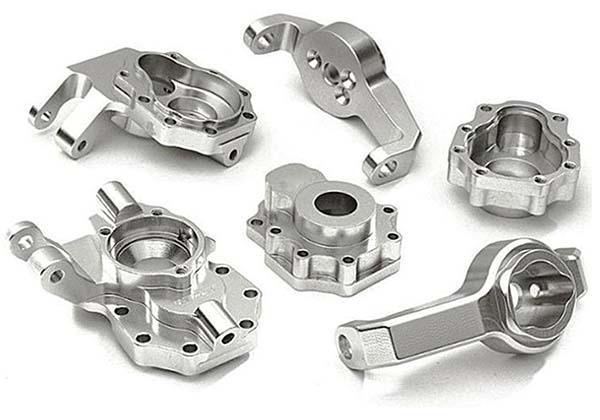
| Aluminum | High | Moderate | Aerospace components, automotive parts |
| Titanium | Low–Moderate | High | Aerospace engine parts, medical implants |
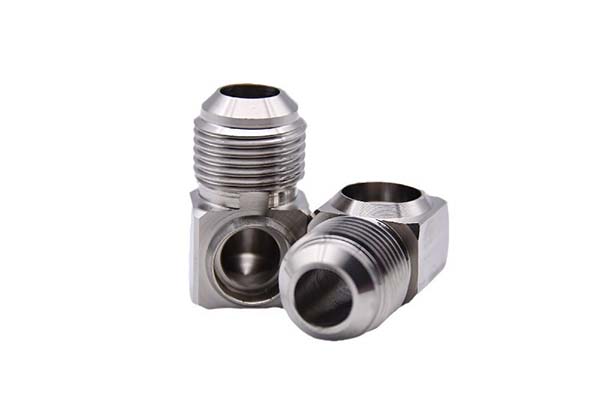
| Stainless Steel | Moderate | High | Food processing equipment, surgical instruments |
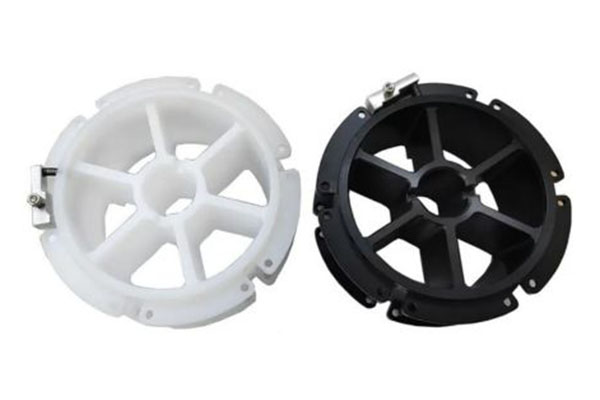
| Plastics (ABS, PEEK) | High | Low–Moderate | Consumer products, medical device housings |
| Composites (carbon fiber) | Moderate–High | High | Aerospace structures, high-performance sports equipment |
Machining adjustments by material:
- Titanium: Slower cutting speeds prevent overheating and tool wear.
- Aluminum: Higher feed rates increase productivity.
What Are the Key Advantages of Custom Milling Solutions?
Precision and Accuracy
Custom milling achieves tolerances far tighter than standard milling operations.
| Milling Type | Typical Tolerance Range |
|---|---|
| Standard milling | ±0.001 – 0.01 inches |
| Custom milling | ±0.0001 – 0.001 inches |
Aerospace example: Aircraft engine components with tight tolerances ensure perfect fit, reducing vibrations and improving performance and safety.
Medical example: Precise fit in implants ensures better integration and reduced complication risk.
Design Flexibility
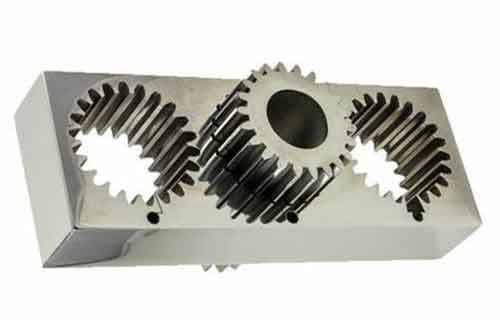
Custom milling creates complex and unique shapes difficult or impossible with other methods.
| Application | Example |
|---|---|
| Automotive | Engine blocks with internal coolant channels, complex port shapes, lightweighting pockets |
| Jewelry | Intricate geometric patterns, filigree work, unique textures |
This flexibility enables product differentiation and meets diverse consumer demands.
Material Compatibility
| Material | Properties | Applications |
|---|---|---|
| Aluminum | Low density, good thermal conductivity | Weight reduction: aerospace, automotive |
| Titanium | High strength-to-weight, corrosion resistance | Aerospace engine parts, medical implants |
| Stainless Steel | Corrosion resistance | Food processing, pharmaceutical, marine |
| Plastics (ABS, PEEK) | Low cost, easy formability, insulating | Consumer products, electronics, medical housings |
| Composites (carbon fiber) | High strength, lightweight | Aerospace structures, sports equipment, automotive body panels |
What Factors Should You Consider When Choosing Custom Milling Solutions?
Equipment and Technology
| Technology | Capability | Impact |
|---|---|---|
| 5-axis CNC mills | Simultaneous movement in five axes (X, Y, Z, A, B/C) | Machining from multiple angles without re-clamping; reduces production time; improves accuracy and surface finish |
| High-speed machining (HSM) | High spindle speeds and feed rates | Material removal rate up to 5–10× conventional milling; requires precise control to avoid tool wear, heat, vibration |
| Simulation software | Virtual testing of milling process | Identifies tool-path collisions, excessive cutting forces, incorrect sequences; reduces costly errors; optimizes process |
Experience and Expertise of the Provider
| Factor | Value |
|---|---|
| Years in business | 20+ years indicates broad project experience and problem-solving capability |
| Industry specialization | Medical device specialists understand regulatory requirements, biocompatible materials; aerospace specialists know strict tolerances |
Case study: A custom heat exchanger for a power generation plant required complex internal channels and tight tolerances. An experienced provider developed a unique milling strategy—combining high-precision CNC machining and specialized coolant delivery—to accurately mill internal channels without thermal distortion.
Quality Control Measures
| Measure | Description |
|---|---|
| ISO 9001 certification | Documented processes from design review to final inspection |
| In-process inspections | CMM (Coordinate Measuring Machine) checks dimensions during production—accuracy within ±0.0001 inches |
| Final inspection | Visual inspection for defects; non-destructive testing (ultrasonic, X-ray) for internal defects (critical for aerospace) |
| Process records | Machine settings, tooling, inspection results—traceability and continuous improvement |
What Do Real-World Applications and Success Stories Show?
Aerospace Industry
Challenge: A leading aircraft manufacturer developing high-efficiency turbofan engines required extremely tight tolerances for optimal performance and fuel efficiency.
Solution: Custom milling created compressor blades with tolerance ±0.0001 inches .
Results:
- 15% increase in engine efficiency (reduced air leakage)
- 10% reduction in engine weight
- Enhanced fuel economy and competitive edge
Medical Device Manufacturing
Challenge: A medical device company needed custom-fit spinal implants—off-the-shelf implants often do not provide the best fit, leading to complications.
Solution: Collaboration with orthopedic surgeons used advanced imaging to produce titanium alloy implants with porous surfaces for better bone ingrowth.
Results:
- 30% reduction in patient recovery time
- 40% decrease in implant-related complications
- Direct positive impact on patient care and quality of life
Automotive Racing
Challenge: A racing team sought to improve engine performance.
Solution: Custom-milled intake manifold with unique internal geometry to optimize airflow—lightweight aluminum alloy, precision fit.
Results:
- 8% increase in horsepower
- 10% improvement in torque at critical engine speeds
- Faster lap times; more podium finishes
Conclusion
Custom milling solutions deliver precision manufacturing through tight tolerances (as low as ±0.0001 inches ), design flexibility (complex internal channels, intricate patterns), and material versatility (aluminum, titanium, composites). Advanced equipment—5-axis CNC mills (machining from multiple angles without re-clamping) and high-speed machining (5–10× material removal rates)—enables efficiency. Quality control through CMM inspections (accuracy ±0.0001 inches) and ISO 9001 ensures consistency. Real-world successes include aerospace (15% engine efficiency gain), medical (30% faster patient recovery), and automotive racing (8% horsepower increase). When selecting a provider, evaluate equipment, experience, and quality measures to ensure your custom-milled parts meet the highest standards.
FAQs
What is the typical lead time for custom milling projects?
Lead time varies by complexity, material, and quantity. For moderate complexity and small-to-medium quantity (10–100 parts), lead time is typically 2–4 weeks. Complex projects or large-scale production runs may take 6–8 weeks. Expedited services can reduce lead time to 1–2 weeks at additional cost.
Can custom milling be used for both small-scale production and large-volume manufacturing?
Yes. For small-scale , custom milling creates prototypes and low-volume runs with high precision—ideal for product development or niche markets. For large-volume , advanced equipment and automation optimize efficiency; economies of scale in material procurement and production scheduling make custom milling cost-effective even for large orders.
How do I ensure the quality of custom-milled parts?
Choose a provider with ISO 9001 certification and strict quality measures. During production, in-process inspections using CMMs verify dimensions. After production, final inspection includes visual and non-destructive testing (if needed). Maintain clear communication about quality requirements and request detailed documentation of quality control procedures and inspection results.
Contact Yigu Technology for Custom Manufacturing
At Yigu Technology , we specialize in custom milling solutions for precision manufacturing. Our 3-axis, 4-axis, and 5-axis CNC mills achieve tolerances as tight as ±0.0001 inches . We work with aluminum, titanium, stainless steel, plastics, and composites. Our ISO 9001-certified quality system includes in-process CMM inspections and final non-destructive testing when required. From aerospace compressor blades to custom-fit medical implants, we deliver precision components that exceed expectations.
Ready to bring your custom design to life? Contact Yigu Technology today for a free consultation and quote. Let us help you achieve precision, performance, and quality in every component.