Introduction
CNC (Computer Numerical Control) technology is the core support for the digital transformation of manufacturing. It precisely controls machine tool movement through computer programs, enabling automated processing of various materials. Compared to traditional manual operation, CNC technology controls machining errors to the micron level while dramatically improving production efficiency. Industry data shows that CNC machining production lines achieve over 40% higher efficiency than traditional production lines. Today, this technology is widely applied across aerospace, automotive manufacturing, precision electronics, and other high-end manufacturing fields—becoming a key measure of production capability.
If CNC machines are the “precision brains” of manufacturing, CNC tools are the “key hands” that execute machining needs. High-quality, well-matched tools unlock the precision advantages of machines. Poor tool selection leads to reduced accuracy, accelerated tool wear, and lower product qualification rates. A case study from an auto parts company illustrates this: when machining engine blocks, switching to optimized tools increased product qualification rates from 89% to 98.5% and reduced tool replacement frequency by 60%—demonstrating the decisive role of CNC tools in production.
What Are the Basic Classifications of CNC Tools?
CNC tools are broadly classified into three categories: cutting tools, fixtures, and measuring tools.
Cutting Tools
Cutting tools directly act on the workpiece, removing excess material to form desired shapes. Their core features are high hardness and wear resistance.
| Tool Type | Core Function | Common Materials |
|---|---|---|
| Cutting tools (general) | Cutting material; shape formation | High-speed steel (HSS), carbide |
| Milling cutters | Planes, grooves, curved surfaces | Carbide; ball nose, flat bottom, end mills |
| Drills | Drilling holes | Twist drills, center drills, deep hole drills |
Key fact: Carbide cutting tools account for over 70% of applications in precision machining due to their high-temperature resistance (withstand 800–1000°C) and high cutting efficiency.
Fixtures and Clamping Devices
Fixtures fix workpiece position, ensuring no displacement during machining and maintaining positional accuracy relative to the machine spindle.
| Fixture Type | Core Strength | Best For |
|---|---|---|
| Flat pliers (vise) | Simple structure; quick clamping | Small flat workpieces |
| Three-jaw chuck | Self-centering; stable clamping | Round workpieces; batch processing |
| Vacuum suction cup | No clamping marks; uniform force | Thin-walled; precision sheet processing |
Quality impact: High-quality fixtures reduce clamping time and improve consistency in batch processing.
Measuring Tools
Measuring tools ensure accuracy throughout the machining process—from workpiece positioning and calibration before machining, to real-time monitoring during processing, to finished product inspection.
| Measuring Tool | Purpose | Accuracy |
|---|---|---|
| Micrometer | Outer diameter, thickness | 0.001 mm |
| Dial gauge | Flatness, circular runout | Varies |
| CMM (Coordinate Measuring Machine) | Multi-dimensional measurement; complex workpieces | ±0.001 mm |
How Are Different CNC Tools Applied?
Tool Application by Material
Different materials require different tool approaches.
| Material | Tool Selection | Parameters |
|---|---|---|
| Titanium alloy | Carbide milling cutter with TiAlN coating | Low speed; high feed—prevents heat-related wear |
| Aluminum alloy | HSS drill bits and end mills | Good chip evacuation—prevents aluminum adhesion |
Example: An aerospace parts company optimized tool selection for titanium vs. aluminum, significantly improving machining results.
Fixtures in Production Lines
Fixture adaptability directly determines production efficiency and product consistency.
Case study: An electronics component factory producing phone frames initially used ordinary flat pliers. Clamping time: 2 minutes per piece. Scrap rate: 5% due to positioning errors.
After switching to customized vacuum suction cup fixtures:
- Clamping time: 30 seconds (75% reduction)
- Scrap rate: 0.8% (84% reduction)
- Production line capacity: 30% increase
Measuring Tools in Quality Control
Measuring tools are the “eyes” of quality control.
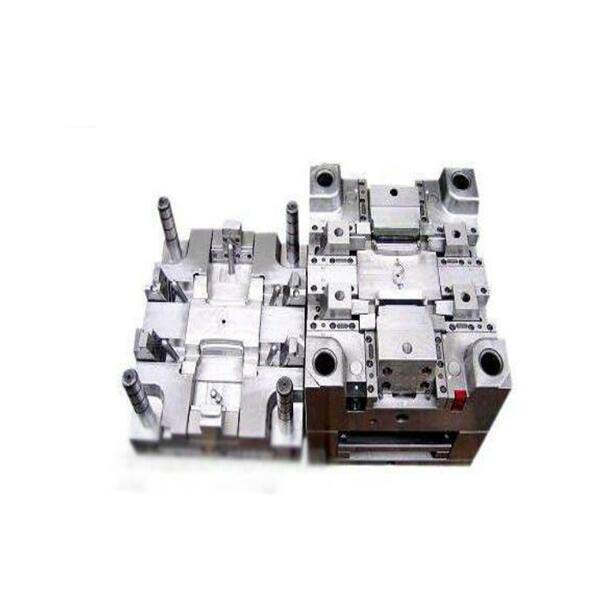
Case study: A precision mold factory machining injection molds uses CMM to inspect 100% of critical mold cavity dimensions, controlling dimensional error within ±0.005 mm. This ensures injection molded products meet customer requirements. Without accurate measurement tools, dimensional deviations go undetected—leading to entire batch scrap and significant economic loss.
How Do You Choose the Right CNC Tool?
Key Considerations
| Factor | Guidance |
|---|---|
| Material type | High-hardness steel (HRC 50+): carbide or CBN tools; Non-ferrous metals (copper, aluminum): HSS tools |
| Machining accuracy | High-precision (molds, aerospace): high-precision tools + CMM; General precision: conventional tools—balance accuracy and cost |
| Cost and efficiency | Mass production: high-end durable tools—lower unit cost via reduced replacement; Small-batch trial: cost-effective conventional tools—control initial investment |
Common Misunderstandings and Recommendations
| Misunderstanding | Recommendation |
|---|---|
| Blindly pursuing high-end tools without considering workpiece/machine adaptability | Prioritize adaptability to machining needs; consult tool supplier technicians |
| Focusing only on tool price, ignoring tool life and efficiency | Conduct small-batch trials before bulk purchase; verify performance and stability |
| No tracking of tool performance | Establish tool usage ledger; record tool life and machining effects—data support for future selection |
What Is the Future of CNC Tools?
Under Industry 4.0, intelligent CNC tools—with wear monitoring functions, automated fixtures—are becoming the industry trend. The integration of tools, machine tools, and control systems enables digital control of the entire machining process. As intelligent manufacturing advances, CNC tools will evolve toward greater precision, efficiency, and intelligence.
Conclusion
Different types of CNC tools play distinct but equally critical roles in machining:
- Cutting tools (milling cutters, drills): Remove material; shape parts—carbide tools account for >70% of precision applications
- Fixtures: Secure workpieces; reduce clamping time (75% reduction in case study); improve consistency
- Measuring tools: Ensure accuracy—CMM achieves ±0.001 mm; 100% inspection prevents batch scrap
Proper selection depends on:
- Workpiece material: Hard materials → carbide/coated tools; soft materials → HSS
- Accuracy requirements: High-precision → high-end tools + CMM; general → conventional tools
- Cost and efficiency: Balance initial investment with long-term tool life and productivity
Mastering the classification, application, and selection of CNC tools is the core prerequisite for advancing CNC machining capability—laying a solid manufacturing foundation for competitive success.
FAQs
Can different types of CNC tools be used universally?
No. Different CNC tool types are designed for different machining methods (cutting, milling, drilling) and workpiece shapes. For example, milling cutters cannot replace drills for precise drilling. Select the appropriate tool type based on specific machining requirements.
What factors are prioritized when choosing CNC fixtures?
Prioritize workpiece shape, size, and machining method—ensuring the fixture holds the workpiece stably. Next, consider clamping efficiency, especially for mass production scenarios. Finally, balance versatility and cost—avoid excessive customization that drives up long-term usage costs.
Do precision measuring tools require regular calibration?
Yes. Precision measuring tool accuracy drifts with usage time and environmental changes. Regular calibration is essential for maintaining measurement accuracy. Establish a calibration schedule based on tool type and usage frequency. For core measurement tools, calibration every 3–6 months is typical.
What tool materials are best for high-hardness materials?
For high-hardness materials (HRC 50+ steel), use carbide or cubic boron nitride (CBN) tools. Carbide tools with specialized coatings (TiAlN, AlTiN) withstand high temperatures (800–1000°C) and maintain cutting efficiency. For superhard materials, consider CBN or ceramic tools.
How can I extend CNC tool life?
Extend tool life by:
- Selecting appropriate tool material and coating for the workpiece
- Optimizing cutting parameters (speed, feed, depth)
- Using proper coolant for heat management
- Regular maintenance and cleaning
- Tracking tool usage in a ledger; replacing when wear exceeds limits (typically 0.1–0.2 mm)
Contact Yigu Technology for Custom Manufacturing
At Yigu Technology, we understand that the right CNC tools are essential for precision manufacturing. With 15 years of experience, advanced CNC machining capabilities, and ISO 9001 certification, we deliver precision components across industries.
Our expertise includes tool selection guidance—matching cutting tools, fixtures, and measuring tools to your material, accuracy requirements, and production volume. Contact us today to discuss your CNC machining project.