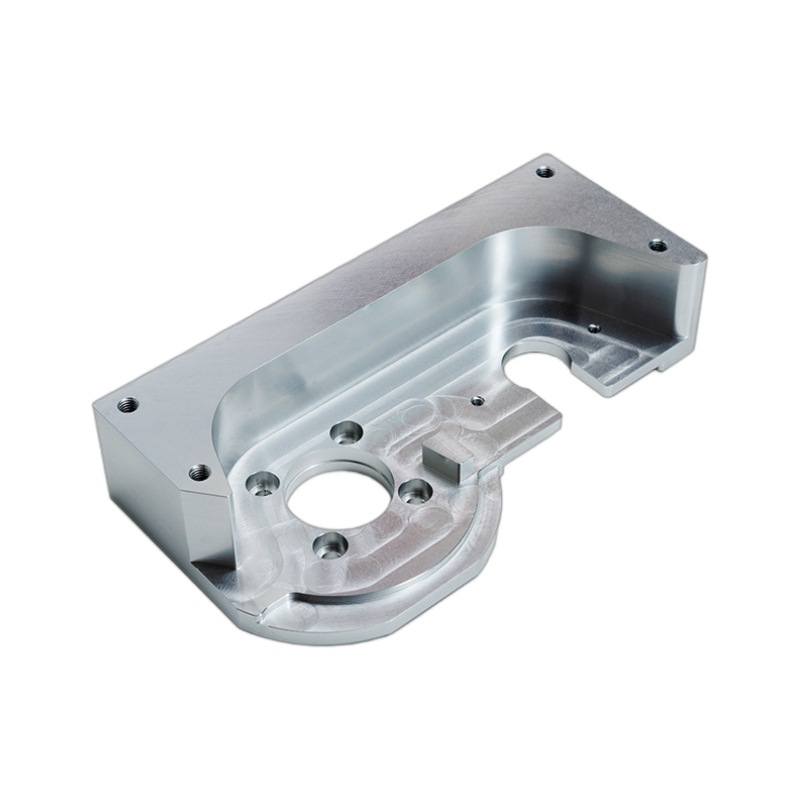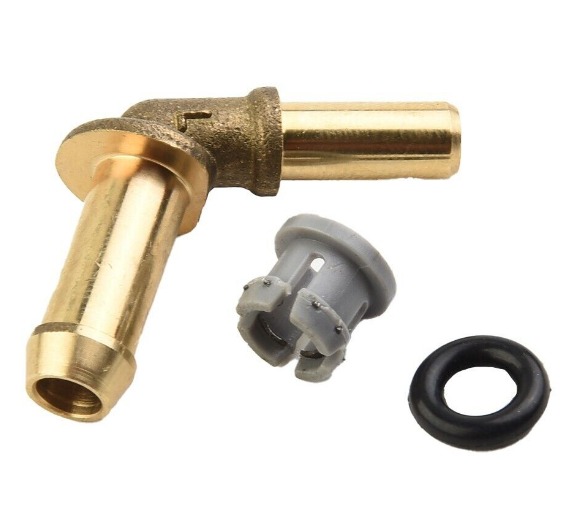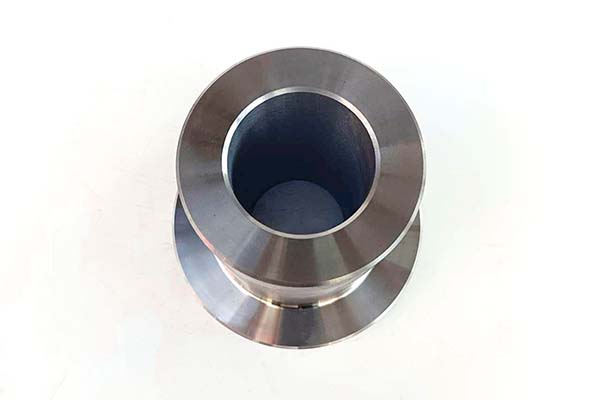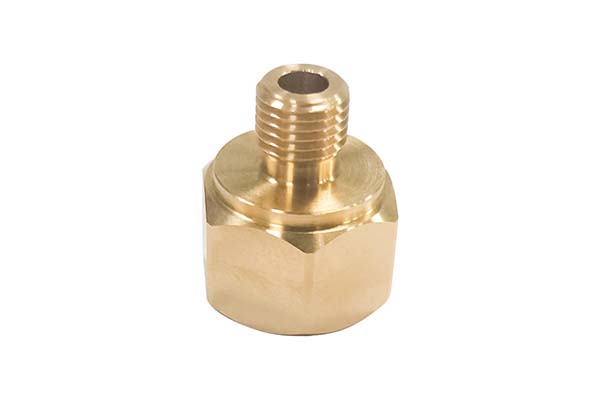
A 5-axis CNC machining center is a sophisticated machine tool capable of moving a cutting tool or workpiece along five different axes simultaneously, enabling the production of highly complex, precise, and contoured parts in a single setup.
For engineers and manufacturers pushing the boundaries of design, a 5-axis CNC machining center represents the pinnacle of subtractive manufacturing capability. Unlike 3-axis machines, which are limited to linear movements, 5-axis technology introduces rotational axes that allow the cutting tool to approach the workpiece from virtually any direction. This unlocks the ability to create intricate aerospace components, complex medical implants, and high-precision molds with fewer setups, better surface finishes, and dramatically reduced production time. This guide delves deep into the mechanics, advantages, and practical applications of 5-axis machining, providing the technical knowledge needed to understand when and why this technology is the optimal choice for your most demanding projects.
Introduction
The evolution from 3-axis to 5-axis CNC machining is a leap from capable manufacturing to transformative fabrication. At its core, a 5-axis machine integrates two additional rotational axes of movement (typically labeled A and B, or B and C) with the three traditional linear axes (X, Y, and Z). This allows for simultaneous 5-axis movement, where the tool's orientation is dynamically adjusted during the cut to maintain the optimal cutting angle and avoid collisions. The implications are profound: parts that once required multiple complex fixtures and manual rotations can now be produced in one continuous, automated operation. This article will dissect how these machines work, explore the distinct advantages they offer over simpler systems, and provide crucial insights into programming, tooling, and precision maintenance. Whether you're evaluating a capital investment or sourcing complex parts, understanding 5-axis technology is essential for modern, high-value manufacturing.
What Is a 5-Axis CNC Machining Center?
A 5-axis CNC machining center is a computer-controlled machine tool that can manipulate a cutting tool relative to a workpiece along five independent axes at the same time. The five axes are a combination of:
- Three Linear Axes: The standard X (left-right), Y (front-back), and Z (up-down) movements.
- Two Rotational Axes: These are the defining feature. Common configurations include:
- A-axis: Rotation around the X-axis (tilting).
- B-axis: Rotation around the Y-axis.
- C-axis: Rotation around the Z-axis (rotation on the table).
This multi-directional capability means the tool can reach five sides of a cube-shaped workpiece in a single setup, fundamentally changing the approach to machining complex geometries.
How Do Simultaneous 5-Axis Movements Work?
The true power of a 5-axis CNC machining center lies in simultaneous 5-axis interpolation. This is the machine controller's ability to coordinate and move all five axes in a synchronized, fluid motion along a programmed path.
- The Concept: Instead of machining a complex curve in a series of small, stair-stepped linear movements (as a 3-axis machine must), a 5-axis machine can keep the cutting tool perpendicular to the contoured surface at all points. It does this by continuously adjusting the two rotational axes while the three linear axes trace the path.
- Tangential Cutting: This continuous adjustment allows the cutting tool's side (the more efficient periphery) to engage the material, rather than just its tip. This results in a superior surface finish, more consistent chip load, and reduced tool wear.
- Machine Kinematics: The way these axes are physically arranged on the machine (its kinematics) dictates its work envelope and capabilities. The controller uses a complex mathematical model (often inverse kinematics) to translate the desired tool path in 3D space into the precise movements required from each of the five individual axes.
What Are the Core Advantages Over 3-Axis?
The benefits of 5-axis machining are transformative, particularly for complex parts:
- Single-Setup Machining: The most significant advantage. Complex parts can be completed in one fixture, eliminating errors from multiple setups and drastically reducing total production time. For a titanium aerospace bracket, this can mean the difference between a 3-hour job and a 12-hour job with multiple realignments.
- Superior Surface Finish and Accuracy: By using the side of the tool and maintaining optimal tool orientation, 5-axis machining produces smoother, more accurate surfaces on complex contours, often eliminating the need for secondary hand-finishing operations.
- Ability to Machine Complex Geometries: Parts that are impossible on a 3-axis machine become routine. This includes components with undercuts, deep cavities, compound angles, and true 3D contours like impellers, turbine blades, and prosthetic joints.
- Improved Tool Life and Efficiency: Optimal tool orientation reduces tool deflection, allows for higher feed rates, and enables the use of shorter, more rigid tools, all of which extend tool life and improve metal removal rates.
- Drastic Reduction in Lead Time: By combining setup reduction, faster machining strategies, and eliminating secondary operations, overall project lead time from design to finished part can be cut by 50% or more.
Types of 5-Axis Machine Configurations
Not all 5-axis machines are built the same. The configuration determines its strengths and ideal applications.
| Configuration Type | How It Works | Key Advantages | Ideal For |
|---|---|---|---|
| Table/Table (Dual Rotary Table) | Both rotational axes (A & C) are on the table that holds the workpiece. The spindle head only moves linearly (X, Y, Z). | Excellent for small to medium-sized, complex parts. The fixed head allows for high rigidity. | Molds, dies, medical components, small complex prototypes. |
| Head/Table (Tilting Rotary Table) | One rotary axis is on the table (C), and one is on the head/spindle (A or B). | Offers a good balance of flexibility and work envelope. Common and versatile configuration. | General complex parts, aerospace components, automotive prototypes. |
| Head/Head (Dual Spindle Head) | Both rotational axes are on the spindle head. The table is stationary or has limited movement. | Can handle very large and heavy workpieces, as the table does not tilt. | Large aerospace structural parts (e.g., wing spars), massive molds, energy sector components. |
Which Industries Benefit Most?
5-axis machining is not for every job, but it is indispensable in several high-tech, precision-driven fields:
- Aerospace & Defense: For monolithic (single-piece) airframe components, turbine blades/vanes, engine mounts, and drone parts. The ability to machine complex, lightweight structures from solid blocks of aluminum, titanium, or Inconel is critical.
- Medical & Dental: Essential for patient-specific implants (cranial plates, spinal cages), surgical tooling, and prosthetics with complex organic geometries that must be biocompatible and perfectly contoured.
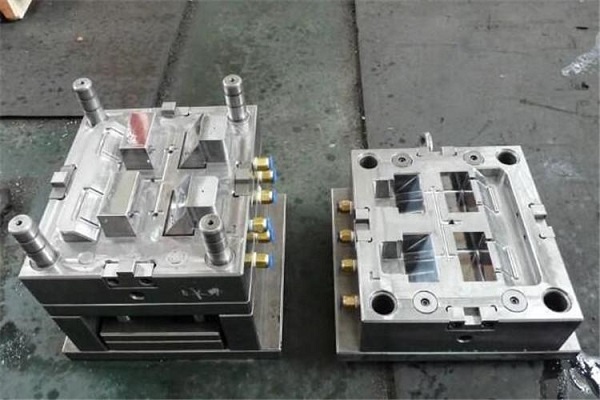
- Mold & Die: For producing complex injection molds, blow molds, and die-casting dies with intricate cooling channels and textured surfaces. 5-axis allows for direct machining of deep cavities and undercuts.
- Automotive & Motorsports: Used for prototyping complex intake manifolds, cylinder heads, and custom suspension components, as well as low-volume production of high-performance parts.
- Energy: For machining complex components like turbine impellers, pump housings, and valve bodies used in oil & gas, nuclear, and renewable energy systems.
How to Program Complex Toolpaths?
Programming a 5-axis CNC machining center requires specialized software and expertise. The process involves:
- Advanced CAM Software: Programs like Siemens NX, HyperMILL, or Mastercam are essential. They include modules for multi-axis toolpath generation, collision avoidance, and post-processing for specific machine kinematics.
- Toolpath Strategies: Common 5-axis strategies include:
- Swarf Machining: Using the side of an end mill to machine tall, vertical walls.
- Multi-Axis Contouring: Following a 3D surface with the tool axis constantly controlled.
- Drilling on Compound Angles: Creating holes that are not perpendicular to any primary machine plane.
- Simulation & Verification: Before sending code to the machine, full machine simulation is non-negotiable. This virtual dry-run checks for collisions between the tool, holder, spindle, and workpiece/fixtures, and verifies the toolpath accuracy.
What Tooling Considerations Are Critical?
Tooling for 5-axis work must prioritize rigidity and precision to handle dynamic movements and orientations.
- Tool Holders: Hydraulic or shrink-fit holders are preferred for their superior gripping force and concentricity, minimizing tool runout and vibration at high speeds and odd angles.
- Cutting Tools: Shortest Possible Tool Length: To maximize rigidity and minimize deflection, always use the shortest tool that can reach the required depth. Bull-nose or corner-radius end mills are often more robust than sharp-cornered tools. Specialized 5-axis tooling with optimized flute geometry for tilted cutting is available.
- Tool Management: With complex programs using many tools, a reliable tool presetter and robust tool management software are crucial to ensure every tool's length and diameter offsets are perfectly known and loaded into the machine control.
How to Maintain Precision and Avoid Collisions?
The complexity of 5-axis motion demands rigorous procedures to ensure safety and accuracy.
- Probing and Workpiece Setup: Using a machine-integrated touch probe to automatically find and set workpiece datums is essential for accuracy in a multi-axis environment.
- Thermal Stability: Precision is highly sensitive to temperature changes. Machines should be installed in a temperature-controlled environment, and many high-end models feature thermal compensation systems for the spindle and ball screws.
- Collision Avoidance: This is paramount. Strategies include:
- CAM Software Simulation: The first and most critical line of defense.
- Machine-Side Look-Ahead: Advanced machine controllers can analyze the program ahead of execution to slow down or adjust paths to avoid sudden, dangerous movements.
- Physical Verification: For the first run of a new program, operators often run the machine in a single-block or dry-run mode (without cutting) at reduced feed rates to visually confirm all movements are safe.
Conclusion
Investing in or utilizing a 5-axis CNC machining center is a strategic decision that unlocks a new tier of manufacturing capability. Its ability to produce highly complex geometries in a single setup translates directly into tangible business advantages: reduced lead times, lower total costs for complex parts, and unparalleled design freedom. While the upfront costs and required expertise in programming and operation are higher than for 3-axis machining, the return on investment for companies working in aerospace, medical, or advanced tooling is undeniable. By understanding the machine configurations, mastering the tooling and programming disciplines, and implementing rigorous procedures for precision and safety, manufacturers can fully harness this transformative technology to build the innovative products of tomorrow.
Frequently Asked Questions (FAQ)
What is the difference between 3+2 axis machining and true 5-axis simultaneous machining?
In 3+2 axis machining (also called positional 5-axis), the machine positions the two rotary axes to a fixed, locked angle, and then performs a 3-axis milling operation. It's excellent for accessing multiple sides of a part without refixturing. True 5-axis simultaneous machining moves all five axes in a coordinated, continuous motion during the cut, which is necessary for machining smooth, complex 3D contours like aerodynamic surfaces or sculpted forms.
Is a 5-axis machine always better than a 3-axis machine?
No. For prismatic parts (parts based on flat surfaces and right angles), a 3-axis machine is faster and more cost-effective. The complexity and cost of a 5-axis machine are only justified when the part geometry demands it—specifically, when features require the tool to approach from multiple angles or when a single-setup advantage outweighs the higher programming and machine time costs.
What is the typical tolerance achievable on a 5-axis machining center?
High-quality 5-axis machines are capable of holding tight tolerances. For machining metals, ±0.025 mm (±0.001") is standard for many features, and with optimal conditions, ±0.0125 mm (±0.0005") or better is achievable. However, achievable tolerances are highly dependent on part size, material, tooling, and environmental control.
How much more expensive is 5-axis machining compared to 3-axis?
Costs are higher in three areas: 1) Machine Investment: A 5-axis center can cost 2 to 5 times more than a comparable 3-axis machine. 2) Programming & CAM Software: Advanced 5-axis CAM modules are significantly more expensive and require specialized training. 3) Per-Hour Machine Rate: Due to higher capital cost and expertise, the hourly rate for 5-axis work is typically 40-100% higher than for 3-axis. The justification comes from the total value created by completing complex parts faster and with fewer secondary operations.
Contact Yigu Technology for Custom Manufacturing.
At Yigu Technology, we leverage state-of-the-art 5-axis CNC machining centers to solve our clients' most complex manufacturing challenges. Our team of experienced engineers and programmers specializes in transforming intricate designs into high-precision, reliable components for aerospace, medical, and advanced technology sectors.
We provide end-to-end support, from Design for Manufacturability (DfM) consultation to advanced multi-axis CAM programming, full machine simulation, and rigorous in-process inspection. Our commitment to precision and quality ensures that every part meets the most demanding specifications.
If your project requires the advanced capabilities of 5-axis machining, partner with Yigu Technology. Contact us today to discuss your component requirements and discover how our expertise can bring your designs to life with unparalleled accuracy and efficiency.